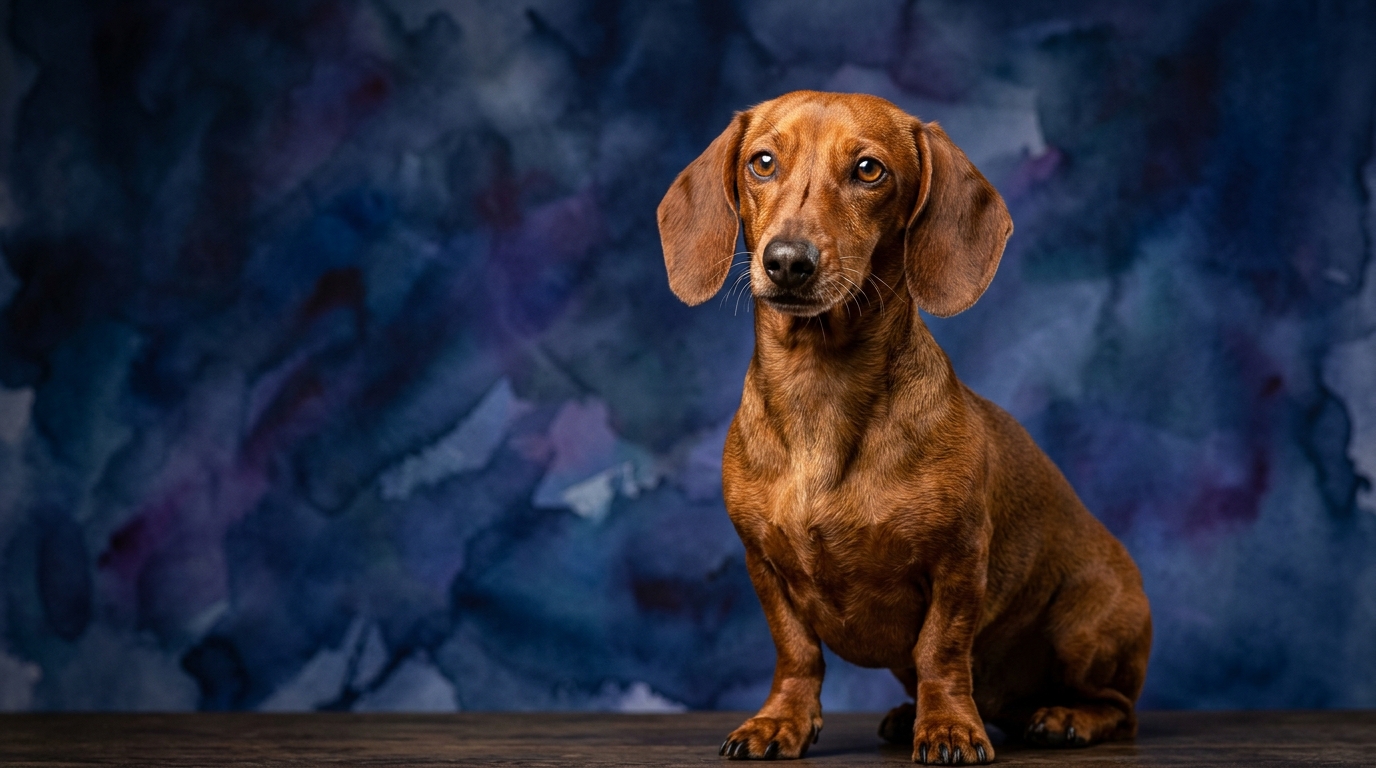
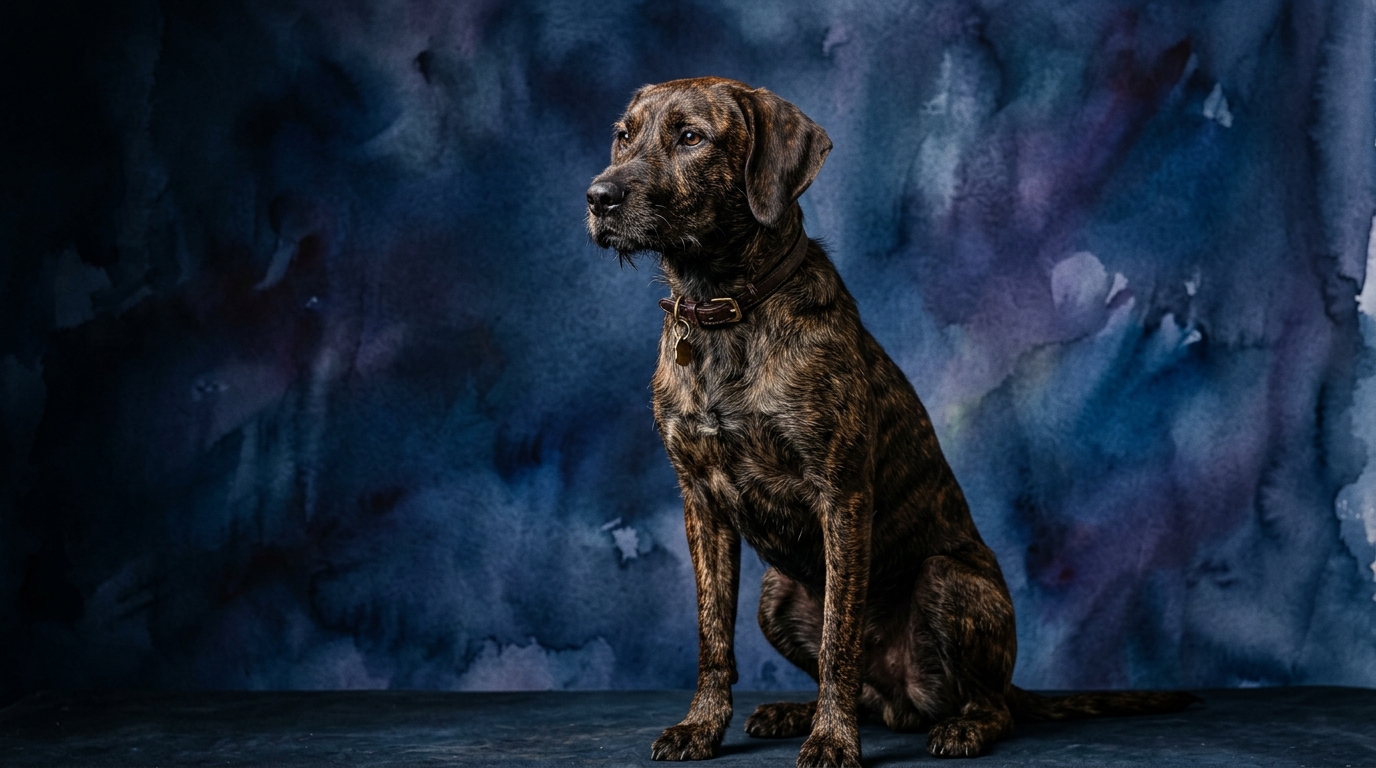
Side-by-Side IQ Profile: Dachshund vs. Plott Hound
The Cosmic Pet Pet IQ Lab employs a five-dimensional framework to assess canine cognition, providing a nuanced look beyond simple obedience. For the Dachshund, a breed ranked #49 in Coren’s intelligence list, their profile paints a picture of cunning and relentless drive. They score 4 out of 5 for Problem Solving, indicating a strong capacity to navigate complex situations to achieve a goal. Their Training Speed is 2 out of 5, suggesting a more deliberate learning pace for human-directed tasks. Social Intelligence sits at a balanced 3 out of 5, reflecting their ability to read and respond to social cues. A standout feature is their Instinctive Drive, earning a perfect 5 out of 5, highlighting their deeply ingrained behavioral patterns related to their original purpose. Memory for the Dachshund is a solid 3 out of 5, allowing them to retain learned information and experiences effectively.
In contrast, the Plott Hound, which is not included in Coren’s ranking, presents a different cognitive landscape. Their Problem Solving ability is rated at 3 out of 5, indicating competence in finding solutions, though perhaps with less independent flair than the Dachshund. Plott Hounds show a balanced Training Speed of 3 out of 5, suggesting they absorb commands at an average rate. Their Social Intelligence matches the Dachshund at 3 out of 5, demonstrating comparable abilities to interact and understand their human and canine companions. The Plott Hound’s Instinctive Drive is also rated 3 out of 5, signifying a robust but perhaps more manageable drive compared to the Dachshund’s intense focus. Their Memory, like the Dachshund’s, scores 3 out of 5, allowing for good retention of experiences and learned behaviors.
Where the Dachshund Excels Cognitively
The Dachshund's cognitive strengths lie distinctly in their problem-solving tenacity and an unparalleled instinctive drive, both scoring higher than the Plott Hound. Their 4/5 Problem Solving isn't just about general cleverness; it's specifically geared towards overcoming obstacles to reach a desired outcome, often a scent or a perceived 'prey.' This manifests in their ability to strategically outmaneuver barriers, figure out how to access forbidden spaces, or persist in digging to find something buried. This isn't abstract thinking but a highly practical, goal-oriented form of intelligence honed over generations for tunneling and hunting.
Complementing this is their 5/5 Instinctive Drive, a force that truly sets them apart. This isn't merely enthusiasm; it's a deep-seated, almost unshakeable compulsion to follow a scent or pursue a perceived quarry. When a Dachshund locks onto a task their instincts deem vital, their focus becomes singular. This drive fuels their problem-solving, making them relentless in their efforts. While it can translate into a charmingly determined personality, it also means their internal compass often points strongly towards their ancestral calling, sometimes overshadowing human directives in favor of their ingrained purpose.
Where the Plott Hound Shows Cognitive Advantage
The Plott Hound's primary cognitive advantage, when compared directly to the Dachshund, rests in its Training Speed, which scores a 3 out of 5 against the Dachshund’s 2 out of 5. This indicates a more receptive and perhaps less independently-minded approach to learning human-initiated commands. While both are Hounds with their own strong wills, the Plott Hound's slightly higher score suggests they may process and respond to new cues with greater initial ease, potentially making early obedience training a more straightforward endeavor for their owners.
Furthermore, while their Instinctive Drive is a solid 3 out of 5, it presents a different kind of strength. Unlike the Dachshund's overwhelming 5/5 drive, the Plott's more balanced drive, though still robust for tracking and hunting, might mean it's less prone to overriding all other cognitive functions in a domestic setting. This allows for a more integrated cognitive experience, where their instincts can be channeled effectively during training or work, rather than becoming a constant, all-consuming focus that might compete with their human's instructions. Their problem-solving at 3/5 is still capable, allowing them to navigate hunting scenarios effectively, but without the intense, singular focus that defines the Dachshund's approach.
Which is Easier to Train and Why
Based on our IQ Lab metrics, the Plott Hound is generally easier to train than the Dachshund. The Plott Hound's Training Speed of 3 out of 5 suggests a more cooperative and receptive learner compared to the Dachshund’s 2 out of 5. This difference isn’t about one breed being 'smarter' overall, but about their inherent willingness and ability to quickly grasp and consistently execute human commands. Plott Hounds, while still possessing a strong hunting drive, often show a greater readiness to work in partnership with their handler, a trait valued in their historical role as focused tracking dogs.
The Dachshund's training challenge stems significantly from their 5/5 Instinctive Drive. This formidable drive means they are often more inclined to follow their nose or their own agenda than to immediately comply with a human directive, especially if it conflicts with an interesting scent or a perceived 'mission.' Their problem-solving skills (4/5) are frequently employed to achieve their own goals, not necessarily the owner's. For instance, a Dachshund might spend considerable mental energy figuring out how to get to a squirrel, rather than focusing on a 'sit' command. This independence and self-direction require a more patient, creative, and consistent training approach from their owners, often leveraging positive reinforcement to make desired behaviors more rewarding than their innate drives.
Suitability for Active vs. Relaxed Owners
When considering owner lifestyles, both breeds present unique needs that might surprise those unfamiliar with their cognitive profiles. The Dachshund, despite its small stature, is not necessarily suited for a purely relaxed owner, especially one who underestimates their mental and physical needs. Their 5/5 Instinctive Drive and 4/5 Problem Solving mean they require consistent mental stimulation and outlets for their natural behaviors. A relaxed owner who doesn't provide structured play, scent work, or puzzle toys will likely find their Dachshund inventing their own 'problems' to solve, which can manifest as destructive digging, barking, or persistent pursuit of perceived prey indoors. They can be calm companions when their cognitive and instinctive needs are met, but they demand engagement.
The Plott Hound, with its 3/5 Instinctive Drive and 3/5 Problem Solving, generally suits a more active owner. While their drive isn't as singularly intense as the Dachshund's, it's still significant and requires substantial physical exertion and mental engagement. These are working dogs designed for endurance and focus in the field. A Plott Hound thrives with owners who enjoy long walks, hiking, scent work, or even dog sports that utilize their tracking abilities. A relaxed owner who cannot commit to daily, vigorous exercise and mental challenges will likely find a Plott Hound becoming restless or exhibiting undesirable behaviors due to unfulfilled energy and cognitive needs. Their balanced social intelligence and training speed make them amenable to structured activities, but the 'active' component is non-negotiable for their well-being.
The Verdict
Choose the Dachshund if you appreciate a dog with immense, self-directed drive and clever problem-solving, and are prepared for consistent, patient training to channel their tenacious spirit.
Opt for the Plott Hound if you lead an active lifestyle and seek a robust, focused companion who learns commands more readily and thrives on purposeful outdoor activity.
🧠 Find Your Pet's IQ Score
Our Pet IQ Lab assessment covers 25+ tests across 5 cognitive dimensions — personalized to your breed.
Take the Full IQ Test →Frequently Asked Questions
Are Dachshunds truly stubborn during training?
Dachshunds are often perceived as stubborn due to their exceptionally high instinctive drive (5/5) and independent problem-solving (4/5). They are not disobedient by nature, but rather highly motivated by their own internal compass, which can sometimes override human commands if not properly channeled through consistent, positive reinforcement training.
Do Plott Hounds require a lot of exercise?
Yes, Plott Hounds are active working dogs with a solid instinctive drive (3/5) and require substantial daily exercise to remain content and well-behaved. Their energy levels demand long walks, runs, or engaging activities like scent work to fulfill their physical and mental needs.
Which breed is better for a first-time dog owner?
For a first-time dog owner, the Plott Hound might be slightly more manageable due to its higher training speed (3/5) compared to the Dachshund's (2/5). However, both breeds require dedicated owners willing to understand their hound instincts and commit to consistent training and exercise.