
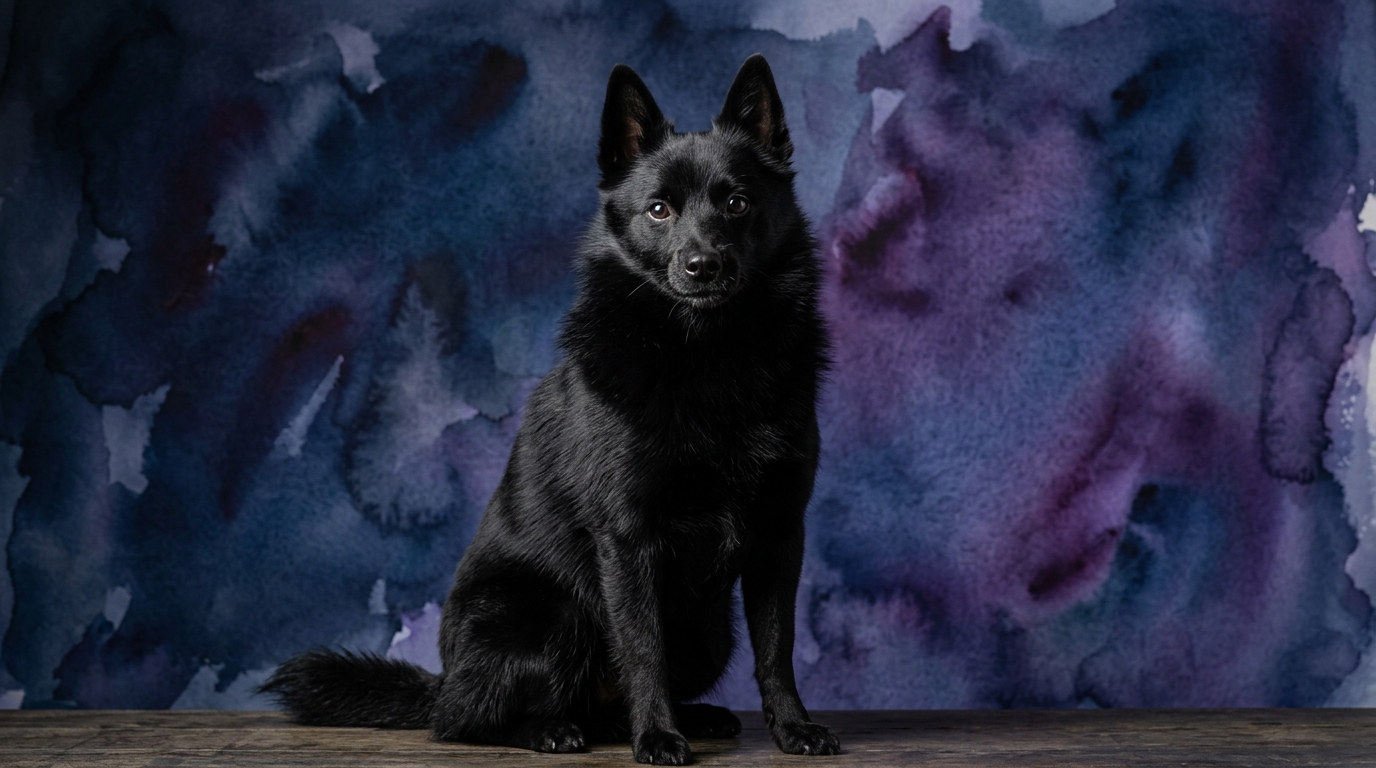
Side-by-Side IQ Profile: Dachshund vs. Schipperke
Delving into the cognitive makeup of these two distinct breeds, The Cosmic Pet Pet IQ Lab employs a five-dimensional framework to illuminate their individual strengths and challenges, moving beyond simple notions of 'smartness' to understand how they think.
Dachshund (Coren Rank #49): The Tenacious Trailblazer
Problem Solving (4/5): Dachshunds exhibit a remarkable capacity for independent problem-solving, particularly when it aligns with their innate desires. This isn't always about pleasing a human; it's about figuring out how to achieve their own goals, whether that's tunneling under a fence to investigate a scent or strategically positioning themselves to access a forbidden treat. Their solutions are often ingenious and driven by persistent determination.
Training Speed (2/5): While capable of learning, the Dachshund's training speed ranks lower due to their strong-willed nature and deep-seated hound instincts. They can be selective listeners, especially when a compelling scent or a perceived 'mission' takes precedence. Consistent, positive reinforcement and patience are crucial, as they learn at their own pace and often require repetition to solidify commands against their independent streak.
Social Intelligence (3/5): Dachshunds form profound bonds with their chosen family, displaying a keen awareness of human emotions and routines. However, their social intelligence often manifests as a loyalty to their inner circle, sometimes coupled with wariness or aloofness towards strangers. They understand cues but may choose to interpret them through the lens of their own agenda.
Instinctive Drive (5/5): This is where the Dachshund truly shines. Their instinctive drive is exceptionally powerful, rooted in centuries of badger hunting. This translates into an intense prey drive, a formidable nose for tracking, and an unyielding persistence in digging or pursuing a perceived quarry. This drive is a core component of their cognitive makeup, influencing many of their behaviors.
Memory (3/5): Dachshunds possess a functional memory for established routines, favorite people, and locations. However, when it comes to remembering less desirable commands or resisting ingrained instincts, their memory can appear selective. They retain information relevant to their comfort and interests, but consistent reinforcement is key for behaviors that go against their natural inclinations.
Schipperke (Coren Rank #15): The Agile Acquirer
In stark contrast, the Schipperke presents a different cognitive profile, reflecting its history as a vigilant barge dog and companion.
Problem Solving (5/5): Schipperkes are exceptional problem solvers, quickly assessing situations and devising creative, often mischievous, solutions. This might involve figuring out how to open cabinets, navigate complex obstacles, or manipulate their environment to their advantage. Their approach is often characterized by quick thinking and adaptability.
Training Speed (5/5): The Schipperke excels in training speed, absorbing new commands and concepts with remarkable swiftness. They are eager to engage, thrive on mental stimulation, and often enjoy the process of learning new tricks and tasks. Their ability to connect actions with consequences and respond to cues is a significant asset in obedience and advanced training.
Social Intelligence (3/5): Similar to the Dachshund, Schipperkes exhibit a strong social bond with their primary caregivers and are highly attuned to household dynamics. They are alert and observant, making them excellent watchdogs who understand the nuances of their environment. While devoted to family, they can be reserved or cautious around new people, requiring careful socialization.
Instinctive Drive (3/5): The Schipperke’s instinctive drive is moderate compared to the Dachshund. While they possess strong watchdog instincts, a moderate prey drive, and a desire to 'herd' their family, these drives are generally more manageable and less singularly focused than a hound's. Their instincts are channeled more towards vigilance and companionship.
Memory (5/5): Schipperkes boast an outstanding memory. They retain learned commands, routines, and experiences over extended periods, making them reliable in their understanding of expectations. This strong memory contributes significantly to their high training speed and their ability to build a vast repertoire of behaviors.
Where the Dachshund Wins Cognitively
While the Schipperke outranks the Dachshund in overall Coren intelligence, the Dachshund holds a unique cognitive edge in specific domains. Its paramount win lies in Instinctive Drive (5/5), an attribute unmatched by the Schipperke (3/5). This isn't just about physical action; it's a deep-seated cognitive program for independent, persistent action, particularly in scent work and pursuit. A Dachshund's brain is uniquely wired for tenacious, self-directed engagement with the world through its nose and will.
Furthermore, their Problem Solving (4/5), while numerically lower than the Schipperke's, operates from a different paradigm. The Dachshund excels at goal-oriented problem-solving driven by an internal motivation, often requiring significant perseverance. This includes figuring out intricate ways to tunnel under obstacles, follow a faint scent trail for miles, or strategically 'outsmart' a perceived barrier to their objective, demonstrating a singular focus and determination that few breeds can match. This cognitive tenacity makes them formidable in tasks requiring prolonged, independent effort without constant human guidance.
Where the Schipperke Wins Cognitively
The Schipperke's cognitive profile presents a clear advantage in several key areas, making it a distinctly different thinker. Its Training Speed (5/5) is a significant win over the Dachshund's (2/5), indicating a rapid acquisition of new commands and concepts. This breed thrives on learning and quickly connects actions to desired outcomes, making complex training routines a rewarding experience rather than a challenge.
Complementing this is its superior Memory (5/5) compared to the Dachshund's (3/5). Schipperkes retain learned information with remarkable fidelity over long periods, meaning once a behavior is taught, it's firmly embedded. This strong memory, combined with exceptional Problem Solving (5/5), allows them to adapt quickly to new situations, understand complex sequences, and often anticipate human requests. Their problem-solving isn't just about achieving their own goals, but often about understanding and navigating their human environment with cleverness and foresight, contributing to their overall high adaptability and Coren rank of #15, significantly higher than the Dachshund's #49.
Which is Easier to Train and Why?
Based on their cognitive profiles, the Schipperke is unequivocally easier to train than the Dachshund. The Schipperke's exceptional Training Speed (5/5) and Memory (5/5) are the primary drivers of this ease. They possess an innate eagerness to learn and please, quickly grasping new commands and retaining them consistently. Their problem-solving skills are often applied to understanding and mastering training challenges, making them highly responsive to positive reinforcement and structured lessons. A Schipperke typically thrives on mental engagement, viewing training as a stimulating game rather than a chore.
In contrast, the Dachshund's Training Speed (2/5) and Memory (3/5) are compounded by its formidable Instinctive Drive (5/5) and independent problem-solving approach. Training a Dachshund often feels like a negotiation; their minds are frequently preoccupied with scents or perceived 'missions,' leading to selective hearing and a preference for self-directed activity. While capable of learning, their strong will and deeply ingrained hunting instincts mean that consistency, patience, and making training incredibly rewarding are paramount to overcoming their natural inclination to follow their nose or their own agenda rather than a human command. Real behavioral differences include a Schipperke's focused attention on its handler during a training session versus a Dachshund's tendency to suddenly 'tune out' if an interesting scent crosses its path.
Cognitive Profiles and Owner Lifestyles
The ideal owner profile for each breed is shaped significantly by their cognitive leanings and energy levels. For active owners, the Schipperke often presents a more direct match. Their high Problem Solving (5/5) and Training Speed (5/5) mean they thrive on mental and physical engagement, excelling in dog sports like agility, obedience, and rally. An active owner who enjoys structuring daily activities, teaching new tricks, or embarking on varied adventures will find the Schipperke an eager and capable partner. Their energy is often expressed in bursts of enthusiastic participation and a constant readiness for the next challenge.
The Dachshund, while not a marathon runner, also requires an owner prepared to channel its intense Instinctive Drive (5/5) and independent Problem Solving (4/5). An active owner for a Dachshund might be one who enjoys scent work, earth dog trials, or long, exploratory walks where the dog can engage its powerful nose. This breed suits an owner who understands their need for consistent, engaging activity that stimulates their hunting instincts, rather than just repetitive physical exercise. A truly relaxed owner might find the Dachshund's independent streak and potential for destructive digging or barking when under-stimulated quite challenging. Similarly, a relaxed owner might struggle to meet the Schipperke's constant need for mental stimulation and structured engagement, potentially leading to boredom-induced behaviors. Both breeds benefit from owners who are actively involved in their mental lives, albeit in different ways.
The Verdict
Opt for a Dachshund if you appreciate a dog with an independent, tenacious spirit, a profound connection to its ancient instincts, and are prepared to engage with a clever, strong-willed companion that marches to the beat of its own drum. Be ready for patient, consistent training and to provide outlets for their powerful scent drive and digging instincts.
Select a Schipperke if you desire a highly trainable, quick-witted, and adaptable partner eager for mental challenges and structured activities, thriving on learning and forming a vigilant, devoted bond with an engaged owner.
🧠 Find Your Pet's IQ Score
Our Pet IQ Lab assessment covers 25+ tests across 5 cognitive dimensions — personalized to your breed.
Take the Full IQ Test →Frequently Asked Questions
Are Dachshunds truly stubborn during training?
Dachshunds can certainly appear stubborn, primarily due to their high instinctive drive and independent problem-solving nature. They often prioritize following a scent or pursuing their own goals over immediate obedience, requiring consistent, highly rewarding training to overcome these strong natural inclinations.
Do Schipperkes require a lot of mental stimulation?
Yes, Schipperkes thrive on mental stimulation due to their high problem-solving ability and rapid training speed. They enjoy learning new tricks, participating in dog sports, and engaging in puzzle toys, which helps prevent boredom and channel their clever minds constructively.
Which breed is better for first-time dog owners?
The Schipperke, with its high training speed and eager-to-please nature, is generally more forgiving for first-time owners willing to commit to consistent mental and physical engagement. Dachshunds, due to their independent streak and strong instincts, can present more training challenges for novices.