Side-by-Side Cognitive Profiles
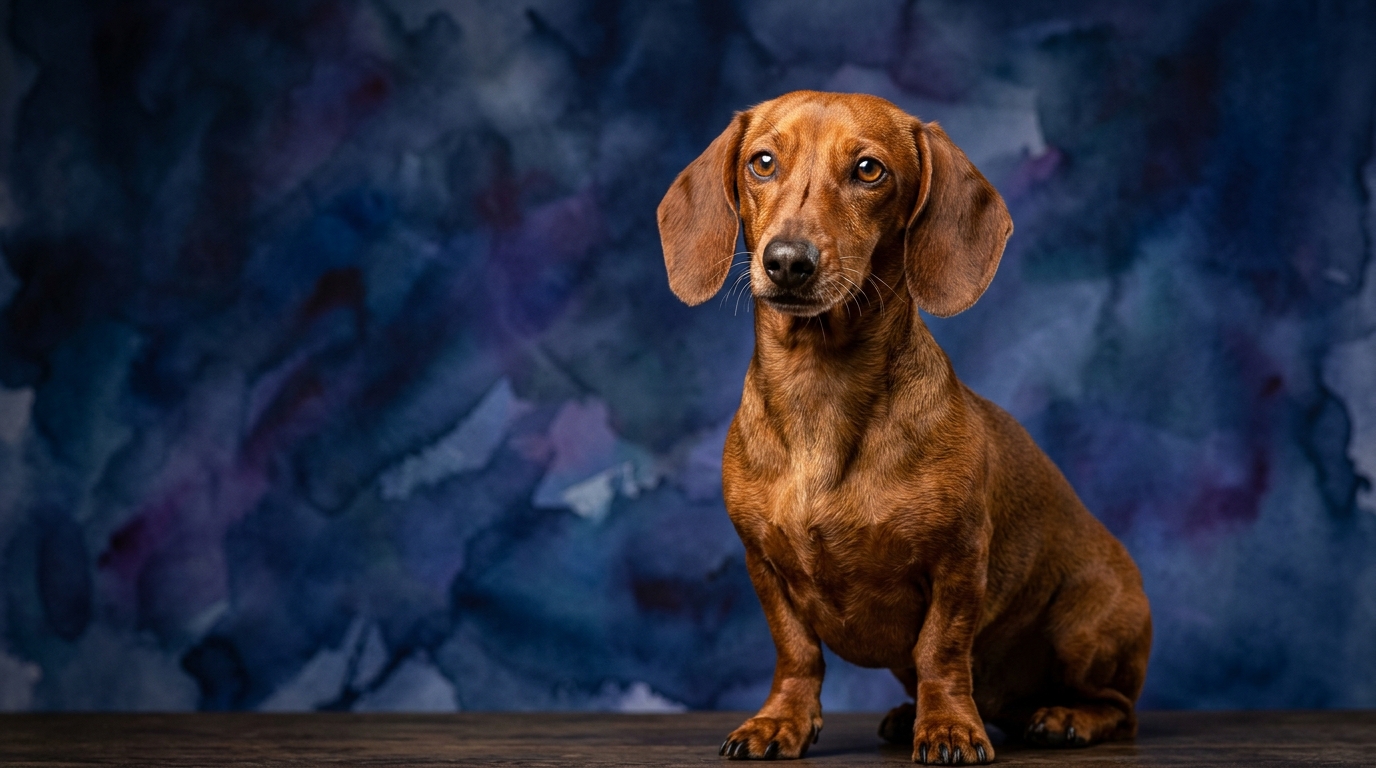
The Cosmic Pet Pet IQ Lab employs a multi-dimensional approach to assess canine intelligence, moving beyond simple obedience to encompass problem-solving, training speed, social intelligence, instinctive drive, and memory. For the Dachshund, classified within the Hound group, its Coren rank of #49 places it squarely in the average working intelligence category, yet its individual cognitive scores tell a more nuanced story. This breed earns a 4/5 in problem-solving, indicating a commendable capacity for figuring things out independently, often through persistence. Its training speed, however, sits at 2/5, suggesting a more deliberate learning pace for conventional commands. Social intelligence is moderate at 3/5, reflecting an ability to understand human cues but perhaps with a degree of independence. A striking 5/5 in instinctive drive highlights its powerful, innate urge to hunt and explore, a cornerstone of its original purpose, while memory scores at 3/5, meaning it retains information adequately but might require consistent reinforcement.
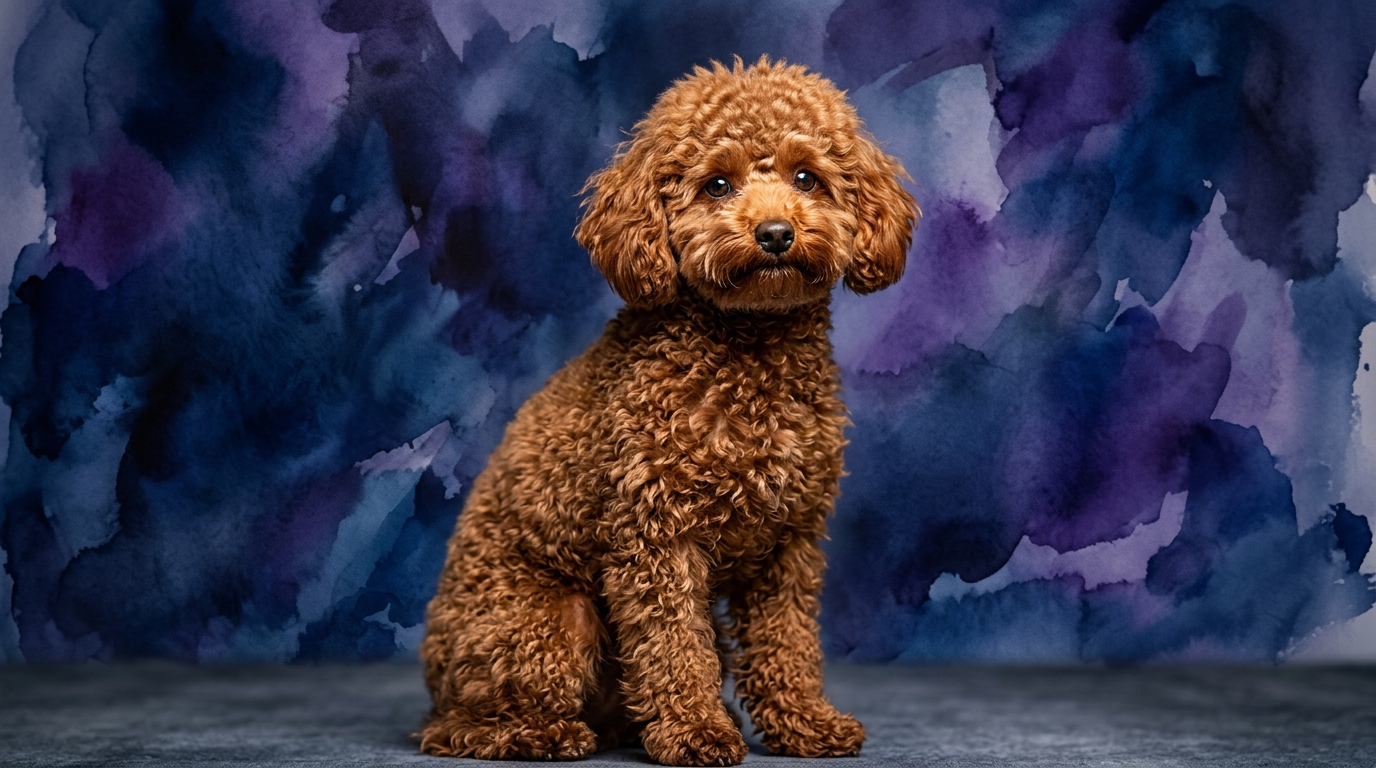
In stark contrast, the Toy Poodle, a member of the Toy group with a Coren rank of #2, showcases a distinctly different cognitive blueprint. This breed excels with a perfect 5/5 in problem-solving, demonstrating a remarkable aptitude for complex challenges and adaptive thinking. Its training speed is equally impressive at 5/5, indicating an exceptional ability to grasp and execute new commands with minimal repetition. Social intelligence matches the Dachshund at 3/5, showing a capacity for connection and understanding human interaction. However, its instinctive drive registers at a moderate 3/5, reflecting a diminished hunting instinct compared to its larger ancestors or the Dachshund. The Toy Poodle truly shines in memory, scoring a top-tier 5/5, signifying an extraordinary ability to recall learned behaviors and past experiences over long periods.
Where the Dachshund Excels Cognitively
The Dachshund's cognitive strengths are deeply rooted in its heritage as a badger hunter, demanding a specific kind of wit and tenacity. Its 4/5 rating in problem-solving isn't about performing complex tricks on command, but rather about independent, persistent strategizing when faced with a goal, particularly one involving scent or burrowing. A Dachshund excels at figuring out how to get to a perceived 'prey' or hidden treat, often employing creative, albeit sometimes stubborn, methods. This manifests as a determined pursuit of a scent trail or an ingenious way to tunnel under a blanket to retrieve a toy.
Perhaps the Dachshund's most defining cognitive attribute is its 5/5 instinctive drive. This isn't merely a physical urge; it's a powerful cognitive motivator. This intense drive means they are hyper-focused on their environment, constantly processing scents and sounds, and exhibiting an unwavering dedication to their perceived 'mission.' While this can present training challenges, it also means a Dachshund is exceptionally good at activities that tap into this innate ability, such as scent work or earthdog trials, where their natural intelligence for tracking and exploring underground tunnels comes to the forefront.
Where the Toy Poodle Excels Cognitively
The Toy Poodle's cognitive prowess truly shines in areas that demand rapid assimilation of information and flexible application of knowledge. Its perfect 5/5 score in problem-solving indicates an exceptional ability to analyze new situations and devise effective solutions quickly. This can be seen in their aptitude for complex puzzle toys, their capacity to learn multi-step commands, or even their ability to adapt to new environments and routines with remarkable ease. They don't just solve problems; they often approach them with an inquisitive and efficient mindset.
Complementing this problem-solving ability are the Toy Poodle's stellar scores in training speed (5/5) and memory (5/5). These two dimensions work in tandem, allowing them to pick up new commands or tricks with astonishing speed and retain that information for extended periods, often requiring very few repetitions. This makes them highly adaptable to various training disciplines, from advanced obedience to agility, where a sequence of commands and obstacles must be learned and remembered precisely. Their strong memory also means they build upon past experiences, quickly learning what behaviors yield rewards and which do not, making them highly responsive to consistent training.
Trainability: Dachshund vs. Toy Poodle
When it comes to ease of training, the Toy Poodle clearly holds an advantage over the Dachshund due to fundamental differences in their cognitive profiles. The Toy Poodle's 5/5 training speed means they are exceptionally quick learners, eager to please and highly motivated by positive reinforcement. They grasp new commands, tricks, and routines with minimal repetition, often appearing to anticipate what's expected of them. Their 5/5 memory ensures that once learned, these behaviors are retained, making consistent, reliable performance achievable. Owners often find Toy Poodles to be highly cooperative and responsive, making training a rewarding and often swift process, even for complex tasks.
The Dachshund, with its 2/5 training speed and dominant 5/5 instinctive drive, presents a different set of training considerations. While certainly capable of learning, their strong independent nature and ingrained drive to follow scents mean they can be easily distracted and often prioritize their own agenda over human commands. They might understand what you want but choose to ignore it if a more compelling scent or activity presents itself. This requires a patient, consistent, and creative training approach that works *with* their instincts rather than against them, often incorporating their love for scent work into training games to keep them engaged. Their 3/5 memory means consistency is key; lapses in reinforcement might lead to behaviors needing re-teaching.
Lifestyle Suitability: Active vs. Relaxed Owners
The distinct cognitive profiles of the Dachshund and Toy Poodle lend themselves to different owner lifestyles. For owners seeking a companion for a more relaxed pace, but who appreciate an independent, curious mind, the Dachshund might be an ideal fit. While they possess a formidable instinctive drive and require daily mental and physical stimulation to prevent boredom, their energy bursts are often followed by periods of contented lounging. Owners who enjoy engaging in scent games, providing opportunities for controlled digging, and appreciating a dog with a strong, distinctive personality will find the Dachshund's cognitive makeup a delightful match. They thrive with owners who understand and respect their hound nature and are prepared for a dog that sometimes operates on its own terms.
Conversely, the Toy Poodle is exceptionally well-suited for active owners who relish engaging their canine companion in a variety of activities that leverage their sharp intellect. Their high problem-solving ability, rapid training speed, and excellent memory make them superb candidates for dog sports like agility, competitive obedience, or even advanced trick training. Owners who enjoy consistent training, mental challenges, and a dog that thrives on learning new things will find the Toy Poodle's cognitive strengths incredibly rewarding. They are eager participants in family activities and excel in environments where their brainpower is regularly stimulated, making them a vibrant companion for dynamic households.
The Verdict
Choose a Dachshund if you admire a tenacious, independent spirit with a powerful instinctive drive, and are prepared to engage their problem-solving skills through scent work and creative, patient training.
Opt for a Toy Poodle if you desire a highly trainable, quick-learning companion with an exceptional memory, eager to participate in diverse mental and physical challenges.
🧠 Find Your Pet's IQ Score
Our Pet IQ Lab assessment covers 25+ tests across 5 cognitive dimensions — personalized to your breed.
Take the Full IQ Test →Frequently Asked Questions
Are Dachshunds stubborn?
Dachshunds are often perceived as stubborn due to their strong instinctive drive (5/5) and lower training speed (2/5). They are highly focused on their own interests, particularly scents, which can make them less inclined to follow commands if something more stimulating catches their attention. This isn't a lack of understanding, but rather a prioritization of their innate drives.
Can Toy Poodles learn complex tricks?
Absolutely. With a 5/5 in problem-solving, 5/5 in training speed, and 5/5 in memory, Toy Poodles are exceptionally adept at learning complex tricks and multi-step commands. Their eagerness to learn and retain information makes them excellent candidates for advanced obedience, agility, and intricate trick training routines.
Which breed is better for first-time dog owners?
For first-time dog owners, the Toy Poodle is generally easier due to its high training speed and memory, making the learning process for both dog and owner more straightforward. Dachshunds, with their independent nature and strong instinctive drive, require more patience and a consistent, creative approach, which can be challenging for those new to dog ownership.