
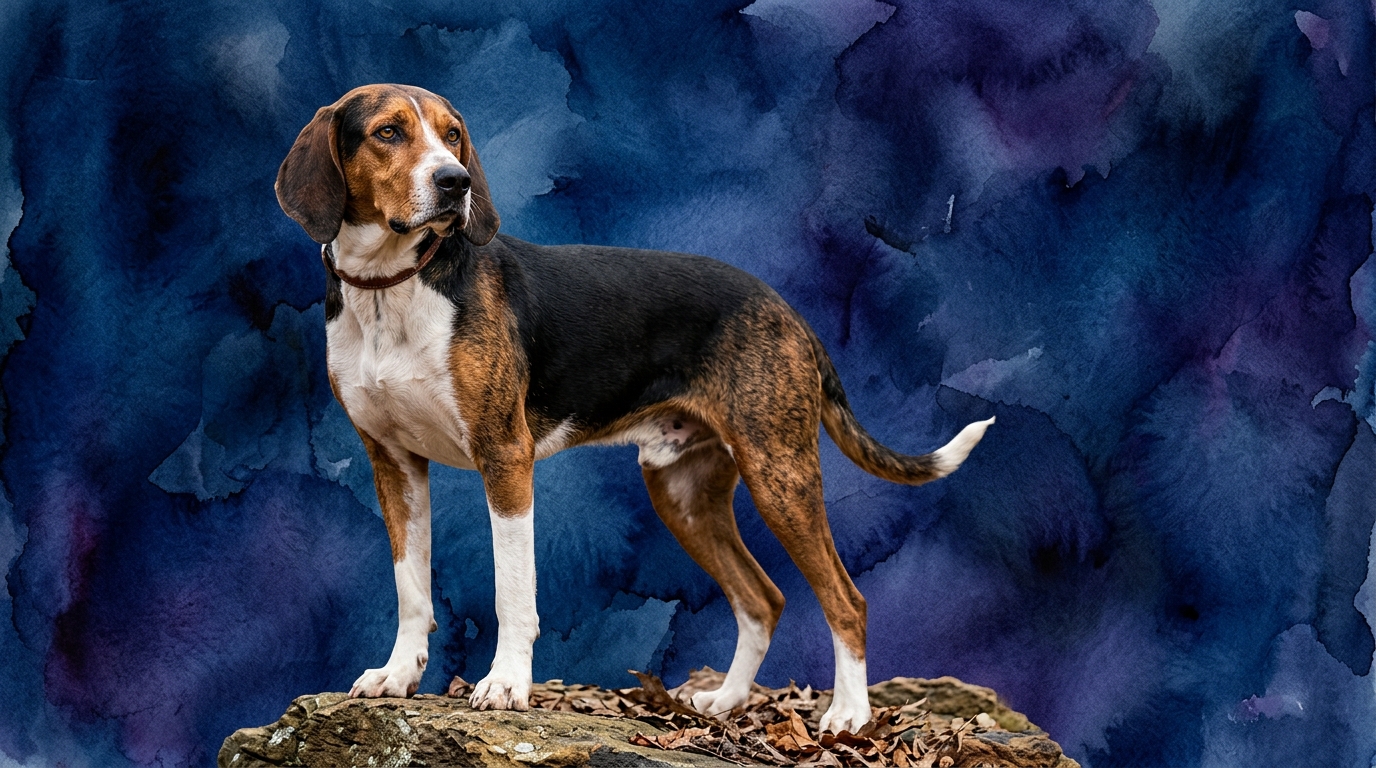
Side-by-Side IQ Profile: Dachshund vs. Treeing Walker Coonhound
At The Cosmic Pet Pet IQ Lab, we evaluate canine intelligence across five key dimensions. For the Dachshund, with a Coren rank of #49, their profile highlights a distinct specialization: Problem Solving 4/5, Training Speed 2/5, Social Intelligence 3/5, Instinctive Drive 5/5, and Memory 3/5. This paints a picture of a dog with profound independent problem-solving abilities and an intense, unwavering drive.
The Treeing Walker Coonhound, while not Coren-ranked, presents a different cognitive blueprint: Problem Solving 3/5, Training Speed 3/5, Social Intelligence 3/5, Instinctive Drive 3/5, and Memory 3/5. This breed exhibits a more balanced profile across the board, reflecting their role in sustained, cooperative hunting efforts rather than solitary, specialized tasks.
Delving deeper into the Dachshund's scores, their 4/5 in Problem Solving reflects exceptional ingenuity in navigating complex spaces, such as burrows, and devising direct strategies to achieve goals. This is practical, goal-oriented intelligence honed for independent hunting. Their 2/5 in Training Speed stems from a strong will and inherent independence, often leading them to prioritize instincts over commands, especially when a compelling scent is present. Social Intelligence at 3/5 means they form deep bonds with family, understanding immediate social cues, yet can be less inclined towards broad social conformity, often preferring familiar company. An Instinctive Drive of 5/5 signifies a profound, unwavering urge to hunt, dig, and follow scents, forming the core of their relentless pursuit and mental fortitude. Finally, their Memory at 3/5 indicates a good recall for places, routines, and 'prey' locations, primarily linked to their strong instinctive motivations.
For the Treeing Walker Coonhound, a Problem Solving score of 3/5 shows effectiveness at interpreting intricate scent trails and navigating diverse terrain to locate prey, focusing on sustained tracking rather than devising novel solutions. Their Training Speed of 3/5 suggests they are generally more amenable to training than many hounds, learning commands at a moderate pace, particularly with motivation from scent work or positive reinforcement. A Social Intelligence score of 3/5 highlights balanced social acumen, capable of effective pack work and forming strong, affectionate bonds with humans, understanding group dynamics. An Instinctive Drive of 3/5 indicates a strong prey drive channeled into sustained, cooperative efforts, with a specific 'treeing' instinct that is less broadly dominant than the Dachshund's general hunting drive. Their Memory at 3/5 means they maintain a solid memory for scent patterns, routes, and hunting grounds, with generally reliable recall in non-distracting environments once commands are learned.
Where the Dachshund Excels Cognitively
Dachshunds demonstrate superior cognitive strength in two key areas. Their Problem Solving (4/5) is particularly adept at intricate, goal-oriented tasks, such as navigating complex subterranean networks to corner prey. This translates to an impressive ability to figure out how to access hidden items or escape enclosures, showcasing determined, adaptive thinking driven by a powerful internal motivation. Their solutions are often direct and tenacious, reflecting their badger-hunting heritage.
Furthermore, the sheer intensity of the Dachshund's Instinctive Drive (5/5) is unparalleled in this comparison. This isn't merely a physical attribute, but a mental fortitude allowing them to maintain singular focus on an objective, persevering in tasks long after other breeds might yield. This potent drive, while sometimes challenging for owners, is a testament to their specialized intelligence for independent, persistent hunting.
Where the Treeing Walker Coonhound Excels Cognitively
The Treeing Walker Coonhound's cognitive strengths lie in their more balanced trainability (3/5) and social cooperation (3/5), crucial for their historical cooperative hunting. Their slightly higher Training Speed score reflects a greater willingness to work alongside humans and respond to cues, making them generally more responsive in structured training sessions. This isn't about raw intellectual power, but about a cognitive disposition that values teamwork and understands human direction within a hunting context.
Additionally, their advantage is in sustained focus and endurance for complex tracking. While their individual scores might not always be numerically higher, their Problem Solving (3/5), Instinctive Drive (3/5), and Memory (3/5) work in concert to manage incredibly intricate scent trails over vast distances. This requires a unique cognitive endurance and the ability to maintain a 'mental map' of their environment and the quarry's path, a different kind of sophisticated intelligence compared to the Dachshund's direct, close-quarters ingenuity.
Trainability: Dachshund vs. Treeing Walker Coonhound
The Treeing Walker Coonhound is generally considered easier to train than the Dachshund, primarily due to their higher Training Speed score (3/5 vs 2/5) and their history of cooperative hunting. Treeing Walkers, while still possessing a strong hound nose, are often more eager to please and more responsive to their handlers' commands, especially when training incorporates scent work or positive reinforcement. They learn new commands at a moderate pace and, once a concept is grasped, are more likely to consistently apply it.
In contrast, the Dachshund's lower Training Speed score reflects their inherent independence and strong will. Bred to make decisions autonomously in underground tunnels, they often prioritize their own instincts—like following a compelling scent or digging—over human directives. While capable of learning a wide array of commands, their execution can be selective; they might 'know' a command but choose not to perform it if something more interesting captures their attention. This stubborn streak isn't a lack of intelligence, but a different cognitive wiring geared towards self-reliance rather than biddability, making training a more patient and persistent endeavor.
Lifestyle Match: Active vs. Relaxed Owners
The Treeing Walker Coonhound is unequivocally suited for active owners. Their breed history as endurance hunters means they possess significant stamina and require substantial physical exercise to remain content and well-behaved. Daily long walks, runs, hikes, or dedicated scent work sessions are essential. Owners who enjoy outdoor activities and can provide consistent, vigorous outlets for their hound's energy and tracking instincts will find them a rewarding companion. Without sufficient exercise, their pent-up energy can manifest as destructive behaviors or excessive vocalization.
The Dachshund, while capable of bursts of activity and requiring regular walks, can adapt more readily to relaxed owners, provided their mental stimulation needs are met. They enjoy exploring and 'hunting' in the backyard, but are also content to curl up on the sofa. Their exercise needs are moderate compared to the Coonhound, but their strong instinctive drive (5/5) means they still need mental engagement, such as puzzle toys, supervised digging opportunities, or scent games, to prevent boredom. A relaxed owner who understands the need for mental enrichment and can manage their independent streak will find a loyal, charming companion.
The Verdict
If you appreciate a dog with tenacious problem-solving skills and a fierce, independent spirit, and are prepared to manage a strong instinctive drive with consistent, patient training and plenty of mental enrichment, the Dachshund is an excellent choice. They thrive with owners who understand their unique blend of courage and charm, capable of both adventure and cozy companionship.
Opt for the Treeing Walker Coonhound if you lead an active lifestyle, seeking an affectionate, cooperative partner for extensive outdoor activities and scent work. Their balanced trainability and sustained focus make them a rewarding companion for owners who can provide ample physical engagement and appreciate a dog with remarkable endurance and a strong pack mentality.
🧠 Find Your Pet's IQ Score
Our Pet IQ Lab assessment covers 25+ tests across 5 cognitive dimensions — personalized to your breed.
Take the Full IQ Test →Frequently Asked Questions
Are Dachshunds difficult to train because of their problem-solving ability?
Dachshunds are not difficult to train due to a lack of intelligence, but because their strong independent problem-solving and intense instinctive drive often lead them to prioritize their own internal motivations over human commands. Effective training requires patience, consistency, and making desired behaviors more rewarding than their innate impulses.
Do Treeing Walker Coonhounds need to hunt to be happy?
Treeing Walker Coonhounds don't require live hunting to be happy, but they critically need appropriate outlets for their powerful scenting and tracking instincts. Engaging them in activities like scent work, tracking trials, or even long, exploratory walks where they can follow interesting smells, is vital for their mental and physical well-being.
Can a Dachshund and a Treeing Walker Coonhound live together peacefully?
Yes, a Dachshund and a Treeing Walker Coonhound can coexist peacefully, particularly with proper introductions and if raised together. While they have different energy levels and temperaments, managing the Coonhound's exercise needs and the Dachshund's independent streak can ensure a harmonious household for both breeds.