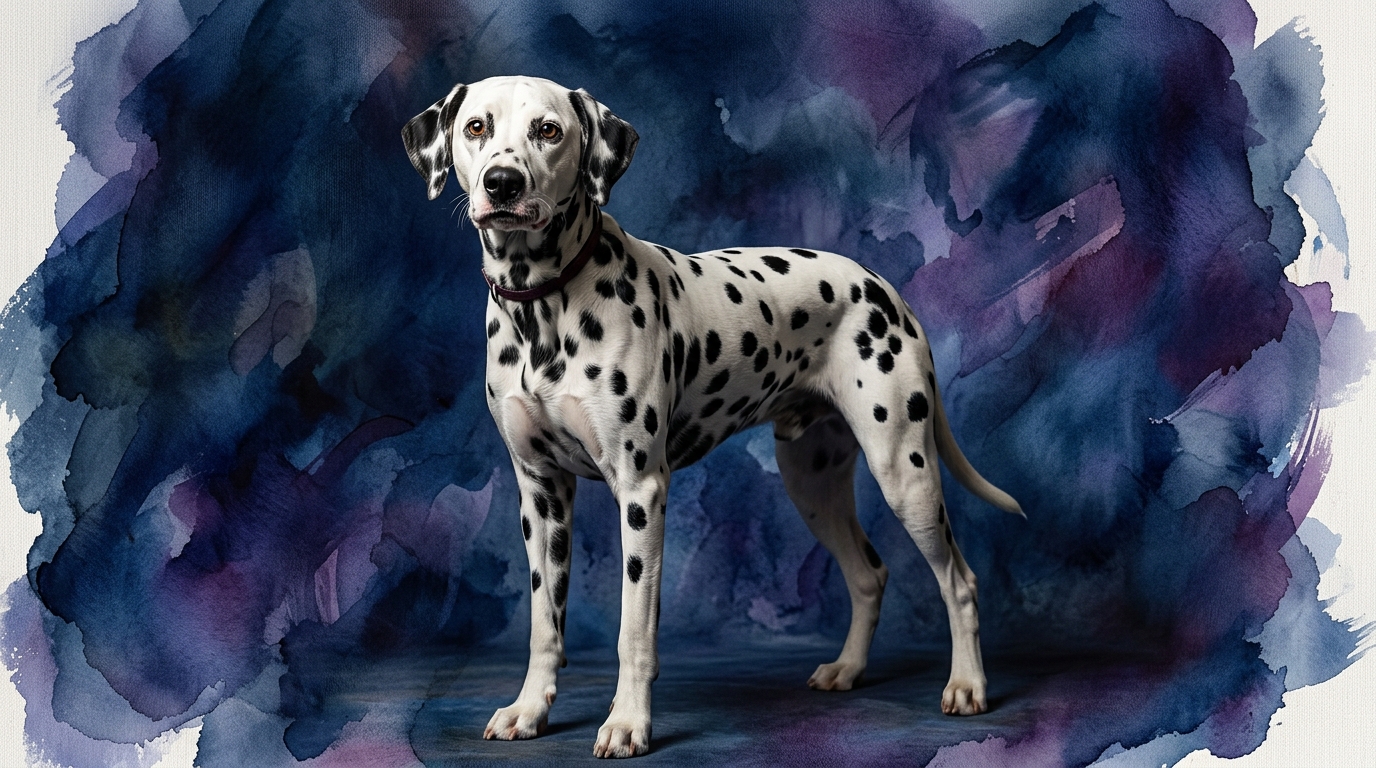
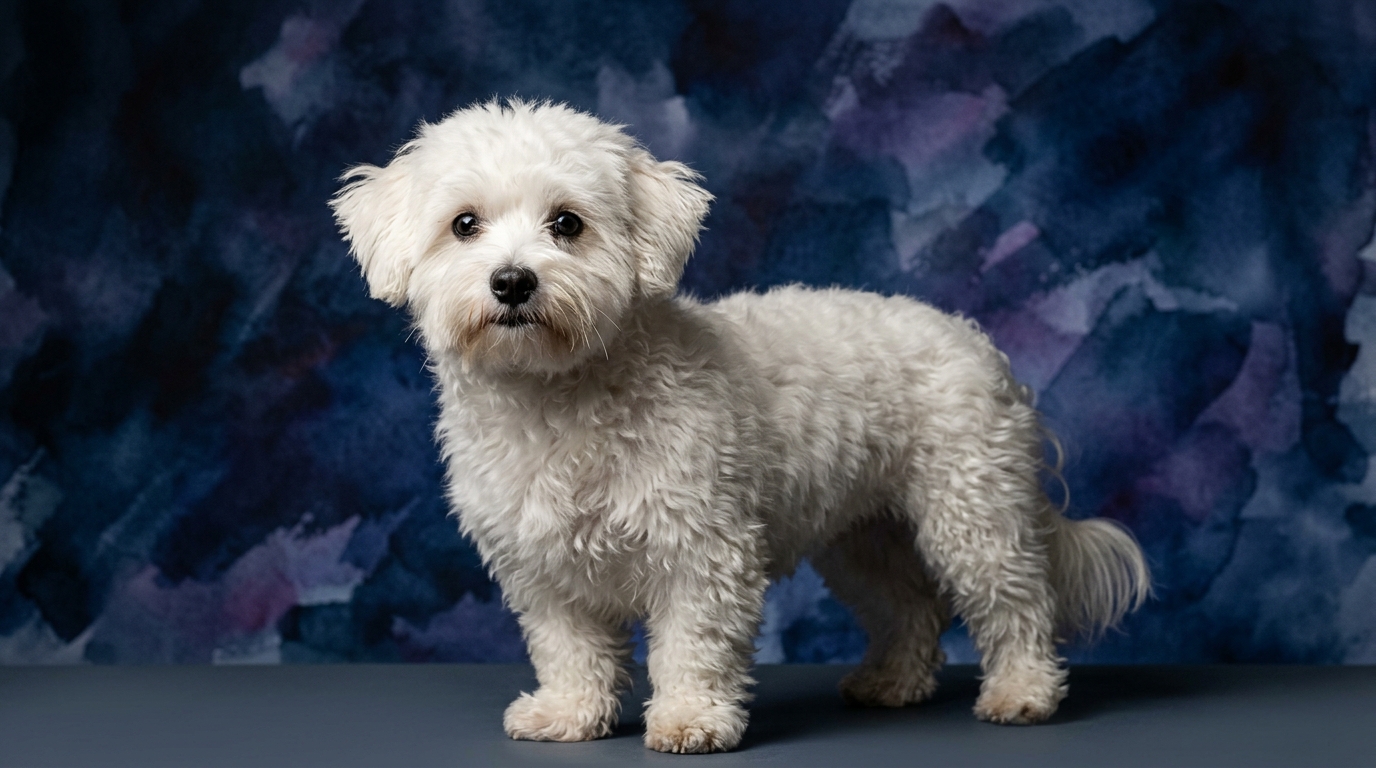
Side-by-Side Cognitive Profile: Dalmatian vs. Coton de Tuléar
At The Cosmic Pet Pet IQ Lab, we evaluate canine intelligence across five key dimensions. Let's examine how the Dalmatian and Coton de Tuléar stack up in their cognitive capabilities.
For the Dalmatian (Coren Rank #39): This placement within Stanley Coren's "Above Average Working Dog" category signifies a breed capable of understanding new commands with fewer repetitions and responding reliably to known cues. Their historical duties demanded a certain intellectual robustness. Their Problem Solving is rated 3/5, indicating a moderate aptitude for navigating novel situations and devising solutions to environmental puzzles. While not typically strategizing complex escape routes, they can adapt to new routines and figure out basic challenges, often with a reliance on their human counterparts for direction. Training Speed is 3/5; they acquire new commands at a moderate pace, often needing consistent, positive reinforcement and engaging methods to solidify learning. Their independent streak and occasional distractibility mean that while they are capable learners, progress might not be instantaneous. Social Intelligence is 4/5; these dogs excel at reading human cues and responding to social dynamics within a family unit, often forming strong, perceptive bonds. Their keen understanding of human moods and intentions allows them to integrate smoothly into social structures, provided they are well-socialized. Instinctive Drive is 4/5; the Dalmatian possesses a robust instinctive drive, particularly their historical endurance for running alongside carriages and guarding. This manifests as a strong prey drive, a desire for physical activity, and a need for purpose-driven engagement to feel fulfilled. Memory is 4/5; Dalmatians exhibit strong memory retention, recalling learned commands, routines, and experiences over extended periods. This contributes significantly to their reliability once a behavior is firmly established and consistently reinforced, making long-term training effective.
For the Coton de Tuléar (Not Coren-ranked): The Coton de Tuléar, primarily developed as a companion and lapdog, is not typically found in Coren's working intelligence rankings, which focus on command obedience. Their cognitive strengths are geared towards domestic interaction rather than complex task execution. Their Problem Solving is rated 3/5, showing a moderate ability to solve problems, often utilizing their observational skills and charming personalities to achieve desired outcomes, such as nudging a toy out from under furniture or figuring out how to get extra attention. They are clever within their immediate environment. Training Speed is 3/5; they learn at a steady pace, responding well to engaging, reward-based training sessions that keep their attention. Their eagerness to please and affectionate nature make them receptive, though they can possess a mischievous streak that sometimes tests boundaries. Social Intelligence is 3/5; Cotons possess a good understanding of social cues and thrive on interaction, forming close, reciprocal bonds with their families. Their social cognition is primarily focused on companionship, understanding household dynamics, and maintaining their place within the human family unit. Instinctive Drive is 3/5; their instinctive drives are moderately developed, often manifesting as a desire for companionship, playful chasing, and alert barking to announce arrivals. They lack the intense working or hunting drives seen in many other breeds, preferring to direct their energy towards their human interactions. Memory is 3/5; Cotons have a good memory for routines, people, and pleasant experiences. They can retain commands effectively, especially when reinforced with positive associations and consistency, though perhaps not with the same depth or immediate recall required for intricate, multi-step tasks.
Where the Dalmatian Excels Cognitively
Dalmatians shine with their superior social intelligence (4/5), robust instinctive drive (4/5), and excellent memory (4/5). Their historical role as coach dogs demanded a profound understanding of human directions, the ability to navigate complex, busy environments, and a reliable memory for routes and commands. This heritage translates into a dog that often anticipates needs, responds keenly to subtle cues, and adapts to varied social settings with a clear understanding of decorum, especially when consistently socialized. The strong instinctive drive also means they possess an inherent motivation for purposeful activity, making them excellent candidates for advanced obedience, agility, or even scent work, where sustained focus, problem-solving, and a clear objective are paramount. Their memory score of 4/5 means that once a task or routine is learned, it is deeply ingrained, allowing for consistent and reliable performance over extended periods, which is invaluable in any structured activity or complex training regimen.
Where the Coton de Tuléar Excels Cognitively
While the Coton de Tuléar's individual scores are generally lower than the Dalmatian's in working intelligence metrics, their cognitive profile is perfectly suited for their primary role as a devoted companion, excelling in areas that foster close human-animal bonds. Their problem-solving (3/5) and training speed (3/5) scores indicate a cleverness that, when combined with their social intelligence (3/5), allows them to master household routines, adapt to family life, and charmingly manipulate situations to their advantage. Cotons are masters of observation, often learning by watching their human family, quickly understanding cause-and-effect within the home environment, such as how to get attention, initiate play, or even open a cabinet door. Their moderate instinctive drive (3/5) means they are less prone to independent pursuits or intense working behaviors, instead directing their focus primarily towards their human companions, making them exceptionally present, engaged, and emotionally attuned family members. This strong emphasis on domestic interaction, rather than external tasks, allows for a nuanced understanding of their immediate social world and the emotional states of their people.
Which is Easier to Train and Why?
Both breeds share a problem-solving score of 3/5 and a training speed of 3/5, suggesting they learn at a comparable pace, yet their underlying behavioral differences significantly impact the training experience. The Coton de Tuléar, with its social intelligence of 3/5 and moderate instinctive drive, is typically perceived as easier to train in a home environment due to its inherent desire for companionship and lower drive for independent action. They respond readily to positive reinforcement, often eager to please and quick to pick up on household rules and routines, driven by the reward of attention, affection, and treats. Their "velcro dog" nature means they naturally want to be with their people, which can make recall, attention-seeking behaviors, and house-training simpler to teach, as they are highly motivated by human presence. In contrast, the Dalmatian, while possessing higher social intelligence (4/5) and memory (4/5), also has a much stronger instinctive drive (4/5) and a history of independent work. This can translate into a dog with a more independent, sometimes headstrong spirit, potentially more easily distracted by external stimuli or their own powerful instincts, such as scent trails or the urge to run. Training a Dalmatian often requires more consistency, firm but positive guidance, and an understanding of their deep-seated need for intense exercise and focused mental engagement to channel their drives productively. Without this structured outlet, their intelligence can manifest as stubbornness, boredom, or an inclination to follow their own agenda, making training feel more challenging.
Matching Breeds to Owner Lifestyles: Active vs. Relaxed
The Dalmatian is unequivocally suited for active owners who can consistently meet its substantial physical and mental exercise requirements. Their instinctive drive (4/5) for endurance, speed, and purpose means they thrive on long runs, challenging hikes, or structured dog sports like agility, canicross, flyball, or advanced obedience. Owners who enjoy a highly active lifestyle and are prepared to integrate their dog into daily, vigorous exercise routines will find a devoted, energetic, and engaged companion. Their cognitive capacity for memory (4/5) and social intelligence (4/5) means they also need significant mental stimulation beyond physical exertion; puzzle toys, scent work, complex trick training, and ongoing learning challenges are crucial to prevent boredom and potential destructive behaviors. Conversely, the Coton de Tuléar, with its moderate instinctive drive (3/5) and primary focus on companionship, is an ideal match for more relaxed owners. While they certainly enjoy play and short walks, their exercise needs are far less demanding than a Dalmatian's. Their social intelligence (3/5) ensures they are content to be close to their human family, participating in daily life from the comfort of a lap or a nearby bed. They are satisfied with indoor games, short strolls around the neighborhood, and consistent human interaction, making them excellent companions for individuals or families seeking a less physically intensive but equally affectionate and present canine presence.
The Verdict
Opt for a Dalmatian if you lead an active lifestyle, are prepared for consistent, engaging training, and desire a dog with strong drives for purposeful activity and a deep understanding of social dynamics.
Select a Coton de Tuléar if you seek a devoted, charming companion with moderate exercise needs, who thrives on close family interaction and will happily participate in a more relaxed daily routine.
🧠 Find Your Pet's IQ Score
Our Pet IQ Lab assessment covers 25+ tests across 5 cognitive dimensions — personalized to your breed.
Take the Full IQ Test →Frequently Asked Questions
Are Dalmatians difficult to train?
Dalmatians are capable learners (training speed 3/5, memory 4/5) but require consistent, positive reinforcement and significant mental and physical engagement due to their strong instinctive drives (4/5). Their independent nature means training must be rewarding and clear and consistent.
Do Coton de Tuléars need a lot of exercise?
Coton de Tuléars have moderate exercise needs (instinctive drive 3/5). Daily walks and indoor play sessions are usually sufficient to keep them content and healthy, making them suitable for less active households. They prioritize human companionship over intense physical exertion.
Which breed is better with children?
Both breeds can be good with children, but their temperaments differ. Dalmatians (social intelligence 4/5) are generally tolerant but need proper socialization and ample exercise to prevent over-exuberance. Cotons (social intelligence 3/5) are affectionate and adaptable, often thriving in a family setting, though their small size requires gentle handling from children to ensure their safety and comfort.