Side-by-Side IQ Profile: Spotting the Nuances
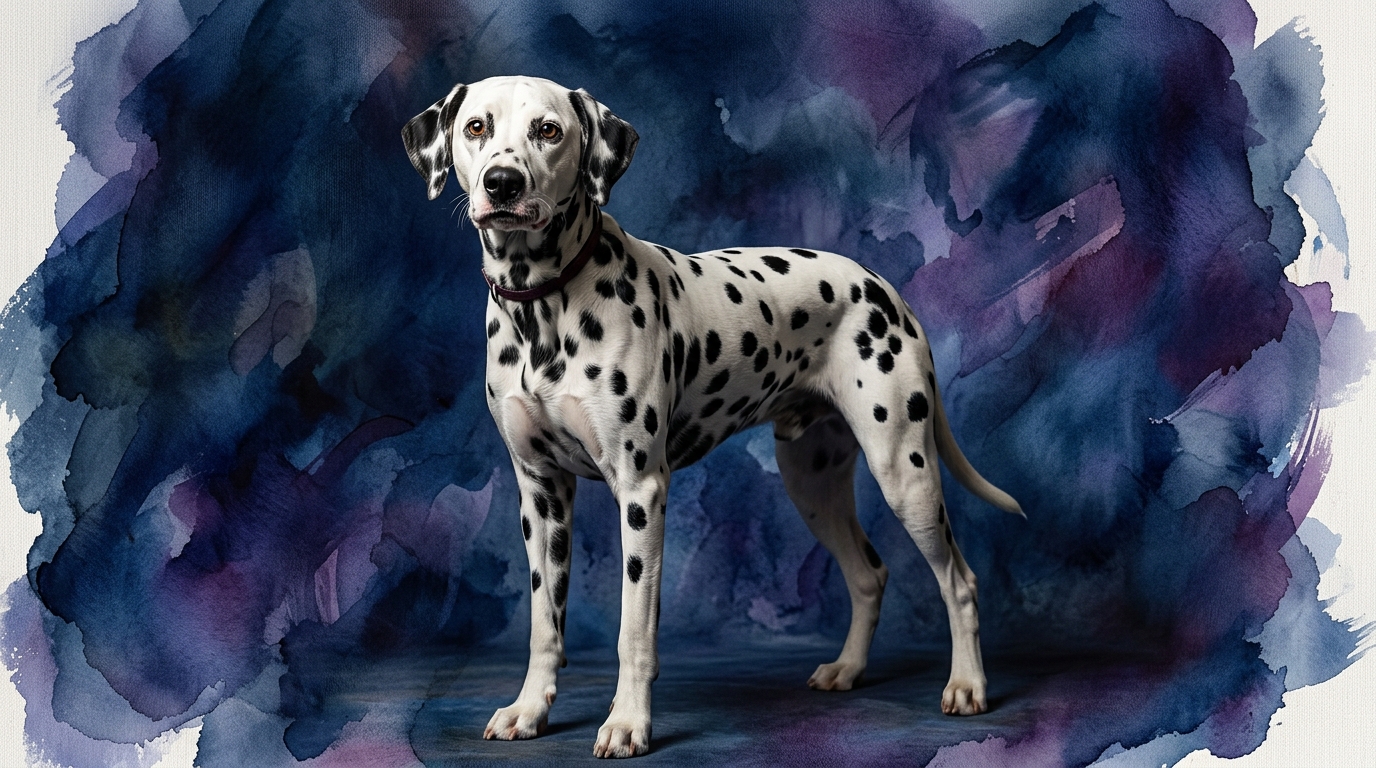
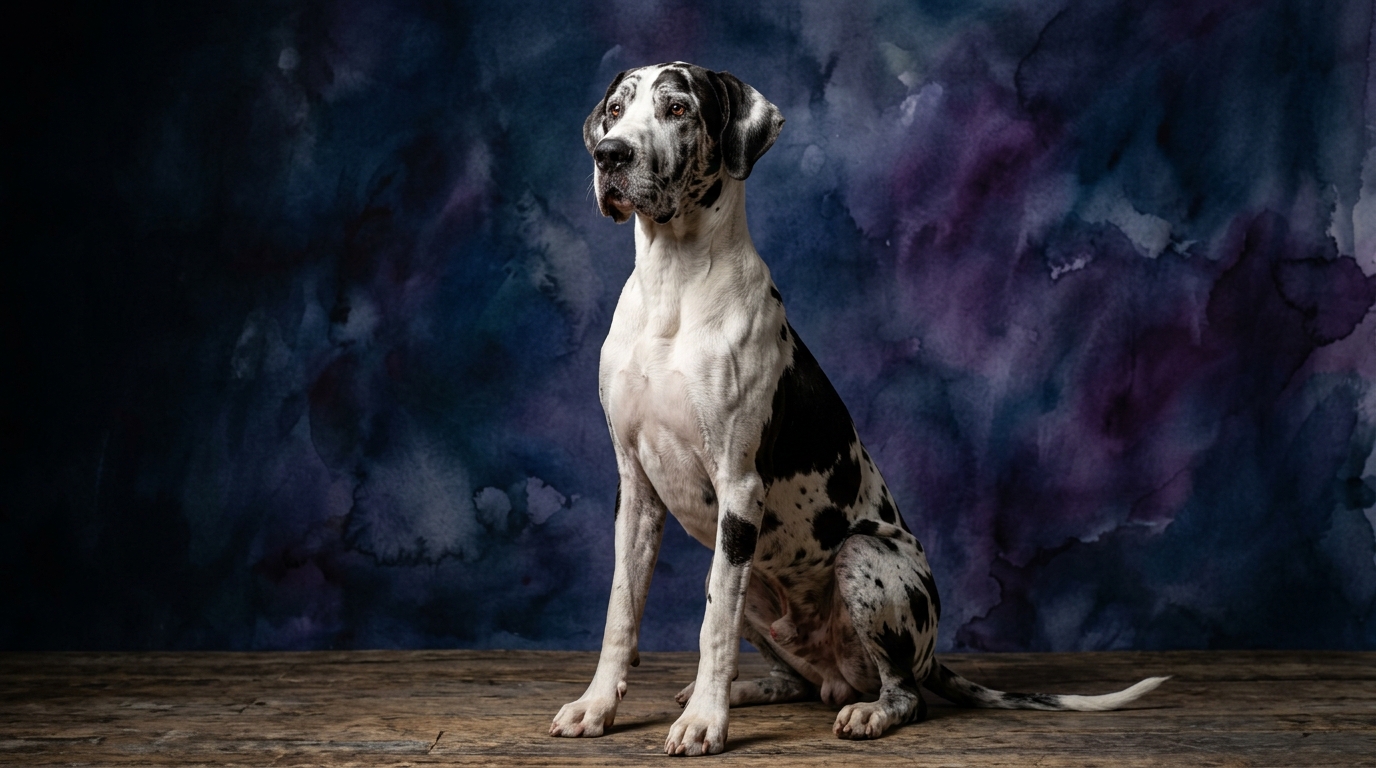
The Cosmic Pet Pet IQ Lab categorizes canine intelligence across five critical dimensions, allowing for a granular comparison of breeds like the Dalmatian and the Great Dane. While their Coren ranks (Dalmatian #39, Great Dane #48) suggest a slight edge for the spotted companion in traditional obedience, a closer look at their individual cognitive scores paints a more detailed picture.
The Dalmatian demonstrates a Problem Solving score of 3 out of 5, indicating a moderate capacity for independently navigating new challenges or figuring out complex tasks. Their Training Speed also stands at 3 out of 5, suggesting they grasp new commands and routines at a steady pace. Where Dalmatians truly shine are in their Social Intelligence (4/5), reflecting a keen understanding of human emotions and social cues, their Instinctive Drive (4/5), which speaks to their strong inherent motivation for activity and purpose, and their Memory (4/5), allowing them to retain learned information and experiences effectively.
In contrast, the Great Dane, while possessing an imposing physical presence, shows a similar Problem Solving ability at 3 out of 5, indicating an equivalent capacity for analytical thought in novel situations. Their Training Speed also matches the Dalmatian's at 3 out of 5, suggesting a comparable rate of learning new behaviors. Like the Dalmatian, Great Danes excel in Social Intelligence (4/5), making them highly attuned to their human companions. However, their Instinctive Drive is rated at 3 out of 5, indicating a slightly lower inherent urge for constant activity or a defined 'job,' and their Memory score stands at 3 out of 5, suggesting information retention is good but not as sharp as their spotted counterparts.
Where the Dalmatian Wins Cognitively
The Dalmatian's cognitive profile reveals clear strengths, particularly in areas of memory and inherent motivation. With a Memory score of 4 out of 5 compared to the Great Dane's 3 out of 5, Dalmatians exhibit a superior ability to recall commands, routines, and past experiences. This means a Dalmatian is more likely to remember complex sequences of actions or retain lessons learned over longer periods, making advanced training or intricate behavioral patterns potentially more solidified once established. Their superior recall can also contribute to better consistency in learned behaviors.
Furthermore, the Dalmatian's Instinctive Drive, scoring a 4 out of 5 against the Great Dane's 3 out of 5, signifies a stronger internal motor and a greater need for purposeful engagement. This isn't just about physical energy; it's a cognitive drive to 'do' something. This higher drive means Dalmatians often possess a more focused determination when pursuing a task, whether it's agility, road work, or a complex scent game. For owners who enjoy engaging their dogs in structured activities that demand sustained attention and motivation, the Dalmatian's higher instinctive drive and robust memory can be a distinct cognitive advantage, allowing them to excel in roles requiring sustained mental effort and recall.
Where the Great Dane Wins Cognitively
While the Great Dane's scores might appear numerically lower in some aspects, their cognitive profile presents a different kind of 'win' that caters to specific owner preferences and lifestyles. Both breeds share an impressive Social Intelligence score of 4 out of 5, demonstrating a profound ability to understand human cues and integrate into family dynamics. For the Great Dane, this high social acumen, combined with a slightly lower Instinctive Drive (3/5), translates into a dog that is often content with companionship rather than constantly seeking a 'job' or high-intensity engagement.
The Great Dane's slightly moderated Instinctive Drive means they are generally less prone to independent pursuits driven by an overwhelming internal urge. This can be a significant cognitive advantage for owners seeking a large, empathetic companion whose primary 'win' is often their calm, observant presence and readiness for relaxed interaction. Their equal Problem Solving (3/5) and Training Speed (3/5) mean they are perfectly capable learners and thinkers, but their overall cognitive energy is often channeled into their social bonds and relaxed environmental observation, making them masters of composed companionship rather than relentless activity. This blend of high social intelligence and a more measured drive allows them to thrive in environments where their gentle giant nature is celebrated without the constant demand for complex mental tasks.
Which is Easier to Train and Why?
When evaluating ease of training, both Dalmatians and Great Danes share a Training Speed score of 3 out of 5, suggesting they both absorb new commands at a similar, respectable pace. However, the nuances lie in their other cognitive dimensions, particularly Instinctive Drive and Memory, which significantly impact the overall training experience. The Dalmatian’s higher Instinctive Drive (4/5) means they possess a strong internal motivation that, while beneficial for focus when channeled, can also manifest as independent thinking or a higher need for consistent mental and physical outlets. If this drive isn't adequately met, training can become more challenging as the Dalmatian might be more prone to creating their own 'fun' or becoming easily distracted by their environment.
Coupled with their superior Memory (4/5), Dalmatians will remember both positive and negative training experiences with greater clarity. This means good training sticks well, but so do bad habits or negative associations. Great Danes, with their slightly lower Instinctive Drive (3/5) and Memory (3/5), might present a somewhat different training journey. While they learn at the same pace, their reduced inherent urge for constant engagement can make them less prone to independent antics, often making them more amenable to instruction in a less demanding environment. Their good social intelligence makes them eager to please, and while their memory isn't as sharp as the Dalmatian's, they are still capable of retaining training effectively. Therefore, for an owner seeking a generally more straightforward training experience with fewer potential diversions arising from intense internal drives, the Great Dane might be perceived as marginally 'easier' due to their more relaxed cognitive disposition, provided consistency is maintained to compensate for slightly lower memory.
Active Owners vs. Relaxed Owners: A Cognitive Match
Matching a dog's cognitive profile to an owner's lifestyle is crucial for a harmonious relationship. For active owners who thrive on engagement and structured activities, the Dalmatian's cognitive makeup is often an ideal fit. Their high Instinctive Drive (4/5) means they genuinely benefit from and enjoy tasks that require sustained mental and physical effort, such as agility, obedience trials, or even long-distance running. Their superior Memory (4/5) allows them to excel in sports or complex routines, remembering intricate patterns and commands with precision. A Dalmatian will actively seek out mental stimulation, and an owner who can provide this through consistent training, puzzle toys, and varied experiences will find a highly responsive and fulfilled companion. They are keen problem-solvers (3/5) and will appreciate opportunities to use their minds to navigate challenges.
Conversely, for more relaxed owners who appreciate a calm, attentive presence without the constant demand for high-octane mental engagement, the Great Dane's cognitive strengths truly shine. While they possess excellent Problem Solving (3/5) and Training Speed (3/5), their slightly lower Instinctive Drive (3/5) means they are often more content to be a companion rather than a constant participant in demanding activities. Their high Social Intelligence (4/5) makes them incredibly attuned to their family's mood and desires, making them empathetic and gentle giants who are happy with leisurely walks and plenty of couch time. For owners who desire a large, gentle dog that offers profound companionship and doesn't require constant mental 'work' to be content, the Great Dane's cognitive profile aligns perfectly with a more laid-back lifestyle, valuing social connection over relentless activity.
The Verdict
Choose the Dalmatian if you're an active owner seeking a driven, mentally sharp companion for structured activities and complex training, appreciating their strong memory and purposeful nature.
Opt for the Great Dane if you desire a gentle, socially intelligent giant whose primary joy is companionship, making them perfect for relaxed owners who value calm presence over constant mental stimulation.
🧠 Find Your Pet's IQ Score
Our Pet IQ Lab assessment covers 25+ tests across 5 cognitive dimensions — personalized to your breed.
Take the Full IQ Test →Frequently Asked Questions
Do Dalmatians need more mental stimulation than Great Danes?
Yes, Dalmatians generally have a higher Instinctive Drive (4/5) and Memory (4/5) compared to Great Danes (3/5 for both). This means Dalmatians typically require more consistent and varied mental challenges to remain content and prevent boredom-related behaviors.
Are Great Danes difficult to train due to their size?
While their size can make physical management a consideration, Great Danes share the same Training Speed (3/5) and Social Intelligence (4/5) as Dalmatians. Their slightly lower Instinctive Drive can actually make them less prone to independent mischief during training, making them responsive and eager learners with consistent, positive reinforcement.
Which breed is better for a first-time dog owner in terms of cognitive demands?
For a first-time owner, the Great Dane might present a slightly less cognitively demanding experience due to their lower Instinctive Drive. While both require training, the Great Dane's more relaxed nature might be more forgiving for someone learning the ropes, whereas the Dalmatian's higher drive requires a more proactive approach to mental engagement.