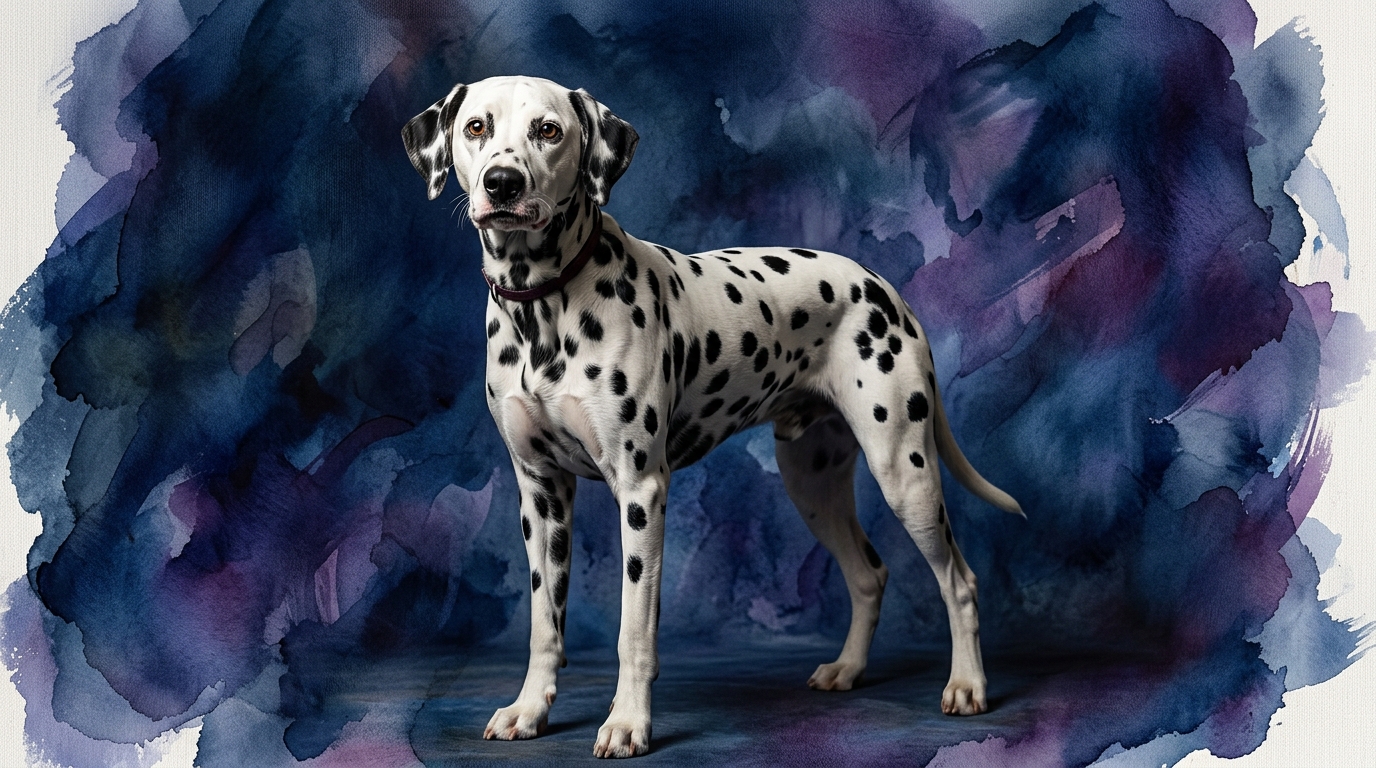
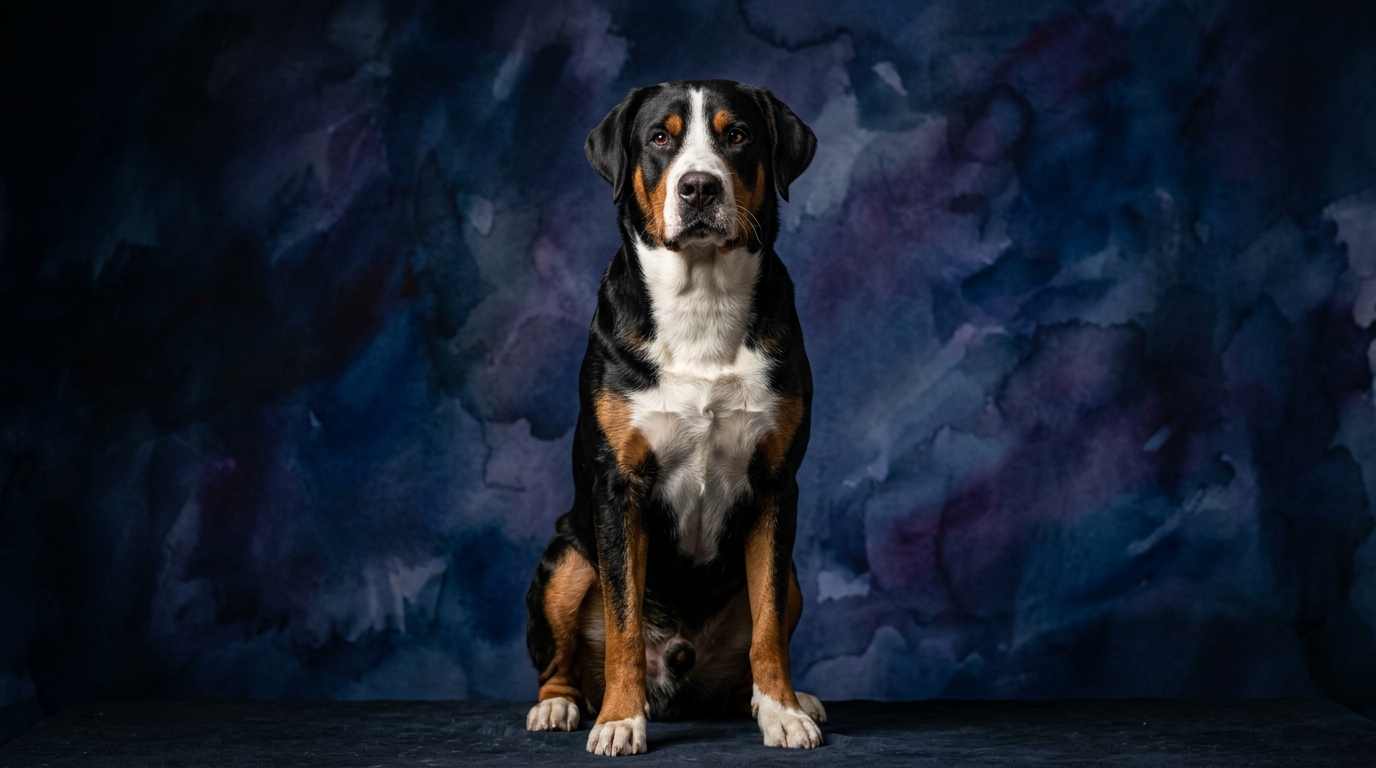
Side-by-Side Cognitive Profile: Dalmatian vs. Greater Swiss Mountain Dog
The Dalmatian, historically tasked with guarding carriages and their occupants, exhibits a cognitive profile reflecting both independence and strong social attunement. Ranked #39 in Coren's intelligence scale for working and obedience, they demonstrate an above-average capacity for understanding new commands. Their Problem Solving is rated 3/5, indicating an ability to navigate moderately complex environmental puzzles or tasks, often with a flair for creative solutions. Training Speed also stands at 3/5, suggesting they grasp new instructions at a steady pace, benefiting greatly from consistent methodology and engaging sessions. A notable strength lies in their Social Intelligence, scoring 4/5, which points to a keen awareness of human emotional states and social cues, fostering deep companionship and responsiveness. Their Instinctive Drive, at 4/5, reveals a powerful urge for sustained activity and a strong prey drive, reflecting their historical role as long-distance escorts and guardians. Finally, their Memory is also a strong 4/5, meaning they retain learned behaviors, specific sequences, and environmental details effectively over time, contributing to their reliability once trained.
In contrast, the Greater Swiss Mountain Dog, a robust working breed from the Swiss Alps, embodies a different set of cognitive priorities, though not formally ranked by Coren. Their Problem Solving ability matches the Dalmatian at 3/5, indicating practical intelligence for tasks like herding, droving, or pulling, often relying on strength, methodical approaches, and a steady disposition. Training Speed is also 3/5, signifying a deliberate learning pace that thrives on clear, patient instruction and positive reinforcement rather than rapid absorption, requiring a consistent, calm approach. Their Social Intelligence is rated 3/5; while deeply loyal and protective of their family, they may be less overtly expressive or attuned to subtle human nuances compared to the Dalmatian, often reserving their affection for their inner circle and being more reserved with strangers. The Instinctive Drive, at 3/5, is geared towards utility—pulling carts, guarding property, and livestock management—rather than high-speed pursuit or endurance, focusing on purposeful work. Their Memory, at 3/5, is reliable for routines, learned commands, and established boundaries, though perhaps less granular in detail retention or spontaneous recall of specific events than their spotted counterpart.
Where the Dalmatian's Cognition Shines Brighter
The Dalmatian's cognitive strengths particularly surface in areas demanding keen social awareness and energetic application. Their Social Intelligence, rated 4/5 compared to the Greater Swiss Mountain Dog's 3/5, means they are often more adept at reading subtle human body language and emotional shifts. This translates into a highly responsive companion who can anticipate needs or react quickly to cues, making them exceptionally interactive in a family setting. This heightened social attunement also contributes to their effectiveness in performance activities where precise timing and connection with a handler are paramount. Furthermore, their superior Instinctive Drive (4/5) and Memory (4/5) make them quick studies in activities requiring sustained focus, endurance, and the recall of complex sequences, such as agility or obedience trials. Their historical role as carriage dogs demanded not only physical stamina but also the cognitive capacity to navigate changing environments while remaining attentive to their charge, a trait still evident in their engagement and adaptability today.
The Greater Swiss Mountain Dog's Unique Cognitive Advantages
While the Greater Swiss Mountain Dog's individual scores might appear slightly lower in some categories, their cognitive profile offers distinct advantages, particularly in roles demanding steadfastness, practical application, and protective instincts. Their Problem Solving (3/5) is less about speed and more about robust, deliberate methods, allowing them to excel at tasks requiring strength and perseverance rather than intricate manipulation. This practical intelligence, combined with their Instinctive Drive (3/5) for utility, makes them highly reliable for activities like carting, drafting, or even as calm, watchful guardians. Unlike the Dalmatian's high-energy pursuit drive, the Swissy's drive is rooted in purpose and protection, leading to a more grounded and less easily distracted approach to tasks. Their Social Intelligence (3/5), while not as effusive, fosters a deep, unwavering loyalty to their family unit, making them dependable protectors who are discerning about strangers but profoundly connected to their inner circle. This blend of practical problem-solving, purposeful drive, and unwavering loyalty defines their unique cognitive strength, making them excellent partners for owners who appreciate a steady and robust companion.
Training Dynamics: Which Breed Learns with Greater Ease?
When it comes to training, the Dalmatian generally presents a more straightforward path for formal obedience due to their higher Coren ranking and superior social intelligence. Their 3/5 Training Speed is coupled with a 4/5 Social Intelligence, meaning they are often eager to please and highly responsive to human feedback, particularly positive reinforcement. They grasp new commands at a decent pace and their strong memory (4/5) ensures retention. However, their high instinctive drive (4/5) means they require consistent mental and physical engagement; an under-stimulated Dalmatian can quickly become bored, leading to selective hearing or the development of undesirable behaviors. In contrast, the Greater Swiss Mountain Dog, with a 3/5 Training Speed and 3/5 Social Intelligence, is a more deliberate learner. They respond best to clear, patient, and consistent instruction, often needing more repetitions to solidify a command. Their independent streak, characteristic of many working breeds, means they might question the immediate benefit of a task, requiring stronger motivation through positive reinforcement centered around their work ethic. While not as quick to pick up subtle cues, their steadfast nature means that once a command is learned, it is typically performed with dependable consistency, especially when tied to a purposeful activity.
Matching Breeds to Lifestyles: Active vs. Relaxed Owners
For owners seeking an intensely interactive and highly active companion, the Dalmatian is often the more suitable choice. Their high instinctive drive (4/5) and boundless energy demand significant daily physical activity, such as long runs, hikes, or participation in dog sports like agility or flyball. They thrive on mental stimulation and consistent engagement, making them ideal for owners who enjoy an energetic lifestyle and are committed to providing structured activities. A truly relaxed or sedentary owner might find a Dalmatian's energy levels overwhelming, potentially leading to destructive behaviors born of boredom. The Greater Swiss Mountain Dog, while certainly not a sedentary breed, offers a more adaptable energy profile. Their moderate instinctive drive (3/5) means they require regular, purposeful exercise like daily walks, hiking, or carting, but they are also generally content to settle down indoors with their family after their needs are met. They are suited for owners who are active but also appreciate a calmer presence indoors, valuing a robust companion for outdoor adventures rather than a constant whirlwind of energy. They are a good fit for families who enjoy a balanced lifestyle, incorporating activity with periods of calm companionship.
The Verdict: When to Choose Each Steadfast Companion
The Verdict
Choose the Dalmatian if you seek a highly interactive, socially attuned companion for dynamic activities and are prepared for consistent, engaging training and ample physical outlets.
Opt for the Greater Swiss Mountain Dog if you value a steady, protective family member, appreciate a robust working dog temperament, and can provide consistent, purposeful mental and physical engagement.
🧠 Find Your Pet's IQ Score
Our Pet IQ Lab assessment covers 25+ tests across 5 cognitive dimensions — personalized to your breed.
Take the Full IQ Test →Frequently Asked Questions
Are Dalmatians good family dogs?
Yes, with proper socialization and training, their high social intelligence makes them very attuned to family members and responsive companions. However, their significant energy levels require active engagement to prevent boredom and ensure a harmonious household.
Do Greater Swiss Mountain Dogs need a lot of exercise?
They require regular, moderate exercise to maintain physical and mental well-being, such as daily walks, hikes, or activities like carting. While not as relentlessly energetic as some breeds, they are not couch potatoes and benefit from purposeful activity.
What are common training challenges for each breed?
Dalmatians can be prone to selective hearing if not consistently engaged and might develop undesirable behaviors if under-stimulated, requiring creative and consistent motivation. Greater Swiss Mountain Dogs can exhibit an independent streak, requiring patient, clear, and consistent motivation to overcome their deliberate nature and ensure compliance.