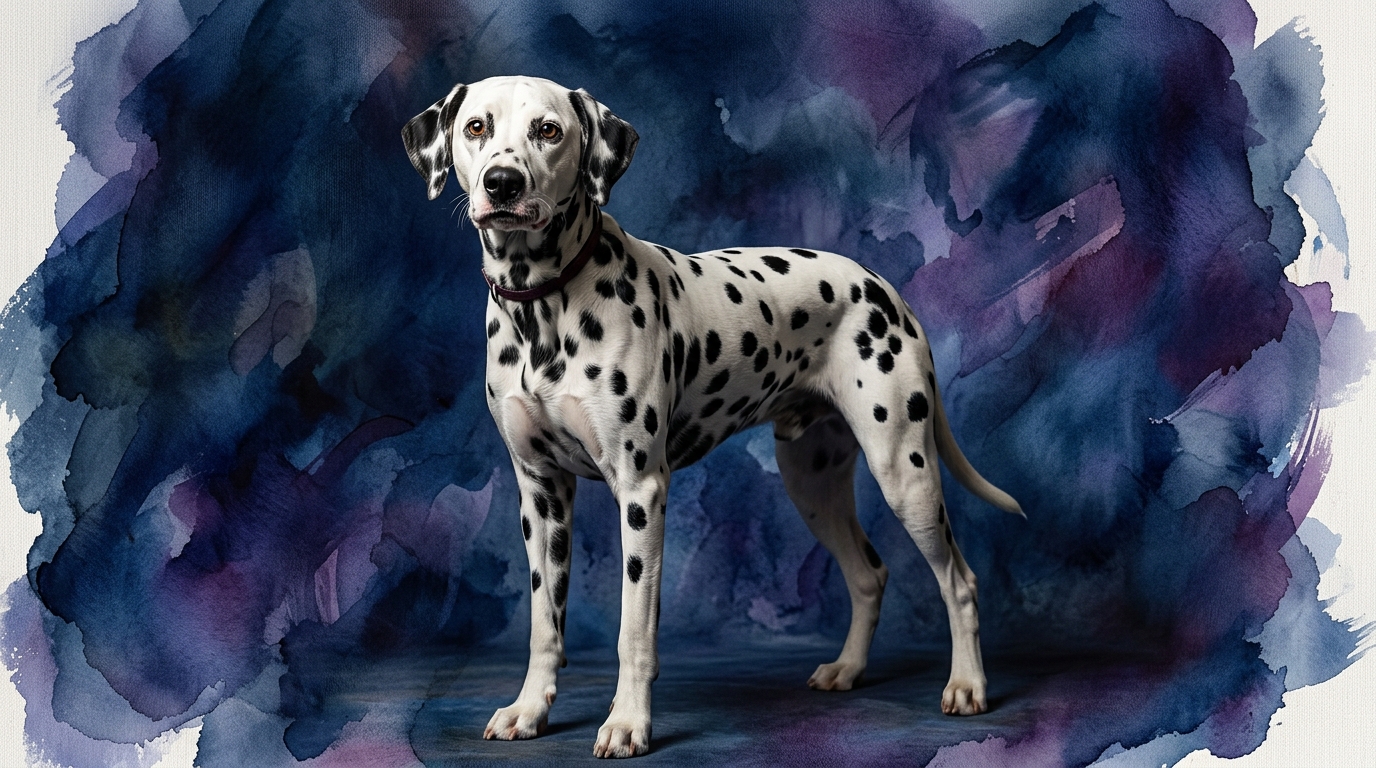
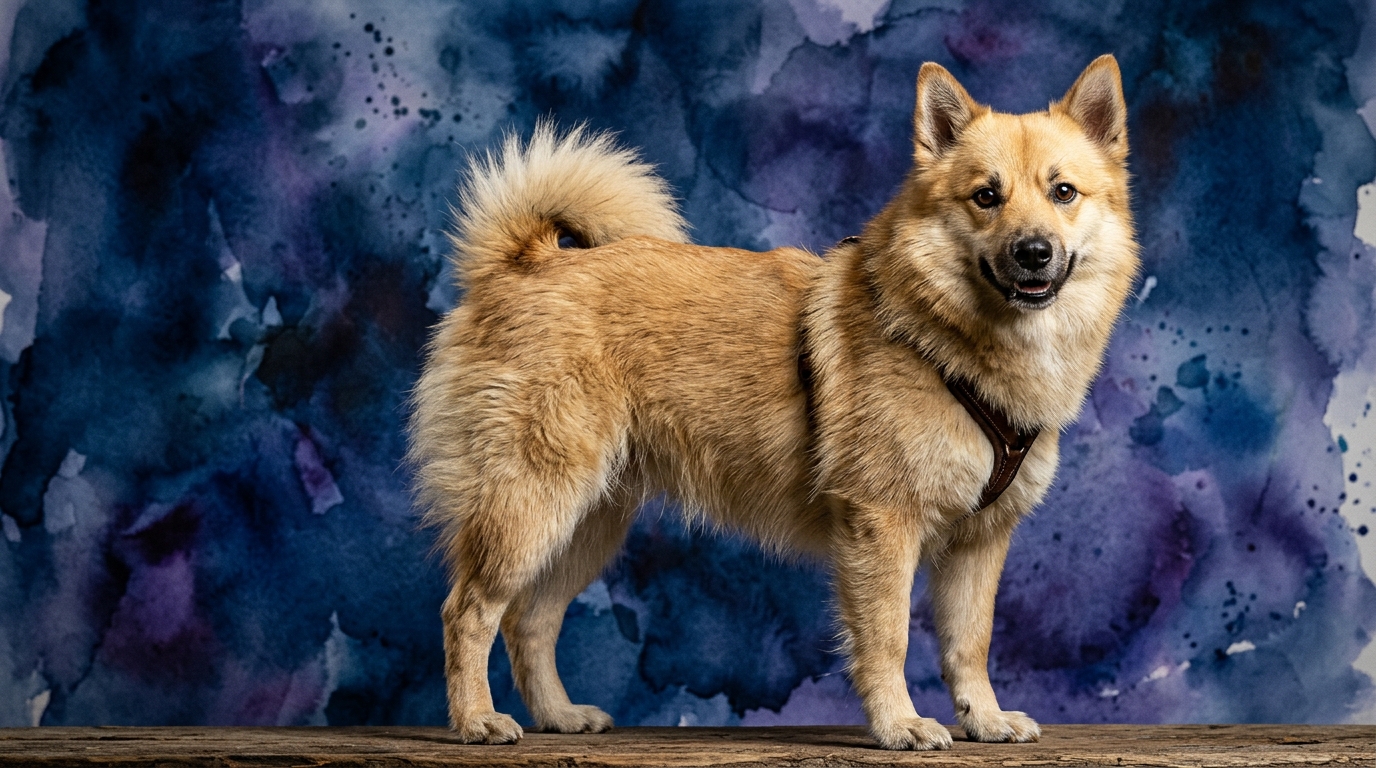
Side-by-Side IQ Profile: Dalmatian vs. Norwegian Buhund
The Cosmic Pet Pet IQ Lab evaluates five key dimensions of canine intelligence, providing a detailed look at each breed's cognitive landscape. Understanding these scores helps prospective owners align a dog's natural aptitudes with their lifestyle and training goals.
**Dalmatian IQ Profile:**
**Problem Solving (3/5):** Dalmatians demonstrate a moderate capacity for navigating novel situations or figuring out puzzles. They're not typically the breed to invent complex strategies but can follow established routines and learn from experience to overcome common obstacles. This score suggests they can adapt to new environments and learn basic tasks requiring some thought.
**Training Speed (3/5):** This breed possesses an average learning curve for new commands and behaviors. They are receptive to training but may require consistent repetition and engaging methods to solidify new lessons, rather than picking them up instantly. Their progress is steady, rewarding patient and clear instruction.
**Social Intelligence (4/5):** Dalmatians excel in understanding and responding to human cues and social dynamics. They tend to be perceptive about their owners' moods and intentions, fostering strong bonds and making them responsive companions. This heightened awareness allows them to integrate smoothly into family life and interact appropriately in varied social settings.
**Instinctive Drive (4/5):** Their historical role as carriage dogs instilled a strong drive for purpose and sustained activity. This manifests as a desire to be engaged, whether through running, playing, or participating in tasks. This robust intrinsic motivation means they thrive when given a 'job' or regular outlets for their energy and focus.
**Memory (4/5):** Dalmatians exhibit a strong ability to recall past experiences, commands, and routines. They remember learned behaviors and the consequences of their actions well, which aids in consistent training and understanding household rules over time. This solid memory contributes to their reliability once a behavior is established.
**Norwegian Buhund IQ Profile:**
**Problem Solving (3/5):** The Norwegian Buhund shows a moderate aptitude for problem-solving, similar to the Dalmatian. Their intelligence is often practical, geared towards navigating their environment and completing tasks, particularly those related to their herding heritage. They can figure out how to achieve goals through trial and error, but might not seek out complex mental challenges.
**Training Speed (3/5):** Buhunds also fall into the average range for training speed, indicating a steady but not instantaneous grasp of new commands. They are willing to learn but benefit from clear, consistent, and positive reinforcement-based training methods to ensure lessons stick. Their progress, while not rapid, is dependable with dedication.
**Social Intelligence (3/5):** Buhunds display a good, functional understanding of social cues, primarily within their family unit. They are attuned to their owners but might be less broadly perceptive of subtle human emotions or complex social nuances outside their immediate circle compared to breeds with higher scores. They form strong bonds but can be more independent in their social interactions.
**Instinctive Drive (3/5):** Reflecting their herding background, Buhunds possess a moderate instinctive drive. This manifests as a desire to work, to manage, and to be active, often with a focus on 'herding' family members or toys. While present, this drive is generally manageable and can be channeled into constructive activities rather than being overwhelming.
**Memory (3/5):** Buhunds have a reliable memory for commands and routines. They retain learned behaviors and environmental information effectively, which is crucial for their working roles and consistent home life. While not exceptional, their memory is certainly sufficient for practical application and maintaining good habits.
Where the Dalmatian Shines Cognitively
The Dalmatian's unique cognitive profile truly distinguishes itself in areas of social acumen, intrinsic motivation, and recall. With a Social Intelligence score of 4/5, they exhibit a superior ability to read human emotions and intentions, making them exceptionally responsive and empathetic companions. This perception allows them to anticipate needs and react appropriately in diverse social scenarios, fostering deep connections. Their Instinctive Drive, also at 4/5, points to a profound internal motivation for engagement and purpose, historically linked to their endurance as carriage dogs. This means Dalmatians thrive on activity and structured tasks, demonstrating sustained focus once motivated. Furthermore, their 4/5 Memory score ensures that once a lesson or routine is established, it tends to stick, contributing to their consistency and making them reliable partners in learned behaviors.
Distinct Cognitive Strengths of the Norwegian Buhund
While the Norwegian Buhund shares a 3/5 score in Problem Solving and Training Speed with the Dalmatian, its cognitive strengths are rooted in a different practical application, shaped by its herding lineage. Its Problem Solving at 3/5 is often directed towards practical, task-oriented challenges, such as navigating a space to gather 'flock' or figuring out how to manage boundaries, showcasing a functional and purposeful intellect. The 3/5 Training Speed indicates a steady, consistent learner, capable of mastering complex sequences over time, particularly when the tasks align with its innate drives. Even with a 3/5 in Instinctive Drive, the Buhund's motivation is specifically channeled towards vigilance and management, expressing itself as a watchful, diligent companion whose cognitive efforts are often focused on the well-being and organization of its perceived family 'flock'.
Which is Easier to Train and Why
Both the Dalmatian and the Norwegian Buhund receive a 3/5 for Training Speed, suggesting neither is inherently a 'fast' or 'slow' learner. However, the Dalmatian's higher Social Intelligence (4/5) and Memory (4/5) often translate into an easier training experience in practice. Their strong social understanding means they are more likely to seek to please and better grasp human communication nuances, making them quicker to respond to cues. Coupled with their robust memory, once a command is learned, it is reliably retained. In contrast, while the Buhund's 3/5 in these areas is perfectly functional, their more independent nature, typical of herding breeds, might require a trainer to be more patient and creative in maintaining engagement. Their herding instincts, even at 3/5, can sometimes override other motivations, requiring consistent redirection and clear boundaries during training sessions.
Suited for Active vs. Relaxed Owners
Neither the Dalmatian nor the Norwegian Buhund is truly suited for a relaxed, sedentary lifestyle, as both possess significant energy and a need for mental engagement. The Dalmatian, with its 4/5 Instinctive Drive, demands consistent, vigorous activity and a sense of purpose. Owners should be prepared for long runs, active games, or participation in dog sports to satisfy this deep-seated need for exertion and focused tasks. The Norwegian Buhund, while scoring 3/5 in Instinctive Drive, still requires substantial activity, often preferring mentally stimulating tasks that leverage its herding instincts, such as agility, obedience, or structured 'flock' management games. While perhaps not requiring the sheer mileage of a Dalmatian, a Buhund owner must be committed to providing regular, varied mental and physical challenges. Both breeds thrive with active owners who enjoy incorporating their dog into daily adventures and training.
The Verdict
Choose a Dalmatian if you seek a highly socially perceptive companion with a strong drive for consistent activity and excellent recall for learned behaviors, thriving on deep human connection and purposeful engagement.
Opt for a Norwegian Buhund if you appreciate a diligent, watchful companion whose practical problem-solving and steady learning are best channeled through task-oriented activities, offering a loyal partner for an active, structured life.
🧠 Find Your Pet's IQ Score
Our Pet IQ Lab assessment covers 25+ tests across 5 cognitive dimensions — personalized to your breed.
Take the Full IQ Test →Frequently Asked Questions
Do Dalmatians and Norwegian Buhunds get along well with children?
Dalmatians, with their 4/5 Social Intelligence, generally adapt well to family dynamics and can be very patient with children, especially when properly socialized. Norwegian Buhunds, scoring 3/5 in Social Intelligence, are typically watchful and protective of their family 'flock,' which often includes children, but their herding instincts might lead to gentle 'nipping' at heels in play, requiring supervision and training to manage.
How much mental stimulation do these breeds need daily?
Both breeds require significant daily mental engagement. Dalmatians, with their 4/5 Instinctive Drive and Memory, benefit from puzzle toys, advanced obedience, and opportunities to learn new tricks that challenge their recall and focus. Norwegian Buhunds, whose 3/5 Problem Solving and Instinctive Drive are task-oriented, thrive on activities like agility, herding games, or scent work that engage their practical intelligence and desire for purpose.
Are Dalmatians or Norwegian Buhunds better for first-time dog owners?
Neither breed is typically recommended for entirely novice owners. Dalmatians' high instinctive drive and energy require consistent training and management. Norwegian Buhunds, with their herding instincts and independent streak, also benefit from experienced handling to channel their energies appropriately. Both require a committed owner willing to invest in training and activity.