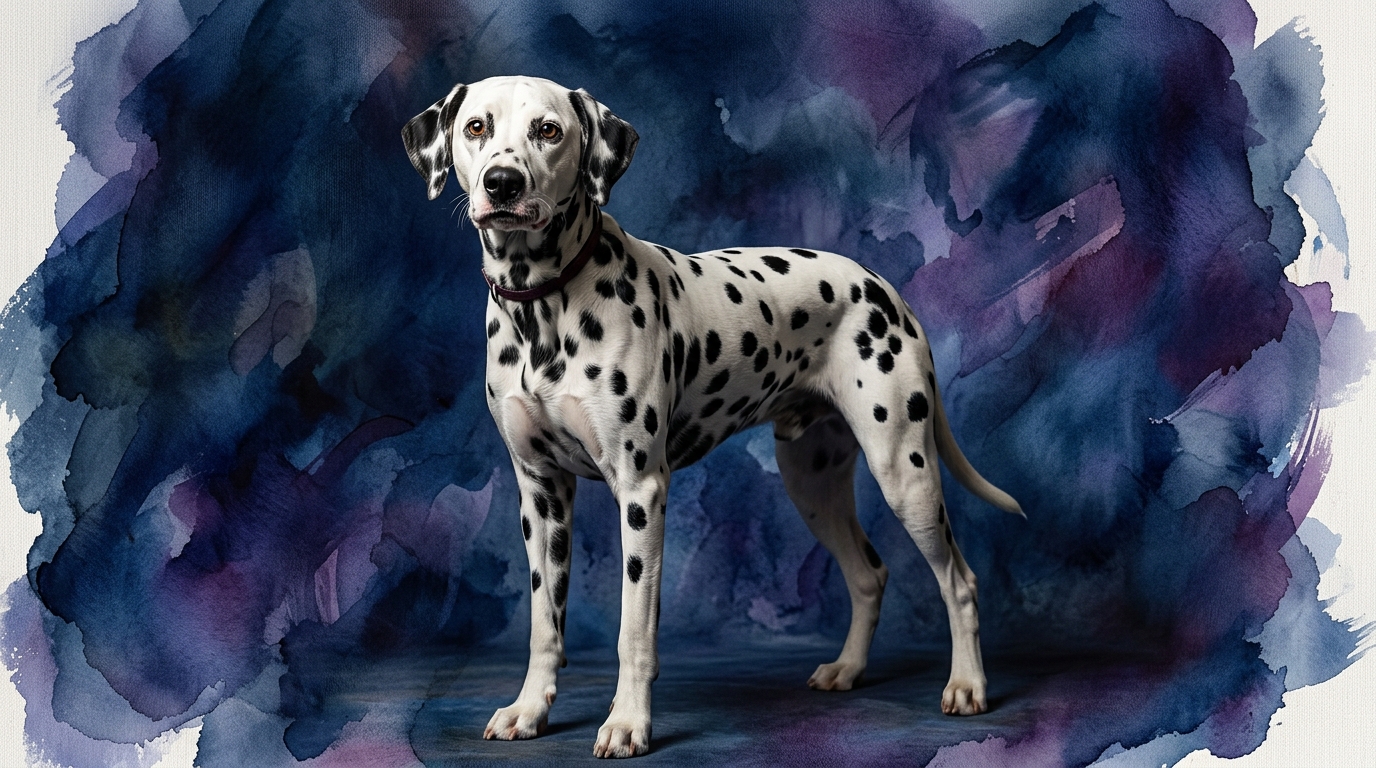
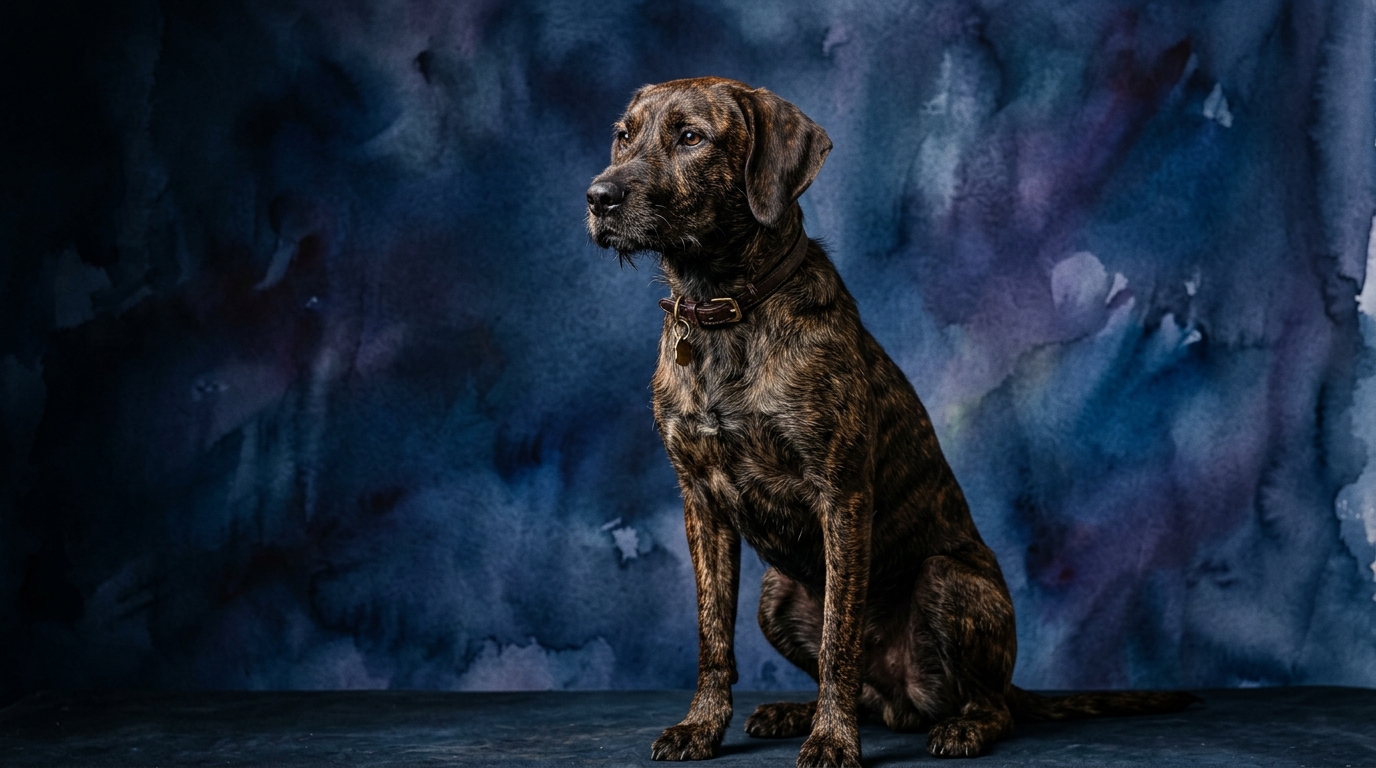
Side-by-Side Cognitive Profiles: Dalmatian vs. Plott Hound
The Dalmatian, a breed often recognized for its distinctive spotted coat and historical role as a coach dog, brings a nuanced cognitive profile to our lab. Ranked 39th by Coren, its Problem Solving and Training Speed both register at 3 out of 5, indicating a moderate capacity for independent thought and a reasonable pace for learning new commands. Where the Dalmatian truly distinguishes itself is in its Social Intelligence, scoring a robust 4 out of 5, suggesting a keen ability to interpret human cues and integrate into complex social structures. This breed also demonstrates a strong Instinctive Drive, rated 4 out of 5, which historically manifested in their endurance and protective instincts during their coach dog duties. Complementing these traits is a solid Memory score of 4 out of 5, enabling them to retain learned behaviors and social interactions effectively over time.
In contrast, the Plott Hound, a powerful and athletic breed developed for hunting big game, presents a more uniform yet highly specialized cognitive profile. Unlike the Dalmatian, the Plott Hound is not included in Coren's ranking, reflecting its distinct working heritage. Across all five dimensions—Problem Solving, Training Speed, Social Intelligence, Instinctive Drive, and Memory—the Plott Hound consistently scores 3 out of 5. This consistent scoring suggests a practical, focused intelligence, where problem-solving is often directed towards tracking and hunting challenges, and training speed is adequate for mastering necessary working commands. Its social intelligence, while not as outwardly expressive as some breeds, is sufficient for forming strong bonds within its family unit and working cooperatively in the field. The 3/5 Instinctive Drive is deeply rooted in its heritage, manifesting as an unwavering focus on scent work, while its Memory, also 3/5, is effective for recalling trails and learned hunting strategies.
Where the Dalmatian Excels Cognitively
Based on our IQ Lab data, the Dalmatian clearly holds an edge in several key cognitive domains. Their superior Social Intelligence, rated 4/5 compared to the Plott Hound's 3/5, indicates a greater aptitude for understanding and responding to human emotional states and social cues. This translates into a dog that often integrates more seamlessly into diverse family dynamics, showing a nuanced awareness of household routines and interpersonal relationships. This social acumen allows them to adapt quickly to new people and situations, making them adept at navigating varied social landscapes.
A Dalmatian's higher score in Instinctive Drive (4/5) further distinguishes them; while a Plott Hound's drive is narrowly focused on scent work, the Dalmatian's manifests as a broader endurance, vigilance, and a historical protective instinct, making them exceptionally alert and capable of sustained activity beyond just tracking. This generalized drive, coupled with their superior Memory (4/5 vs. 3/5), allows Dalmatians to quickly internalize and recall a wider array of experiences and complex sequences, from intricate agility courses to remembering the habits of various household members. These combined strengths make the Dalmatian particularly adept at navigating and thriving in varied, human-centric environments, often picking up on subtle environmental changes and family expectations with notable precision, displaying a keen ability to learn and recall complex patterns of behavior and environmental cues.
Understanding the Plott Hound's Distinct Cognitive Strengths
While the Plott Hound's scores might appear lower in direct comparison, framing their cognitive profile as a 'win' requires understanding their specialized application of intelligence. Where the Plott Hound truly shines is in the focused intensity and resilience derived from its consistent 3/5 scores across the board, particularly in its Instinctive Drive. This drive, while scoring 3/5 compared to the Dalmatian's 4/5, is singularly dedicated to its purpose: tracking and baying big game. This means their problem-solving (3/5) is acutely honed for scent discrimination and trail navigation, their memory (3/5) for recalling complex scent pathways, and their training speed (3/5) for mastering specific hunting commands. They excel not through broad versatility but through unwavering dedication to a specific, challenging task.
A Plott Hound's cognitive strength lies in its profound ability to maintain focus on a singular objective over extended periods, exhibiting remarkable stamina and determination in pursuit of a goal. Their problem-solving might be less about abstract puzzles and more about practical navigation through challenging terrain or deciphering intricate scent puzzles. This specialized intelligence makes them exceptionally effective in their traditional role, demonstrating a unique form of cognitive resilience and single-mindedness that is invaluable in the demanding world of hunting, where sustained effort and focused application of skills are paramount. Their moderate social intelligence ensures they are cooperative with their handler, but their primary cognitive engagement is often with the environment's olfactory landscape.
Training Dynamics: Dalmatian vs. Plott Hound
Evaluating ease of training between these two breeds requires looking beyond just the 'Training Speed' score. Both Dalmatians and Plott Hounds score 3/5 in Training Speed, suggesting a moderate learning pace. However, real-world training experience often highlights behavioral nuances that influence perceived ease. Dalmatians, with their higher Social Intelligence (4/5) and Memory (4/5), often appear more responsive to human-directed training methods. Their desire to please and their capacity to recall a wider range of commands and social cues can make them seem more straightforward to guide through obedience or trick training. They are typically more attuned to their handler's body language and vocal tone, which aids in quicker understanding of expectations and a readiness to engage in collaborative learning.
In contrast, the Plott Hound's training experience, while equally capable of learning, is profoundly shaped by its powerful, specialized Instinctive Drive (3/5). This drive, focused on scent and pursuit, means they can be easily distracted by compelling odors in the environment, making off-leash reliability a greater challenge. Their problem-solving (3/5) is often applied to figuring out how to follow a scent, rather than how to execute a 'stay' command when a squirrel crosses their path. Therefore, while both learn at a similar pace, training a Plott Hound often demands more patience, consistency, and creative methods to overcome their ingrained hunting instincts, whereas a Dalmatian might be more readily motivated by social interaction and praise, making them generally perceived as 'easier' for a typical pet owner to train in a domestic setting where diverse commands are prioritized over scent work.
Matching Breeds to Lifestyles: Active vs. Relaxed Owners
The cognitive profiles and inherent drives of Dalmatians and Plott Hounds offer clear guidance for matching them with owner lifestyles. Dalmatians, with their 4/5 Instinctive Drive and 4/5 Memory, thrive with active owners who can provide consistent mental and physical engagement. Their historical role as coach dogs means they possess significant stamina and require ample opportunities for running, exploring, and engaging in structured activities like agility, hiking, or long walks. Their high social intelligence also means they enjoy being involved in family activities and can become destructive if bored or isolated. They are not suited for owners seeking a purely relaxed, couch-potato companion, as their cognitive needs extend to varied stimulation and interaction, requiring diverse environments to explore and learn from.
The Plott Hound, while also an active breed, suits a different type of active owner, specifically those who understand and can channel their intense, scent-driven instincts. Their 3/5 Instinctive Drive is powerful and requires an outlet, making them ideal for individuals interested in scent work, hunting, or long, exploratory walks where they can follow their nose. While they possess good stamina, their activity is often less about speed and more about sustained, focused effort in pursuit of a scent. They can adapt to a more relaxed home environment after their daily cognitive and physical needs are met, but these needs are non-negotiable and demand a dedicated owner willing to engage with their specific hound behaviors. Neither breed is a fit for genuinely relaxed owners who prefer minimal daily activity; both require substantial engagement to prevent boredom and behavioral issues, though the nature of that engagement differs significantly.
The Verdict
Choose a Dalmatian if you seek a highly social, adaptable companion who thrives on varied mental and physical engagement, and whose broader memory and social intelligence make them responsive to diverse training and family life.
Opt for a Plott Hound if you're an active owner dedicated to channeling a powerful, specialized scent drive, valuing a resilient, focused companion for scent work, hunting, or extensive outdoor exploration.
🧠 Find Your Pet's IQ Score
Our Pet IQ Lab assessment covers 25+ tests across 5 cognitive dimensions — personalized to your breed.
Take the Full IQ Test →Frequently Asked Questions
Are Dalmatians good family dogs?
Dalmatians, with their 4/5 social intelligence, can be excellent family dogs, forming strong bonds and often showing a keen awareness of household dynamics. However, their high instinctive drive and memory mean they require consistent training and plenty of physical and mental stimulation to thrive in a family setting, especially with children.
Do Plott Hounds need a lot of exercise?
Yes, Plott Hounds require substantial daily exercise to satisfy their 3/5 instinctive drive, which is deeply rooted in their hunting heritage. Long, vigorous walks, opportunities for scent work, or secure off-leash running are crucial to keep them physically and mentally content, preventing boredom and potential behavioral issues.
Which breed is better for first-time dog owners?
Neither breed is typically recommended for entirely novice owners without prior research and commitment. Dalmatians, while socially intelligent, have high energy and specific training needs. Plott Hounds, with their powerful scent drive, require experienced handling to manage their instincts. Both benefit from owners who understand their unique cognitive and behavioral requirements.