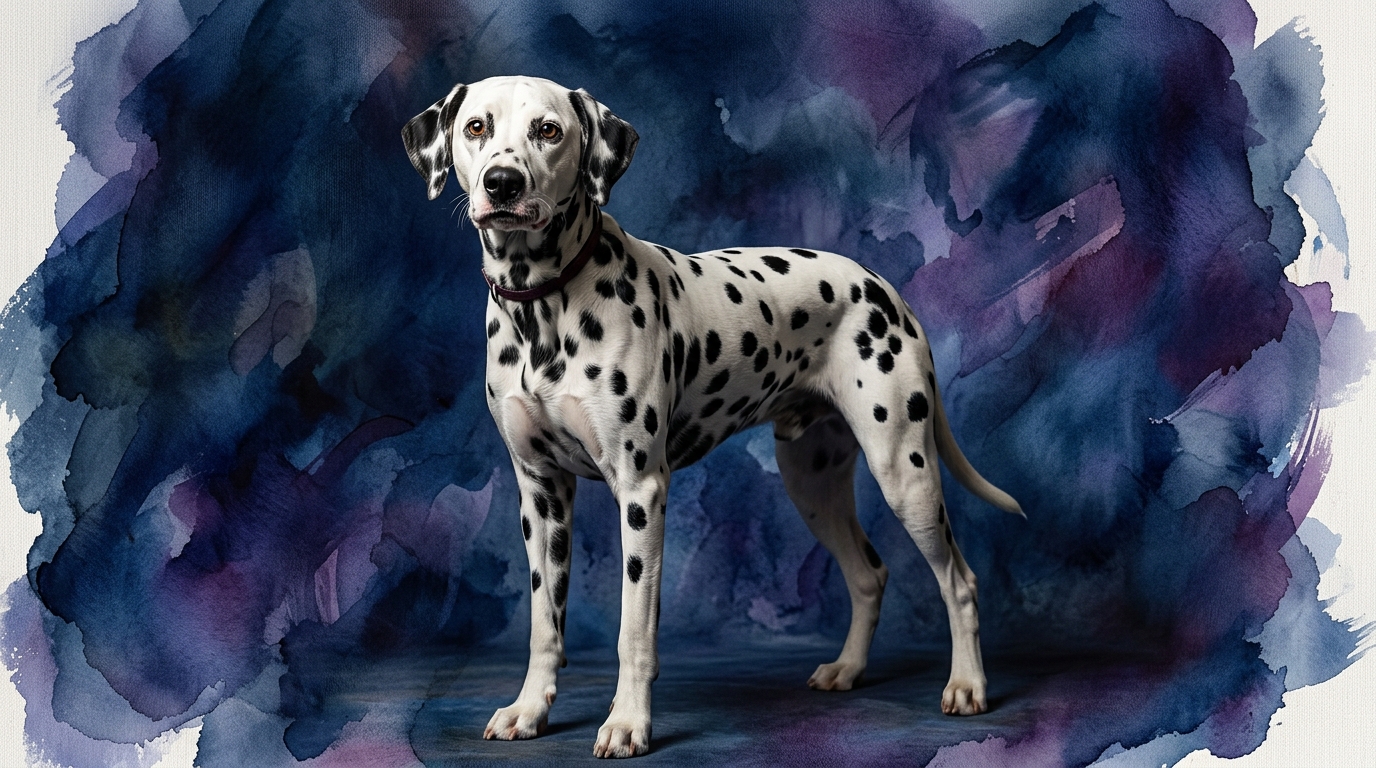
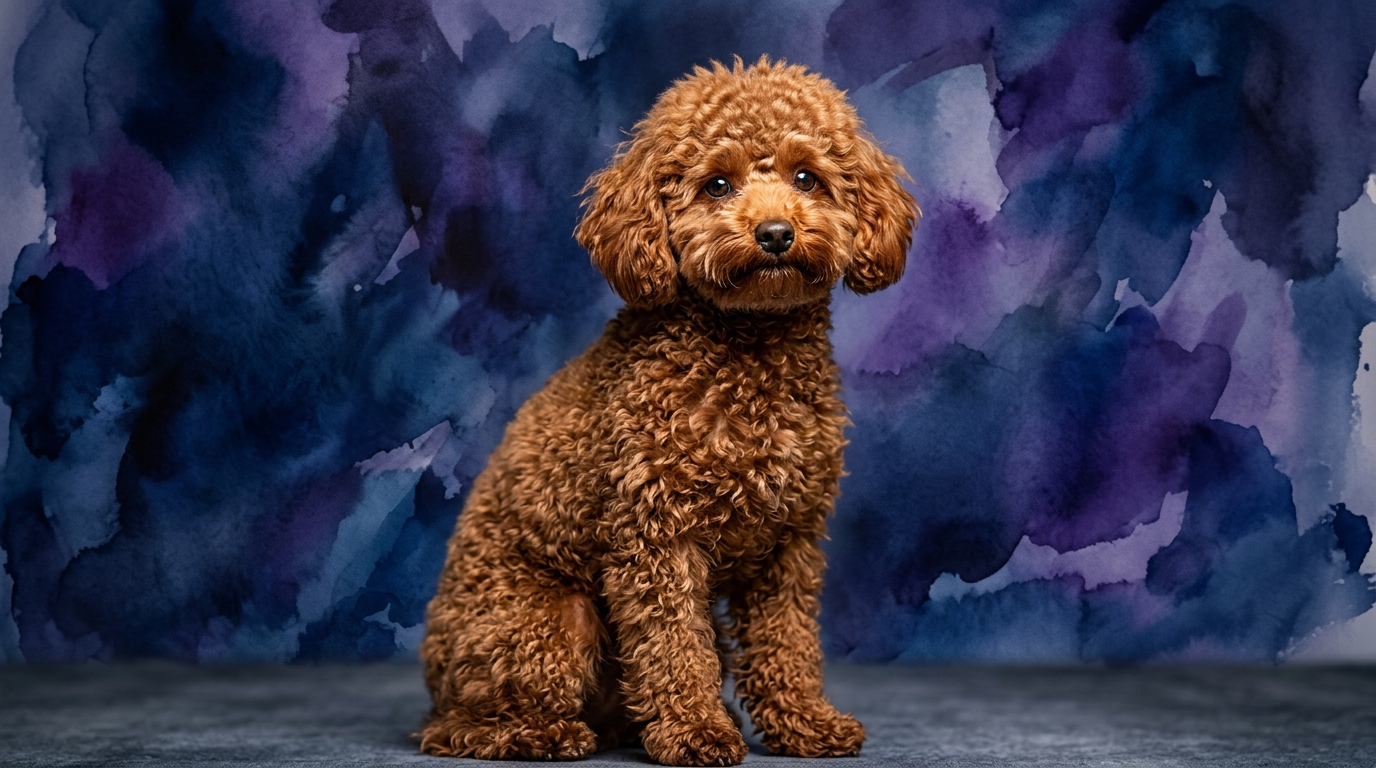
Side-by-Side IQ Profile: Dalmatian vs. Toy Poodle
Delving into the specific cognitive dimensions for both breeds reveals their distinct mental architectures. For the Dalmatian, our lab tests show a Problem Solving score of 3/5, indicating a solid but not exceptional capacity for independent strategizing, often relying on established routines or human direction to navigate novel situations. Their Training Speed also rates 3/5, meaning they acquire new commands at a respectable pace but require consistent reinforcement and potentially more repetitions to solidify learning. Where Dalmatians shine is in Social Intelligence (4/5), demonstrating a commendable ability to interpret human body language and emotional cues, allowing them to integrate smoothly into various family dynamics and social gatherings. Their Instinctive Drive is strong at 4/5, reflecting a pronounced need for purposeful activity and exploration, often linked to their historical roles. Lastly, their Memory is robust at 4/5, indicating effective retention of learned behaviors and environmental associations.
The Toy Poodle, in contrast, presents a remarkably different cognitive landscape. They achieve a perfect 5/5 in Problem Solving, exhibiting an exceptional aptitude for deconstructing new challenges and devising novel strategies with minimal prompting. Their Training Speed is also a perfect 5/5, meaning they absorb new information with astonishing rapidity, often mastering complex sequences after just a few sessions due to acute cognitive processing. However, their Social Intelligence is rated 3/5; while affectionate and responsive to primary caregivers, they may display a more selective social awareness, sometimes preferring the company of their chosen few over broad social engagement. Their Instinctive Drive is 3/5, showing a less intense drive for independent, task-oriented pursuits compared to more working breeds, generally favoring activities that involve close interaction with their human companions. Finally, their Memory stands out as exceptional, also rated 5/5, allowing them to recall intricate sequences, past experiences, and detailed instructions with remarkable precision and longevity.
Where the Dalmatian Wins Cognitively
When we analyze the cognitive strengths of the Dalmatian, their superior social intelligence, rated at 4/5, truly shines. Unlike breeds that might form intense bonds with only one individual, Dalmatians often show an impressive capacity to connect with multiple family members, adapting their social cues and interactions to suit a diverse household. This makes them particularly adept at navigating complex group dynamics, understanding the subtle shifts in human moods and intentions across various individuals. Their cognitive framework allows them to be highly attuned to their environment and the people within it, fostering a sense of belonging and responsiveness that is a hallmark of their character. Furthermore, their instinctive drive, also at 4/5, means they possess a strong, purposeful inner compass. This isn't just about physical energy; it's a cognitive drive to engage with the world through activity, exploration, and a sense of purpose. This manifests as a sustained focus on tasks once engaged, whether it's following a scent trail or maintaining pace during a long activity, showcasing a mental endurance that complements their physical stamina. Their cognitive drive compels them to seek engagement and fulfillment through action, requiring owners who can channel this mental energy constructively.
Where the Toy Poodle Wins Cognitively
Conversely, the Toy Poodle’s cognitive profile boasts an unparalleled trifecta of problem-solving, training speed, and memory, each rated a perfect 5/5. Their problem-solving acumen is truly remarkable; these dogs don't just learn routines, they actively analyze situations, often devising novel strategies to achieve a desired outcome. This might manifest as quickly figuring out how to open a complex puzzle toy or understanding multi-step commands that require sequential actions. Their training speed is equally impressive, allowing them to grasp new concepts, cues, and behaviors with astonishing rapidity, often requiring only a handful of repetitions to solidify a command. This cognitive efficiency means they pick up on nuances quickly, making them exceptionally responsive learners. This rapid acquisition is further bolstered by their superior memory, enabling them to retain vast repertoires of commands, tricks, and learned associations over extended periods. Their ability to recall past experiences and apply learned knowledge to new contexts is a testament to their exceptional long-term retention capabilities, making them consistent performers once a skill is mastered.
Which is Easier to Train and Why
When considering ease of training, the Toy Poodle distinctly outperforms the Dalmatian, a difference rooted in their fundamental cognitive strengths. The Toy Poodle's perfect 5/5 scores in problem solving, training speed, and memory create a synergistic effect that makes them extraordinarily receptive to instruction. They possess an innate ability to quickly associate an action with a reward or consequence, and critically, they remember these associations with remarkable fidelity. This means fewer repetitions are needed, and once a command is learned, it tends to stick. For example, teaching a Toy Poodle a complex agility sequence involves them not just memorizing the steps but often understanding the overall goal, allowing for faster generalization of skills. In contrast, the Dalmatian, with 3/5 in problem solving and training speed, requires a more patient and varied approach. While capable learners, they may take longer to form associations and need consistent, engaging reinforcement to prevent boredom and maintain focus. Their instinctive drive, while a strength in other areas, can sometimes translate into an independent streak during training, meaning an owner must work harder to capture and maintain their attention. Dalmatians learn best through positive reinforcement that taps into their desire for companionship and activity, but their retention might not be as immediate or as deep as the Toy Poodle’s without ongoing practice.
Which Suits Active Owners vs. Relaxed Owners
The choice between a Dalmatian and a Toy Poodle also depends significantly on an owner's lifestyle. For active owners who thrive on outdoor adventures and structured engagement, the Dalmatian is often a more suitable cognitive match. Their 4/5 instinctive drive and robust memory mean they excel in activities that require stamina, focus, and a sense of purpose, such as long-distance running, hiking, or participating in dog sports like canicross or endurance trials. These dogs possess a cognitive need for consistent physical and mental outlets, and an owner who can provide varied, stimulating activities will find their Dalmatian to be a highly engaged and fulfilled companion. Without sufficient engagement, their strong drives can lead to boredom and potentially destructive behaviors, as their minds are wired for action. Conversely, the Toy Poodle, while certainly enjoying walks and play, is often a better fit for more relaxed owners who prioritize intellectual stimulation and close companionship over intense physical demands. Their exceptional problem-solving and training speed make them superb candidates for indoor games, advanced trick training, and puzzle toys that challenge their keen minds. They thrive on learning new things and engaging in complex mental exercises, which can be accomplished effectively within a home environment. An owner who enjoys teaching new skills, participating in obedience, or simply having a highly responsive and interactive companion will find the Toy Poodle’s cognitive makeup aligns perfectly with their lifestyle, offering deep engagement without the necessity of extensive outdoor excursions.
The Verdict
Choose a Dalmatian if you lead an active lifestyle, value a dog with strong social adaptability, and are prepared to channel their independent, driven nature into purposeful activities and consistent training.
Opt for a Toy Poodle if you seek a highly trainable companion who excels at problem-solving and rapidly masters complex tasks, thriving on mental enrichment and close, interactive learning within a more relaxed home environment.
🧠 Find Your Pet's IQ Score
Our Pet IQ Lab assessment covers 25+ tests across 5 cognitive dimensions — personalized to your breed.
Take the Full IQ Test →Frequently Asked Questions
Is a Dalmatian difficult to train?
While not inherently difficult, Dalmatians require consistent, engaging, and positive training methods due to their 3/5 training speed and independent streak. They benefit from owners who understand their need for physical and mental activity to maintain focus and motivation.
Do Toy Poodles need a lot of exercise?
Toy Poodles enjoy daily walks and playtime, but their primary need is for mental stimulation. Their high problem-solving and memory scores mean they thrive on learning new tricks, puzzle toys, and obedience work, which can often be satisfied indoors.
Which breed is better for first-time dog owners?
For first-time owners, the Toy Poodle's exceptional trainability and rapid learning curve typically make them an easier choice. Dalmatians, while rewarding, might present more challenges due to their higher exercise requirements and potential for independent thought.