
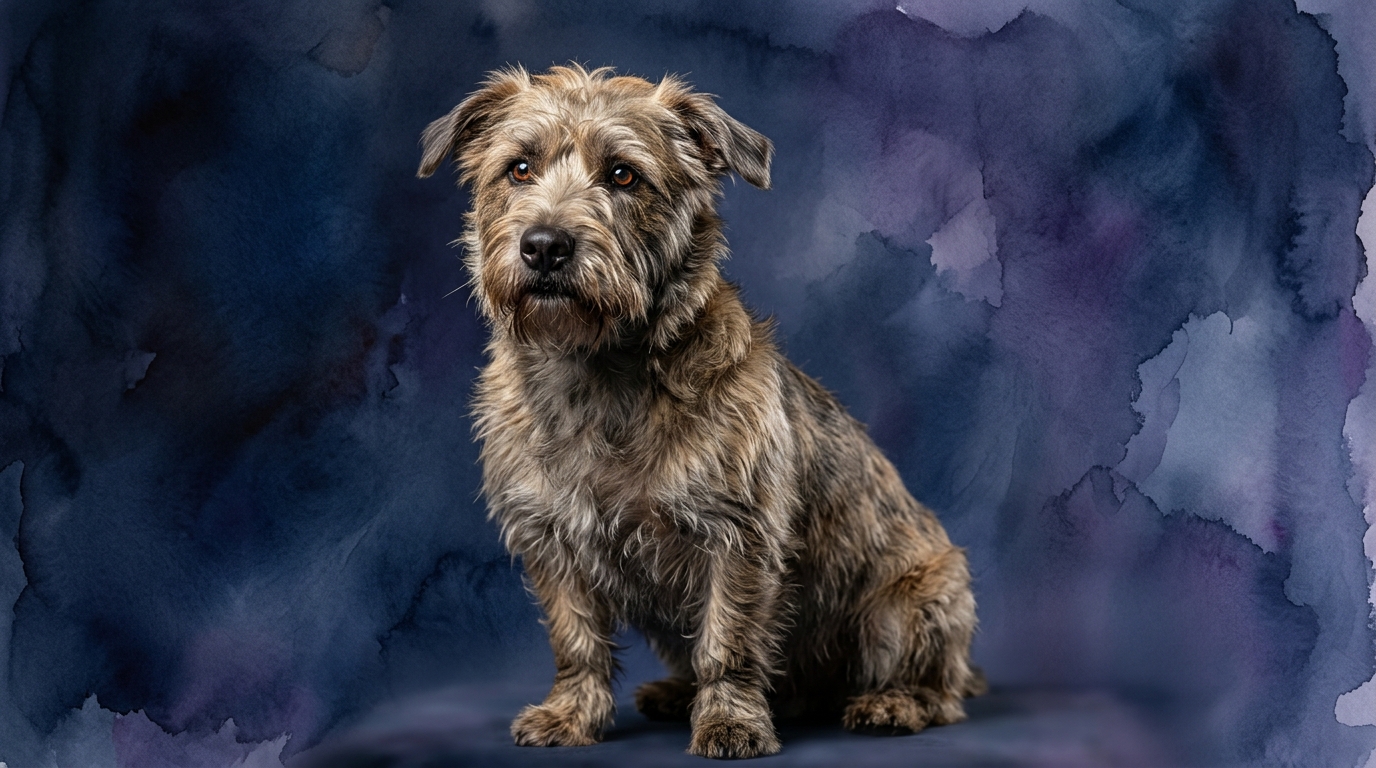
Side-by-Side IQ Profile: Unpacking the 3/5 Scores
The Cosmic Pet Pet IQ Lab assesses five crucial dimensions of canine cognition, with both the Dandie Dinmont Terrier and the Glen of Imaal Terrier scoring 3/5 across the board. A 3/5 score indicates a competent and capable level within that dimension, suggesting these breeds possess functional intelligence without necessarily reaching the extremes of canine brilliance or struggling significantly. The intrigue lies in how these equivalent capabilities manifest uniquely in each breed, shaped by their individual histories and personalities.
For the Dandie Dinmont Terrier, a Problem Solving score of 3/5 often translates into a resourceful approach to daily life, such as cleverly navigating household obstacles or finding the most comfortable, sunlit nap spot. Their Training Speed, also 3/5, means they are receptive to learning new commands and routines with consistent, positive reinforcement, though they retain a typical terrier independence. Social Intelligence at 3/5 signifies their capacity for deep bonds with their family, coupled with a discerning nature towards strangers, expressing affection clearly within their trusted circle. Their Instinctive Drive, rated 3/5, points to a moderate prey drive that requires management but is generally less intense than some working terriers, often expressed through playful chasing rather than relentless hunting. Finally, a Memory score of 3/5 ensures they recall learned commands, routines, and significant experiences, contributing to their adaptability and ease within a structured home environment.
The Glen of Imaal Terrier, also holding 3/5 across all categories, showcases these capacities with a distinct working-dog flair. Their Problem Solving (3/5) is often seen in their tenacious pursuit of a goal, whether it's figuring out how to access a coveted toy or persistently investigating an interesting scent. Training Speed at 3/5 means they are capable learners, yet their inherent independence and strength of will necessitate patience, creativity, and highly motivating rewards to keep them engaged. Social Intelligence (3/5) for a Glen manifests as profound loyalty and devotion to their immediate family, often being more reserved and less overtly demonstrative with outsiders. Their Instinctive Drive, a robust 3/5, is strongly tied to their heritage as badger and fox hunters, translating into a powerful urge to dig, explore, and pursue, requiring consistent redirection. Their Memory, also 3/5, allows them to retain complex training sequences and remember past interactions, which can be both a boon for training and a challenge if negative associations are formed.
While the numerical scores are identical, the practical application of these cognitive traits differs significantly. The Dandie often uses its intelligence to navigate its social world and achieve comfort, while the Glen applies its cognitive abilities with a more determined, task-oriented focus, reflecting its working roots. Understanding these subtle distinctions is key to appreciating their individual mental prowess.
Where the Dandie Dinmont Terrier Shines Cognitively
The Dandie Dinmont Terrier exhibits a unique cognitive charm, particularly in its adaptability and social nuance. While both breeds score 3/5 in social intelligence, the Dandie often demonstrates this through a more sophisticated understanding of household dynamics and human moods. They are adept at integrating into varied home environments, often discerning when to be playful and when to offer quiet companionship. This isn't about being 'smarter,' but rather how their 3/5 social intelligence is expressed: a finely tuned ability to read their human companions and adjust their behavior accordingly. Their problem-solving (3/5) often leans towards finding efficient ways to achieve personal comfort or secure attention, displaying a cleverness that is less about brute force and more about subtle manipulation of their environment and human interactions. For example, a Dandie might quickly learn the precise time an owner is most susceptible to a cuddle request, or how to subtly nudge a favorite toy into play. Their memory (3/5) supports this by retaining specific routines and preferences of their family members, allowing them to anticipate events and engage appropriately within the home structure.
Where the Glen of Imaal Terrier Excels Cognitively
The Glen of Imaal Terrier’s cognitive strengths lie in its unwavering tenacity and practical, task-oriented problem-solving. Their 3/5 problem-solving score is often showcased in their determined efforts to overcome physical obstacles or complete a self-assigned 'mission,' like digging to the bottom of a scent trail. This is a breed that, when presented with a challenge, will often persist until a solution is found, even if it requires significant physical effort. Their strong instinctive drive (3/5) fuels this persistence, making them exceptionally focused once a goal is identified. While their social intelligence is also 3/5, it's often expressed through a deep, steadfast loyalty to their immediate family, rather than broad social adaptability. They form intense bonds and their memory (3/5) retains experiences, particularly those related to their 'work' or perceived tasks, making them excellent at remembering where they buried a prized possession or how to navigate a complex trail. Their cognitive profile is geared towards independence and a robust, resilient approach to the world, often making them highly effective at tasks requiring sustained focus and physical engagement.
Training Dynamics: A Tale of Two Terriers
Both Dandie Dinmont Terriers and Glen of Imaal Terriers share a 3/5 score in Training Speed, indicating they are capable of learning, but neither is a 'push-button' dog. The differences lie in the approach required to harness their cognitive potential. The Dandie, with its slightly more amenable social intelligence (3/5) and desire for companionship, often responds well to positive reinforcement methods focused on building a strong relationship. They thrive on praise, treats, and interactive games, and their willingness to engage with their owner makes training a cooperative venture. However, their terrier independence means sessions must be kept engaging and varied to prevent boredom and stubbornness. They might question a command if they don't see the immediate benefit but are generally receptive to pleasing their family.
The Glen of Imaal Terrier, on the other hand, presents a different training challenge despite the identical 3/5 score. Their robust instinctive drive and inherent tenacity mean they can be more independent and less overtly keen to 'please' solely for praise. Training a Glen requires immense patience, consistency, and a deep understanding of their motivated nature. They often need to be convinced that following a command is more rewarding than pursuing their own agenda. High-value treats, engaging games that tap into their natural drives (like scent work), and a firm yet fair approach work best. They are not servile and will often think for themselves, which means an owner must be creative in making training a compelling partnership rather than a series of demands. Their memory (3/5) ensures they recall both desired behaviors and any inconsistencies in training, so clarity is paramount.
Lifestyle Match: Active Owners vs. Relaxed Owners
When considering which breed aligns with an active or relaxed lifestyle, their cognitive profiles offer clear guidance. The Dandie Dinmont Terrier, while enjoying regular walks and playtime, can adapt quite well to a moderately active household. Their 3/5 problem-solving and social intelligence are often satisfied by interactive toys, puzzle feeders, and ample quality time with their family. They are content with mental stimulation that involves their human companions, enjoying a balance of physical activity and cozy domesticity. An owner who enjoys varied activities, from gentle strolls to engaging in trick training or simply spending quiet evenings together, would find a Dandie a fitting companion. They are adaptable to apartment living provided they receive adequate mental and physical outlets, making them suitable for owners who appreciate a dog that is present and engaged without demanding constant high-octane activity.
The Glen of Imaal Terrier, conversely, generally thrives with owners who lead a more active lifestyle, or at least one that can consistently accommodate their pronounced instinctive drive (3/5). While they are not hyperactive, their historical role means they need regular opportunities to explore, dig (in appropriate places!), and engage in activities that challenge their practical problem-solving (3/5). Long walks, hikes, secure off-leash exploration, or participation in dog sports like earthdog trials or agility can satisfy their robust mental and physical needs. A relaxed owner might find the Glen's determination and drive challenging to manage without sufficient outlets. Owners who appreciate a tenacious, independent spirit and are prepared to provide consistent, engaging physical and mental activities will find the Glen a rewarding partner. Their cognitive engagement is often tied to purposeful activity, making them ideal for those who enjoy structured outdoor adventures and problem-solving alongside their canine companion.
The Verdict
Choose the Dandie Dinmont Terrier if you seek a nuanced companion with adaptable social intelligence, content with moderate activity and appreciative of a clever, domestic problem-solver.
Opt for the Glen of Imaal Terrier if you value robust tenacity, a devoted but independent spirit, and are prepared to engage their strong instinctive drive with consistent, purposeful activity.
🧠 Find Your Pet's IQ Score
Our Pet IQ Lab assessment covers 25+ tests across 5 cognitive dimensions — personalized to your breed.
Take the Full IQ Test →Frequently Asked Questions
Are Dandie Dinmont Terriers good with children?
Dandie Dinmont Terriers can be good with respectful children, especially if raised with them. Their 3/5 social intelligence means they form strong bonds with their family, but like all terriers, supervision is important to ensure positive interactions.
Do Glen of Imaal Terriers bark a lot?
Glen of Imaal Terriers are generally not excessive barkers; they are often described as quiet dogs. They might alert bark, but consistent training and addressing the cause of barking can manage this.
Which breed is better for first-time dog owners?
Neither breed is typically recommended for first-time dog owners without a strong commitment to learning about terrier temperaments. Both require consistent training and understanding of their independent natures, though the Dandie's slightly more adaptable social intelligence might make it a marginally easier entry point.