Side-by-Side Cognitive Profiles
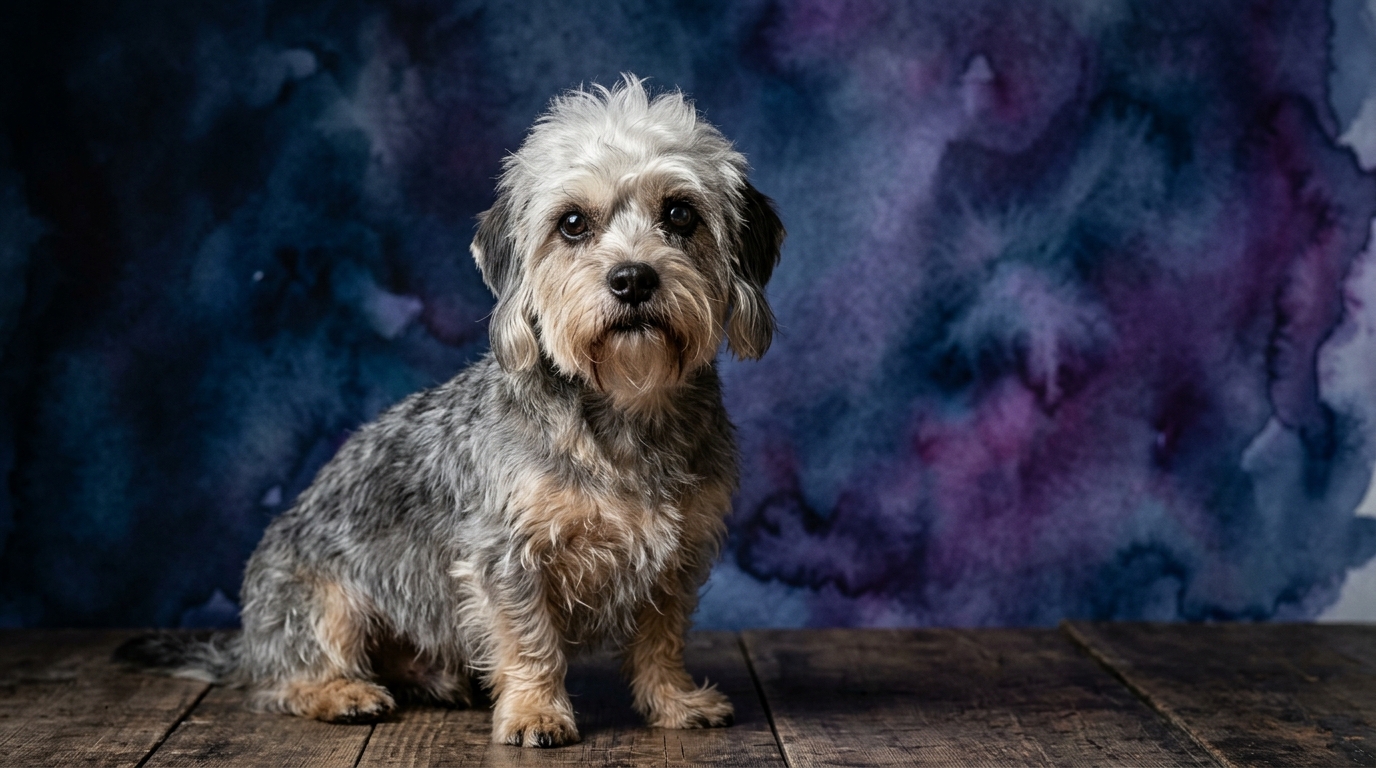
The Cosmic Pet Pet IQ Lab assesses canine intelligence across five key dimensions. For the Dandie Dinmont Terrier, a Terrier group dog not Coren-ranked, we observe a problem-solving score of 3/5, indicating a solid capacity for independent thought and overcoming obstacles. Their training speed is also 3/5, suggesting they learn at a moderate pace, often requiring consistent and engaging methods. Social intelligence stands at 3/5, reflecting their ability to form bonds and interpret cues within their immediate family, though perhaps with a reserved nature towards strangers. An instinctive drive of 3/5 highlights their inherent terrier tenacity and prey drive, while a memory score of 3/5 indicates a dependable capacity to recall lessons and experiences.
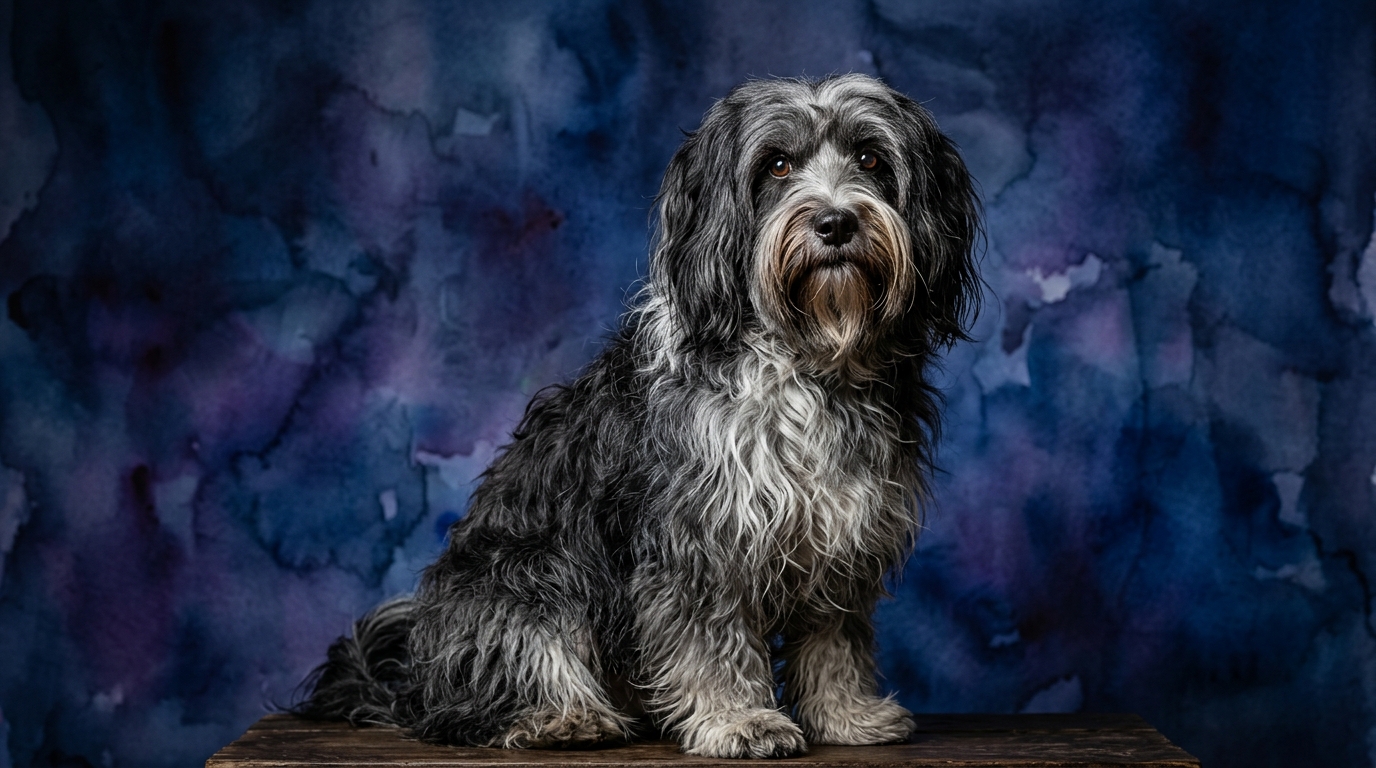
In comparison, the Tibetan Terrier, a Non-Sporting group dog Coren-ranked at #63, shares identical scores across all five dimensions. Their problem-solving capacity, also 3/5, often manifests as a thoughtful approach to environmental challenges and understanding household dynamics. A training speed of 3/5 suggests they are receptive learners, thriving on positive reinforcement and clear communication. Their social intelligence, at 3/5, points to a perceptive nature, deeply attuned to their human companions and often discerning with new acquaintances. An instinctive drive of 3/5 in this breed typically relates to their historical role as watchful companions and agile mountain dogs rather than a strong prey drive. Finally, their memory, also 3/5, ensures they retain learned behaviors and social experiences effectively.
Where the Dandie Dinmont Terrier Excels Cognitively
Despite identical numerical ratings, the Dandie Dinmont Terrier often demonstrates a particular cognitive strength rooted in its terrier heritage: tenacious, independent problem-solving driven by instinct. Their 3/5 problem-solving score is less about complex logical sequences and more about persistent, single-minded determination. For example, a Dandie might exhibit remarkable ingenuity in figuring out how to access a confined space or retrieve a hidden toy, employing a trial-and-error approach with unwavering resolve. This stems from centuries of selective breeding for hunting vermin, where a dog needed to think on its feet, make independent decisions underground, and not give up easily. This manifests as a practical, hands-on intelligence focused on achieving a specific, often physical, goal. Their instinctive drive, also 3/5, significantly fuels this cognitive application, making them adept at tasks requiring focused pursuit and overcoming resistance.
Furthermore, their memory, while rated 3/5, often seems particularly robust for spatial awareness and the location of "prey" or interesting scents. A Dandie might remember exactly where they last saw a squirrel or where a particular scent trail leads, exhibiting a recall of environmental details crucial to their ancestral function. This specific application of memory allows them to navigate their territory efficiently and return to points of interest, a direct cognitive advantage for an explorer and hunter.
Where the Tibetan Terrier Shows Unique Cognitive Strengths
The Tibetan Terrier, while also scoring 3/5 across the board, showcases its distinct cognitive prowess through its social perceptiveness and adaptable problem-solving, honed by centuries of close companionship with humans in challenging environments. Their 3/5 social intelligence often translates into a nuanced understanding of human emotions and household routines. They are perceptive observers, capable of picking up on subtle cues from their family members, often anticipating needs or moods without explicit commands. This makes them particularly adept at navigating the complexities of a multi-person household, understanding family dynamics, and offering comfort or companionship precisely when needed.
Their problem-solving at 3/5 frequently manifests as an ability to adapt to new situations and learn from observation within a social context. A Tibetan Terrier might figure out how to open a child-proof gate by watching a human, or learn to manipulate objects to gain access to a desired item within the home, demonstrating a more observational and context-dependent form of ingenuity. Their memory, also 3/5, is often applied to remembering social interactions, preferred routines, and the specific habits of their human family, contributing to their reputation as thoughtful and deeply connected companions. This blend of social acumen and adaptable intellect makes them unique in their cognitive application.
Training Dynamics: Dandie Dinmont vs. Tibetan Terrier
When it comes to training, both breeds score 3/5 for training speed, but their underlying motivations and potential challenges differ significantly, stemming from their breed temperaments. The Dandie Dinmont Terrier, with its strong independent streak and inherent terrier tenacity, requires a trainer who understands how to channel their instinctive drive. They learn effectively when the training is engaging, varied, and feels like a 'game' or a 'hunt' rather than a repetitive chore. Their 3/5 training speed means they grasp concepts, but their independent nature can lead to perceived 'stubbornness' if they don't see the immediate value or if the training is monotonous. Consistency, positive reinforcement, and short, fun sessions are key to maintaining their focus. They are less likely to be motivated purely by a desire to please and more by their own internal rewards, such as the thrill of a chase or a successful 'solve'.
The Tibetan Terrier, by contrast, also scoring 3/5 in training speed, tends to be more sensitive and responsive to their owner's emotional state. They thrive on positive reinforcement, clear communication, and a calm, patient approach. While they are intelligent and capable of learning a wide array of commands, their independent spirit, characteristic of many ancient breeds, means they respond best when treated as partners rather than subordinates. Harsh corrections or impatient methods can cause them to shut down or become withdrawn. Their social intelligence (3/5) means they are often highly attuned to their handler's cues, but their occasional 'selective hearing' might require creative motivation rather than brute force. They often learn quickly in a supportive and predictable environment, valuing the bond and interaction with their human.
Matching Breeds to Lifestyles: Active vs. Relaxed Owners
The cognitive profiles and temperaments of these two breeds lend themselves to different owner lifestyles. The Dandie Dinmont Terrier, with its pronounced instinctive drive (3/5) and independent problem-solving (3/5), is better suited for owners who are active and enjoy engaging with a dog that has a purpose. These dogs thrive with regular opportunities to explore, dig, and 'hunt' (even if it's just for toys in the backyard). Owners who appreciate a dog with a strong personality and are prepared to provide consistent mental and physical stimulation to channel their terrier energy will find a rewarding companion. They are not necessarily high-energy in the sense of needing to run miles every day, but they require engagement that satisfies their inquisitive and tenacious nature. A relaxed owner who prefers a purely sedentary companion might find the Dandie's independent streak and drive challenging.
The Tibetan Terrier, on the other hand, with its adaptable problem-solving (3/5) and strong social intelligence (3/5), offers a versatile companionship that can suit both moderately active and more relaxed owners. They are agile and enjoy outdoor activities, making them good partners for hikes or long walks, but they are equally content to curl up with their family indoors. Their perceptiveness means they adapt well to the household's rhythm. Owners who value a deeply connected, sensitive, and watchful companion who can be both an active participant in family adventures and a calm presence at home will find the Tibetan Terrier a wonderful fit. They are not typically demanding of constant vigorous exercise, but they do require consistent social interaction and mental engagement within the family unit.
The Verdict
Choose a Dandie Dinmont Terrier if you appreciate a dog with tenacious, independent problem-solving skills and a distinct terrier drive, thriving on engaging activities that challenge their intellect and instincts.
Opt for a Tibetan Terrier if you seek a perceptive, socially intelligent companion who adapts well to family life and offers versatile companionship for both active outings and relaxed home environments.
🧠 Find Your Pet's IQ Score
Our Pet IQ Lab assessment covers 25+ tests across 5 cognitive dimensions — personalized to your breed.
Take the Full IQ Test →Frequently Asked Questions
Do Dandie Dinmont Terriers get along with other pets?
Dandie Dinmont Terriers can coexist with other pets, especially if introduced early in life. However, their strong instinctive drive (3/5) means small, rodent-like pets might trigger their prey drive, requiring careful supervision and training.
Are Tibetan Terriers good apartment dogs?
Yes, Tibetan Terriers can adapt well to apartment living due to their adaptable nature and moderate exercise needs, provided they receive regular walks and mental stimulation. Their social intelligence (3/5) means they thrive on close family interaction.
Which breed is more prone to separation anxiety?
While both breeds form strong bonds, Tibetan Terriers, with their higher social intelligence and desire for companionship, might be slightly more prone to separation anxiety if left alone for extended periods. Dandie Dinmont Terriers, being more independent, might tolerate solitude better but still require companionship.