
Side-by-Side Cognitive Profile: Dandie Dinmont Terrier vs. Toy Poodle
The Cosmic Pet Pet IQ Lab employs a five-dimensional framework to assess canine cognition, providing a granular view of each breed's mental aptitudes. For the Dandie Dinmont Terrier, we observe a steady, measured cognitive profile, with scores of 3/5 across all five dimensions: problem solving, training speed, social intelligence, instinctive drive, and memory. This indicates a dog capable and competent, but one who approaches learning and interaction with a degree of deliberation and self-reliance, rather than immediate, eager engagement. Their problem-solving at 3/5 suggests they will eventually figure things out, perhaps through trial and error or by following their own independent reasoning, rather than seeking direct human assistance. Training Speed at 3/5 means lessons stick with consistent reinforcement, but the pace of acquisition is moderate, requiring patience and engaging methods to hold their attention. Social Intelligence at 3/5 indicates they are attuned to their immediate family and familiar social cues but might not be overly demonstrative or broadly adaptable in diverse social settings. Instinctive Drive at 3/5 reflects their terrier heritage, possessing a balanced prey drive that can be managed within a companion lifestyle, rather than being overwhelming. Memory at 3/5 implies they retain learned behaviors and experiences, but consistent practice is key to solidifying those neural pathways over time.
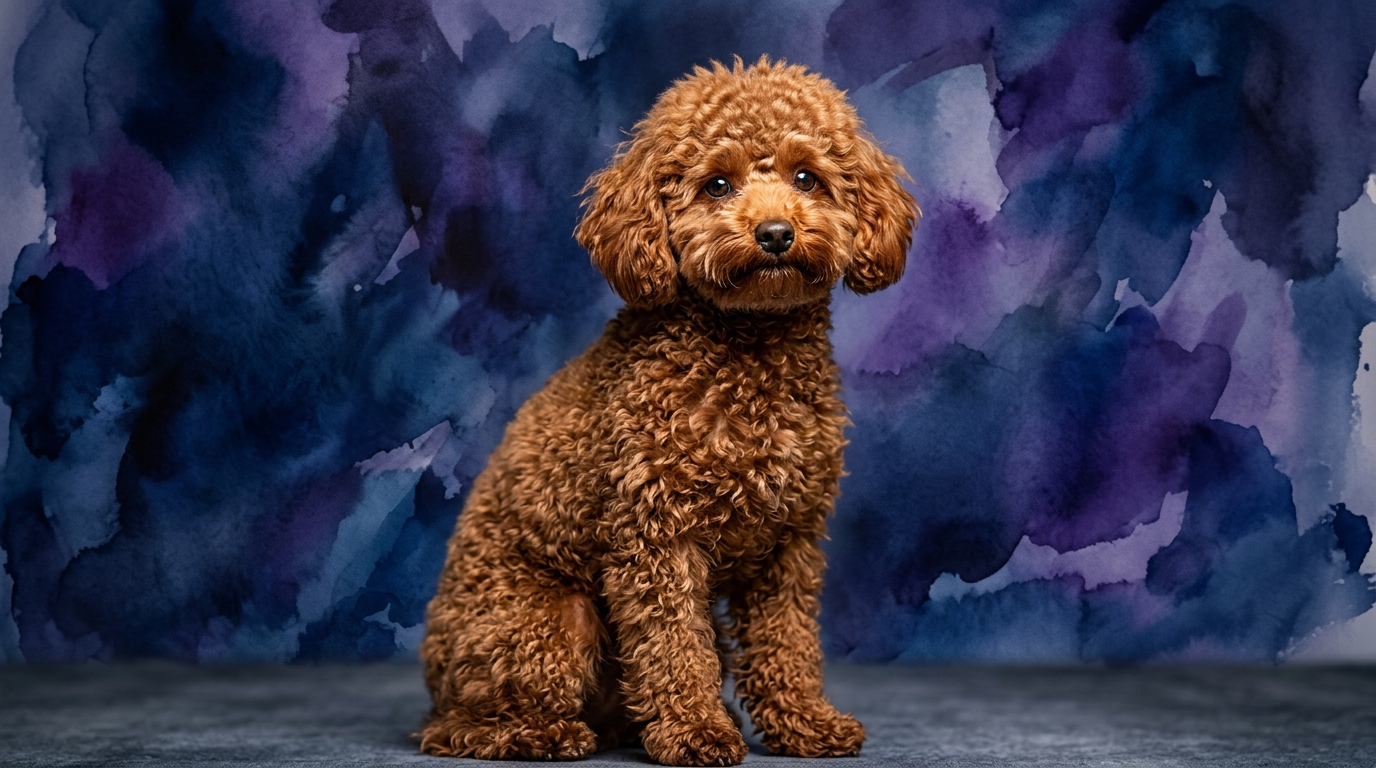
In stark contrast, the Toy Poodle presents a profile marked by exceptional cognitive agility in several key areas, underpinned by their impressive Coren rank of #2 among all breeds. Their Problem Solving is rated an outstanding 5/5, indicating a dog that actively analyzes situations, strategizes effectively, and quickly grasps complex tasks, often demonstrating a proactive approach to mental challenges. Training Speed also scores a perfect 5/5, signifying a breed that picks up new commands and routines with remarkable rapidity, eager to engage in the learning process and respond to cues. Social Intelligence for the Toy Poodle is rated 3/5, mirroring the Dandie Dinmont Terrier; while perceptive to human emotions and family dynamics, their social acumen might be more focused on their immediate circle and less about broad, generalized social adaptability. Instinctive Drive similarly scores 3/5, suggesting they retain some of the Poodle's original retrieving and water dog predispositions, but these drives are typically well-integrated into a companion role and are not overtly dominant. Finally, Memory for the Toy Poodle is an impressive 5/5, reflecting an exceptional capacity for recalling learned behaviors, remembering people, places, and past experiences, which significantly aids in advanced training and complex routines.
Where the Dandie Dinmont Terrier Shines Cognitively
While the Toy Poodle boasts higher scores in several areas, the Dandie Dinmont Terrier's cognitive profile offers unique advantages for certain owners. Their 3/5 problem-solving score translates into a delightful independence; these dogs are less inclined to rely solely on human direction and can often entertain themselves or figure out solutions to environmental puzzles on their own terms. This self-sufficiency means they might be less prone to separation anxiety stemming from a constant need for human engagement to solve their daily dilemmas. Furthermore, their moderate training speed means that once a lesson is truly understood and internalized, it tends to be deeply embedded, often leading to a reliable, if slower-to-acquire, repertoire of behaviors. This breed's cognitive make-up fosters a certain mental resilience, preferring straightforward approaches and consistent routines over the constant mental gymnastics that might overwhelm a more sensitive or intensely focused canine.
Where the Toy Poodle Excels Cognitively
The Toy Poodle's exceptional cognitive scores paint a picture of a canine partner eager for mental engagement and quick to adapt. Their 5/5 problem-solving ability means they are adept at navigating complex scenarios, figuring out how to open child-proof latches, or mastering multi-step puzzle toys with remarkable efficiency. This breed thrives on intellectual challenges, actively seeking opportunities to use their minds rather than passively waiting for direction. Coupled with a 5/5 training speed, the Toy Poodle can learn an extensive vocabulary of commands and tricks at an astonishing pace, making them incredibly versatile for various dog sports or advanced obedience. Their perfect 5/5 memory ensures that these complex lessons are retained over long periods, allowing for the build-up of an impressive behavioral repertoire and making them highly reliable in performing intricate routines or remembering specific cues from months past. This combination of rapid learning, analytical thinking, and strong recall makes the Toy Poodle an outstanding candidate for owners seeking a deeply interactive and mentally stimulating companion.
Trainability: Which Breed is Easier to Teach?
In the realm of trainability, the Toy Poodle clearly holds an advantage due to their superior cognitive scores. Their 5/5 training speed means they quickly form associations between commands, actions, and rewards, making the learning process efficient and often enjoyable for both dog and owner. This rapid uptake, combined with a 5/5 memory, ensures that once a behavior is learned, it is retained with minimal refreshers, paving the way for advanced and nuanced training. Toy Poodles generally exhibit an eagerness to please and thrive on positive reinforcement, making them highly cooperative students who often anticipate the next instruction. The Dandie Dinmont Terrier, with its 3/5 training speed and memory, presents a different training journey. While certainly capable of learning, they require more patience, consistency, and creative engagement to counteract their inherent terrier independence. These dogs can be more self-directed, sometimes questioning the immediate value of a command or becoming distracted by environmental stimuli. Training a Dandie often involves finding what truly motivates them and making lessons fun and rewarding, understanding that repetition and a firm but gentle approach will yield results over time, even if the pace is slower.
Lifestyle Match: Active vs. Relaxed Owners
When considering lifestyle compatibility, both breeds offer distinct advantages. The Toy Poodle, despite its smaller stature, is an excellent fit for owners who enjoy active mental engagement. Their 5/5 problem-solving and memory mean they thrive on daily mental stimulation, whether it's learning new tricks, engaging with complex puzzle toys, or participating in dog sports like agility or obedience. While they appreciate physical exercise, their true need is for their minds to be challenged, making them ideal for owners who enjoy interactive play and training sessions that go beyond simple walks. A relaxed owner who isn't prepared to provide this mental outlet might find a Toy Poodle exhibiting boredom behaviors. The Dandie Dinmont Terrier, on the other hand, is generally better suited for owners who appreciate a more balanced and relaxed pace. Their consistent 3/5 scores across all cognitive dimensions suggest they enjoy moderate daily walks and exploring, but don't typically demand intense, high-octane physical or mental exertion. They are content with a predictable routine, consistent but not overly strenuous training, and ample snuggle time. An owner who enjoys quiet companionship and moderate activity, without the pressure of constant mental enrichment activities, would find a Dandie Dinmont Terrier a delightful and harmonious companion.
The Verdict
Opt for a Dandie Dinmont Terrier if you appreciate an independent, resilient companion who learns at a steady pace and thrives on consistent routines and moderate mental engagement.
Select a Toy Poodle if you are an owner who relishes the process of advanced training, enjoys teaching complex tasks, and desires a canine partner eager to engage in high-level mental stimulation and problem-solving.
🧠 Find Your Pet's IQ Score
Our Pet IQ Lab assessment covers 25+ tests across 5 cognitive dimensions — personalized to your breed.
Take the Full IQ Test →Frequently Asked Questions
Are Dandie Dinmont Terriers difficult to train?
Dandie Dinmont Terriers are not inherently difficult, but their 3/5 training speed means they require more patience and consistency than some breeds. Their independent nature necessitates engaging, positive reinforcement methods and understanding that they learn at their own deliberate pace.
Do Toy Poodles need a lot of physical exercise?
While Toy Poodles enjoy daily walks and play, their primary need is for mental stimulation, scoring 5/5 in problem-solving and memory. Owners should focus on puzzle toys, trick training, and interactive games to keep their sharp minds engaged, complementing their physical activity.
How do their social intelligence scores compare?
Both breeds score 3/5 in social intelligence, indicating they are attuned to their immediate family's emotions and cues. This suggests they form strong bonds within their household but might not be overly expressive or broadly adaptable in diverse social situations with strangers.