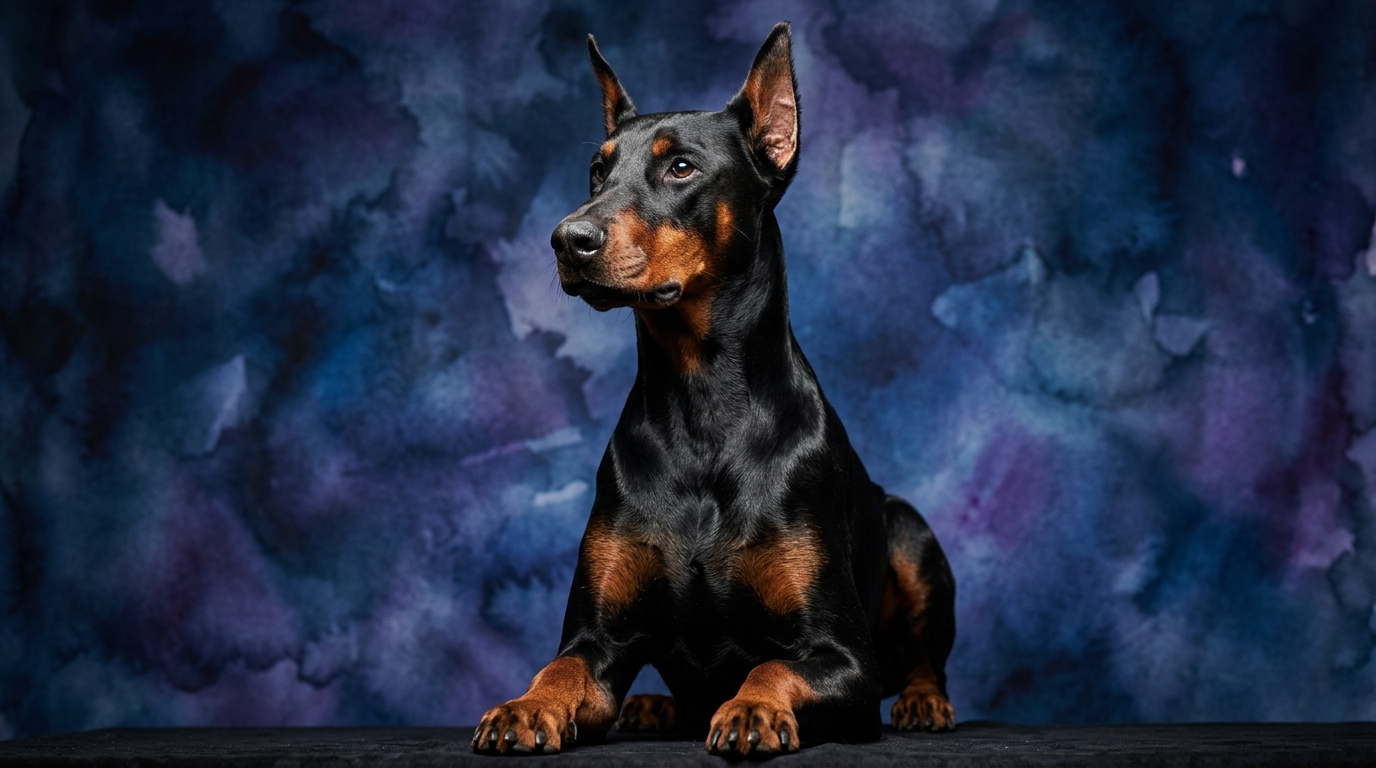
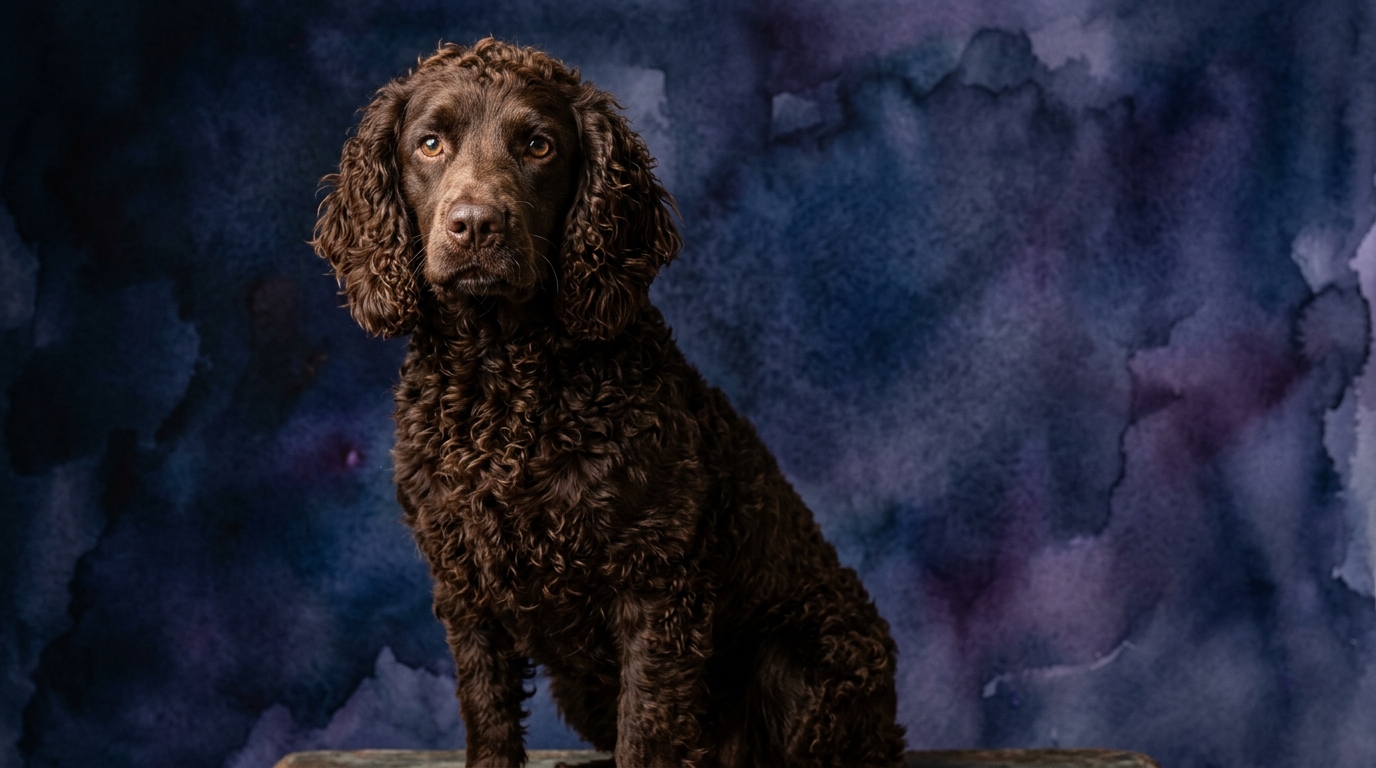
Side-by-Side IQ Profile: Doberman Pinscher vs. American Water Spaniel
The Cosmic Pet Pet IQ Lab provides a robust framework for understanding canine cognition, breaking down intelligence into five key dimensions: problem solving, training speed, social intelligence, instinctive drive, and memory. For the Doberman Pinscher, a Working group dog with a Coren ranking of #5, their profile showcases exceptional cognitive prowess across the board. They achieve a perfect 5/5 in problem solving, training speed, instinctive drive, and memory, alongside a strong 4/5 in social intelligence, indicating a highly adaptable and quick-thinking companion.
This breed's high scores reflect a historical demand for complex tasks and close partnership with humans, where rapid learning and strategic thinking were paramount. In contrast, the American Water Spaniel, a Sporting group dog ranked #44 by Coren, presents a different but equally compelling cognitive makeup. This breed scores a 3/5 in problem solving, training speed, social intelligence, and instinctive drive, with a commendable 4/5 in memory.
These scores suggest a capable and focused dog, tailored for specific roles rather than broad, abstract challenges. Their cognitive strengths are geared towards efficiency and reliability in their specialized tasks, rather than rapid, generalized learning or complex strategic planning. The comparison highlights how distinct evolutionary pressures and human partnership roles have sculpted their mental architectures.
Where the Doberman Pinscher Wins Cognitively
The Doberman Pinscher's cognitive architecture presents several distinct advantages, particularly in areas demanding rapid assimilation and strategic application of knowledge. Their perfect 5/5 score in problem solving means they possess an exceptional capacity to analyze novel situations, devise effective strategies, and adapt their approach on the fly. This isn't just about figuring out a puzzle toy; it extends to understanding complex multi-step commands or navigating unexpected environmental changes with minimal human intervention.
Coupled with a 5/5 in training speed, Dobermans absorb new information with astonishing alacrity, often mastering a command after only a handful of repetitions. This makes them exceptionally responsive and capable of learning an extensive repertoire of behaviors, from basic obedience to intricate sport routines. Furthermore, their 5/5 instinctive drive translates into an intense focus and unwavering motivation, whether it's for protection work, scent detection, or competitive obedience. This powerful internal engine fuels their persistence and precision, ensuring tasks are completed with dedication.
Finally, a 5/5 memory means Dobermans retain learned behaviors, routines, and even specific environmental details over extended periods. This durable recall ensures their training is long-lasting and cumulative, allowing them to build upon a vast foundation of knowledge and experience without significant regression. These combined attributes make the Doberman a formidable cognitive force, excelling in roles requiring quick wit and sustained mental effort.
Where the American Water Spaniel Wins Cognitively
While the American Water Spaniel's scores might appear lower than the Doberman's on a universal scale, their cognitive profile represents a winning strategy for their specific historical purpose and lifestyle. Their 4/5 memory score, while one point shy of the Doberman's, is a significant asset, particularly for a sporting dog expected to remember game locations, retrieve multiple birds, and recall complex scent patterns over varied terrain. This robust memory ensures they can consistently perform their duties in the field without needing frequent re-training on core tasks.
The AWS's 3/5 in social intelligence, though not as high as the Doberman's, often translates into a more independent nature. This independence is not a drawback but an advantage in scenarios where a dog needs to work autonomously, making decisions in the field without constant human direction, such as flushing birds or retrieving from dense cover. They are less prone to seeking constant validation or relying heavily on handler cues for every micro-decision, fostering a self-reliant work ethic.
Their moderate instinctive drive of 3/5 means they are driven enough to perform their tasks with enthusiasm but are less likely to become overly intense or hyper-focused to the point of being challenging in a home environment. This balanced drive allows them to transition more smoothly from working mode to companion mode, making them adaptable family members. In essence, the American Water Spaniel's cognitive strengths lie in their specialized efficiency, resilient memory for practical tasks, and a degree of independent decision-making crucial for their role as a steadfast hunting companion.
Training Dynamics: Doberman Pinscher vs. American Water Spaniel
When evaluating ease of training, the Doberman Pinscher clearly holds an advantage due to their superior cognitive scores across multiple dimensions. Their 5/5 training speed means they grasp new commands almost instantaneously, often requiring only a few repetitions before demonstrating proficiency. This rapid absorption is bolstered by their 5/5 problem-solving ability, allowing them to anticipate handler intentions and generalize learned behaviors to new contexts with remarkable ease. For instance, a Doberman might quickly understand that 'stay' applies whether the handler is nearby or out of sight, or that a new obstacle in an agility course requires a similar approach to a previously encountered one. Their potent 5/5 instinctive drive also contributes significantly, as they possess a strong innate desire to work and please, making them highly motivated partners in any training endeavor.
The American Water Spaniel, with a 3/5 training speed and problem-solving, requires a more patient and consistent approach. They will certainly learn, especially given their commendable 4/5 memory, but the process may involve more repetitions and a slower progression through complex sequences. Their more independent social intelligence (3/5) means they might not always offer immediate, enthusiastic compliance, sometimes needing more creative motivational strategies to maintain engagement. While equally capable of mastering a wide range of commands, the AWS typically benefits from shorter, more frequent training sessions focused on positive reinforcement to build and reinforce behaviors. Their training success hinges on consistency and understanding their innate desire for purpose-driven activity.
Suitability for Active vs. Relaxed Owners
For owners with an active lifestyle and a desire for a highly engaged canine partner, the Doberman Pinscher is an exceptional fit. Their perfect 5/5 scores in instinctive drive and problem-solving necessitate significant mental and physical outlets to thrive. These dogs demand daily structured exercise, advanced obedience work, and opportunities to engage their sharp minds through dog sports, protection training, or complex puzzle activities. An owner who can dedicate substantial time to channeling this immense cognitive and physical energy will find an incredibly rewarding and responsive companion, but one who can become restless or destructive without adequate engagement.
Conversely, while no dog is truly suited for a 'relaxed' owner in the sense of minimal interaction, the American Water Spaniel might be a more manageable choice for those seeking a companion with a somewhat less intense cognitive demand. They still require regular exercise to satisfy their sporting instincts, including opportunities for swimming and retrieving, but their moderate scores in problem-solving and drive mean they are less prone to becoming destructive or anxious if not constantly challenged with complex mental tasks. An AWS thrives with consistent outdoor activity and a stable routine, but without the relentless need for advanced intellectual stimulation that a Doberman often presents, making them a good fit for active families who enjoy the outdoors but don't necessarily seek a high-level working partner.
The Verdict
Choose the Doberman Pinscher if you seek a highly engaged, supremely responsive partner for advanced training, competitive dog sports, or dedicated protection work, and are prepared to invest significant daily time in their mental and physical stimulation.
Choose the American Water Spaniel if you appreciate a more independent, resilient companion for outdoor adventures, particularly water-based activities and retrieving tasks, and are prepared for a consistent, patient training approach that respects their specialized working heritage.
🧠 Find Your Pet's IQ Score
Our Pet IQ Lab assessment covers 25+ tests across 5 cognitive dimensions — personalized to your breed.
Take the Full IQ Test →Frequently Asked Questions
Does the Doberman Pinscher's social intelligence score of 4/5 mean they are less friendly?
Not at all; a 4/5 social intelligence indicates they are highly perceptive to human cues and social dynamics, making them excellent communicators and adaptable to family life. It suggests a strong awareness of their social environment, enabling them to form deep bonds while also being discerning in their interactions.
Can an American Water Spaniel learn complex commands despite a 3/5 training speed?
Absolutely. While they may take more repetitions than a Doberman Pinscher, their 4/5 memory ensures that once learned, commands and routines are retained effectively. Consistency, patience, and positive reinforcement are key to unlocking their learning potential and building a robust behavioral repertoire.
How does instinctive drive impact daily life for these breeds?
For the Doberman Pinscher, a 5/5 instinctive drive means they possess a powerful internal motivation for work, requiring consistent outlets like protection training or scent work to prevent boredom and channel their energy constructively. The American Water Spaniel's 3/5 drive suggests a balanced enthusiasm for their sporting tasks, making them eager for retrieves but generally less intense in their daily demands, transitioning more easily between work and rest.