Side-by-Side Cognitive Profile: Doberman Pinscher vs. Australian Terrier
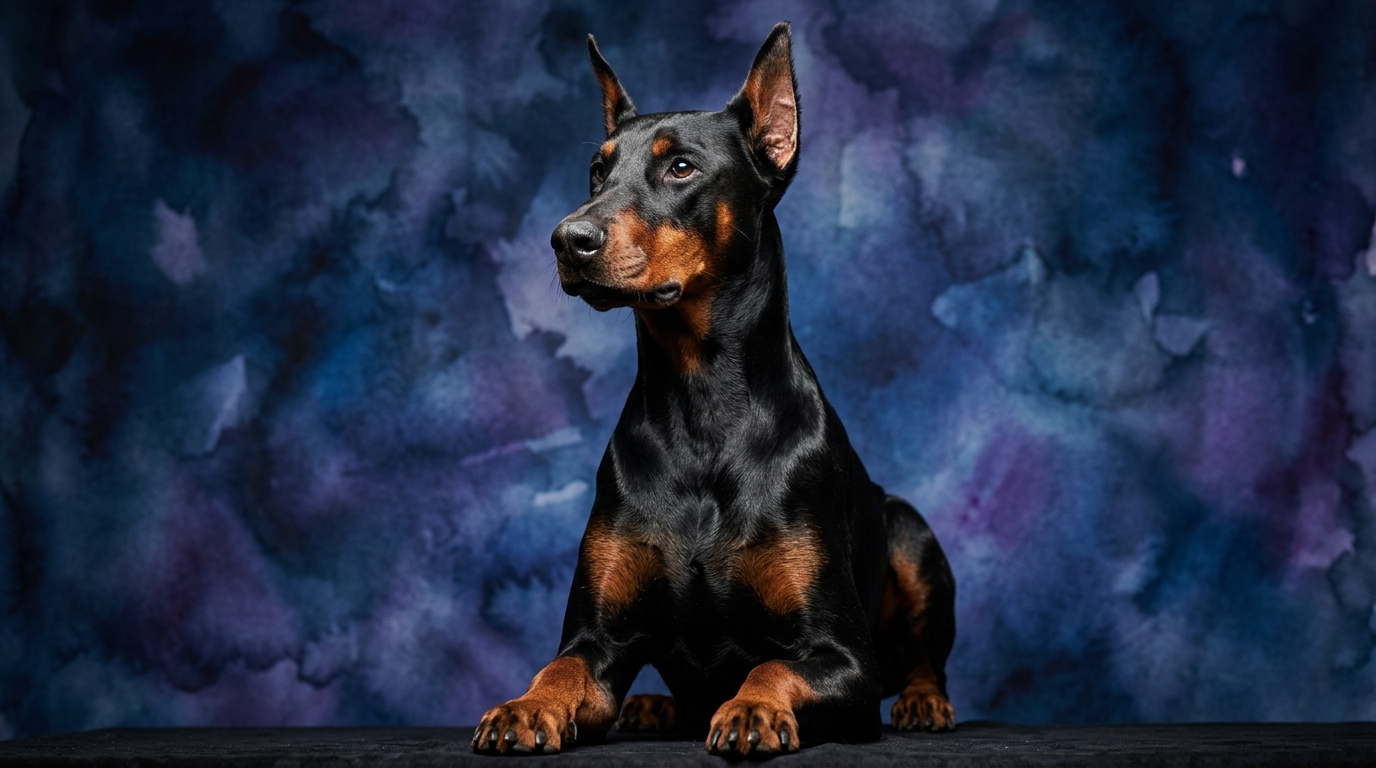
The Cosmic Pet Pet IQ Lab provides a unique framework for evaluating canine mental faculties across five key dimensions. For the Doberman Pinscher, a distinguished member of the Working Group, we observe a profile indicative of a highly capable and purpose-driven mind. Their Problem Solving is rated 5/5, reflecting an exceptional capacity to navigate complex scenarios and devise solutions. Training Speed also stands at a perfect 5/5, signifying their rapid absorption of new commands and routines. Social Intelligence is strong at 4/5, indicating a nuanced understanding of social cues and interactions. An Instinctive Drive of 5/5 underscores their powerful inherent motivations for tasks and protection, while their Memory, at 5/5, ensures long-term retention of learned information.
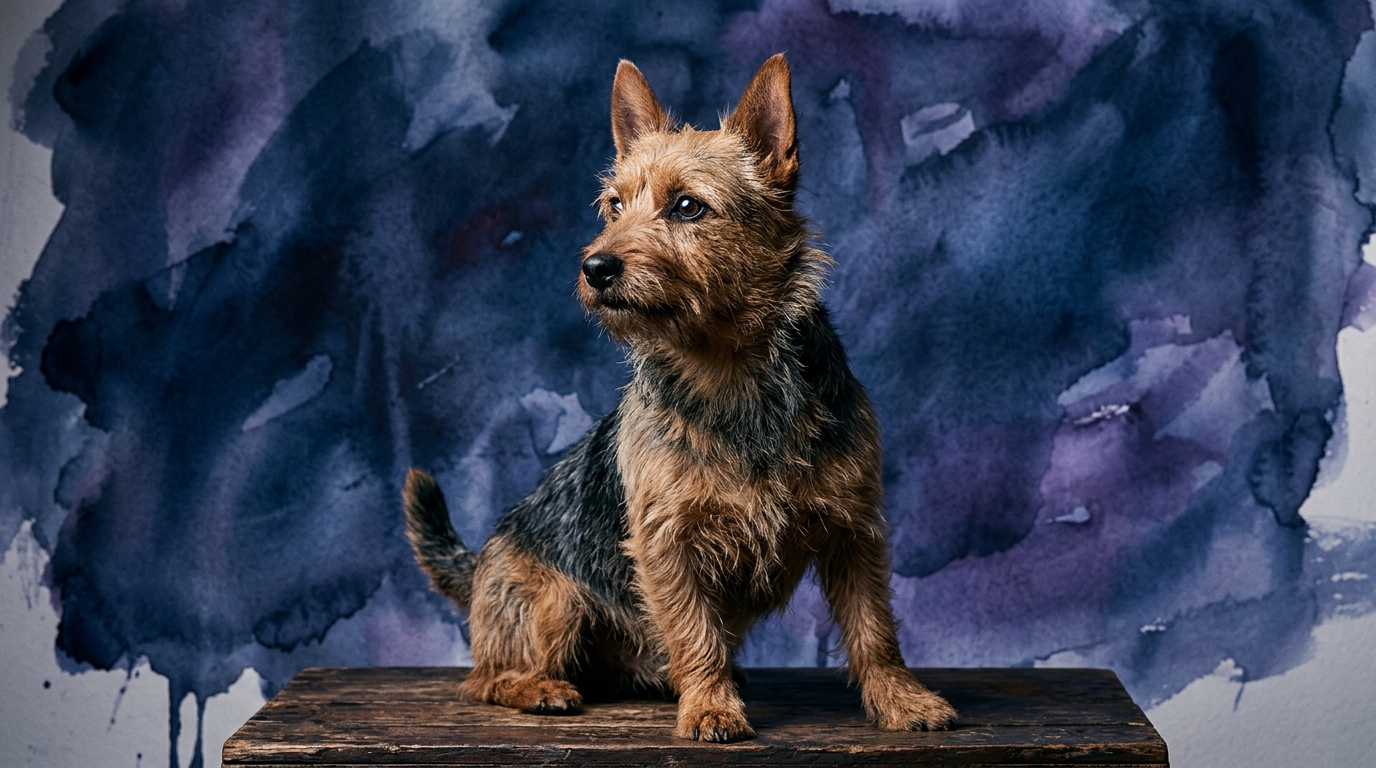
In contrast, the Australian Terrier, a spirited member of the Terrier Group, presents a different cognitive landscape. Their Problem Solving is rated 3/5, suggesting practical cunning, particularly in instinct-driven situations, rather than abstract conceptualization. Training Speed is moderate at 3/5, meaning they learn with consistency but may require more repetitions than some breeds. Social Intelligence is 3/5, indicating an awareness of their environment and companions but perhaps a more independent social approach. Their Instinctive Drive, also 3/5, points to strong terrier traits like prey drive and digging. Finally, their Memory is 3/5, indicating a functional retention of information but potentially less precision for infrequently practiced lessons.
Where the Doberman Pinscher Excels Cognitively
The Doberman Pinscher's cognitive strengths are evident in their remarkable efficiency and focus, particularly when engaging with human-directed tasks. Their top-tier Problem Solving (5/5) allows them to swiftly analyze and resolve intricate challenges, such as figuring out multi-step puzzle toys or navigating complex obstacle courses. This breed demonstrates an impressive ability to generalize learned concepts, applying solutions from one scenario to a similar, novel situation with minimal guidance. The Doberman's superior Training Speed (5/5) means they grasp new commands often within a few repetitions, making them highly responsive to instruction and capable of mastering an extensive repertoire of behaviors quickly. Their perfect Memory (5/5) ensures these lessons are retained over long periods, making reinforcement straightforward even after breaks in training.
Furthermore, their strong Social Intelligence (4/5) enables them to interpret human intentions and moods effectively, fostering a deep working partnership. This cognitive advantage allows Dobermans to anticipate commands and adapt their behavior to different social contexts, making them exceptionally attuned companions in structured environments. Their high Instinctive Drive (5/5) is channelled into purposeful activities, providing a powerful internal motivation to excel in roles requiring focus, precision, and dedication, whether in protection work, obedience, or agility.
Where the Australian Terrier Demonstrates Unique Cognitive Strengths
While the Australian Terrier's cognitive profile differs from the Doberman's, it reveals distinct strengths rooted in their terrier heritage. Their Problem Solving (3/5) shines in practical, independent contexts, particularly those related to their innate drives. An Australian Terrier is adept at figuring out how to access a hidden burrow, navigate tight spaces, or persist in digging to unearth an interesting scent. This isn't abstract problem-solving, but rather a tenacious, goal-oriented approach to immediate environmental challenges. Their moderate Instinctive Drive (3/5) fuels this persistence, making them incredibly determined when pursuing their own interests, often demonstrating resourcefulness in independent exploration.
The Australian Terrier's Social Intelligence (3/5) allows them to form strong bonds and understand household dynamics, though they often exhibit a more independent streak compared to working breeds. They observe their human companions and surroundings keenly, often noticing subtle changes or sounds that might go unnoticed by others, demonstrating a sharp awareness of their immediate environment. Their moderate Training Speed and Memory (both 3/5) mean they are capable learners, but their learning process is often influenced by their independent nature and strong environmental focus, requiring engaging and varied training approaches to hold their attention. This independence can be a cognitive asset, allowing them to make decisions and act autonomously in situations where direct human instruction might be absent.
Ease of Training: Doberman Pinscher vs. Australian Terrier
When considering ease of training, the Doberman Pinscher generally presents a more straightforward experience for most owners. Their exceptional Training Speed (5/5) means they absorb new commands and routines with remarkable swiftness, often requiring very few repetitions to achieve mastery. This is compounded by their superior Memory (5/5), ensuring that once learned, behaviors are retained over long periods. Furthermore, their strong Social Intelligence (4/5) makes them highly responsive to human direction and eager to engage in collaborative tasks. A Doberman typically thrives on structure and purpose, finding motivation in pleasing their owner and fulfilling a 'job.' They are less prone to distraction during training sessions, maintaining focus on the task at hand.
The Australian Terrier, while trainable, often presents a more nuanced challenge. Their moderate Training Speed and Memory (both 3/5) mean they require more consistent, patient, and engaging methods. Their powerful instinctive drives, particularly for chasing and digging, can easily sidetrack them during training, as they might prioritize an interesting scent or movement over a command. Australian Terriers possess an independent spirit; they may view commands as suggestions rather than absolute directives if not sufficiently motivated or if training becomes monotonous. Owners must be creative and persistent, using positive reinforcement and varying training locations and activities to maintain their interest and overcome their natural inclination for self-directed exploration. Real behavioral differences include the Doberman's innate desire to work *with* their human versus the Australian Terrier's tendency to work *alongside* or *for* themselves.
Which Suits Active Owners vs. Relaxed Owners
For active owners seeking a highly engaged and purposeful canine partner, the Doberman Pinscher is an excellent match. Their high instinctive drive and problem-solving abilities demand consistent mental and physical stimulation. They excel in activities like advanced obedience, protection sports, agility, and extensive daily runs or hikes where they have a clear objective. A Doberman requires an owner dedicated to channeling their considerable energy and cognitive capacity into productive outlets; without sufficient engagement, they can become bored, anxious, or develop destructive behaviors. They thrive on having a 'job' and working collaboratively with their human.
The Australian Terrier also suits active owners, but for different reasons. Their robust energy and strong terrier instincts mean they need regular vigorous exercise and outlets for their natural drives, such as digging, chasing, and exploring. They are well-suited for owners who enjoy long walks, interactive play, Earthdog trials, or agility, and appreciate a dog with a spirited, independent personality. While they need activity, their cognitive profile suggests they are often content with self-directed exploration in a secure yard, provided they also receive consistent human interaction and training. Neither breed is truly suitable for 'relaxed' owners in the sense of low-effort companionship; both require significant time, attention, and appropriate outlets for their inherent mental and physical needs to prevent boredom and behavioral issues. However, the Doberman demands more structured, human-centric activity, whereas the Australian Terrier can balance human-directed play with independent ventures.
The Verdict
Choose a Doberman Pinscher if you desire a highly trainable, purpose-driven companion for advanced obedience, protective roles, or competitive dog sports, and are prepared to dedicate significant time to their mental and physical engagement.
Opt for an Australian Terrier if you appreciate a spirited, independent companion with a keen sense of adventure, are ready for consistent, creative training, and can provide ample opportunities for their natural instincts like digging and chasing in a secure environment.
🧠 Find Your Pet's IQ Score
Our Pet IQ Lab assessment covers 25+ tests across 5 cognitive dimensions — personalized to your breed.
Take the Full IQ Test →Frequently Asked Questions
Do Dobermans require constant mental stimulation?
Yes, Doberman Pinschers, with their high problem-solving and memory scores, thrive on consistent mental engagement, such as training, puzzle toys, and learning new tasks, to prevent boredom and foster well-being.
Are Australian Terriers difficult to house train?
Australian Terriers can be house-trained successfully with consistency and patience; their moderate training speed means they may require more repetitions and a highly structured routine compared to some other breeds.
Can an Australian Terrier live in an apartment?
An Australian Terrier can adapt to apartment living if provided with sufficient daily exercise, mental stimulation, and opportunities to expend their energy through walks and play, despite their strong instincts.