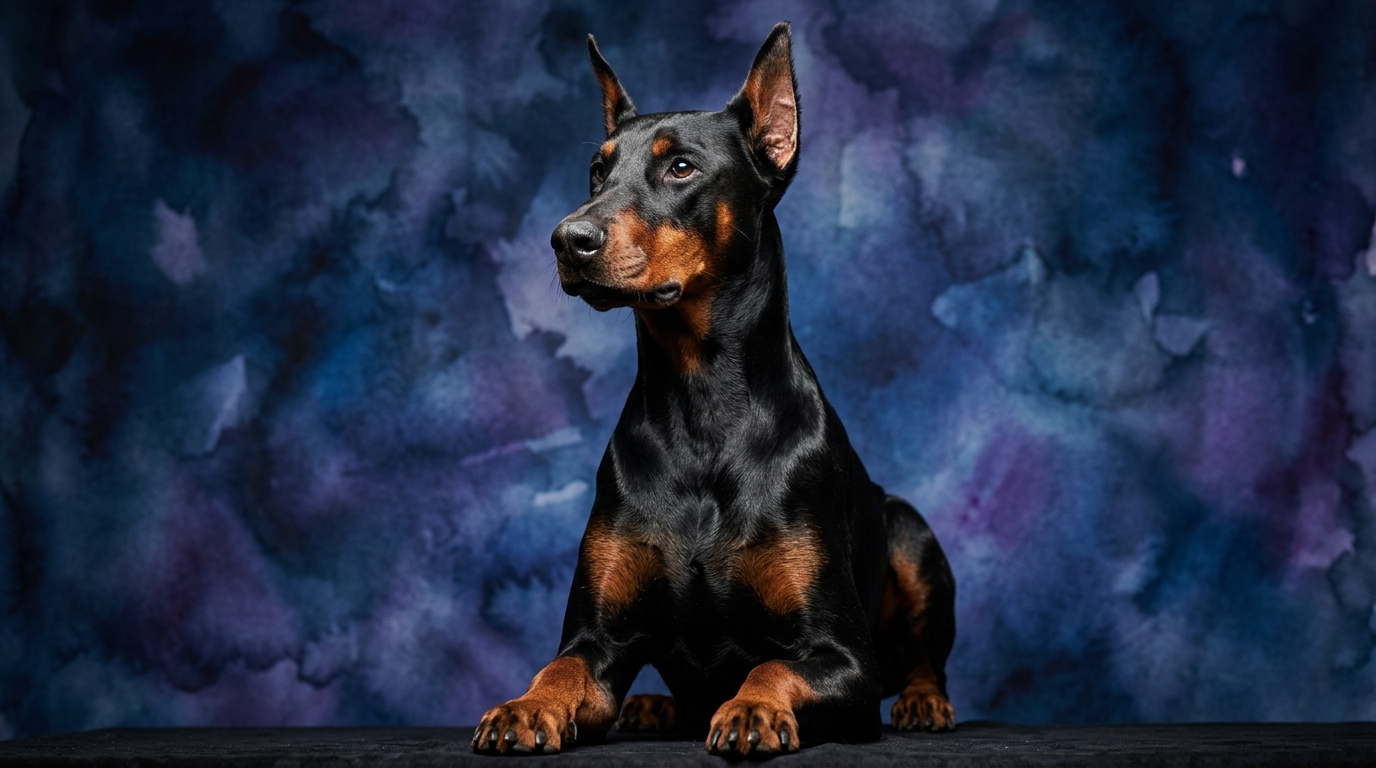
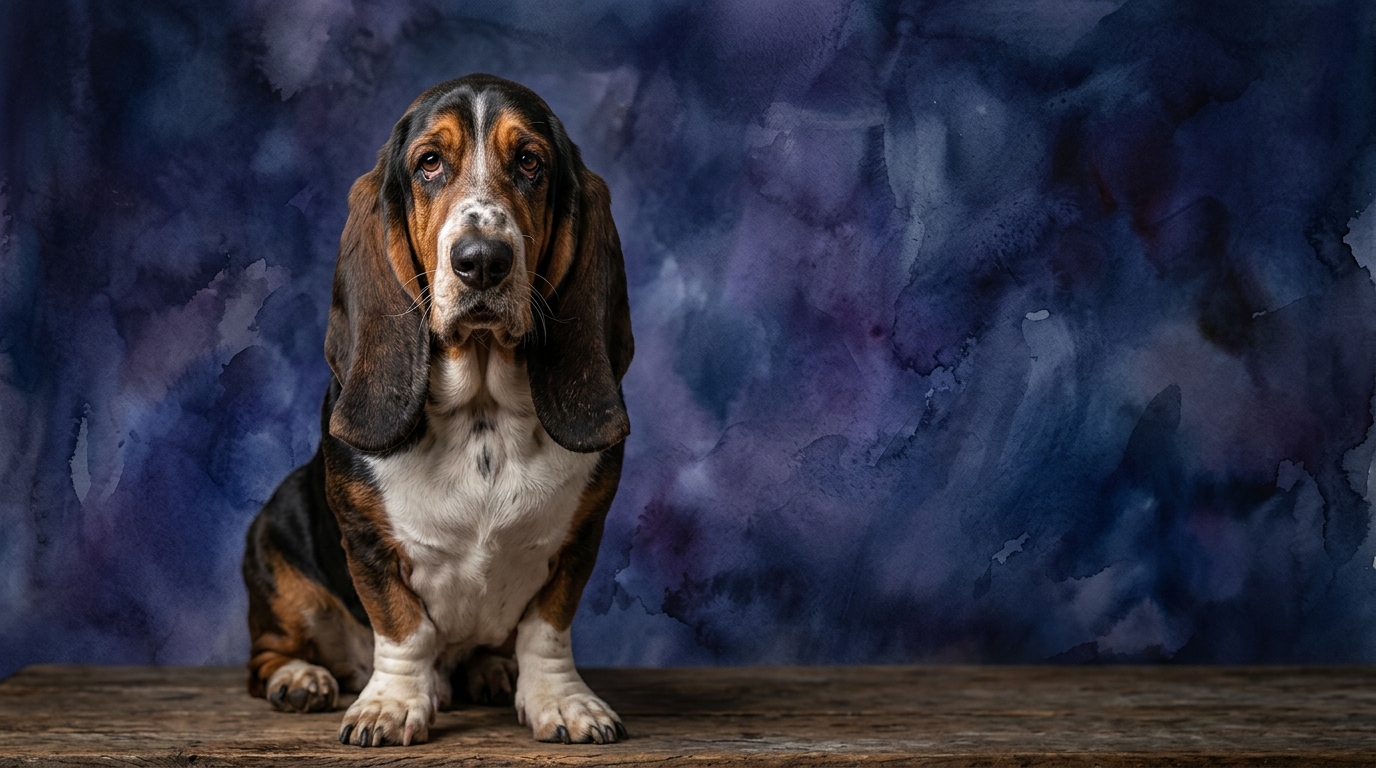
Side-by-Side IQ Profile: Doberman Pinscher vs. Basset Hound
At The Cosmic Pet Pet IQ Lab, we evaluate canine intelligence across five key dimensions, offering a nuanced understanding beyond simple obedience. The Doberman Pinscher, a sentinel of the working group, consistently demonstrates exceptional cognitive prowess, reflected in its Coren rank of #5. Their Problem Solving is rated 5/5, indicating an outstanding capacity for understanding complex tasks, strategizing, and adapting to new challenges with remarkable speed. Training Speed also scores a perfect 5/5, meaning Dobermans grasp new commands and routines with minimal repetition, eager to comply and generalize learned behaviors to new contexts. Their Social Intelligence, at 4/5, highlights a strong ability to interpret human cues, emotional states, and intentions, fostering a deep partnership. An Instinctive Drive of 5/5 speaks to their powerful innate motivation for purposeful work, protection, and vigilance, while a Memory score of 5/5 ensures they retain vast amounts of information, from commands to routines and past experiences, with impressive accuracy.
In stark contrast, the Basset Hound, a cherished member of the hound group, occupies a Coren rank of #71, reflecting a different set of cognitive priorities. Across all five IQ dimensions – Problem Solving, Training Speed, Social Intelligence, Instinctive Drive, and Memory – the Basset Hound consistently scores 3/5. This doesn't imply a lack of intellect, but rather a specialized intelligence shaped by centuries of selective breeding for scent-tracking. Their Problem Solving, while moderate, is often applied to navigating intricate scent trails rather than abstract puzzles. A Training Speed of 3/5 suggests they learn at a more deliberate pace, often requiring more patience and repetition, driven less by a desire to please and more by their own internal motivations. Social Intelligence at 3/5 indicates they are certainly capable of forming bonds, but may exhibit a more independent demeanor, less overtly seeking human direction. Their Instinctive Drive, also 3/5, is intensely focused on their olfactory world, often to the exclusion of other stimuli. Finally, a Memory score of 3/5 implies good retention for their purposes, particularly scent-related information, but perhaps not the same breadth or immediate recall for human-centric commands as a Doberman.
Where the Doberman Pinscher Excels Cognitively
The Doberman Pinscher's cognitive architecture is built for rapid assimilation and decisive action. Their 5/5 Problem Solving isn't just about figuring out a puzzle toy; it extends to understanding complex multi-step commands, assessing novel situations, and even anticipating human needs or threats. For instance, a Doberman can quickly learn to open various types of latches, differentiate between commands for 'fetch' and 'find the keys,' and execute a sequence of actions like 'sit, stay, come, heel' without hesitation. This breed's 5/5 Training Speed means they don't just learn; they internalize. They grasp new concepts so quickly that owners often find themselves needing to introduce new challenges constantly to keep their minds engaged. This cognitive agility allows them to excel in advanced obedience, protection work, and even therapy roles where nuanced understanding is paramount.
Furthermore, their perfect 5/5 Memory contributes to their reliability. Once a Doberman learns a task or a rule, it tends to stick, making them incredibly consistent companions. Their 4/5 Social Intelligence, combined with this memory and problem-solving ability, allows them to 'read' their human companions with impressive accuracy, often responding to subtle shifts in tone or body language before a verbal command is even issued. This breed's powerful 5/5 Instinctive Drive fuels their desire for purpose, making them receptive to training that channels their natural inclination to guard, protect, and partner. They thrive on having a 'job' and apply their substantial cognitive resources to fulfilling it with precision and dedication, demonstrating a formidable blend of physical and mental prowess.
Where the Basset Hound's Unique Cognition Shines
While the Basset Hound's general IQ scores of 3/5 across the board might suggest a less 'intelligent' dog by conventional metrics, it's crucial to understand that their cognitive strengths are highly specialized and perfectly adapted for their ancestral role. Their 3/5 Instinctive Drive is overwhelmingly directed towards scent work, and within this domain, it transforms into an unwavering, almost obsessive focus. A Basset can lock onto a scent trail and follow it for miles, through dense underbrush and across varied terrains, demonstrating a sustained concentration that few other breeds can match. This isn't a lack of drive; it's a profound, singular drive for a specific purpose, often overriding all other stimuli, including human commands.
Their Problem Solving, rated 3/5, is similarly geared towards this olfactory world. When a Basset encounters an obstacle while tracking, they don't necessarily look to a human for guidance; they autonomously figure out how to navigate around, under, or through it to maintain the trail. This demonstrates a specific type of spatial and environmental problem-solving, driven by their nose. The Basset's Memory (3/5) might not be for a vast repertoire of tricks, but it is undoubtedly exceptional for scent profiles and the intricate maps of their olfactory discoveries. They remember specific scents and where they encountered them, a crucial cognitive asset for a hound. Their Social Intelligence (3/5), while not as focused on human-pleasing as a Doberman's, allows for effective communication within a pack, or a unique, independent bond with their owner that values mutual understanding over constant command-following.
Training Dynamics: Doberman Pinscher vs. Basset Hound
When it comes to training, the Doberman Pinscher presents a significantly different experience than the Basset Hound, largely due to their disparate IQ profiles. The Doberman's 5/5 Training Speed, coupled with their 5/5 Problem Solving and 5/5 Memory, makes them exceptionally receptive to instruction. They pick up new commands often in just a few repetitions, understand complex sequences, and are eager to generalize their learning. Their 4/5 Social Intelligence means they are attuned to their handler's desires, often working to please and anticipate cues. This combination results in a dog that thrives on structured training, excels in competitive obedience, and can be taught a wide array of advanced behaviors with relative ease. They genuinely enjoy the mental engagement that training provides and form a strong working partnership with their human.
The Basset Hound, with its 3/5 scores across Training Speed, Problem Solving, and Memory, requires a far more patient and nuanced approach. Their independent nature and overwhelming focus on scent mean that 'training' often feels more like 'negotiation.' A Basset might understand a command perfectly well but choose to prioritize an interesting smell over immediate compliance. Their more moderate Training Speed means more repetitions are needed, and their Problem Solving is less directed towards human-centric tasks. Owners must understand that a Basset's 'stubbornness' is often a manifestation of their deeply ingrained instincts, not a lack of capacity. Training a Basset requires high-value rewards, short engaging sessions, and a deep appreciation for their innate drives, focusing on positive reinforcement and making training a collaborative, rather than strictly command-driven, experience. Recall, in particular, can be a lifelong challenge due to their powerful instinctive drive to follow a trail.
Lifestyle Match: Active Owners vs. Relaxed Owners
The Doberman Pinscher is a breed that demands an active, engaged, and mentally stimulating lifestyle from their owners. Their high scores in Problem Solving, Instinctive Drive, and Training Speed mean they require consistent exercise, rigorous training, and a 'job' to do. Owners who thrive on routine, enjoy participating in dog sports like agility, obedience, or protection work, and can provide ample mental challenges will find the Doberman an incredibly rewarding and dedicated companion. A Doberman left without sufficient physical and mental outlets can become bored, leading to undesirable behaviors. They are not content to be couch potatoes for long stretches; their cognitive and physical energy needs to be channeled productively.
Conversely, the Basset Hound is often a better fit for owners seeking a more relaxed pace, particularly indoors. While they do require regular, moderate exercise to stay healthy and manage their weight, their energy levels are generally lower than a Doberman's. Owners who appreciate a calm, affectionate presence in the home, enjoy leisurely strolls where the Basset can indulge its nose, and have a good sense of humor for their occasional 'selective hearing' will find a Basset Hound a delightful addition. They are less demanding in terms of constant mental challenges but do need owners who understand and respect their profound drive to follow a scent, meaning secure yards and leashed walks are essential. A Basset is perfectly content to spend a significant portion of its day napping, provided its scenting instincts are occasionally satisfied.
The Verdict
Choose the Doberman Pinscher if you seek a highly trainable, cognitively agile partner for demanding activities, protection, or advanced obedience, and can commit to extensive mental and physical engagement.
Opt for the Basset Hound if you appreciate a calm, independent companion with an unparalleled nose, are patient with training, and enjoy a more relaxed home life punctuated by scent-driven outdoor explorations.
🧠 Find Your Pet's IQ Score
Our Pet IQ Lab assessment covers 25+ tests across 5 cognitive dimensions — personalized to your breed.
Take the Full IQ Test →Frequently Asked Questions
Can Basset Hounds be trained to the same level as Doberman Pinschers?
While Basset Hounds can certainly learn basic obedience, their training speed and motivation for human-centric tasks are different. They excel in scent work but typically do not reach the same level of complex obedience or rapid response as a Doberman, requiring more patience and specialized methods.
Do Doberman Pinschers require more mental stimulation than Basset Hounds?
Yes, Doberman Pinschers, with their high problem-solving and memory scores, thrive on constant mental challenges and purposeful activities. Basset Hounds, while still needing engagement, are more content with fulfilling their scenting instincts and general relaxation, requiring less structured mental work.
Which breed is better for a first-time dog owner?
Neither breed is typically recommended for an absolute first-time dog owner without prior research and commitment. However, a Doberman's intensity and need for rigorous training make them more challenging, while a Basset's independence and selective hearing can also be a hurdle for novices. A Doberman requires a confident, experienced hand, whereas a Basset requires immense patience and understanding of hound instincts.