Side-by-side IQ profile
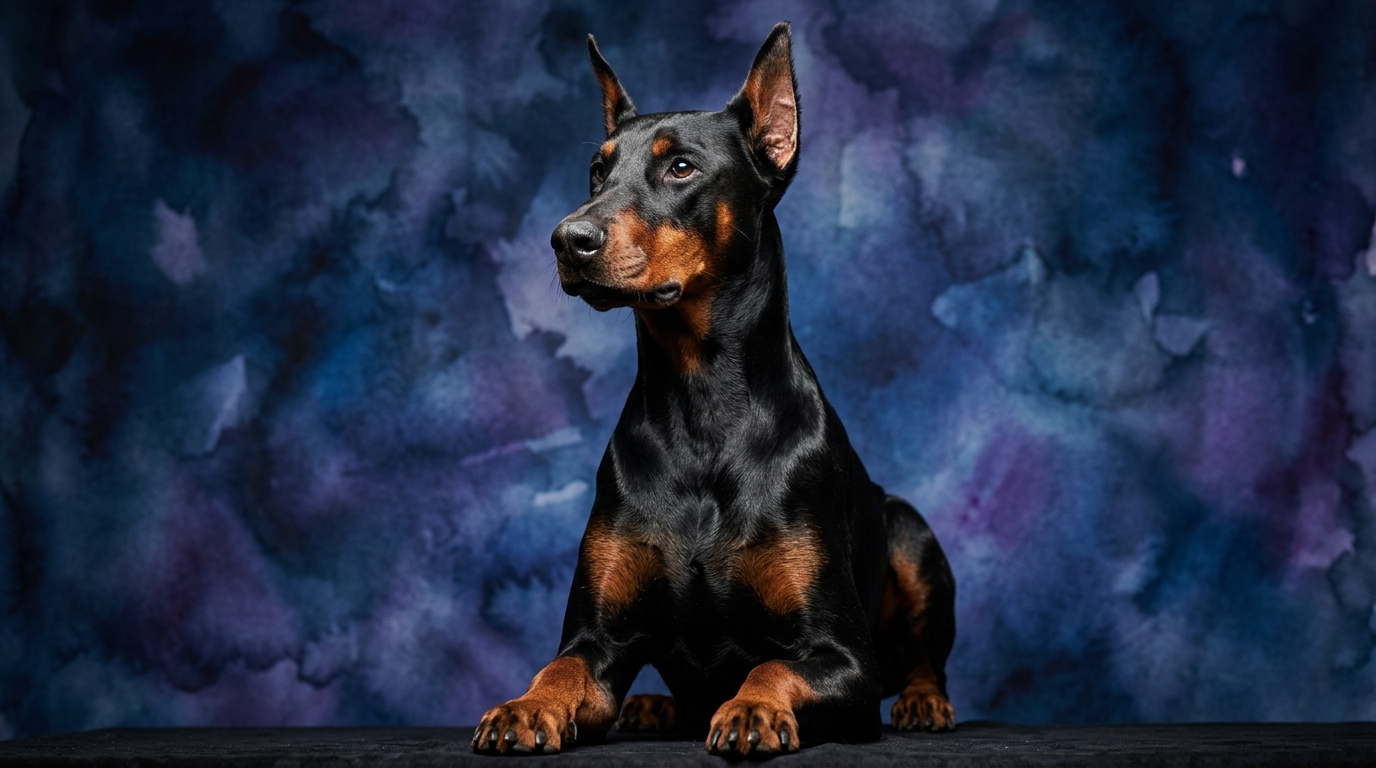
The Doberman Pinscher, a distinguished member of the Working Group, commands attention with its Coren ranking of #5 for working and obedience intelligence, a clear indicator of its sharp cognitive faculties. Our Pet IQ Lab assessment confirms this with top marks across several dimensions: their Problem Solving (5/5) signifies an exceptional capacity to navigate complex situations and independently devise solutions. Training Speed (5/5) underscores their rapid grasp of commands and routines, often requiring remarkably few repetitions to master new tasks. Social Intelligence (4/5) reflects a strong ability to interpret human cues and adapt behavior within a social framework, though often coupled with a touch of independent thought. Instinctive Drive (5/5) highlights their powerful innate motivations for protection, vigilance, and task completion, a direct legacy of their original purpose as guardians. Finally, Memory (5/5) solidifies their remarkable retention of learned behaviors, commands, and experiences, contributing to their consistent and reliable performance.
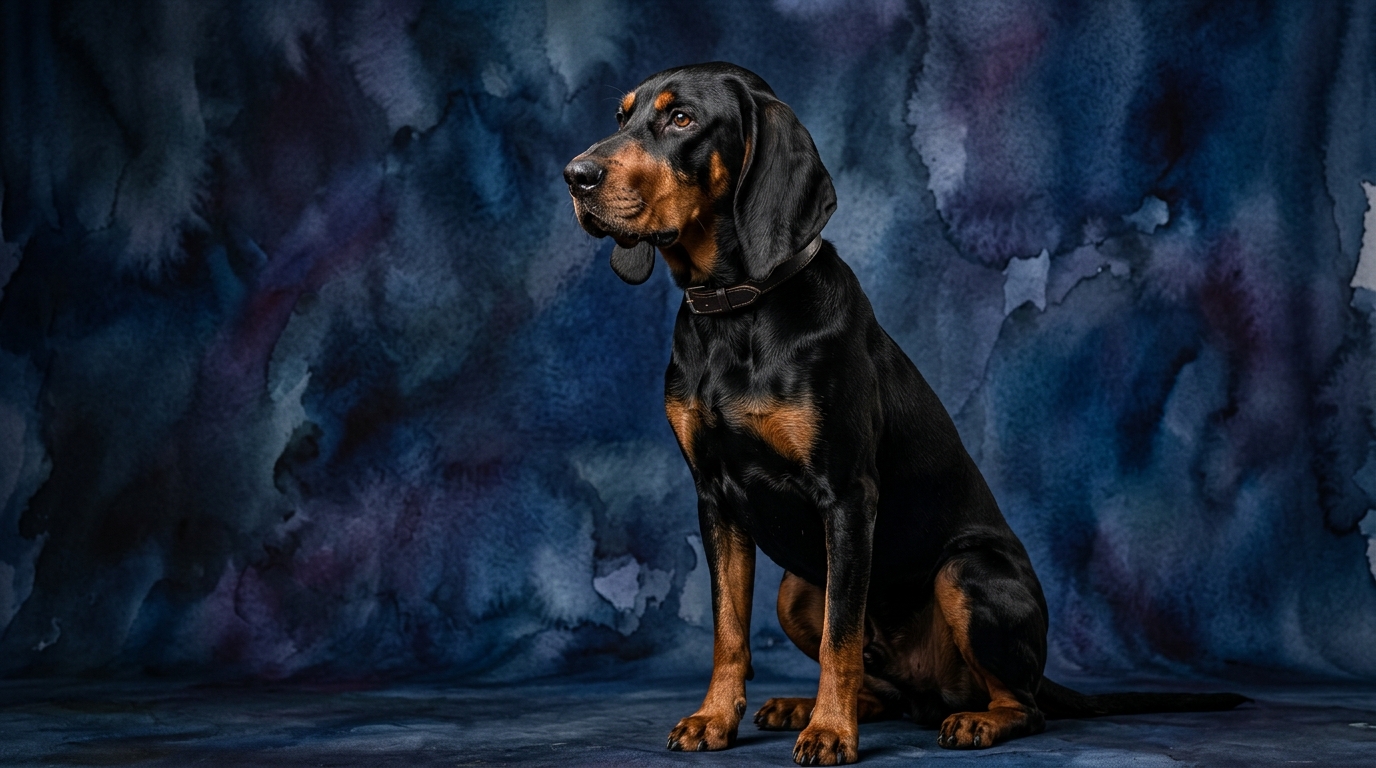
In contrast, the Black and Tan Coonhound, a quintessential member of the Hound Group, is not specifically ranked by Coren, a characteristic common among breeds whose primary “work” relies profoundly on instinctual scent tracking rather than complex obedience routines. Their Pet IQ Lab scores paint a picture of a more specialized cognitive profile: Problem Solving (3/5) suggests they are capable of navigating challenges, particularly those directly related to their primary pursuit of scent, but may not exhibit the same abstract problem-solving prowess as a working breed. Training Speed (3/5) indicates a moderate pace for learning new commands, often demanding patience and consistent, positive reinforcement due to their independent nature. Social Intelligence (3/5) signifies an ability to interact within a family unit, though their focus can frequently be drawn more strongly to olfactory stimuli than to human social cues. Their Instinctive Drive (3/5) is primarily centered on their profound scenting ability and the persistent pursuit of a trail, rather than protection or generalized obedience. Memory (3/5) suggests they retain information adequately, especially concerning established routines and specific scent trails, but might not recall commands with the same precision or speed as a Doberman.
Where Doberman Pinscher wins cognitively
The Doberman Pinscher’s cognitive strengths are vividly apparent in its exceptional scores, making it an outstanding performer in structured environments and tasks demanding precision and rapid learning. Their 5/5 Problem Solving ability translates into a dog that can quickly assess novel situations, such as figuring out how to unlatch a gate or adeptly navigating an intricate agility course with minimal human intervention after initial training. This capability isn't merely about physical dexterity; it's about understanding spatial relationships and cause-and-effect with remarkable clarity. Their 5/5 Training Speed is unparalleled, meaning a Doberman can pick up complex multi-step commands, like a protection routine or an advanced obedience sequence, in significantly fewer repetitions than many other breeds. This rapid acquisition makes them extraordinarily adaptable to various disciplines and new learning challenges. The 5/5 Instinctive Drive manifests as a powerful internal motivation to engage intently in activities, whether it's guarding, tracking, or competitive sports, often with an intensity that demands a productive outlet. This drive, coupled with their 5/5 Memory, ensures that once a Doberman learns a task or a rule, it is deeply ingrained, leading to consistent and reliable performance over extended periods. Their 4/5 Social Intelligence allows them to keenly observe and respond to subtle human body language and vocal tones, making them highly attuned partners in collaborative tasks, often anticipating their handler's next move with impressive accuracy.
Where Black and Tan Coonhound wins cognitively
While the Black and Tan Coonhound's Pet IQ Lab scores are generally moderate across broader cognitive dimensions, their profound cognitive strengths lie in a profoundly specialized area: olfactory processing and unwavering, persistent pursuit. Their 3/5 Instinctive Drive, while not as broadly applicable as a Doberman's, is intensely focused on scent work, giving them an unmatched advantage in tracking. A Coonhound's “problem solving” in this context isn't about abstract puzzles, but about meticulously following a complex, often cold trail over varied and challenging terrain, expertly ignoring myriad distractions, and making nuanced decisions based solely on olfactory information. This requires a unique form of cognitive processing that prioritizes and interprets scent data above all other sensory input. Their 3/5 Social Intelligence, though not typically manifesting as an eager-to-please demeanor, often translates into an independent decision-making capacity crucial for long-distance tracking where they must rely on their own judgment rather than constant human direction. Their 3/5 Memory is excellent for recalling specific scent profiles and the intricate details of a particular trail, allowing them to pick up a lost scent after a long period or recognize a familiar track. While their Training Speed (3/5) might be slower for traditional obedience commands, their persistence, a key facet of their drive, means they will continue a task once motivated, especially if it involves following a compelling scent. Their cognitive wins are rooted in their deep, unwavering commitment to their nose, a specialized aptitude that few breeds can truly match.
Which is easier to train and why
Based on their Pet IQ Lab scores, the Doberman Pinscher (Training Speed 5/5) is significantly easier to train than the Black and Tan Coonhound (Training Speed 3/5). The Doberman's rapid acquisition of commands stems directly from its high problem-solving ability and strong desire to work collaboratively with its handler, often anticipating what is expected of them. They process new information quickly and generalize learned behaviors efficiently across different contexts and environments. This means fewer repetitions are needed for a Doberman to master a new command, and they are generally more receptive to complex sequences and nuanced instructions, making them highly rewarding for experienced trainers. In stark contrast, the Black and Tan Coonhound's training speed is moderate, primarily because their cognitive focus is intensely wired for scent work and independent pursuit rather than human-directed obedience. They are often described as “stubborn,” not due to a lack of intelligence, but because their powerful instinctive drive to follow a scent overrides other stimuli, including a handler's commands. Training a Coonhound requires immense patience, creativity, and consistency, often leveraging their profound love for sniffing as a primary reward. They are less inclined to offer behaviors solely for human approval and more likely to follow their nose, making traditional obedience training a longer, more challenging, though ultimately rewarding, endeavor.
Which suits active owners vs relaxed owners
The Doberman Pinscher, with its 5/5 Instinctive Drive and 5/5 Problem Solving, thrives with active, highly engaged owners who can consistently provide both rigorous mental and physical stimulation. These dogs fundamentally require a “job,” whether it's competitive dog sports like agility, obedience, protection work, or simply daily vigorous exercise coupled with complex, structured training sessions. An owner who genuinely enjoys structured activities, has ample time for extensive and ongoing training, and possesses the ability to channel the Doberman's powerful drives into productive outlets will discover an unparalleled and devoted partner. Their inherent need for purpose and mental engagement means they are not well-suited for a relaxed owner who prefers minimal interaction or only short, infrequent walks, as this can quickly lead to boredom, destructive behaviors, and general dissatisfaction for the dog.
The Black and Tan Coonhound, while certainly needing activity, suits a different kind of “active” owner or can adapt more readily to a somewhat more relaxed, albeit still committed, lifestyle, provided their primary instinctive needs are met. Their 3/5 Instinctive Drive is predominantly scent-focused and requires an outlet. An owner who enjoys long, meandering walks in varied natural environments, potentially engaging in fun scent work games or dedicated tracking sports, will profoundly appreciate the Coonhound's dedication to the trail. They require regular, substantial exercise to prevent restlessness, but their mental stimulation is often deeply satisfied by simply being allowed to “work” their nose on walks or in a secure yard. While they can be calm and affectionate indoors, their deep, resonant bark and strong propensity for following a scent wherever it leads means they are not ideal for owners seeking a perfectly quiet, always-at-heel companion. A “relaxed” owner who enjoys exploring nature at a leisurely pace and isn't overly concerned with pristine obedience might find a Coonhound a wonderfully unique and affectionate fit, as long as they understand and respect the breed's independent nature and vocal tendencies.
The Verdict
Choose the Doberman Pinscher if you seek an exceptionally trainable, highly engaged canine partner for advanced obedience, protection, or competitive dog sports, and are committed to providing rigorous mental and physical challenges.
Choose the Black and Tan Coonhound if you appreciate independent thinkers, possess immense patience for training, and are eager to explore the world through scent work, enjoying long, meandering walks where their nose can lead the way.
🧠 Find Your Pet's IQ Score
Our Pet IQ Lab assessment covers 25+ tests across 5 cognitive dimensions — personalized to your breed.
Take the Full IQ Test →Frequently Asked Questions
Is a Doberman Pinscher a good choice for a first-time dog owner?
While Dobermans are highly trainable, their strong drives and need for consistent, experienced guidance can be challenging for a first-time owner. They thrive with confident leadership and a clear structure, which can be a steep learning curve for novices.
How much exercise does a Black and Tan Coonhound need daily?
Black and Tan Coonhounds require at least an hour of moderate to vigorous exercise daily, ideally incorporating opportunities for scent exploration. This can include long walks, supervised off-leash time in a secure area, or dedicated scent work sessions.
Do Black and Tan Coonhounds make good family pets despite their independent nature?
Yes, Black and Tan Coonhounds can be devoted and gentle family pets, often forming strong bonds with their human companions. Their independent nature primarily manifests outdoors on a scent trail; indoors, they are generally calm and affectionate, especially with children.