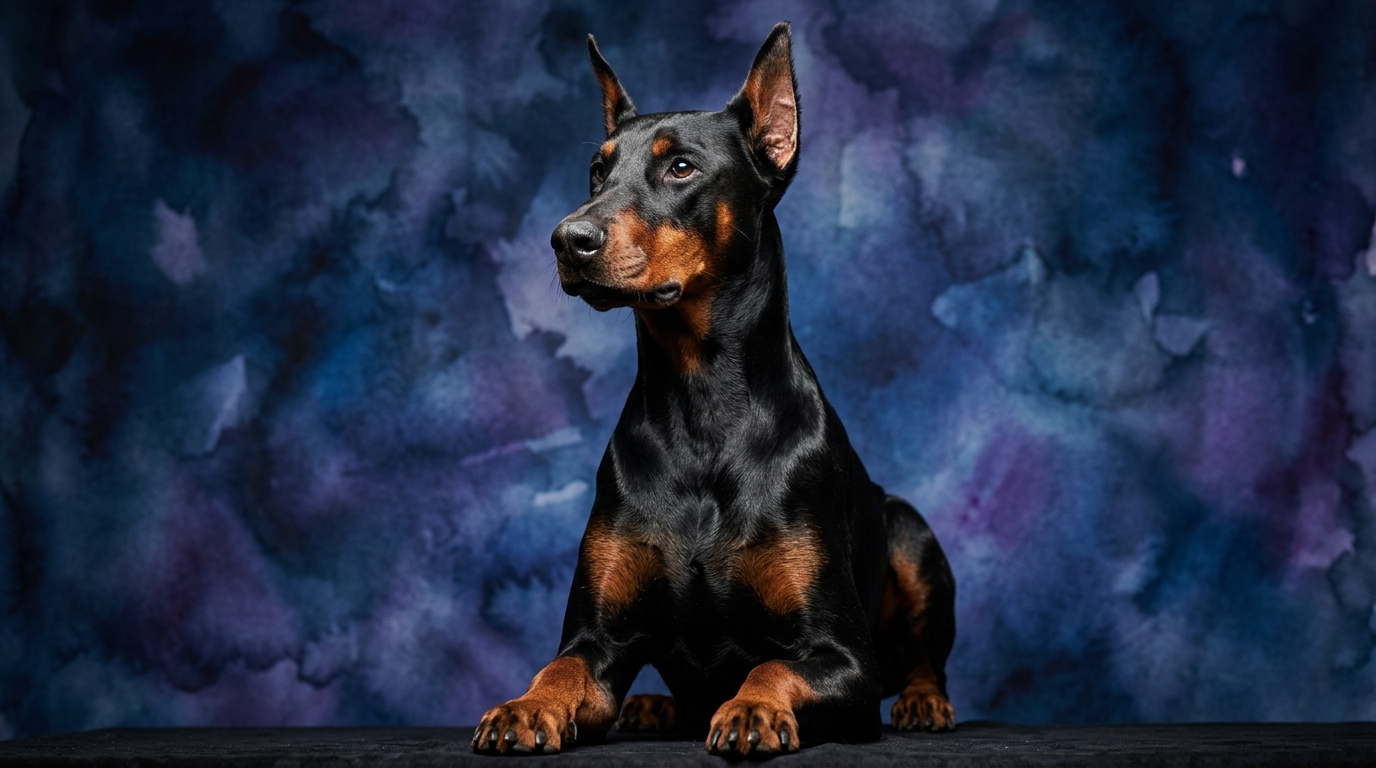
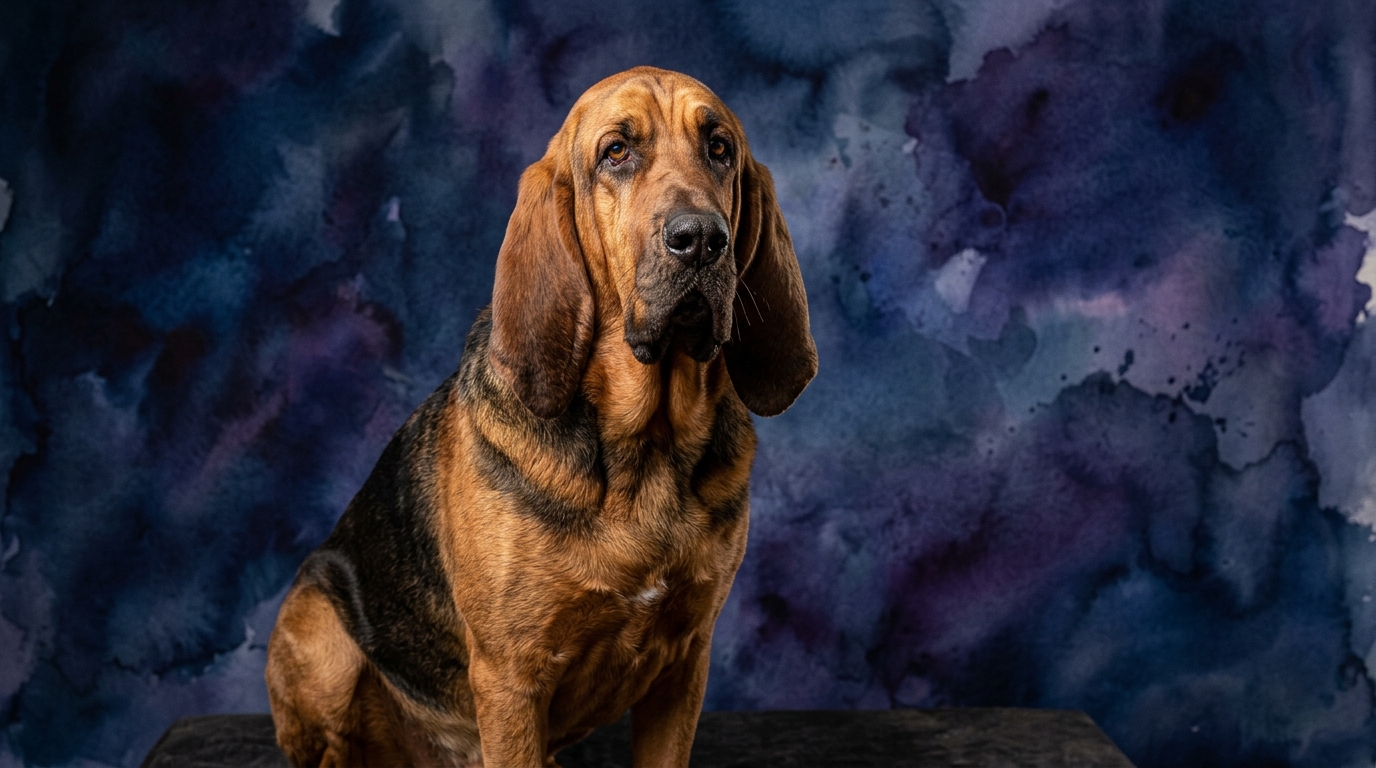
Side-by-Side Cognitive Profiles
The Cosmic Pet Pet IQ Lab offers a granular look into canine mental faculties, assessing breeds across five crucial dimensions that define their cognitive landscape. For the Doberman Pinscher, a breed celebrated for its historical role in protection and police work, the scores paint a picture of sharp, adaptable cognition: Problem Solving at a perfect 5/5, Training Speed also 5/5, Social Intelligence at 4/5, Instinctive Drive a maximal 5/5, and Memory an impressive 5/5. These metrics collectively suggest a dog inherently designed for rapid learning, complex task execution, and highly engaged human partnership, capable of processing information and responding with remarkable efficiency.
In stark contrast, the Bloodhound, an ancient breed revered for its unparalleled scenting ability and relentless pursuit of a trail, presents a specialized cognitive blueprint. While sharing the Doberman's top marks in Problem Solving (5/5), Instinctive Drive (5/5), and Memory (5/5), its scores for Training Speed plummet to 1/5 and Social Intelligence to 2/5. This unique profile indicates a dog whose cognitive strengths are intensely focused on its primary purpose of tracking, with significantly less emphasis on immediate obedience or broad social engagement, highlighting a profound difference in their mental priorities and operational modes.
Where the Doberman Pinscher Excels Cognitively
The Doberman Pinscher's cognitive strengths are particularly evident in its remarkable Training Speed (5/5) and robust Social Intelligence (4/5), which combine to create a highly cooperative and responsive companion. A 5/5 Training Speed score signifies an extraordinary capacity for acquiring new commands and behaviors with minimal repetition, allowing them to internalize instructions and perform tasks with exceptional fluidity. This rapid learning curve enables Dobermans to excel across a diverse range of disciplines, from competitive obedience and agility to complex protection work, quickly understanding and executing intricate sequences of actions with precision. Their cognitive architecture appears finely tuned for absorbing and applying human directives efficiently, making them a joy for structured learning.
Furthermore, the Doberman's 4/5 Social Intelligence score indicates a strong aptitude for understanding and responding to human cues, emotions, and intentions, fostering a deep partnership. This dimension allows them to form profound, cooperative bonds, often anticipating their owner's needs and reacting appropriately in various social contexts. This blend of quick learning and social attunement makes the Doberman a highly interactive and adaptable companion, capable of sophisticated communication and appearing to "think with" their human counterparts, making them incredibly versatile in family and working environments.
Where the Bloodhound Excels Cognitively
The Bloodhound's cognitive brilliance shines intensely in its specialized Problem Solving (5/5) and its profound Instinctive Drive (5/5), albeit manifested in a profoundly different way than the Doberman's generalist approach. While both breeds achieve a 5/5 in Problem Solving, the Bloodhound's prowess is almost entirely dedicated to olfactory puzzles, representing a highly specific form of intelligence. Their ability to discriminate a specific human scent from a multitude of others, follow a fading trail over diverse and challenging terrain, and ignore all other environmental distractions is a testament to highly sophisticated, specialized cognitive processing. This isn't about solving abstract puzzles for human amusement, but about navigating a complex, invisible world of scent data with unwavering focus and analytical precision.
Their 5/5 Instinctive Drive is equally singular: an unshakeable, all-consuming compulsion to track. Once a Bloodhound locks onto a scent, this drive overrides nearly all other considerations, becoming the central organizing principle of its immediate behavior. This isn't merely a strong urge; it's a deep-seated behavioral program that directs their entire cognitive apparatus towards the relentless pursuit of a trail, often to the exclusion of other stimuli. This relentless dedication, combined with their exceptional Memory (5/5) for scent profiles and previous paths, allows them to maintain a track for incredible distances and durations, demonstrating a unique form of cognitive endurance and single-minded dedication unparalleled in the canine world.
Which is Easier to Train and Why
When considering ease of training for general obedience and commands, the Doberman Pinscher stands out significantly due to its 5/5 Training Speed, contrasting sharply with the Bloodhound's 1/5. The Doberman's high score indicates they are exceptionally quick to grasp new commands and respond consistently to cues, often requiring only a few repetitions to solidify a new behavior. Their cognitive architecture allows them to process instructions efficiently, making repetition less necessary and progress rapid. They generally exhibit a strong desire to please their handler and a focused attention span, which further streamlines the learning process, making them highly receptive to formal training programs.
The Bloodhound, with its minimal 1/5 Training Speed, presents a substantially different and often more challenging training experience. This low score does not imply a lack of mental capacity or an inability to learn, but rather a profound independence and an overwhelming preoccupation with their primary instinctive drive: scent. While capable of learning basic commands, their attention is easily diverted by interesting odors, and their motivation is often internal rather than handler-focused. Training a Bloodhound requires immense patience, consistent positive reinforcement, and a deep understanding that their nose will often take precedence over human commands, making the acquisition of traditional obedience more protracted and demanding, often feeling like a negotiation rather than a direct instruction.
Which Suits Active Owners vs. Relaxed Owners
The Doberman Pinscher is ideally suited for active, engaged owners who thrive on consistent interaction, structured activities, and ongoing mental stimulation. Their high Instinctive Drive (5/5) and rapid Training Speed (5/5) mean they flourish when given clear tasks, regular vigorous exercise, and ample opportunities to use their problem-solving abilities in diverse settings like obedience, agility, or protection sports. Owners who enjoy a highly responsive, cooperative partner for various intellectual and physical endeavors will find the Doberman an excellent match, as they require an owner who can consistently channel their considerable energy and cognitive prowess effectively, preventing boredom and destructive behaviors.
Conversely, the Bloodhound, while possessing a powerful 5/5 Instinctive Drive, aligns better with owners who appreciate a more independent companion and are dedicated to facilitating their specific, scent-driven needs. These are not dogs for casual obedience, high-speed agility, or endless games of fetch in the same way a Doberman might be. Owners must be prepared for long, deliberate scent walks or dedicated tracking activities that allow the Bloodhound to engage its profound olfactory problem-solving skills, which is their true form of mental exercise. While their training speed for general obedience is low, owners who understand and respect their breed's primary motivation will find immense satisfaction in watching a Bloodhound work its unique magic, even if daily life involves a less "obedient" or "socially fluid" companion. They suit owners who are patient, understand canine independence, and can provide ample outlets for their dog's unique gifts, perhaps being more "relaxed" about traditional obedience but highly committed to their dog's breed-specific enrichment.
The Verdict
Opt for a Doberman Pinscher if you seek a highly trainable, socially responsive partner eager to engage in diverse activities, from competitive sports to family protection, and you are prepared to provide consistent direction and mental stimulation.
Select a Bloodhound if you are passionate about scent work, value an independent and single-minded companion, and are committed to providing extensive opportunities for their unparalleled tracking abilities, accepting that traditional obedience will require significant patience.
🧠 Find Your Pet's IQ Score
Our Pet IQ Lab assessment covers 25+ tests across 5 cognitive dimensions — personalized to your breed.
Take the Full IQ Test →Frequently Asked Questions
Does the Bloodhound's low training speed mean it cannot learn anything?
Not at all. The Bloodhound's 1/5 Training Speed indicates it learns at a slower pace and requires more repetition than many breeds, often due to its strong independent drive and focus on scent. While it can learn, owners need exceptional patience and creative motivation to integrate obedience commands effectively into its life.
How does the Doberman's 5/5 Problem Solving differ from the Bloodhound's 5/5?
Both breeds excel at Problem Solving, but their applications differ significantly. The Doberman's is often general, applied to understanding complex tasks or adapting to new situations quickly, while the Bloodhound's is specialized, focused almost exclusively on the intricate, multi-layered puzzle of scent discrimination and trailing.
Is a Bloodhound a good choice for a first-time dog owner?
A Bloodhound can be challenging for a first-time owner due to its independent nature, strong scent drive, and low Training Speed, which demand significant patience, consistency, and a deep understanding of breed-specific needs. While rewarding, their unique cognitive profile often requires experienced handling to thrive.