A Side-by-Side Look at Canine Cognition
To understand canine intelligence beyond simple obedience, The Cosmic Pet Pet IQ Lab employs a five-dimensional framework: problem solving, training speed, social intelligence, instinctive drive, and memory. These metrics provide a nuanced view of how a breed processes information, interacts with its environment, and retains learned behaviors, moving beyond generalized notions of cleverness.
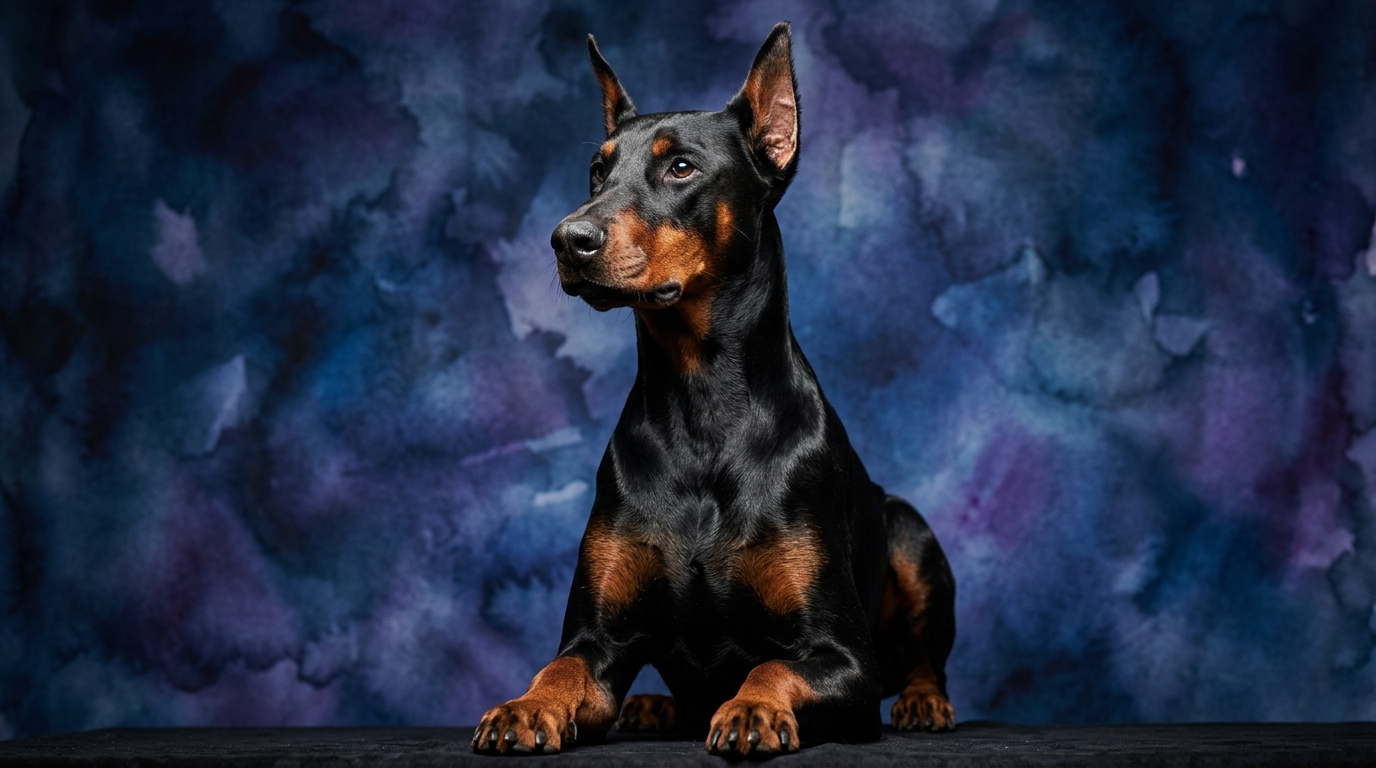
The Doberman Pinscher, ranking #5 in Coren's intelligence hierarchy, demonstrates a robust cognitive profile befitting its Working group designation. Its scores are consistently high: Problem Solving 5/5, Training Speed 5/5, Social Intelligence 4/5, Instinctive Drive 5/5, and Memory 5/5. This indicates a breed engineered for rapid learning, complex task execution, and unwavering focus, reflecting generations of selective breeding for demanding roles.
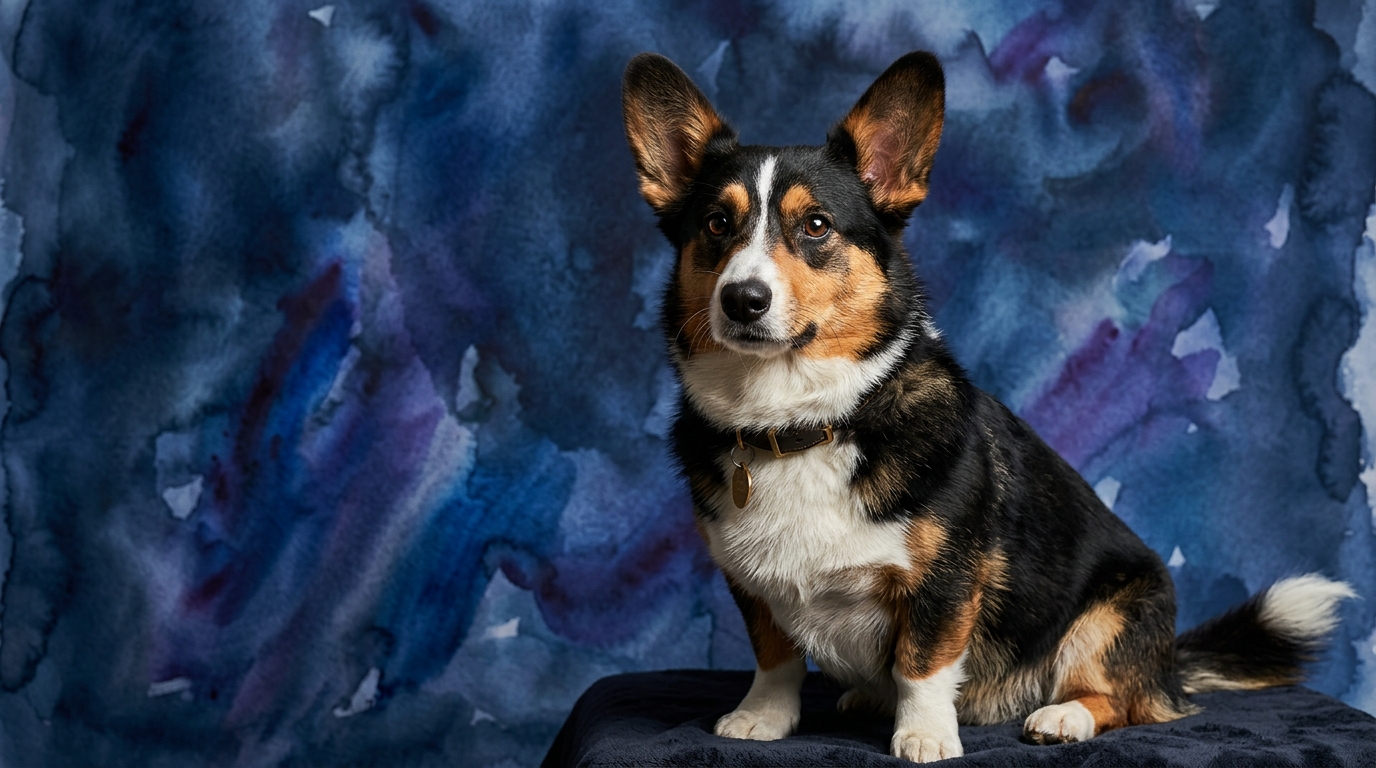
In contrast, the Cardigan Welsh Corgi, a member of the Herding group and Coren rank #26, presents a different yet equally functional cognitive blueprint. Its scores are Problem Solving 4/5, Training Speed 4/5, Social Intelligence 3/5, Instinctive Drive 3/5, and Memory 4/5. These metrics suggest a dog with solid, practical intelligence, capable of learning efficiently and adapting to tasks, albeit with a slightly different emphasis on independent action over strict handler-dependent precision.
Where the Doberman Pinscher Excels Cognitively
The Doberman Pinscher's perfect 5/5 scores in Problem Solving and Training Speed are not merely theoretical; they translate into a tangible capacity for mastering intricate commands and navigating novel situations with exceptional efficiency. This breed assimilates complex sequences quickly, making it a prime candidate for advanced obedience, protection work, and competitive dog sports where rapid, precise responses are paramount. Its ability to process and act upon information at an accelerated pace sets it apart.
Complementing its rapid learning is a 5/5 Instinctive Drive and 5/5 Memory. This drive is not simply about energy; it embodies a profound purpose-driven action and the tenacity to complete assigned tasks, whether it's tracking a scent or performing a multi-step routine. Its remarkable memory ensures that commands, routines, and even complex environmental cues are retained with fidelity over extensive periods, allowing for consistent performance and minimal refresher training.
While its Social Intelligence at 4/5 is not the highest possible, it remains a strong indicator of the Doberman's capacity to interpret human cues and adapt its behavior within social contexts. This manifests as a deep attunement to its handler's intentions and moods, allowing it to function as a highly responsive partner. This social acumen, combined with its other cognitive strengths, underpins its effectiveness in roles requiring close human-animal partnership and subtle communication.
The Cardigan Welsh Corgi's Cognitive Strengths
The Cardigan Welsh Corgi's 4/5 in Problem Solving and Training Speed reflects a practical, grounded intelligence. This breed excels at figuring out solutions to real-world challenges, particularly those related to movement and spatial awareness inherent in its herding heritage. While it might not master abstract concepts with the Doberman's speed, the Corgi learns efficiently, especially when tasks align with its innate tendencies, demonstrating a solid capacity for acquiring new skills and behaviors.
A 4/5 Memory score means the Cardigan Welsh Corgi retains learned information, routines, and boundaries effectively, contributing to its reliability in household settings and training. Crucially, its herding background imbues it with a notable degree of independent thought, a necessary trait for a dog expected to make decisions about livestock movement without constant human direction. This cognitive independence, though not directly scored as a dimension, is a significant part of its overall mental makeup.
The Corgi's 3/5 Social Intelligence suggests it understands human cues, but often filters them through its own agenda or task-oriented focus, typical of many herding breeds. They are adaptable to various living situations, a testament to their robust general intelligence and ability to adjust to new environments and expectations. This adaptability, combined with their practical problem-solving, makes them versatile companions capable of thriving in diverse family dynamics.
Training Dynamics: Doberman vs. Corgi
The Doberman Pinscher's 5/5 Training Speed and high Instinctive Drive make it an exceptionally responsive student, often described as eager for direction within a working framework. They thrive on structured, consistent training, clear commands, and positive reinforcement. Their rapid learning means they master new commands with minimal repetitions, allowing for quick progression to advanced tasks. However, this high drive necessitates experienced handling to channel their intensity effectively and prevent the development of unwanted behaviors.
The Cardigan Welsh Corgi, with its 4/5 Training Speed, learns well, but may require more repetitions or varied motivation strategies than a Doberman. Their independent herding streak means they can display a degree of opinionated behavior, requiring patience, creativity, and engaging, positive reinforcement to maintain their focus. Training that incorporates games or problem-solving relevant to their instincts, such as shaping behaviors through lures or targeting, often yields the best results.
Real behavioral differences emerge in their training approaches: the Doberman exhibits an intense focus and desire for a 'job,' readily accepting guidance to achieve a shared goal. The Corgi, while capable, often brings a more independent, sometimes humorous, approach to tasks, occasionally prioritizing its own interpretation of the situation. Owners of Dobermans will find a partner seeking direction, while Corgi owners will engage with a clever, sometimes charmingly stubborn, collaborator.
Lifestyle Match: Active vs. Relaxed Owners
Doberman Pinschers, with their profound 5/5 Instinctive Drive and high cognitive needs, are best suited for owners who can provide substantial physical exercise and consistent mental stimulation. They excel in structured activities such as competitive obedience, agility, tracking, and protection sports, thriving when given a clear purpose. A relaxed owner who cannot meet these demands might find the Doberman's intensity overwhelming, potentially leading to boredom-induced behavioral challenges.
Cardigan Welsh Corgis, while not as intensely driven as Dobermans, still require regular exercise and mental engagement. Their 3/5 Instinctive Drive means they enjoy activities like herding games, agility, or brisk walks, but they are not constantly seeking a 'job' in the same demanding way. They can adapt well to moderately active households, but owners should not underestimate their need to burn off energy and engage their minds to prevent mischief or boisterous behavior.
The Doberman demands a dedicated partnership in purpose, seeking an owner who will actively engage them in challenging tasks and consistent training. The Corgi, conversely, seeks companionship with ample opportunities for mental and physical engagement, appreciating an owner who understands their independent spirit. One thrives with a 'co-worker' relationship, the other with a 'playmate with responsibilities' dynamic.
The Verdict
Choose a Doberman Pinscher if you are an experienced, active owner seeking a highly trainable, purpose-driven companion for advanced training, dog sports, or protection work, capable of mastering complex tasks with exceptional speed and memory.
Opt for a Cardigan Welsh Corgi if you desire a charming, adaptable companion with practical intelligence for a moderately active lifestyle, appreciating their independent spirit and ability to learn well with patient, engaging training.
🧠 Find Your Pet's IQ Score
Our Pet IQ Lab assessment covers 25+ tests across 5 cognitive dimensions — personalized to your breed.
Take the Full IQ Test →Frequently Asked Questions
Is a Doberman Pinscher good for a first-time dog owner?
Generally, Doberman Pinschers are better suited for experienced owners due to their intense drive, high cognitive needs, and requirement for consistent, firm guidance. Their rapid learning means they can pick up bad habits as quickly as good ones without proper direction.
Do Cardigan Welsh Corgis require a lot of mental stimulation?
Yes, Cardigan Welsh Corgis do require significant mental stimulation, despite their lower Coren rank compared to Dobermans. Their herding background equips them with problem-solving skills and an independent nature that benefits from puzzle toys, training games, and engaging activities to prevent boredom.
Which breed is better for a family with young children?
Both breeds can be good family dogs with proper socialization and training, but their approaches differ. A well-socialized Doberman can be protective and loyal, while a Corgi is often playful and robust, though their herding instincts might lead to nipping at heels if not managed. Individual temperament and consistent training are key for either breed.