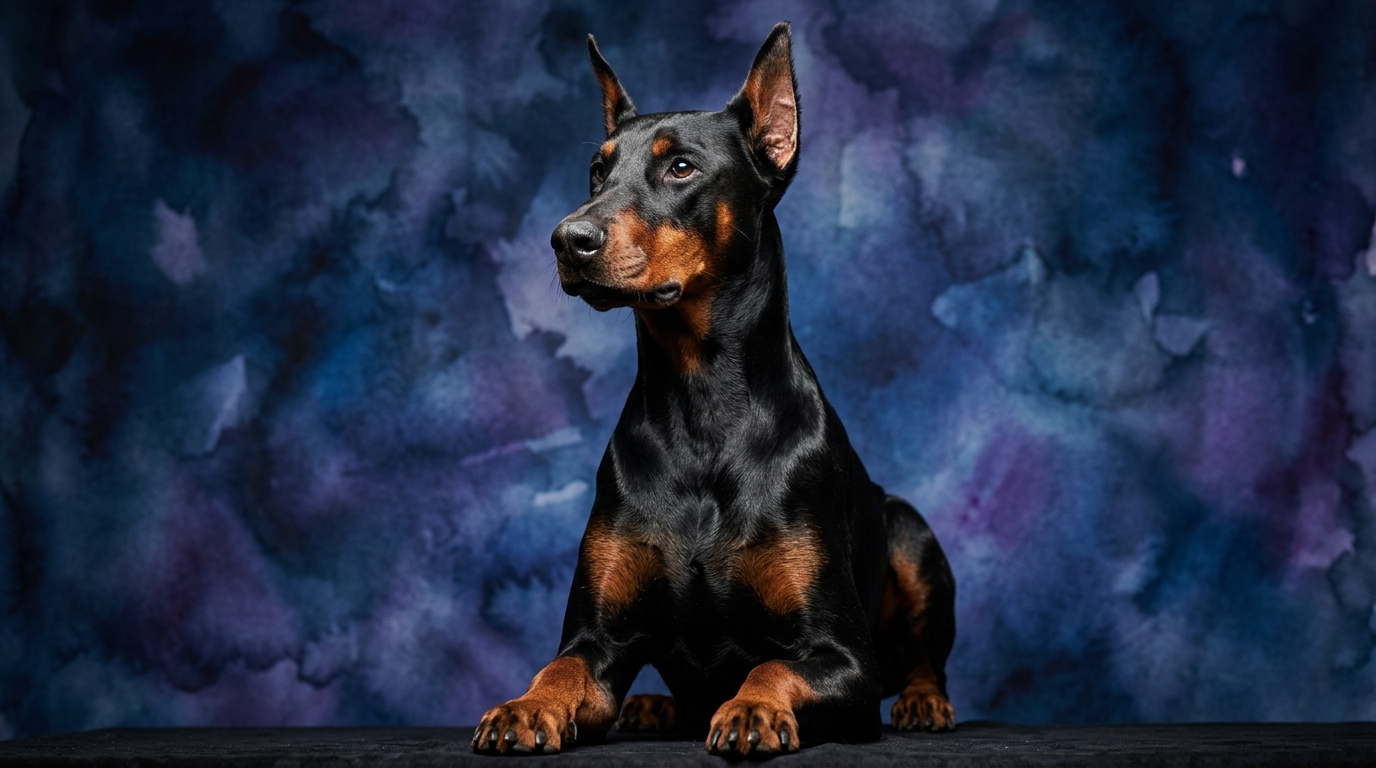
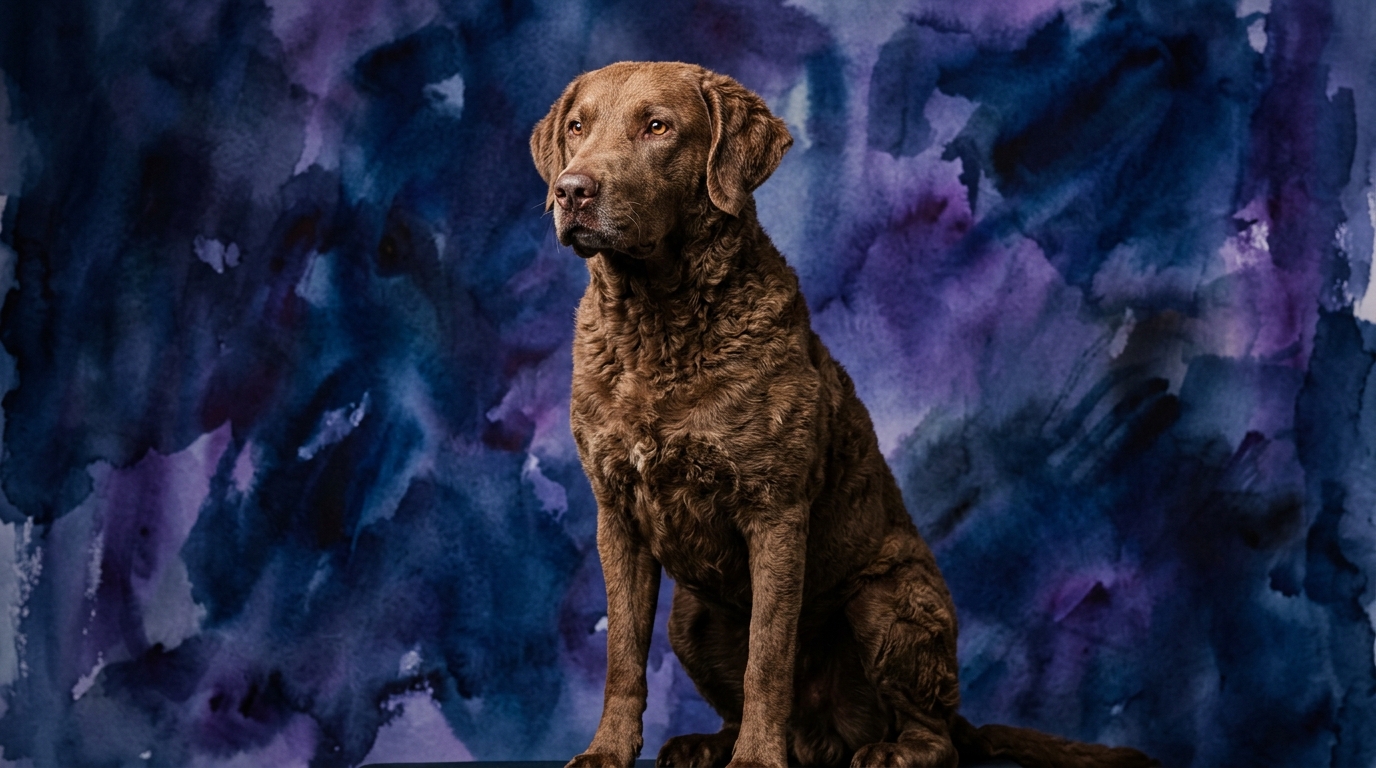
Side-by-Side IQ Profile: Doberman Pinscher vs. Chesapeake Bay Retriever
The Doberman Pinscher, ranked #5 by Coren, presents a formidable cognitive profile. Its Problem Solving is rated 5/5, indicating an exceptional capacity to navigate complex scenarios and figure out novel challenges quickly. Training Speed also scores 5/5, reflecting a rapid grasp of new commands and routines, fueled by an eagerness to learn. Social Intelligence stands at 4/5, demonstrating a keen attunement to human cues and the formation of strong, responsive bonds. An Instinctive Drive of 5/5 underscores their potent inclination for protection, guarding, and working closely with humans, while their Memory, also 5/5, ensures learned information and experiences are retained with remarkable accuracy over long periods.
In contrast, the Chesapeake Bay Retriever, ranked #27 by Coren, showcases a different, task-oriented intelligence. Their Problem Solving is rated 4/5, signifying capability in practical, task-oriented challenges, particularly those relevant to retrieval work. Training Speed, at 4/5, indicates efficient learning, though often with a more independent approach compared to some working breeds. Social Intelligence is 3/5; while forming deep bonds with their family, they can be reserved or aloof with strangers, indicating a less universally people-focused disposition. Their Instinctive Drive, 3/5, is strongly geared towards tenacious retrieving, especially in challenging environments, and their Memory, 4/5, allows them to retain practical skills and location-based knowledge vital for their specialized tasks.
Where the Doberman Pinscher Wins Cognitively
The Doberman Pinscher's cognitive edge is most apparent in its broad adaptability and rapid acquisition of diverse skills. With a 5/5 in Problem Solving, they excel at deciphering a wider array of novel situations beyond a single, specialized function. This translates into an ability to quickly understand and execute complex, multi-step commands, making them suitable for intricate roles from service work to competitive obedience and protection.
Their superior Social Intelligence (4/5) further enhances their cognitive wins, allowing them to interpret nuanced human communication and intentions with precision. This deep understanding fosters a partnership where the Doberman anticipates commands and reacts with remarkable responsiveness. Coupled with their perfect Memory score, they retain vast amounts of learned information, enabling them to perform complex sequences and adapt swiftly to changing directives over extended periods.
Where the Chesapeake Bay Retriever Wins Cognitively
While the Doberman excels in generalist cognitive prowess, the Chesapeake Bay Retriever's wins are rooted in specialized, tenacious application. Their 3/5 Instinctive Drive, though numerically lower, represents an unwavering dedication to retrieval tasks, particularly in adverse conditions. This means a Chessie will persist through icy waters, dense cover, and long distances to complete a retrieve, showcasing a single-minded focus and resilience that is paramount for their purpose.
Their Problem Solving (4/5) and Memory (4/5) are highly tuned to their working environment. A Chessie often makes independent, sound judgments in the field, navigating complex terrain and remembering scent trails or fall zones when working away from a handler. This self-reliance in task execution, combined with their robust physical and mental fortitude, allows them to succeed where other breeds might falter due to environmental discomfort or lack of specialized drive.
Which is Easier to Train and Why
When it comes to ease of training, the Doberman Pinscher generally holds a clear advantage. Their 5/5 Training Speed and 4/5 Social Intelligence mean they are exceptionally quick to grasp new commands and are highly motivated by human interaction and approval. Dobermans often possess an innate eagerness to please, making them highly receptive to positive reinforcement and consistent, clear directives. Their cognitive makeup allows them to connect actions with consequences swiftly and efficiently, accelerating the learning process for a wide range of behaviors.
The Chesapeake Bay Retriever, with 4/5 Training Speed and 3/5 Social Intelligence, is certainly capable of learning but often presents a more independent and sometimes stubborn streak. While they learn efficiently, they may require more patience and consistency, as their focus is often task-oriented rather than solely handler-pleasing. Their strong drive is typically directed towards their specific retrieving purpose, meaning training methods that tap into this natural inclination are often most effective, whereas abstract obedience might require more effort to instill.
Which Suits Active Owners vs. Relaxed Owners
The Doberman Pinscher unequivocally suits active owners who can provide significant mental and physical engagement. Their high instinctive drive (5/5), coupled with superior problem-solving (5/5) and memory (5/5), demands structured training, engaging dog sports like agility, obedience, or protection work, and a clear, consistent role within the family. Owners who cannot commit to providing consistent mental challenges and robust physical exercise will find a Doberman can become bored and potentially destructive, as their cognitive abilities require an outlet.
The Chesapeake Bay Retriever also requires an active owner, but with a more specific focus on outdoor and purpose-driven activities. Owners who enjoy hunting, extensive hiking, swimming, or water sports will find an ideal companion in a Chessie. They thrive on robust physical exercise and tasks that engage their natural retrieving drive and tenacity. They are less suited for owners seeking a purely decorative companion; their independence and specialized drives mean they excel when given a specific, physically demanding task to perform rather than just generalized structured obedience.
The Verdict: When to Choose Each Breed
The Verdict
Choose the Doberman Pinscher for owners seeking a highly adaptable, acutely responsive companion eager for complex training, protection work, or competitive dog sports. They thrive with consistent mental engagement and a clear leadership structure.
Choose the Chesapeake Bay Retriever for owners who embrace outdoor adventures, especially water-based activities or hunting, and appreciate a tenacious, independent working partner. They excel when given a specific, physically demanding task to perform.
🧠 Find Your Pet's IQ Score
Our Pet IQ Lab assessment covers 25+ tests across 5 cognitive dimensions — personalized to your breed.
Take the Full IQ Test →Frequently Asked Questions
Do Doberman Pinschers and Chesapeake Bay Retrievers require different types of mental stimulation?
Yes, Dobermans thrive on diverse, complex problem-solving games and structured obedience, engaging their broad cognitive toolkit. Chesapeake Bay Retrievers benefit more from activities that mimic their retrieving heritage, like scent work, hide-and-seek, and water retrieves, tapping into their specialized instinctive drive.
How do their social intelligence scores impact their family life?
The Doberman's 4/5 social intelligence means they are generally more attuned to family dynamics and eager to interact, often seeking closeness. The Chesapeake Bay Retriever's 3/5 indicates they form strong bonds with their primary family but might be more reserved or independent, less universally demonstrative, and often more aloof with strangers.
Can a Chesapeake Bay Retriever be a good protection dog like a Doberman?
While a Chessie's loyalty and sturdy build can offer a deterrent, their instinctive drive is primarily geared towards retrieving, not protection. Dobermans, with a 5/5 instinctive drive for guarding and a higher social intelligence for discerning threats, are inherently better suited and more readily trained for dedicated protection roles.