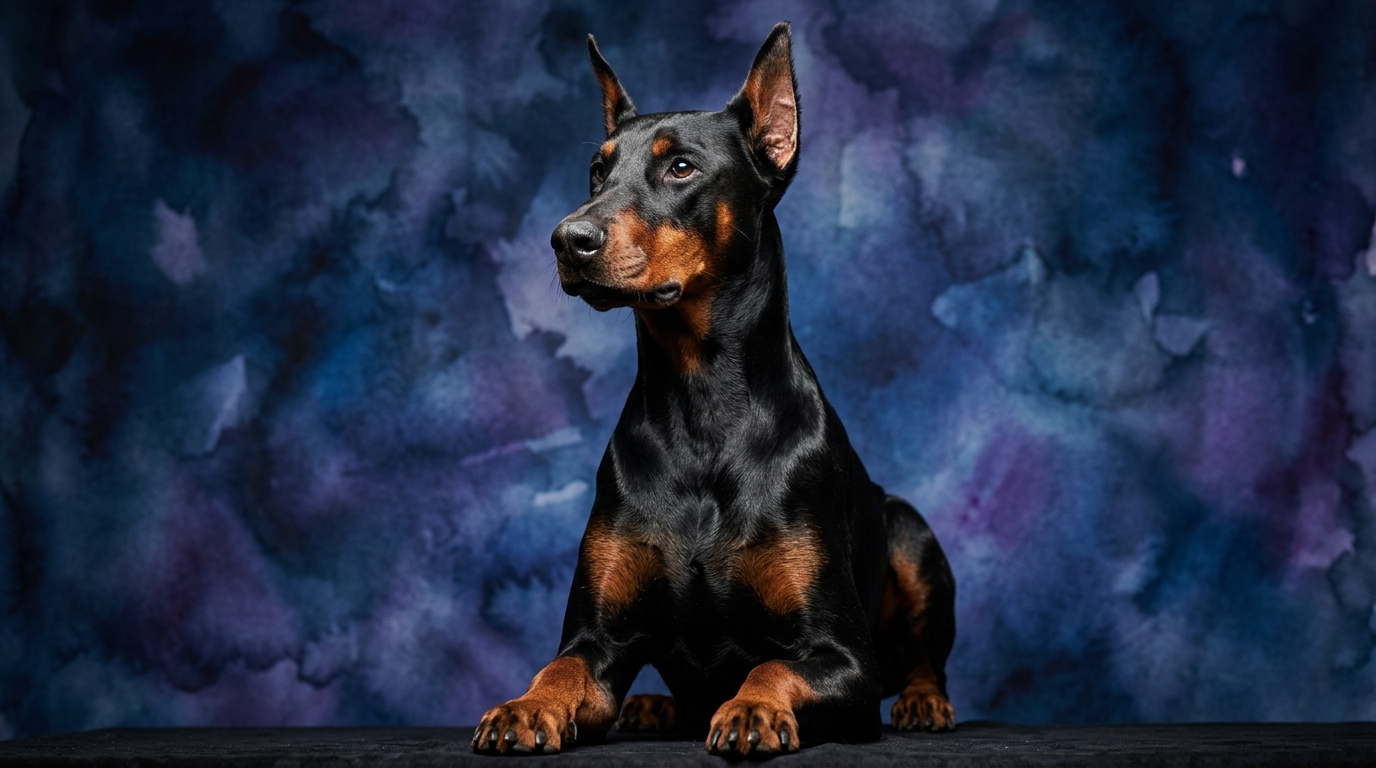
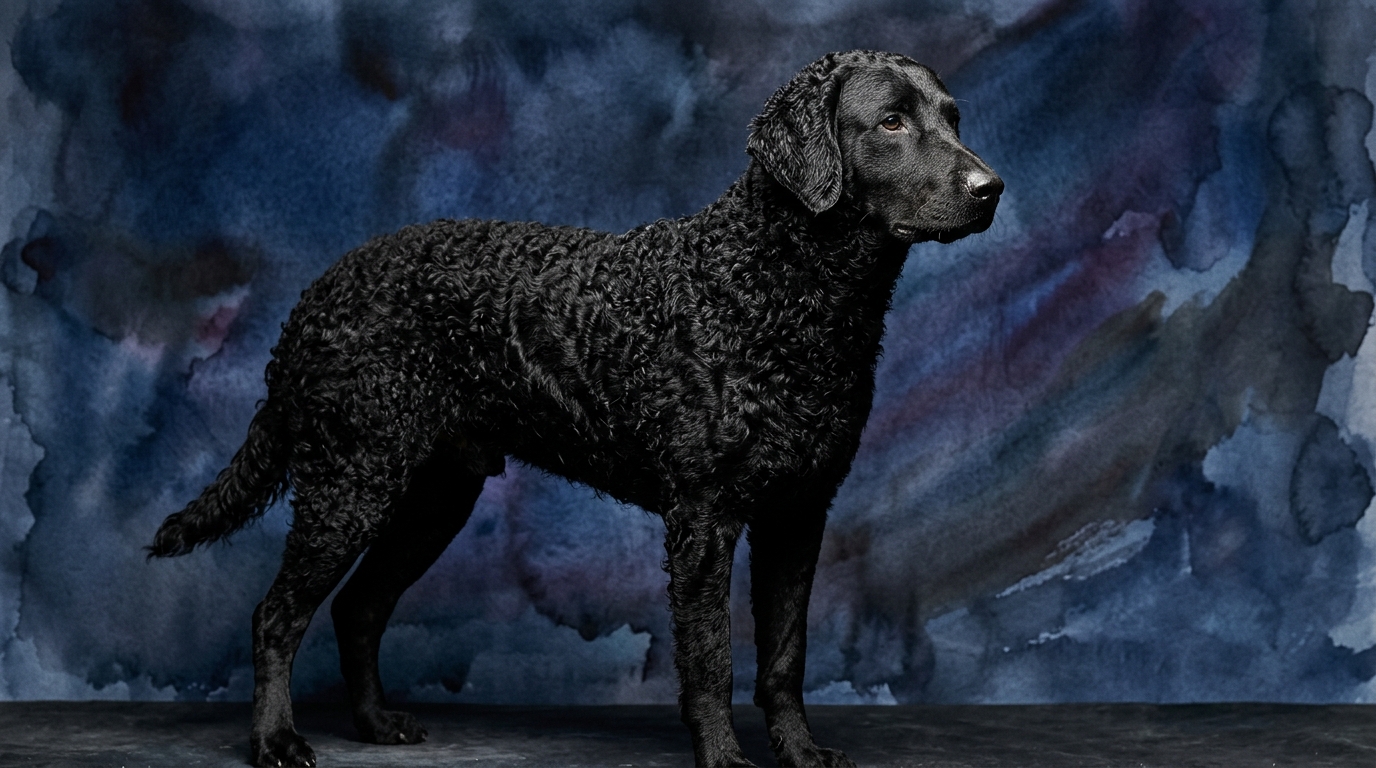
Side-by-Side IQ Profile: Doberman Pinscher vs. Curly-Coated Retriever
The Cosmic Pet Pet IQ Lab assesses canine intelligence across five key dimensions, providing a nuanced view of each breed’s mental landscape. Here’s how the Doberman Pinscher and Curly-Coated Retriever measure up:
Doberman Pinscher:
Problem Solving (5/5): Exhibits exceptional aptitude for navigating complex situations and devising solutions, quickly understanding cause-and-effect relationships in their environment.
Training Speed (5/5): Possesses an unparalleled ability to grasp new commands and routines with minimal repetition, making them remarkably swift learners in structured environments.
Social Intelligence (4/5): Demonstrates strong awareness of human cues and emotional states, allowing for effective communication and a deep understanding of their family unit's dynamics.
Instinctive Drive (5/5): Driven by a profound working ethic and inherent protective instincts, they display intense focus and determination when engaged in tasks or guarding their perceived territory.
Memory (5/5): Retains learned information, experiences, and associations over extended periods, contributing to their consistent performance in complex tasks and long-term recall of training.
Curly-Coated Retriever:
Problem Solving (3/5): Shows a moderate capacity for independent problem-solving, capable of figuring out straightforward challenges but potentially requiring more guidance with intricate scenarios.
Training Speed (3/5): Learns new commands at a steady, average pace, benefiting from consistent, positive reinforcement methods and clear, repetitive instruction.
Social Intelligence (3/5): Possesses a respectable level of social awareness, able to interpret common human signals and interact appropriately within their social circle, though perhaps less nuanced than some breeds.
Instinctive Drive (3/5): Exhibits a balanced drive, characteristic of a retriever, with a natural inclination for fetching and moderate enthusiasm for tasks, without the intense, relentless focus of a working breed.
Memory (4/5): Holds onto learned behaviors and experiences well, demonstrating good retention for training and familiar routines, aiding in their overall adaptability.
Where the Doberman Pinscher Excels Cognitively
The Doberman Pinscher's cognitive profile shines in areas demanding rapid assimilation of information and decisive action. Their problem-solving score of 5/5 indicates an exceptional ability to analyze novel situations and formulate effective responses. This is seamlessly coupled with a 5/5 training speed, meaning they grasp solutions and any new skill with extraordinary efficiency. This combination makes them adept at mastering intricate sequences and adapting quickly to rule changes in competitive dog sports or advanced obedience.
Furthermore, their perfect 5/5 instinctive drive translates into an unwavering focus and dedication to tasks, fueled by a deep-seated desire to work. Paired with their 5/5 memory, learned tasks are retained with remarkable permanence, ensuring consistent, high-level performance even after long breaks. Their 4/5 social intelligence allows them to interpret human intent and emotional states effectively, which is crucial for the precise communication required in demanding working roles. Essentially, the Doberman excels where quick thinking, precise execution, and enduring commitment are paramount.
Where the Curly-Coated Retriever Shines Cognitively
While the Doberman excels in speed and intensity, the Curly-Coated Retriever offers a different, equally valuable set of cognitive strengths, particularly in areas valuing resilience and a balanced approach. Their memory score of 4/5 stands out as their highest attribute, suggesting a strong capacity to recall past experiences and learned behaviors. This robust memory underpins their reliability in retrieving tasks, remembering locations of fallen game, or recalling specific scent trails.
Their 3/5 social intelligence fosters a companionable nature, enabling them to integrate well into family life and respond to common social cues without being overly sensitive or intensely focused on human nuances. The Curly-Coated Retriever's 3/5 instinctive drive, focused on retrieving, is less about intense guarding or protection and more about joyful, persistent engagement with fetching and water work. This directs their cognitive energy towards a specific, historically valued purpose. Their moderate scores in problem-solving and training speed indicate a dog that learns steadily and thoughtfully, less prone to the high-strung intensity that can sometimes accompany extreme cognitive quickness. This methodical approach can be a benefit in environments where patience and steady progress are valued over sheer speed.
Training Dynamics: Doberman Pinscher vs. Curly-Coated Retriever
Based on The Cosmic Pet Pet IQ Lab data, the Doberman Pinscher (Training Speed 5/5) is unequivocally easier to train. Their exceptional training speed means they absorb new commands and complex routines almost instantaneously, requiring fewer repetitions. This is amplified by their 5/5 problem-solving and 5/5 instinctive drive, equipping them with a profound desire to engage with tasks and figure out solutions. For instance, teaching a Doberman a multi-step retrieve would likely involve fewer teaching sessions due to their quick linking of object, action, and reward. Their 5/5 memory ensures that once learned, these behaviors are retained with remarkable fidelity.
Conversely, the Curly-Coated Retriever (Training Speed 3/5) requires a more patient and consistent approach. They will learn, but at an average pace, needing more repetitions and clearer, more direct instruction. Their 3/5 problem-solving means they might not independently figure out complex sequences as readily, benefiting instead from step-by-step guidance. While they excel at retrieving (due to their instinctive drive), teaching a Curly a nuanced task requiring several distinct actions might take more time and careful shaping. Their 4/5 memory is good for retaining what they've learned, but the initial learning phase is less accelerated. Owners of Curly-Coated Retrievers should be prepared for a training journey that emphasizes positive reinforcement, clear communication, and consistent practice, understanding that progress will be steady rather than immediate.
Matching Breeds to Lifestyles: Active vs. Relaxed Owners
The Doberman Pinscher is ideally suited for active owners who thrive on engagement and purpose. With a 5/5 instinctive drive and perfect scores in problem-solving and training speed, a Doberman demands consistent mental and physical stimulation. They excel in structured activities like obedience, agility, protection work, or search and rescue, where their keen intellect and drive can be channeled. An owner who enjoys daily challenging training sessions, long runs, and a dog that is always 'on' and ready for the next task will find a Doberman a highly rewarding companion. Insufficient outlets for their cognitive and physical energy risk a bored and potentially destructive or anxious dog.
The Curly-Coated Retriever, with its more moderate cognitive scores (3/5 problem-solving, 3/5 training speed, 3/5 instinctive drive), offers a balanced energy level that can appeal to a broader range of owners. While they are sporting dogs and do require regular exercise—enjoying fetching, swimming, and outdoor adventures—their cognitive demands are less intense than the Doberman's. They are well-suited for active families who enjoy daily walks, hikes, or retrieving games, but don't necessarily seek a dog for advanced competitive sports or protection work. A Curly-Coated Retriever can adapt to a more relaxed home environment once their exercise needs are met, enjoying quiet time with their family. They are a good fit for owners who appreciate a dog with good memory and a steady learning pace, without the need for constant, high-level mental challenges.
The Verdict
Opt for a Doberman Pinscher if you are an experienced, active owner seeking a highly trainable, intensely focused working companion capable of mastering complex tasks with remarkable speed and precision.
Select a Curly-Coated Retriever if you desire a steadfast, good-natured sporting companion with a reliable memory, who learns at a steady pace and thrives on consistent, positive engagement in active family life.
🧠 Find Your Pet's IQ Score
Our Pet IQ Lab assessment covers 25+ tests across 5 cognitive dimensions — personalized to your breed.
Take the Full IQ Test →Frequently Asked Questions
Does the Doberman Pinscher's high instinctive drive make them difficult to manage?
The Doberman's 5/5 instinctive drive means they possess a strong innate desire to work and protect, which, without proper outlets and training, can manifest as excessive energy or territoriality. However, with consistent, engaging training from a dedicated owner, this drive is a tremendous asset, making them highly responsive and eager to perform.
How does the Curly-Coated Retriever's social intelligence impact their family life?
With a 3/5 social intelligence score, the Curly-Coated Retriever is generally good-natured and capable of understanding common human cues, fostering a harmonious family life. They are typically affectionate with their family but might be more reserved with strangers, valuing their close circle without the intense, nuanced social focus seen in some other breeds.
Can a Curly-Coated Retriever participate in dog sports despite lower training speed?
Absolutely. While their 3/5 training speed means they learn new skills at an average pace, their 4/5 memory ensures good retention. With patient, consistent training and positive reinforcement, Curly-Coated Retrievers can excel in various dog sports like obedience, agility, and especially retrieving trials, where their natural drive and memory are strong assets.