
Side-by-Side Cognitive Profiles: A Closer Look at Canine Minds
**Doberman Pinscher: The Strategic Learner (Coren Rank #5)**
**Problem Solving (5/5):** Dobermans exhibit a remarkable capacity to analyze novel situations and formulate effective solutions rapidly. They are adept at navigating complex environments, figuring out how to open latches, or understanding multi-step commands, often showing foresight in their actions.
**Training Speed (5/5):** Their eagerness to engage and sharp focus translate into exceptionally fast learning. Dobermans grasp new commands and routines with minimal repetition, making them highly responsive partners in a variety of disciplines, from obedience to specialized tasks.
**Social Intelligence (4/5):** While deeply bonded with their families, Dobermans possess a nuanced understanding of human cues and social dynamics. They can interpret subtle body language and vocal tones, allowing them to anticipate needs and respond appropriately within their social structure, though their primary focus remains on their inner circle.
**Instinctive Drive (5/5):** Bred for protection and companionship, Dobermans possess an intense, purposeful drive. This manifests as a strong work ethic, an innate desire to guard, and a relentless pursuit of tasks once engaged, channeling their energy into productive outlets.
**Memory (5/5):** This breed demonstrates exceptional retention of learned behaviors, commands, and experiences. Dobermans rarely forget training or past interactions, contributing to their consistent performance and reliability over time.
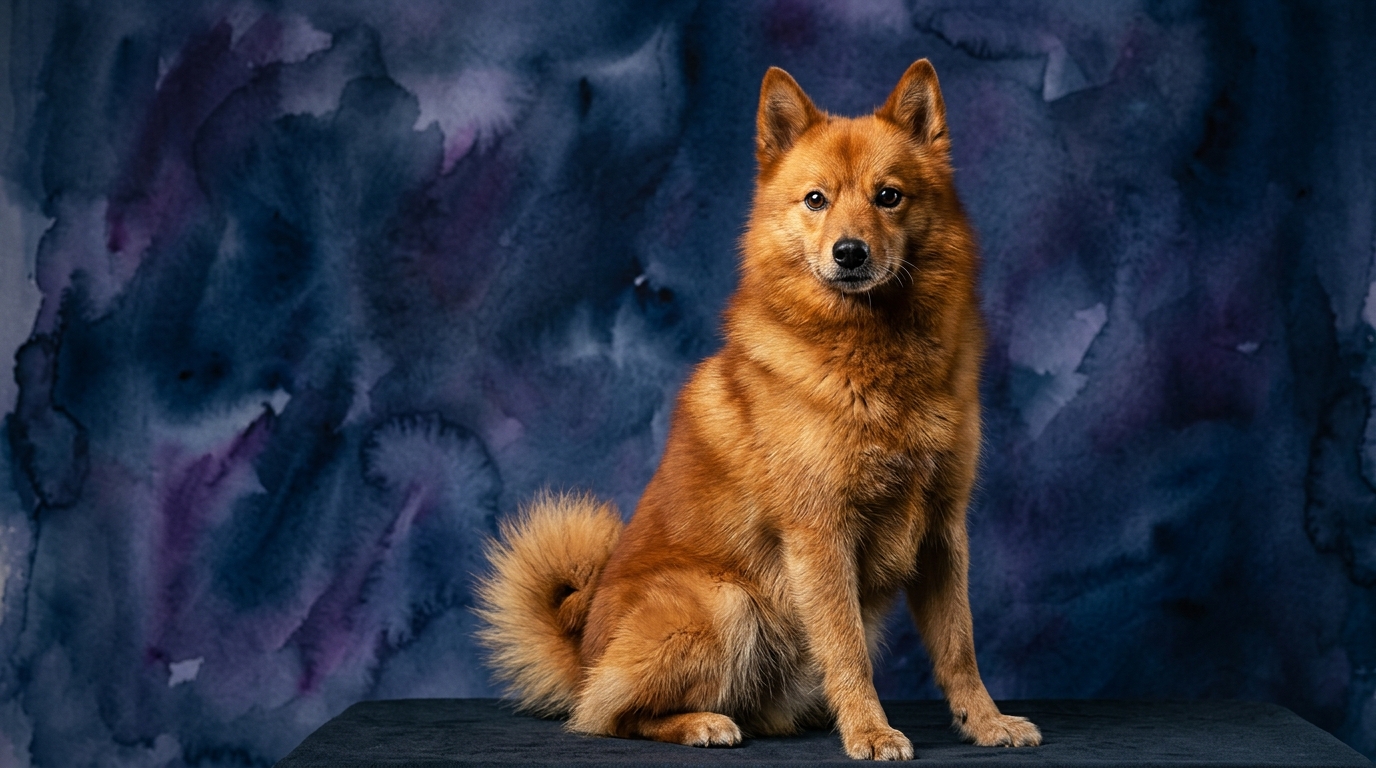
**Finnish Spitz: The Independent Spirit (Not Coren-Ranked)**
**Problem Solving (3/5):** Finnish Spitz are capable of addressing routine challenges and learning from experience, but they may approach novel problems with a more trial-and-error method or require more guided repetition. Their solutions often stem from instinctual behaviors rather than complex analytical thought.
**Training Speed (3/5):** This breed learns at a moderate pace, requiring consistent and patient instruction. Their independent nature means they respond best to positive reinforcement and may take longer to solidify new commands, especially if the task doesn't align with their intrinsic motivations.
**Social Intelligence (3/5):** Finnish Spitz form strong bonds with their immediate families, displaying affection and loyalty. However, their interpretation of complex human social cues might be less refined than some breeds, and they tend to be more reserved with strangers, preferring the company of their trusted circle.
**Instinctive Drive (3/5):** Their primary instinctive drive revolves around their original purpose as barking bird dogs. This manifests as a strong vocalization tendency and a keen interest in their surroundings, but it's a more focused, less generalized drive compared to breeds designed for diverse working roles.
**Memory (3/5):** Finnish Spitz retain information and experiences adequately, remembering familiar routines and commands. While they can recall past training, it may require more regular reinforcement to maintain the sharp recall seen in breeds with higher scores.
Where the Doberman Pinscher Excels Cognitively
The Doberman's cognitive strengths shine in environments demanding rapid learning, precise execution, and sustained mental effort. Their perfect 5/5 in problem-solving means they are not just repeaters of commands but active thinkers, capable of adapting their responses to changing scenarios. For instance, a Doberman can quickly learn a multi-stage agility course, anticipate the next obstacle, and adjust its approach mid-run without direct cues. Their 5/5 training speed and memory enable them to master intricate obedience routines or specialized service tasks with impressive efficiency, retaining complex sequences of actions over long periods. This breed truly thrives when given a job that requires both physical and mental engagement, demonstrating a deep satisfaction in purposeful activity.
Where the Finnish Spitz Shows Unique Cognitive Strengths
While their scores might appear lower on a scale designed for general working intelligence, the Finnish Spitz possesses distinct cognitive attributes that are highly valuable in their own right. Their instinctive drive (3/5) is keenly focused on alerting and observation, making them exceptional 'watchdogs' in a unique, vocal way. They are masters of their immediate environment, using their senses to detect nuances that might escape other breeds, and communicating these observations through their characteristic 'yodel.' Their moderate social intelligence (3/5) allows for deep, affectionate bonds within their family, coupled with a healthy self-reliance. This independence means they are less prone to separation anxiety than some breeds, finding contentment in their own activities even when their humans are occupied, a trait that can be a cognitive advantage for certain lifestyles.
Ease of Training: A Tale of Two Temperaments
The difference in training ease between these two breeds is significant, directly reflecting their cognitive profiles. The Doberman Pinscher, with its 5/5 training speed and memory, is often described as a dream to teach. They approach training with eagerness and focus, quickly understanding what is expected and striving to please. Their social intelligence (4/5) helps them interpret subtle human cues, allowing for nuanced communication during training sessions. Conversely, the Finnish Spitz, with a 3/5 training speed, requires a more patient and consistent approach. Their independent nature and focused instinctive drive (often towards barking) mean that training requires creative motivation and a strong understanding of their intrinsic desires. While they are capable of learning, their progress may be slower, and they might require more frequent reinforcement to maintain learned behaviors, as their memory (3/5) is solid but not as indelible as a Doberman's. Owners must work to make training sessions engaging and relevant to the Finnish Spitz's natural inclinations.
Matching Breeds to Owner Lifestyles: Active Engagement vs. Affectionate Independence
The Doberman Pinscher is an ideal companion for active owners who relish a highly engaged partnership in various activities. Their high instinctive drive (5/5) and problem-solving abilities (5/5) mean they excel in dog sports like agility, obedience, protection work, or as dedicated service animals. They require consistent mental stimulation and physical exercise to channel their energy constructively, thriving in households where they are integrated into daily routines and given purposeful tasks. A relaxed owner who cannot provide this level of engagement may find a Doberman challenging, as their unspent mental and physical energy can lead to undesirable behaviors.
The Finnish Spitz, on the other hand, suits owners who appreciate a dog with an affectionate, somewhat independent spirit. While they benefit from regular walks and mental enrichment, their overall exercise requirements are moderate compared to a Doberman. They are well-suited to households that enjoy their vocal nature and keen observational skills, perhaps in a more suburban or rural setting where their barking won't be an issue. Relaxed owners who are content with a devoted family dog that doesn't demand constant, high-level structured activity, but still provides companionship and alerts to surroundings, will find the Finnish Spitz a delightful match. They thrive on family interaction and moderate engagement rather than intense, demanding work.
The Verdict
Opt for a Doberman Pinscher if you are an experienced, active owner seeking a highly trainable, purpose-driven canine partner for demanding roles, complex training, or an integrated, engaged lifestyle.
Select a Finnish Spitz if you appreciate a charming, vocal, and affectionate family companion with a moderate activity level and an independent streak, valuing their unique alertness and devoted presence.
🧠 Find Your Pet's IQ Score
Our Pet IQ Lab assessment covers 25+ tests across 5 cognitive dimensions — personalized to your breed.
Take the Full IQ Test →Frequently Asked Questions
Is the Finnish Spitz genuinely less capable of learning than a Doberman Pinscher?
Not necessarily less capable, but their learning style and motivation differ significantly. A Finnish Spitz can learn, but their independence and moderate training speed mean they require more patience, consistency, and positive reinforcement tailored to their natural inclinations, whereas a Doberman typically grasps concepts with remarkable speed.
Do Doberman Pinschers require constant 'work' to be well-adjusted?
Dobermans possess a strong instinctive drive and high problem-solving abilities, meaning they thrive on having a purpose and consistent mental engagement. While not always 'work' in a formal sense, daily mental challenges, structured training, and ample physical activity are crucial for their well-being and to prevent boredom-related issues.
How does the 'social intelligence' difference manifest in daily life?
A Doberman's higher social intelligence means they often pick up on subtle human moods and intentions more readily, making them highly responsive and attuned companions within their family unit. A Finnish Spitz, while affectionate with family, might be less inclined to interpret nuanced human signals or engage with strangers, preferring a more self-directed interaction style.