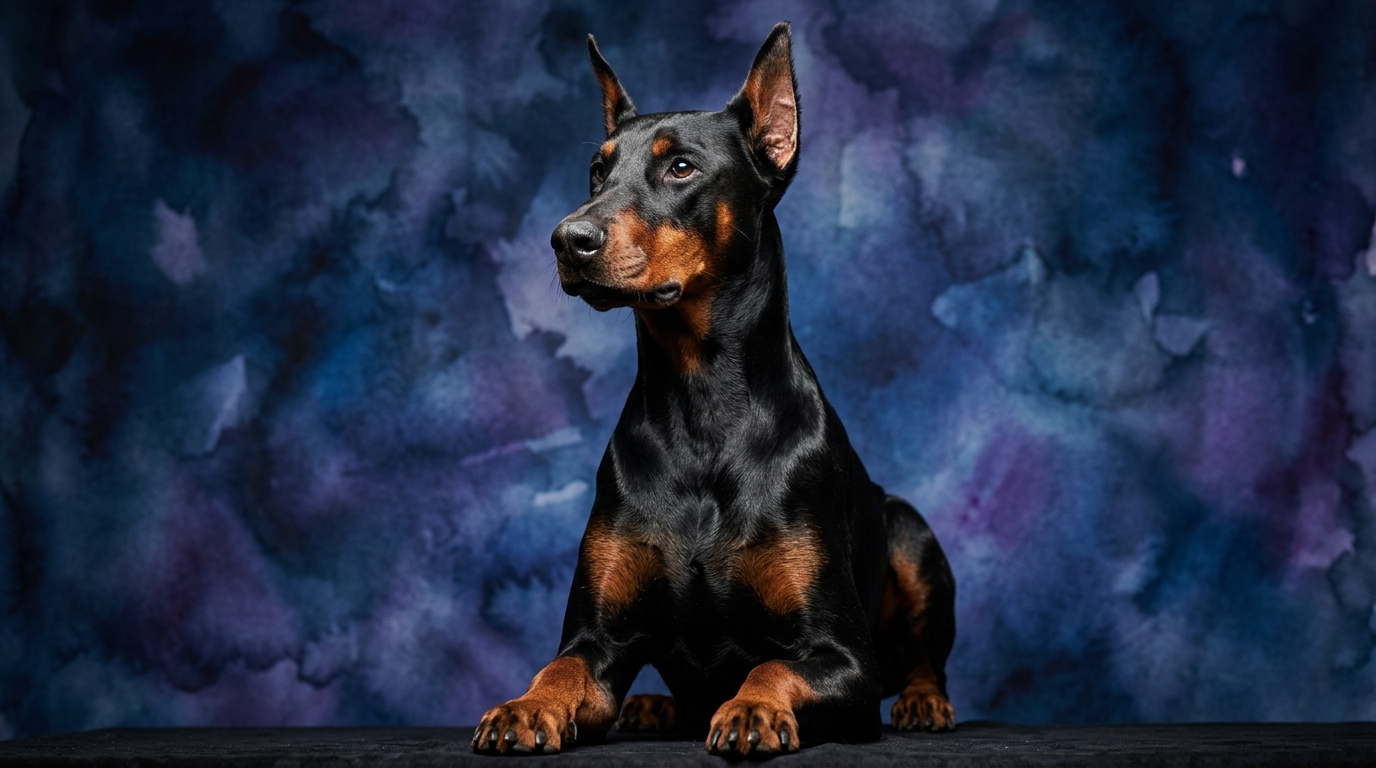
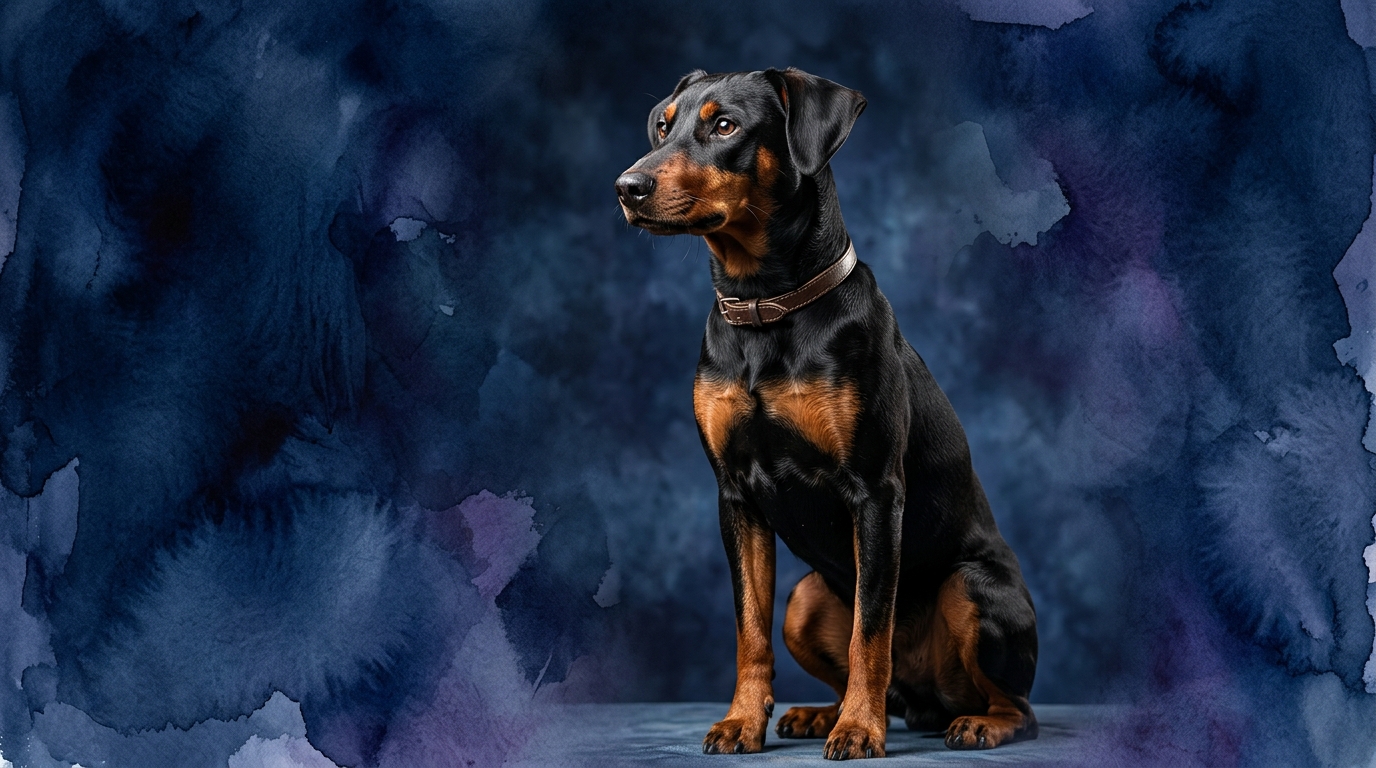
Side-by-Side IQ Profile: Doberman vs. German Pinscher
The Cosmic Pet Pet IQ Lab employs a comprehensive five-dimensional framework to evaluate canine intelligence, offering a granular view beyond simple 'smart' labels. For the Doberman Pinscher, a breed recognized by Stanley Coren as ranking #5 among working dogs, this framework reveals a formidable cognitive architecture. Their Problem Solving is rated 5/5, indicating an exceptional capacity to analyze novel situations and devise effective solutions, often with minimal human intervention. Training Speed also scores 5/5, demonstrating an almost effortless ability to absorb and execute new commands, making them highly responsive learners. Social Intelligence, at 4/5, suggests a profound understanding of human cues and emotional states, allowing for sophisticated communication and partnership. Their Instinctive Drive, a perfect 5/5, points to a powerful, intrinsic motivation for tasks like guarding, tracking, or protection work, often manifesting as unwavering focus and determination. Finally, Memory, also 5/5, highlights their superb recall and ability to retain complex sequences of behaviors over extended periods.
In contrast, the German Pinscher, while sharing the 'Working' group designation, presents a distinct cognitive profile that underscores its unique temperament. Not specifically ranked by Coren, our IQ lab data positions them with a consistent 3/5 across all five dimensions. Their Problem Solving at 3/5 means they possess a functional capacity to navigate challenges, though they may rely more on learned patterns or require more repetition to master new solutions compared to their Doberman cousins. Training Speed, also 3/5, indicates they are certainly trainable, but not with the rapid-fire acquisition seen in the Doberman; patience and consistent reinforcement are key. Social Intelligence at 3/5 suggests they are capable of forming strong bonds and understanding basic human interactions, but might not interpret subtle emotional nuances with the same depth as a Doberman, often displaying a more independent streak. Their Instinctive Drive, 3/5, implies a moderate level of innate motivation for typical canine behaviors, without the intense, focused drive for a specific 'job' often seen in specialized working breeds. Lastly, Memory at 3/5 means they can certainly remember commands and routines, but perhaps not with the complex, multi-layered precision of a Doberman, making sequential tasks potentially more challenging to solidify.
Where the Doberman Pinscher Wins Cognitively
The Doberman Pinscher's cognitive strengths are evident across nearly every dimension, positioning them as a truly exceptional canine intellect, particularly when a dedicated working partnership is desired. Their 5/5 Problem Solving means they don't just follow orders; they actively process their environment and adapt. For instance, in a protection scenario, a Doberman isn't merely reacting; it's assessing threat levels, evaluating escape routes, and making split-second decisions based on its training and innate understanding of the situation. This superior cognitive flexibility allows them to excel in dynamic, unpredictable environments far beyond simple obedience routines. Furthermore, their 5/5 Training Speed translates into a remarkable efficiency in learning. An owner can introduce a complex sequence of agility obstacles, and the Doberman will often grasp the desired path and movements after just a few repetitions, internalizing the skill with impressive speed. This rapid acquisition of new skills makes them ideal candidates for advanced competitive sports or intricate service dog roles. The Doberman's 5/5 Memory also ensures that once a lesson is learned, it is deeply ingrained, leading to reliable performance even after long breaks. This robust memory contributes significantly to their unwavering precision in tasks requiring a sequence of actions or perfect recall in distracting environments. Finally, their 5/5 Instinctive Drive fuels a relentless determination to complete tasks. Whether it's tracking a scent or performing a complex protection routine, the Doberman approaches it with an intense focus and an almost inherent understanding of its purpose, making them highly effective in roles demanding sustained effort and mental engagement.
Where the German Pinscher Wins Cognitively
While the German Pinscher's IQ scores may be numerically lower than the Doberman's, these distinctions don't signify a lack of capability, but rather a different cognitive approach that can be a 'win' for specific lifestyles. Their 3/5 Problem Solving, for example, means they are capable of navigating their world, but might do so with a more independent, less human-directed style. They are adept at figuring things out for themselves, which can translate into a charming self-reliance rather than a constant need for guidance. This can be beneficial for owners who appreciate a dog that isn't always looking for the next command but can entertain itself or solve minor dilemmas on its own. The German Pinscher's 3/5 Instinctive Drive, while not as intense as the Doberman's, means they possess a balanced level of innate motivation. They are spirited and energetic, but typically without the overwhelming 'job' focus that demands constant, high-level mental engagement to prevent boredom or destructive behaviors. This moderate drive makes them highly adaptable to a wider range of family environments, where they can be happy with regular exercise and companionship without the specific demands of a working dog. Their 3/5 Social Intelligence also fosters a more generalized adaptability. They form strong bonds with their families but are often less intensely focused on human directives than a Doberman. This can result in a dog that is affectionate and connected, yet capable of enjoying its own space and pursuing its own interests, offering a less 'velcro' experience for owners who prefer a bit more canine independence. Essentially, the German Pinscher's cognitive profile leans towards a well-rounded, less intensely specialized intellect, which can be a distinct advantage for owners seeking a spirited companion that is less demanding in terms of constant, high-level mental programming.
Which is Easier to Train and Why
When considering ease of training, the Doberman Pinscher clearly holds an advantage due to its exceptional cognitive attributes, particularly its 5/5 Training Speed and 5/5 Memory. These dogs possess an innate ability to rapidly grasp new concepts and commands, often requiring fewer repetitions to achieve proficiency. Their strong social intelligence (4/5) also means they are highly attuned to human feedback, making them eager to please and responsive to their handler's cues. This combination allows Dobermans to excel in complex obedience, protection work, and competitive dog sports, quickly mastering intricate routines and demonstrating reliable recall even in distracting environments. Training a Doberman often feels like a highly collaborative process, where the dog actively participates in the learning experience, internalizing lessons with impressive speed and precision.
In contrast, the German Pinscher, with its 3/5 Training Speed and 3/5 Memory, presents a different training challenge. While certainly trainable, they typically require more patience, consistency, and creative reinforcement strategies. Their moderate problem-solving approach (3/5) means they may take longer to connect actions with desired outcomes, and their independent streak, stemming from their balanced social intelligence, can sometimes manifest as a charming stubbornness. Owners might find that German Pinschers need shorter, more engaging training sessions to maintain focus, and consistent repetition over a longer period to solidify commands. They might not internalize complex sequences with the same speed or precision as a Doberman, but with positive reinforcement and clear expectations, they can still become well-behaved and capable companions. The key difference lies in the Doberman's innate eagerness to learn and work collaboratively, versus the German Pinscher's more self-reliant and occasionally questioning approach to directives.
Which Suits Active Owners vs. Relaxed Owners
Both the Doberman Pinscher and the German Pinscher are inherently active breeds, stemming from their working dog heritage, but their cognitive profiles dictate different types of activity and mental engagement. The Doberman Pinscher, with its 5/5 Instinctive Drive and high cognitive scores across the board, thrives with highly active owners who are prepared to provide significant physical exercise and intensive mental stimulation. These dogs excel in structured activities like Schutzhund, agility, competitive obedience, or even as dedicated running partners, where their sharp minds and powerful bodies can be fully utilized. A Doberman requires a 'job' or a consistent outlet for its mental energy; otherwise, its considerable problem-solving abilities and drive can lead to boredom and potentially destructive behaviors if left unstimulated. They are best suited for experienced, dedicated owners who enjoy structured training and can commit to daily rigorous activity and mental challenges.
The German Pinscher, while also requiring regular exercise, is perhaps more adaptable to a broader range of active lifestyles. Their 3/5 Instinctive Drive means they are energetic and enjoy physical activity—daily walks, runs, or play sessions are essential—but they don't typically demand the same level of intense, task-oriented mental work as a Doberman. They can be content with engaging play, puzzle toys, and consistent, but perhaps less rigorous, training. For owners who enjoy an active lifestyle but don't necessarily want to commit to competitive dog sports or highly specialized training, the German Pinscher can be an excellent fit. They are spirited companions who love to be involved in family activities, and while they need mental engagement to prevent boredom, it doesn't need to be as intensely structured or demanding as what a Doberman requires to feel fulfilled. A truly 'relaxed' owner, however, would likely struggle with either breed, as both possess significant energy and need consistent engagement.
The Verdict
Opt for the Doberman Pinscher if you desire a highly trainable, intensely focused working partner eager to excel in complex tasks, advanced obedience, or protection sports, and are prepared to meet its substantial needs for structured mental and physical engagement.
Select the German Pinscher if you prefer a spirited, independent, and adaptable companion that enjoys activity and mental stimulation but doesn't require the same level of intense, specialized 'work' focus, and you appreciate a dog with a charming self-reliance.
🧠 Find Your Pet's IQ Score
Our Pet IQ Lab assessment covers 25+ tests across 5 cognitive dimensions — personalized to your breed.
Take the Full IQ Test →Frequently Asked Questions
Are German Pinschers harder to train than Dobermans?
German Pinschers typically require more patience and consistency in training compared to Dobermans. Their 3/5 Training Speed means they may take longer to grasp commands and solidify behaviors, whereas Dobermans' 5/5 Training Speed allows for rapid skill acquisition.
Which breed is more likely to develop behavioral issues if not mentally stimulated?
The Doberman Pinscher, with its 5/5 Problem Solving and 5/5 Instinctive Drive, is more prone to developing behavioral issues like destructive chewing or anxiety if its significant mental and physical stimulation needs are not met. The German Pinscher, with its moderate drives, is generally more adaptable.
Can a German Pinscher compete in dog sports like agility or obedience?
Yes, German Pinschers can certainly compete and excel in dog sports like agility and obedience. While their training speed is 3/5, their spirited nature and moderate drive make them enthusiastic participants with consistent, positive reinforcement from their handlers.