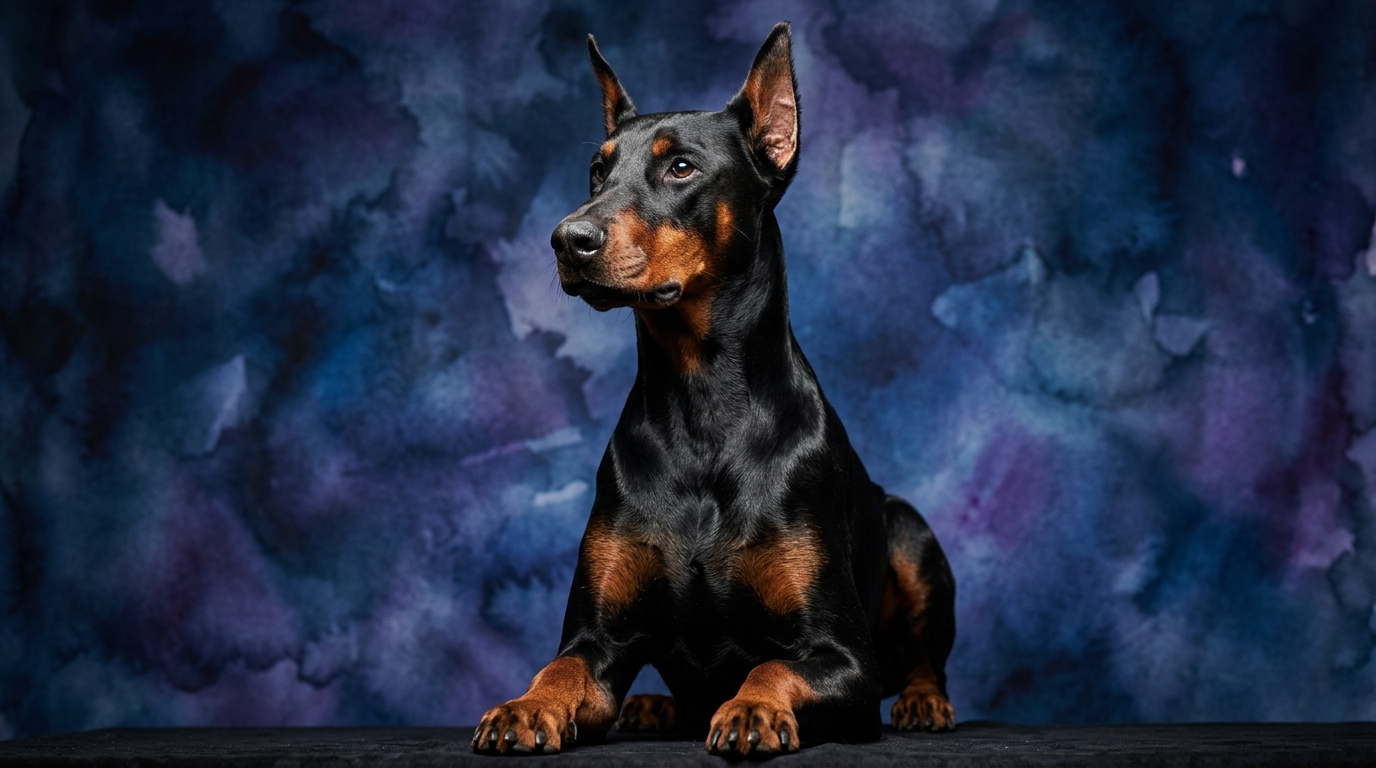
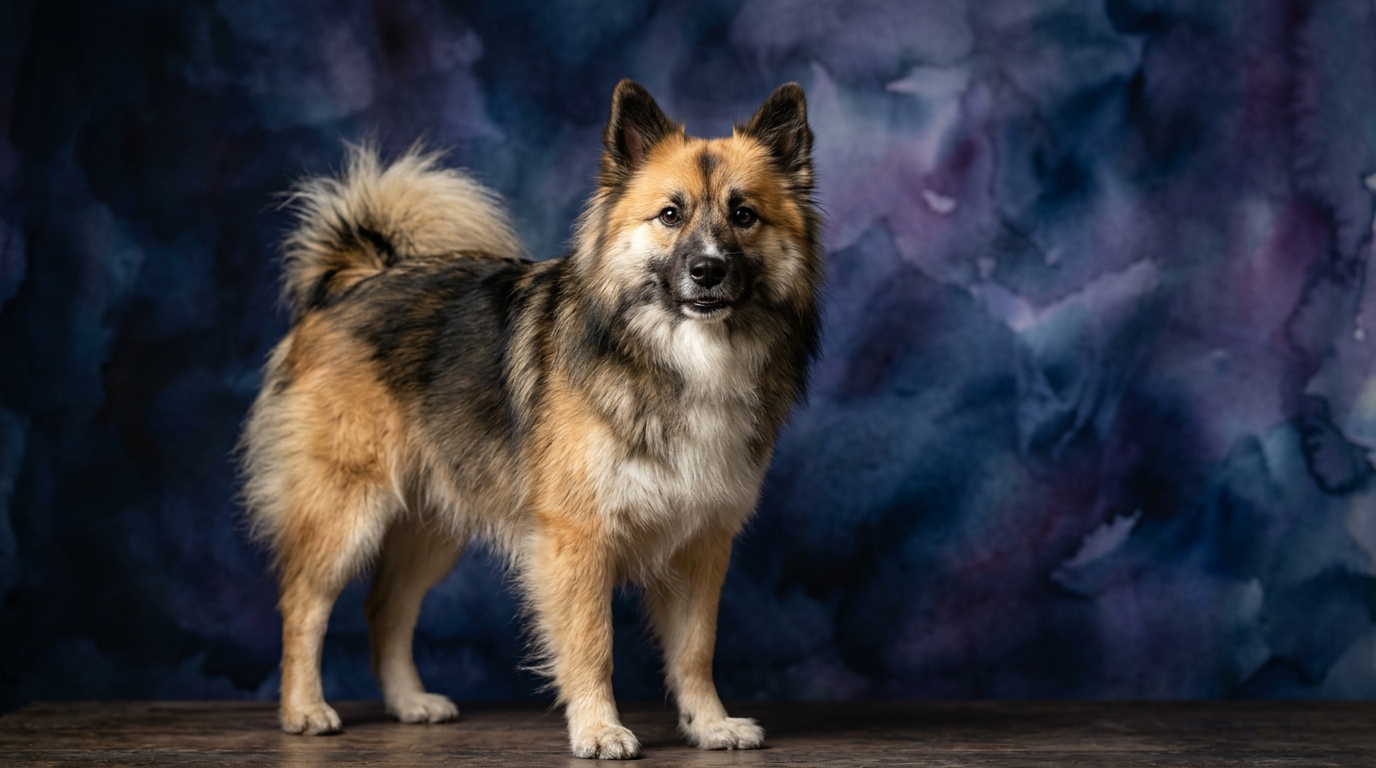
Side-by-Side Cognitive Profiles: Doberman Pinscher vs. Icelandic Sheepdog
The Cosmic Pet Pet IQ Lab data presents a clear distinction between these two breeds. The Doberman Pinscher, a formidable Working group dog, registers an impressive Coren rank of #5, indicating a profound capacity for obedience and working intelligence. Its individual cognitive dimensions are consistently high: Problem Solving 5/5, Training Speed 5/5, Social Intelligence 4/5, Instinctive Drive 5/5, and Memory 5/5. This profile paints a picture of a dog engineered for complex tasks, rapid learning, and nuanced interaction, often excelling in roles requiring precision and sustained mental effort.
In contrast, the Icelandic Sheepdog, a charming Herding breed, does not appear on Coren's ranking, suggesting its intelligence, while perfectly functional for its ancestral role, operates on a different plane. Its IQ scores are uniformly set at 3/5 across all categories: Problem Solving 3/5, Training Speed 3/5, Social Intelligence 3/5, Instinctive Drive 3/5, and Memory 3/5. This consistent scoring indicates a balanced, moderate cognitive approach, likely prioritizing practical application over abstract complexity, making it well-suited for independent, adaptable herding work in challenging environments.
Where the Doberman Pinscher Excels Cognitively
The Doberman Pinscher's cognitive architecture is built for peak performance in structured environments and demanding roles. Its 5/5 Problem Solving score means it can quickly analyze novel situations and devise effective solutions, often demonstrating foresight in complex tasks such as protection work or advanced obedience routines. This isn't merely about following commands, but about understanding the underlying goal and adapting its approach when faced with obstacles, making it an exceptional partner for intricate challenges.
Furthermore, the Doberman's 5/5 Training Speed and 5/5 Memory combine to create a dog that absorbs information with remarkable speed and retains it over long periods. This allows for the rapid acquisition of extensive repertoires of commands and behaviors, enabling sophisticated communication and control. Its 4/5 Social Intelligence, while not perfect, indicates a strong capacity to read and respond to human cues, facilitating deep bonds and cooperative working relationships where subtle signals are critical. The Doberman's powerful 5/5 Instinctive Drive fuels its dedication to tasks, providing the sustained motivation necessary for high-stakes work and demanding training regimens.
Where the Icelandic Sheepdog's Cognition Shines
While the Icelandic Sheepdog's scores are more moderate, its cognitive profile represents a perfectly calibrated intelligence for its traditional role as a resilient, independent herder in rugged terrain. Its 3/5 Problem Solving isn't about abstract puzzle-solving, but about practical, on-the-spot decisions necessary for managing a flock and navigating challenging landscapes, often with minimal human direction. This involves assessing sheep movement, finding safe paths, and reacting swiftly to environmental changes, demonstrating a pragmatic, field-oriented intelligence.
The Icelandic Sheepdog's 3/5 Instinctive Drive, specifically for herding, is a distinct cognitive strength. It manifests as a balanced, vocal, and agile approach to moving livestock, relying on barking and quick movements rather than aggressive nipping. This specific application of drive, coupled with its moderate social intelligence (3/5), allows it to work effectively with its flock while still being amenable to human guidance, without the intense, sometimes overwhelming, drive seen in breeds bred for more aggressive herding styles or protection work. Its cognitive makeup ensures it's adaptable and resourceful in its specific niche, thriving on natural, open-ended challenges rather than highly structured, repetitive tasks.
Training Dynamics: Doberman Pinscher vs. Icelandic Sheepdog
When it comes to ease of training, the Doberman Pinscher holds a clear advantage with its 5/5 Training Speed. This breed typically grasps new commands and concepts with remarkable rapidity, often requiring fewer repetitions to solidify a behavior. Their strong desire to please, coupled with exceptional focus and memory, makes them highly responsive to positive reinforcement and structured training programs. They thrive on consistency and mental engagement, quickly progressing through advanced obedience, agility, or specialized working tasks.
The Icelandic Sheepdog, with its 3/5 Training Speed, requires a more patient and nuanced approach. While intelligent and willing, they may take longer to process and internalize new commands, often needing more repetitions and consistent reinforcement. Their moderate instinctive drive means their motivation might not always be as intensely focused on human-directed tasks as the Doberman's. Trainers will find success by leveraging the Icelandic Sheepdog's natural curiosity and playfulness, using varied techniques to maintain engagement and making training sessions feel like a collaborative game rather than a rigorous drill. Their independent herding nature means they might occasionally prioritize their own assessment of a situation over an owner's command, requiring clear, consistent communication to build trust and responsiveness.
Suitability for Active vs. Relaxed Owners
The Doberman Pinscher is unequivocally suited for active and engaged owners who can provide consistent mental and physical stimulation. Their high problem-solving ability, intense instinctive drive, and need for complex tasks mean they require more than just daily walks; they need 'jobs' or structured activities that challenge their intellect. Owners who enjoy advanced obedience, protection sports, agility, or even complex puzzle toys will find a Doberman to be an enthusiastic and capable partner. Without adequate mental engagement, a Doberman's considerable cognitive power and drive can lead to boredom and potentially destructive behaviors, making them unsuitable for predominantly relaxed or hands-off lifestyles.
The Icelandic Sheepdog, while certainly not a couch potato, is a better fit for owners seeking a moderately active companion. Their moderate instinctive drive and problem-solving skills mean they appreciate regular exercise and mental enrichment but don't typically demand the same intensity or complexity as a Doberman. They thrive on outdoor adventures, exploring new scents, and participating in family activities. Their herding background means they enjoy having a 'flock' (their human family) to be with and watch over, making them adaptable to owners who enjoy daily walks, occasional hikes, and a generally engaged but not hyper-intensive lifestyle. They are more forgiving of an occasional relaxed day than a Doberman might be, provided their core needs for companionship and moderate activity are met.
The Verdict
Choose a Doberman Pinscher if you are an experienced, active owner seeking a highly trainable, intensely driven partner for complex tasks, advanced obedience, or protection work, and can provide substantial daily mental and physical engagement.
Opt for an Icelandic Sheepdog if you desire a moderately active, adaptable companion with a charming disposition, suited for family life and outdoor exploration, and appreciate a dog with a balanced, practical intelligence for its traditional role.
🧠 Find Your Pet's IQ Score
Our Pet IQ Lab assessment covers 25+ tests across 5 cognitive dimensions — personalized to your breed.
Take the Full IQ Test →Frequently Asked Questions
Do Doberman Pinschers really need a 'job'?
Yes, Doberman Pinschers possess a very high instinctive drive and problem-solving ability, meaning they thrive on having structured tasks or activities. Without a 'job' to channel their considerable mental and physical energy, they can become bored, leading to undesirable behaviors or anxiety.
Is the Icelandic Sheepdog suitable for first-time dog owners?
The Icelandic Sheepdog can be suitable for first-time owners who are committed to consistent, positive reinforcement training and can provide moderate daily exercise and companionship. Their generally adaptable and friendly nature, combined with a manageable level of instinctive drive, makes them less demanding than some other working breeds, but still requires dedication.
How do their social intelligence scores impact family dynamics?
The Doberman's 4/5 social intelligence means they are often acutely tuned into human emotions and social structures, making them highly responsive but also potentially sensitive to household dynamics. The Icelandic Sheepdog's 3/5 social intelligence indicates a friendly, adaptable nature that integrates well into family life, often valuing companionship without necessarily needing the same depth of complex social interaction or exhibiting the same level of nuanced social awareness as the Doberman.