
Side-by-Side Cognitive Profiles: Doberman Pinscher vs. Komondor
The Doberman Pinscher, ranked #5 in Coren's intelligence scale, presents a comprehensive cognitive powerhouse. Their Problem Solving is a perfect 5/5, indicating an exceptional capacity to navigate complex situations and strategize solutions efficiently. Training Speed also scores 5/5, meaning they grasp new commands and routines with remarkable rapidity, often requiring fewer repetitions than most breeds. Social Intelligence, at 4/5, suggests a strong aptitude for understanding human cues and social dynamics, though perhaps with a touch of independent thought. Instinctive Drive is a commanding 5/5, reflecting their powerful genetic predisposition for tasks like guarding and protection, often executed with unwavering focus. Finally, their Memory at 5/5 means they retain learned information and experiences over long periods, making training cumulative and effective.
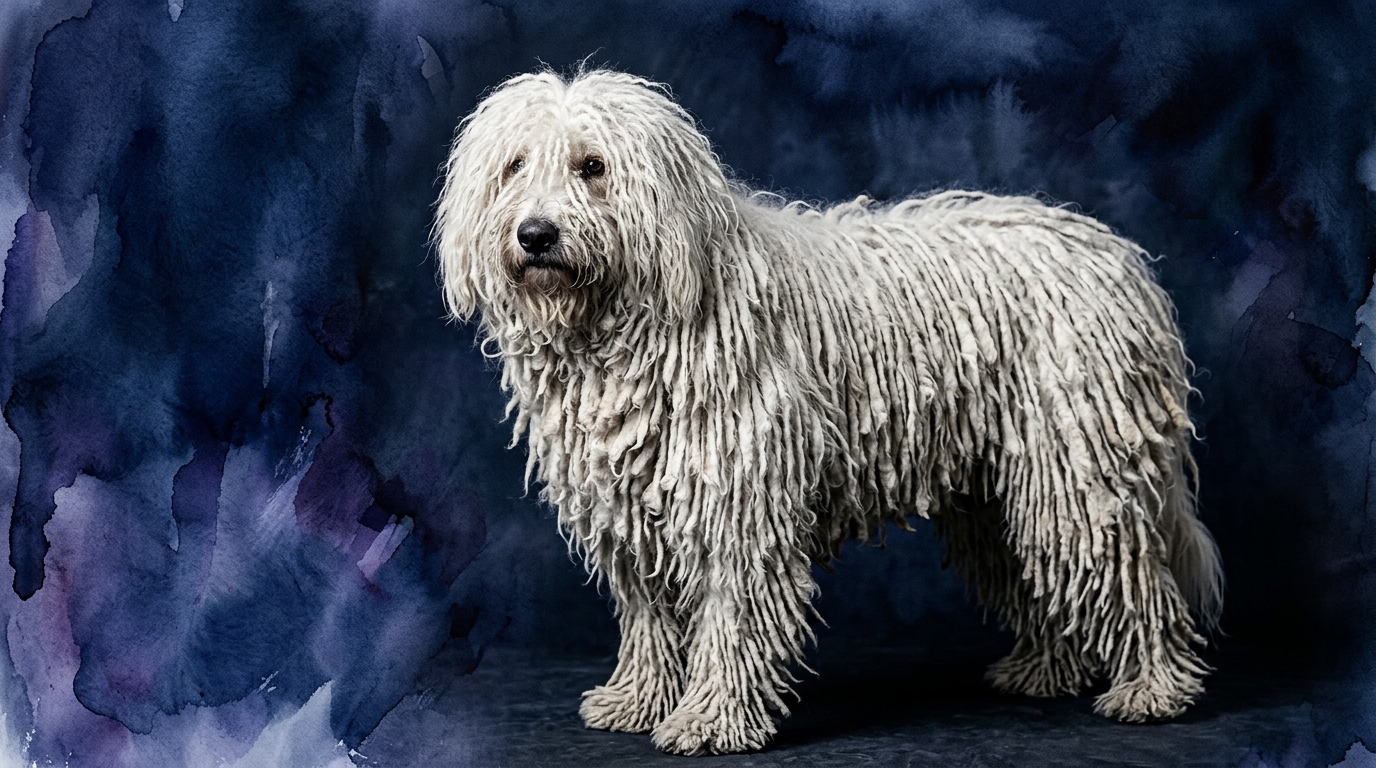
The Komondor, positioned at #67 on Coren's scale, offers a contrasting cognitive blueprint, rooted in centuries of solitary livestock guarding. Their Problem Solving is rated 3/5, indicating a practical, situation-specific approach rather than abstract strategizing; they solve problems primarily related to their immediate environment and threats. Training Speed also scores 3/5, meaning they learn at a moderate pace, often requiring more patience and consistent reinforcement due to their independent nature. Social Intelligence is 3/5, reflecting an ability to understand their immediate family and flock, but with less emphasis on broad human social nuances compared to more companion-oriented breeds. Instinctive Drive is 3/5, focusing intensely on their primary guarding role, which can manifest as territoriality and vigilance, but without the broad task-orientation of the Doberman. Their Memory is 3/5, sufficient for retaining essential routines and recognizing threats, but perhaps not for a vast repertoire of complex commands.
Where the Doberman Pinscher Excels Cognitively
The Doberman Pinscher's cognitive strengths are evident across multiple domains, making them exceptionally versatile. Their 5/5 rating in Problem Solving means they don't just follow commands; they can analyze novel situations and devise effective strategies, whether it's figuring out how to open a complex latch or adapting to a new obedience routine. This capacity for analytical thought allows them to excel in advanced dog sports like agility, obedience, and protection work, where quick, independent decisions are paramount. The perfect 5/5 Training Speed further amplifies this, allowing trainers to introduce complex sequences and multi-step commands quickly. They process information rapidly, forming strong associations between actions and consequences. This breed's 5/5 Memory ensures that once a lesson is learned, it's rarely forgotten, building a robust foundation of knowledge and skills over their lifetime. Their 5/5 Instinctive Drive fuels their engagement, providing the motivation to apply their cognitive abilities to tasks with unwavering focus and determination.
Where the Komondor's Cognition Shines
While the Doberman excels in broad cognitive versatility, the Komondor's strengths are deeply specialized, honed over millennia for a specific purpose: independent livestock guarding. Their 3/5 Problem Solving, though not as broad as the Doberman's, is highly effective in their ancestral role. They are adept at assessing threats to their flock, discerning genuine danger from benign stimuli, and making autonomous decisions without human intervention. This isn't about solving abstract puzzles, but about practical, life-or-death judgment in the field. Their 3/5 Instinctive Drive is singularly focused on protection and vigilance; they possess an innate understanding of their territory and charges, displaying a profound commitment to their duty. This manifests as an unwavering watchfulness and a deep-seated protective instinct, which, while not a broad "drive" in the Doberman sense, is incredibly powerful within its specific context. Their memory, while rated 3/5, is more than sufficient for recognizing their flock, family, and potential intruders, and for retaining the patterns of their environment. This breed's cognition is about steadfast, self-reliant guardianship rather than rapid, varied task acquisition.
Ease of Training: A Tale of Two Temperaments
The marked differences in their cognitive profiles directly translate to their trainability. The Doberman Pinscher, with its 5/5 Training Speed, 5/5 Memory, and 4/5 Social Intelligence, is generally considered far more straightforward to train for a wide range of tasks. They eagerly absorb new information, respond well to positive reinforcement, and actively seek to understand and comply with human directives. Their strong instinctive drive can be channeled into specific tasks, making them highly receptive to structured training programs. A Doberman thrives on mental stimulation and enjoys the collaborative process of learning with their handler.
The Komondor, on the other hand, presents a different training challenge. Their 3/5 Training Speed and 3/5 Social Intelligence mean they learn at a more deliberate pace and are less inclined to blindly follow commands. Their independence, a cornerstone of their guarding heritage, means they will often weigh a command against their own judgment or perceived priorities. Training a Komondor requires immense patience, consistency, and a deep understanding of their unique motivations. They respond best to clear, fair leadership and positive reinforcement, but their compliance is often earned through respect rather than immediate eagerness. Commands need to make sense to them, and repetitive, arbitrary drills can be met with disinterest.
Active Owners vs. Relaxed Owners: Matching Lifestyle to Mindset
For active owners seeking a dynamic partner, the Doberman Pinscher is an ideal match. Their high problem-solving capacity and intense instinctive drive demand consistent mental and physical engagement. They excel in structured activities like competitive obedience, agility, tracking, and protection sports, where their sharp minds and athletic bodies can be fully utilized. An owner who can provide daily challenges, varied training sessions, and plenty of exercise will find the Doberman a deeply rewarding and engaged companion. A relaxed owner who cannot meet these needs might find a Doberman becomes bored, potentially leading to destructive behaviors or excessive vocalization stemming from unchanneled energy and intellect.
The Komondor, conversely, suits an owner who understands and respects their independent, vigilant nature, rather than one seeking a highly biddable companion for diverse activities. While they are large and require space, their activity level often involves patrolling their territory rather immense bursts of speed or complex maneuvers. They are not typically suited for competitive dog sports that require rapid, precise responses to handler cues. An owner who appreciates a steadfast, self-reliant guardian, capable of making independent judgments, and who can provide a secure environment where their protective instincts are appropriately managed, will find the Komondor a loyal and dedicated presence. They do not demand constant interaction or structured "work" in the same way a Doberman does, making them potentially suitable for owners who prefer a more hands-off, yet deeply committed, canine companion, provided their unique guarding needs are met.
The Verdict
Select a Doberman Pinscher if you desire a highly trainable, versatile canine partner eager for complex tasks, competitive sports, and consistent mental engagement. This breed thrives with owners who can provide structured training, ample stimulation, and channel their powerful drives into productive activities.
Opt for a Komondor if you seek a steadfast, independent guardian with a deep-seated protective instinct and are prepared for a deliberate training journey focused on respect and understanding. This breed suits owners who appreciate self-reliance and can provide a secure environment for their ancient guarding temperament.
🧠 Find Your Pet's IQ Score
Our Pet IQ Lab assessment covers 25+ tests across 5 cognitive dimensions — personalized to your breed.
Take the Full IQ Test →Frequently Asked Questions
Are Doberman Pinschers good for first-time dog owners?
Doberman Pinschers can be suitable for first-time owners who are committed to extensive training, socialization, and providing consistent mental and physical stimulation. Their high cognitive abilities require an owner willing to invest significant time in their development.
Do Komondors get along with other pets?
Komondors can coexist with other pets, especially if raised with them from a young age, as their guarding instinct extends to their perceived "flock." However, their protective nature means careful introductions and supervision are crucial, particularly with new animals.
What kind of exercise does a Doberman Pinscher need?
A Doberman Pinscher requires substantial daily exercise, including vigorous physical activity like running or fetch, combined with mental challenges such as obedience training, puzzle toys, or scent work. Their high energy and cognitive drive necessitate both outlets.