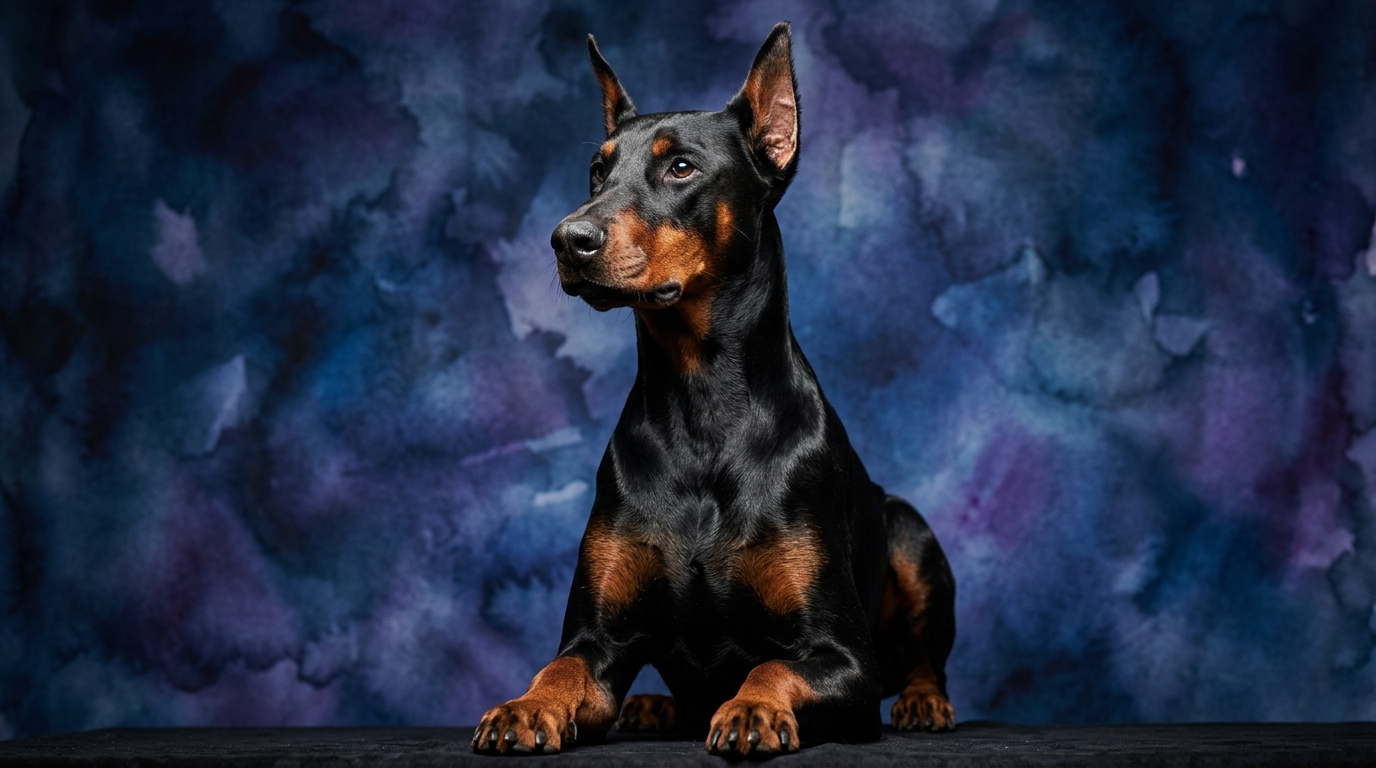
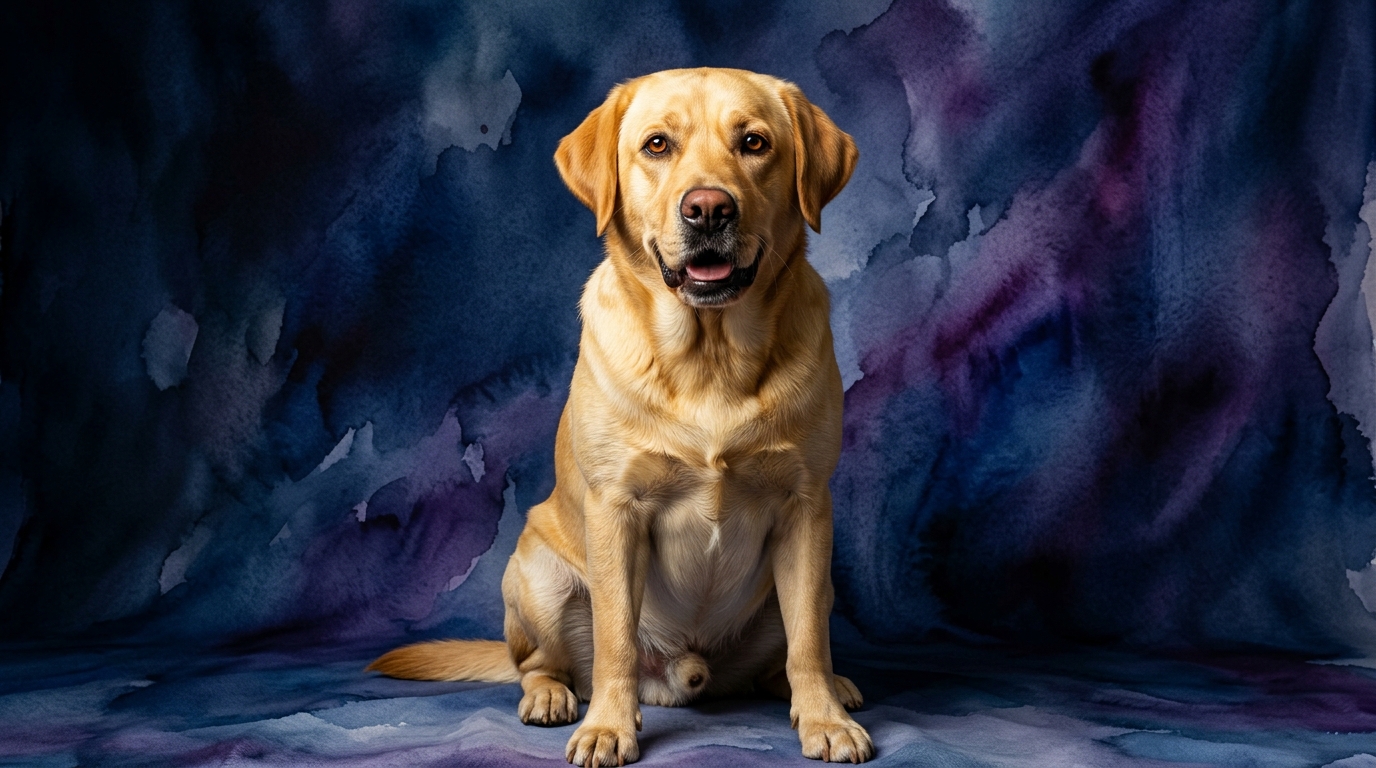
Side-by-Side IQ Profile: Doberman Pinscher vs. Labrador Retriever
**Doberman Pinscher (Coren Rank #5):** This breed excels with a top-tier Problem Solving score of 5/5, indicating an exceptional capacity to navigate complex challenges and adapt strategies. Its Training Speed also stands at a perfect 5/5, reflecting rapid assimilation of new commands and routines. Social Intelligence, at 4/5, suggests a strong understanding of human cues but perhaps a more selective or task-oriented social engagement compared to some breeds. A 5/5 Instinctive Drive underscores a powerful innate motivation for specific tasks, often involving protection or vigilance. Finally, a 5/5 Memory score means the Doberman retains learned information and experiences with remarkable fidelity over time.
**Labrador Retriever (Coren Rank #7):** The Labrador Retriever's Problem Solving registers at 4/5, showing robust capabilities in navigating new situations, though perhaps with less independent innovation than a Doberman. Its Training Speed matches the Doberman at 5/5, demonstrating an eager and quick grasp of instruction. Where the Labrador truly shines is its 5/5 Social Intelligence, indicating an outstanding ability to interpret and respond to human emotions and social dynamics, fostering strong cooperative bonds. Its Instinctive Drive is rated 4/5, signifying a strong, but perhaps more generalized, motivation often channeled into retrieving or companionship. A Memory score of 4/5 indicates solid retention of commands and experiences, though potentially not with the same precise recall as a Doberman across all contexts.
Where the Doberman Pinscher Wins Cognitively
The Doberman Pinscher's cognitive architecture presents a clear advantage in scenarios demanding sharp analytical prowess and precise recall. Its 5/5 Problem Solving allows it to quickly assess novel situations, formulate effective solutions, and even anticipate next steps, whether figuring out how to bypass a complex agility course obstacle or understanding multi-stage commands. This breed doesn't merely follow instructions; it actively processes, strategizes, and often anticipates the handler's intent, showcasing a capacity for independent thought. Coupled with a 5/5 Memory, the Doberman can retain intricate sequences, past experiences, and learned associations with exceptional clarity, leading to remarkably consistent performance even after significant breaks in training. Furthermore, its 5/5 Instinctive Drive fuels a powerful, laser-focused motivation, making it exceptionally persistent and resilient in tasks aligning with innate predispositions like vigilance, advanced obedience, or scent work. This intense drive, when correctly channeled, transforms learning into an immersive, goal-oriented pursuit, where the Doberman harnesses its formidable mental faculties to achieve specific, often demanding, outcomes with unwavering dedication and precision.
Where the Labrador Retriever Wins Cognitively
The Labrador Retriever's cognitive strengths primarily orbit around its exceptional social acumen and cooperative spirit, making it a master of harmonious interaction. Its 5/5 Social Intelligence means it possesses an innate, highly developed ability to read human emotions, body language, and intentions with remarkable sensitivity. This translates into an incredibly empathetic companion and an eager, intuitive partner in activities where human-canine collaboration is paramount, such as service work, therapy, or search and rescue where a calm, reassuring presence is as vital as task completion. While its Problem Solving is rated 4/5, it often leverages its robust social intelligence to seek guidance and reassurance from its handler when faced with novel or challenging situations, rather than always attempting independent solutions, fostering a strong partnership. The Labrador's 4/5 Instinctive Drive, though not as intensely focused as the Doberman's, is broad, highly adaptable, and generally manifests as a strong desire for retrieving, exploration, and shared activities. This adaptable drive, combined with its social grace, makes the Labrador particularly adept at roles requiring continuous, positive interaction and a profound willingness to work alongside people, thriving on shared experiences and mutual understanding.
Which is Easier to Train and Why
Both the Doberman Pinscher and the Labrador Retriever boast an impressive 5/5 Training Speed, indicating that both breeds grasp new commands and routines with remarkable alacrity. However, the nature of their trainability and the perceived ease of the overall training journey can differ significantly due to their other cognitive dimensions. The Doberman's 5/5 Problem Solving and 5/5 Instinctive Drive mean it can learn complex tasks quickly and perform them with intense focus, precision, and a high degree of independence, especially when the training taps into its innate drives for protection or highly structured work. It excels at mastering intricate routines, chain behaviors, and subtle cues, committing them to memory (5/5) with little difficulty. The primary 'challenge' with a Doberman often lies not in its learning capacity, but in managing its powerful instinctive drive and ensuring its problem-solving isn't applied to undesirable behaviors; this requires a firm, consistent, experienced handler who can provide clear structure, channel its mental energy productively, and maintain psychological leadership.
The Labrador, with its 5/5 Training Speed combined with 5/5 Social Intelligence, often presents an 'easier' and more straightforward training experience for the average owner. Its inherent eagerness to please, robust social connection with humans, and innate desire for cooperative interaction mean it actively seeks to understand and comply with human directives, often requiring less intrinsic motivation beyond praise and shared activity. While its Problem Solving is 4/5, it's generally more inclined to look to its handler for solutions and reassurance rather than independently devising them, which can simplify the training process by reducing potential for willful divergence. The Labrador's 4/5 Instinctive Drive, while strong for retrieving and general activity, is typically less intense and more generalized than the Doberman's, making it more amenable to a wider variety of training tasks and less prone to fixating on a single objective without handler input. Its generally more forgiving nature and strong desire for companionship make it a less demanding partner to train for those prioritizing a strong, willing partnership and adaptability over absolute precision in complex tasks.
Which Suits Active Owners vs. Relaxed Owners
For owners who embrace an active, highly structured, and goal-oriented lifestyle, and are prepared to engage deeply in advanced training and mental stimulation, the Doberman Pinscher is an exceptional match. Its 5/5 Instinctive Drive demands consistent and challenging outlets for its mental and physical energy, thriving on activities like competitive obedience, Schutzhund, agility, or scent detection. This breed needs a 'job' that consistently stimulates its 5/5 Problem Solving and utilizes its 5/5 Memory, making it an unparalleled companion for those who enjoy teaching complex skills, maintaining mental engagement, and fostering a disciplined partnership. A Doberman requires an owner who can consistently provide clear leadership, consistent structure, and engaging challenges, transforming its powerful drives into productive and rewarding behaviors.
The Labrador Retriever, while certainly benefiting from an active owner who provides regular exercise and mental enrichment, is more adaptable across a broader spectrum of lifestyles, suitable for moderately active and more relaxed owners prioritizing engagement and companionship. Its 5/5 Social Intelligence means it thrives on being an integral part of family life and shared experiences, whether that's a long hike, a game of fetch in the park, or simply being present and interactive with its family indoors. Its 4/5 Instinctive Drive is strong enough to enjoy consistent daily walks, retrieves, and playtime, but generally less demanding in its specificity or intensity compared to the Doberman's. A Labrador can be content with consistent daily exercise, interactive play, and mental enrichment through puzzle toys and basic training, making it an excellent fit for families or individuals who seek a highly interactive, affable, adaptable companion without committing to intensive competitive dog sports or specialized working roles. Its forgiving nature and profound desire to please make it a more relaxed and accommodating partner for those who appreciate enthusiasm, loyalty, and a strong, easygoing bond.
The Verdict
Choose the Doberman Pinscher if you are an experienced, active owner seeking a highly focused, driven partner for advanced training, protection work, or competitive dog sports, appreciating its unparalleled problem-solving and memory.
Opt for the Labrador Retriever if you desire a highly social, cooperative, and adaptable companion for family life, therapy work, or general outdoor activities, valuing its exceptional social intelligence and eager-to-please attitude.
🧠 Find Your Pet's IQ Score
Our Pet IQ Lab assessment covers 25+ tests across 5 cognitive dimensions — personalized to your breed.
Take the Full IQ Test →Frequently Asked Questions
Does a Doberman Pinscher's high instinctive drive make it difficult to live with?
A Doberman's 5/5 instinctive drive, while powerful, isn't inherently problematic; it simply means the breed requires consistent mental and physical outlets. Without appropriate direction and training, this drive can manifest in undesirable ways, but with experienced handling and engaging activities, it becomes a remarkable asset.
How does the Labrador Retriever's social intelligence benefit a family environment?
The Labrador Retriever's 5/5 social intelligence makes it exceptionally adept at reading human emotions and integrating smoothly into family dynamics. This fosters a highly empathetic and cooperative companion, often making it patient with children and amiable with other pets, enhancing household harmony.
Given both have 5/5 training speed, what's the key difference in their learning approach?
While both learn commands quickly, the Doberman often learns with an intense, task-oriented focus, leveraging its problem-solving to master complex sequences independently. The Labrador, conversely, learns with an eager-to-please, cooperative approach, often looking to its handler for guidance and reinforcement, making the process feel more collaborative.