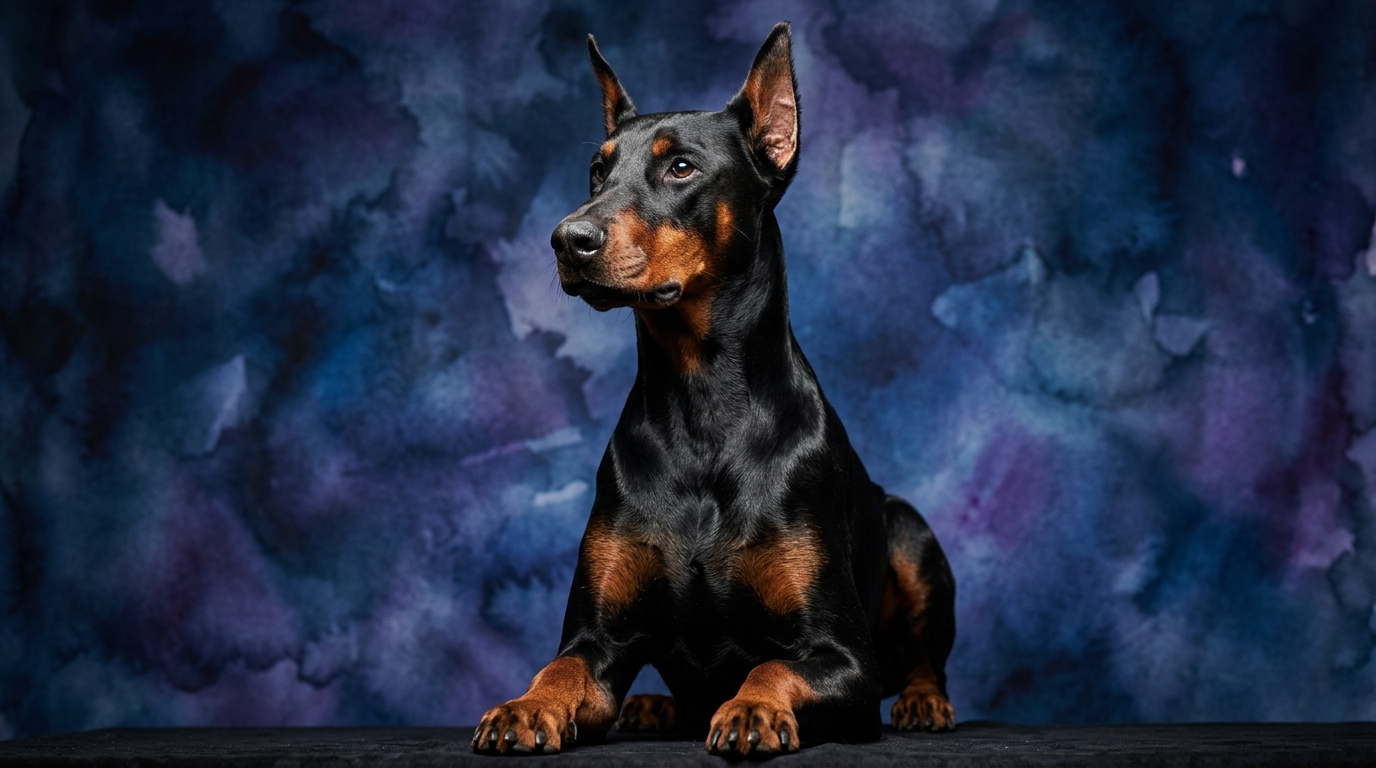
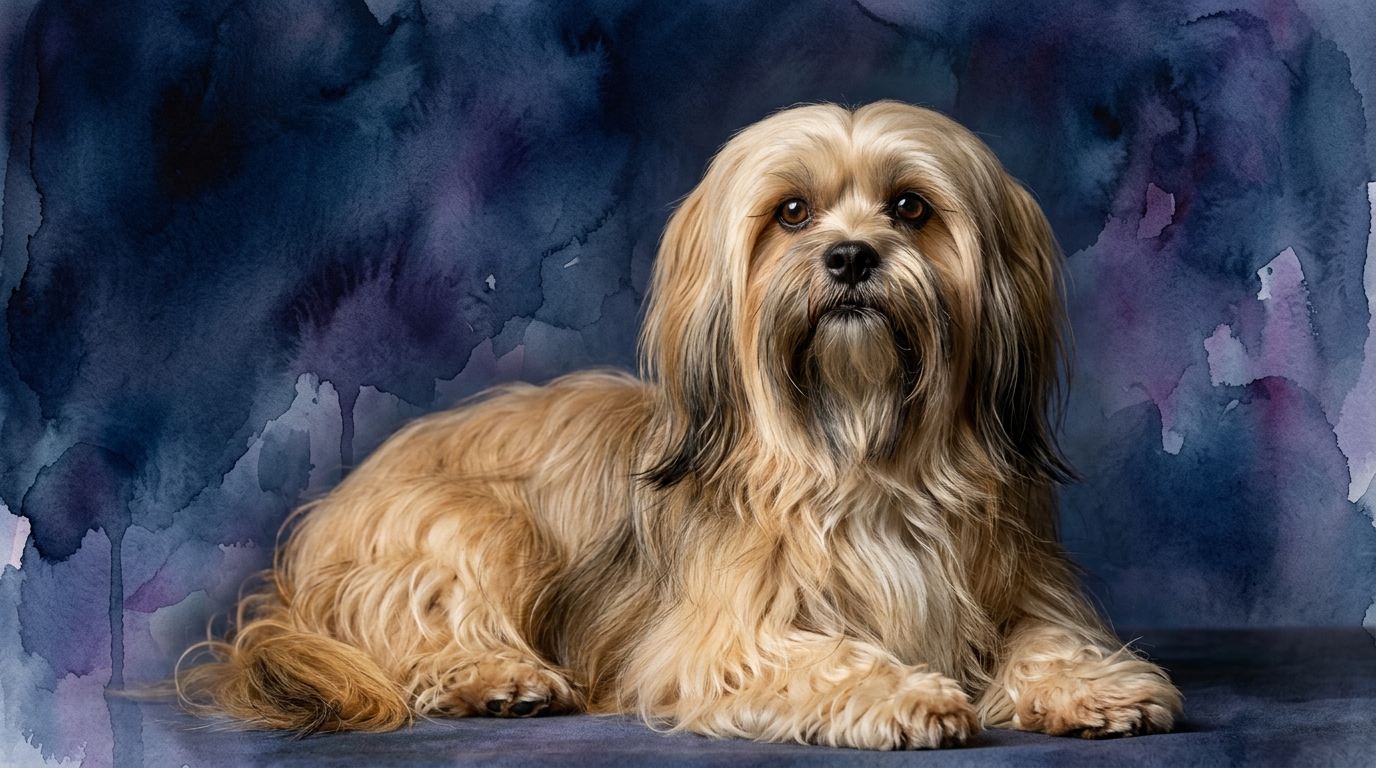
Side-by-Side IQ Profile: Doberman Pinscher vs. Lhasa Apso
At The Cosmic Pet Pet IQ Lab, we analyze canine intelligence across five key dimensions, providing a nuanced understanding of each breed's cognitive strengths. The Doberman Pinscher, categorized as a Working breed and holding an impressive Coren rank of #5, presents a profile geared for complex tasks and unwavering dedication. Conversely, the Lhasa Apso, a Non-Sporting breed with a Coren rank of #68, showcases a cognitive makeup more aligned with independent companionship and alert guardianship, rather than intricate problem-solving.
For the Doberman Pinscher, Problem Solving is rated 5/5. This indicates an exceptional capacity to analyze novel situations, devise effective strategies, and adapt learned behaviors to new challenges, making them adept at tasks requiring ingenuity and foresight. Their Training Speed is also 5/5, reflecting an extraordinary ability to grasp and retain new commands and routines with minimal repetition. Social Intelligence, at 4/5, points to a strong understanding of human cues and emotions, fostering deep, responsive bonds, though perhaps with a slight independent streak compared to breeds purely bred for human-centric interaction. Instinctive Drive, a perfect 5/5, highlights their powerful innate predispositions for protection, vigilance, and purposeful activity, requiring outlets for these deep-seated urges. Finally, their Memory, at 5/5, ensures that once a lesson is learned or a routine established, it is retained with remarkable fidelity.
The Lhasa Apso, in contrast, presents a different cognitive blueprint. Their Problem Solving is rated 3/5, suggesting a moderate ability to navigate new challenges, often relying on learned patterns or their own cleverness to achieve desired outcomes rather than complex analytical thought. Training Speed also sits at 3/5, meaning they are capable of learning, but may require more consistent, patient, and engaging methods to fully internalize commands. Social Intelligence, at 3/5, indicates they are attuned to their immediate family but can be discerning or aloof with strangers, valuing their personal space and forming bonds selectively. Instinctive Drive, also 3/5, shows a moderate level of innate behaviors, primarily focused on their historical role as watchful sentinels, rather than high-energy working tasks. Their Memory, at 3/5, signifies a solid ability to recall routines and boundaries, though perhaps not with the same depth or speed as a Doberman Pinscher.
Where the Doberman Pinscher Excels Cognitively
The Doberman Pinscher's cognitive profile positions them as an unmatched partner for demanding roles. Their exceptional 5/5 Problem Solving capability means they can quickly assess and react to dynamic situations, making them proficient in protection work, search and rescue, or competitive dog sports where rapid decision-making is paramount. This isn't just about following commands; it's about anticipating needs and acting autonomously when required. For instance, a Doberman can learn a multi-step obstacle course and generalize that knowledge to a new course layout with minimal guidance, demonstrating true cognitive flexibility. Their 5/5 Training Speed means they absorb complex command sequences almost effortlessly, allowing owners to teach advanced behaviors like scent detection or intricate agility sequences in a remarkably short timeframe. Furthermore, their 5/5 Memory ensures these skills are not fleeting but become deeply ingrained, accessible even after long periods without practice. This comprehensive cognitive strength allows them to operate effectively as true working partners, capable of understanding and executing sophisticated tasks with precision and reliability.
Where the Lhasa Apso's Cognitive Profile Shines
While not scoring high on working intelligence metrics, the Lhasa Apso's cognitive attributes are perfectly suited to their historical role as an alert, independent companion. Their 3/5 Problem Solving, for example, manifests as cleverness in navigating their domestic environment to their advantage—figuring out how to access a favorite sunbeam, or subtly manipulating routines to get an extra treat. This isn't about solving human-assigned tasks, but rather about effective self-advocacy and comfort. Their 3/5 Social Intelligence allows them to form deep, selective bonds with their chosen family members, exhibiting a discerning loyalty that prioritizes quality over quantity in social interactions. This independence also means they are less prone to separation anxiety, often content to supervise their domain from a comfortable perch without constant human engagement. The 3/5 Instinctive Drive, primarily focused on vigilance, allows them to be excellent watchdogs, keenly aware of their surroundings and quick to alert, without the overwhelming need for constant strenuous activity that higher-drive breeds demand. This unique blend of independence and selective loyalty makes them exceptional companions for those who appreciate a dog with a distinct personality and a self-sufficient streak.
Training Dynamics: Doberman Pinscher vs. Lhasa Apso
When it comes to ease of training, the Doberman Pinscher stands out significantly due to their top-tier scores in Training Speed (5/5) and Memory (5/5). They possess an inherent eagerness to learn and please, coupled with a remarkable ability to focus and retain information. A Doberman can often master a new command in just a few repetitions and will reliably perform it even weeks later. Their high Social Intelligence (4/5) means they are highly attuned to their handler's intentions and body language, making communication during training remarkably fluid. This breed thrives on structure and mental challenges, often finding joy in the learning process itself, which fuels their motivation to perform complex tasks like advanced obedience routines or specific service dog duties.
The Lhasa Apso, with a Training Speed of 3/5 and Memory of 3/5, presents a different training experience. They are capable of learning, but their independent nature and discerning social intelligence (3/5) mean they may not always be as intrinsically motivated by human approval for every command. They often require more patience, consistency, and positive reinforcement, with training sessions needing to be engaging and varied to prevent boredom. A Lhasa Apso might learn a command but choose to perform it only when they perceive a clear benefit or if the request is delivered with sufficient conviction. They are known for their 'selective hearing' and can be quite adept at ignoring commands if they deem them unnecessary or uninteresting. Successful training with a Lhasa Apso often hinges on building a strong, trusting relationship and making training feel like a collaborative game rather than a strict command-and-response exercise. They will learn house rules and important boundaries, but complex multi-step tasks will take considerably more time and dedication than with a Doberman.
Suitability for Active vs. Relaxed Owners
The Doberman Pinscher is unequivocally suited for active owners who can provide substantial mental and physical engagement. Their 5/5 Instinctive Drive and 5/5 Problem Solving demand a lifestyle filled with purposeful activity, whether it's competitive dog sports like agility or obedience, protection training, long runs, or complex puzzle toys. An owner who can channel this immense cognitive and physical energy will find an incredibly devoted and capable partner. Without sufficient outlets, a Doberman can become bored and potentially develop undesirable behaviors out of frustration, reflecting their need for a 'job' to do.
The Lhasa Apso, with its lower 3/5 Instinctive Drive, is a better fit for more relaxed owners. While they still enjoy walks and playtime, their exercise needs are moderate compared to a Doberman. Their cognitive profile, emphasizing independent watchfulness rather than intense work, means they are often content with a comfortable spot from which to observe their surroundings and alert to perceived intruders. They appreciate companionship and mental enrichment through interactive play or short training sessions, but they do not demand constant, high-intensity mental or physical stimulation. This makes them an excellent choice for individuals or families seeking a devoted, alert companion who doesn't require an exhaustive daily activity schedule.
The Verdict
Choose the Doberman Pinscher if you are an active, experienced owner seeking a highly trainable, dedicated working partner capable of complex tasks and unwavering loyalty.
Opt for the Lhasa Apso if you desire an independent, alert, and discerning companion who thrives in a more relaxed home environment and values selective, deep bonds.
🧠 Find Your Pet's IQ Score
Our Pet IQ Lab assessment covers 25+ tests across 5 cognitive dimensions — personalized to your breed.
Take the Full IQ Test →Frequently Asked Questions
Do Doberman Pinschers truly need a 'job'?
Yes, their 5/5 Instinctive Drive and Problem Solving mean Dobermans thrive on having a purpose. This could be anything from advanced obedience and dog sports to protection work or even just complex training routines and puzzle activities, which are crucial for their mental well-being.
Is the Lhasa Apso difficult to train because of its lower IQ scores?
The Lhasa Apso isn't difficult to train due to a lack of intelligence, but rather due to their independent nature and selective motivation. With patient, consistent, and reward-based training, they can learn commands and house rules effectively, though they may not perform with the same eager enthusiasm as a Doberman.
Which breed is better for a first-time dog owner?
Given their significant exercise and training demands, Doberman Pinschers are generally better suited for experienced dog owners. The Lhasa Apso, while still requiring consistent training and socialization, can be a more manageable option for dedicated first-time owners who are prepared for their independent streak and watch dog tendencies.