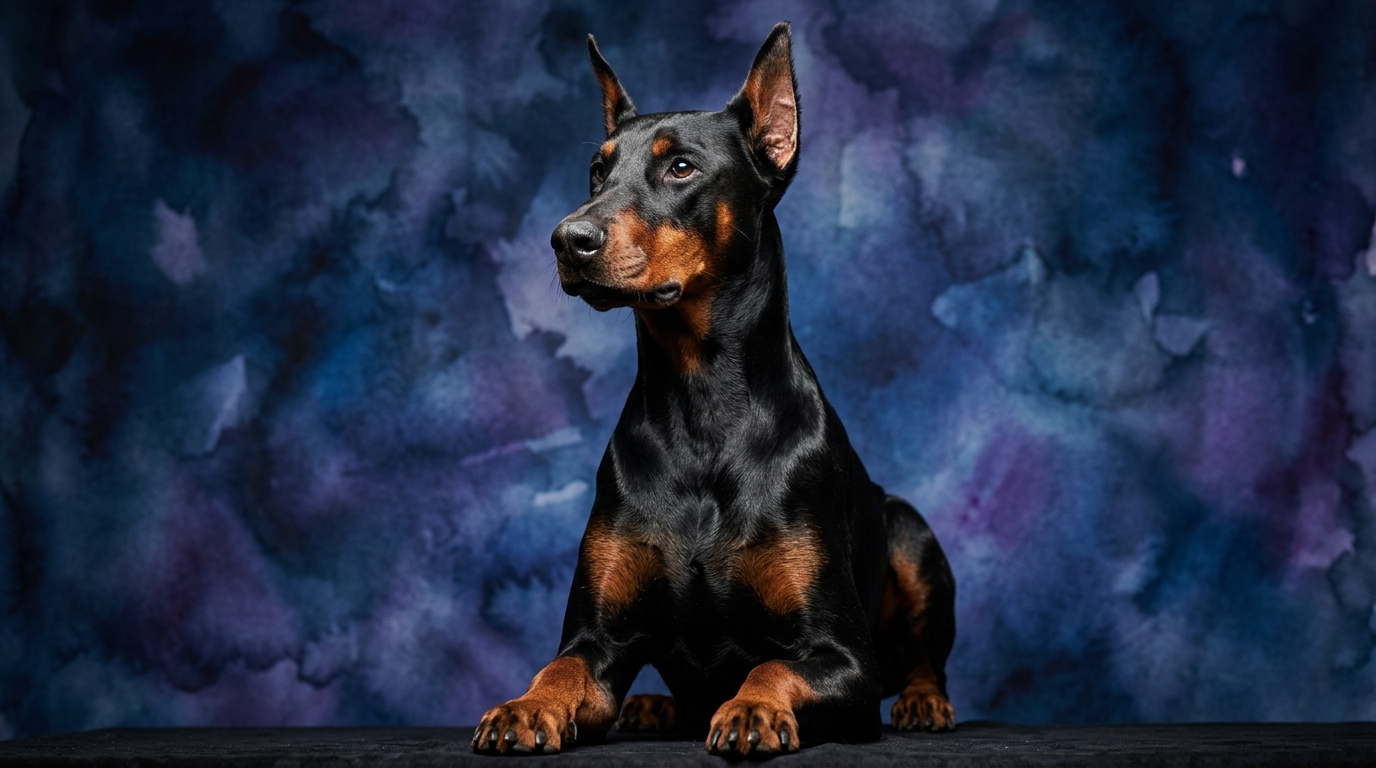
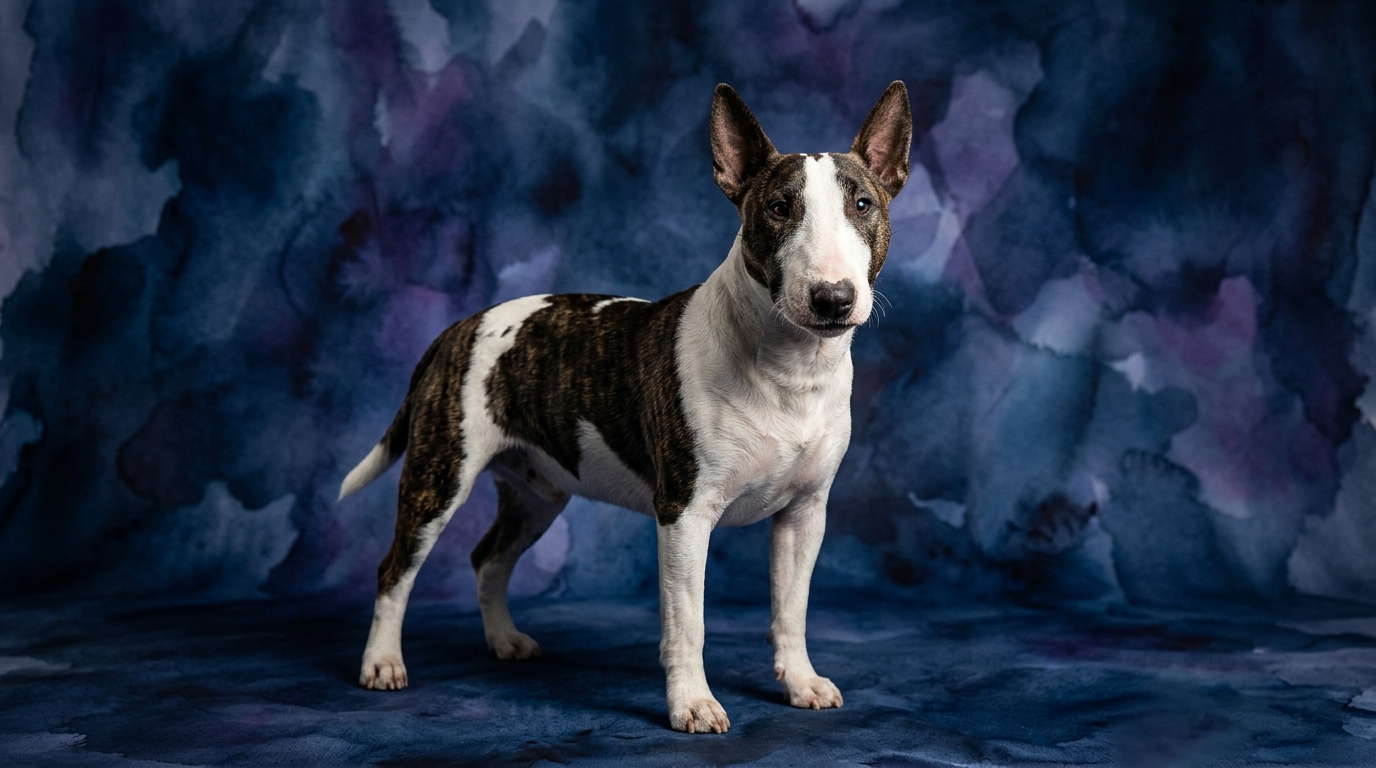
Side-by-Side Cognitive Profile
The Cosmic Pet Pet IQ Lab's assessment provides a clear framework for understanding the unique cognitive strengths of each breed. For the Doberman Pinscher, a Working group dog, its profile is marked by exceptional mental acuity across several dimensions. It scores 5/5 in Problem Solving, indicating an outstanding ability to analyze situations and formulate effective strategies. Its Training Speed is also a perfect 5/5, reflecting how quickly it grasps new commands and routines. Social Intelligence is rated 4/5, suggesting a strong understanding of human cues within its immediate circle. Its Instinctive Drive is a powerful 5/5, highlighting an inherent motivation for purpose-driven tasks. Lastly, its Memory is an impressive 5/5, ensuring long-term retention of learned behaviors and experiences.
In contrast, the Miniature Bull Terrier, a Terrier group dog, presents a different cognitive blueprint. Its Problem Solving is rated 3/5, indicating a functional but perhaps less conventional or systematic approach to challenges. Training Speed stands at 3/5, meaning it can learn, but often requires more patience and engaging methods. Social Intelligence is also 3/5, suggesting it forms strong bonds but can be more selective or independent in its social interactions. Its Instinctive Drive is a moderate 3/5, implying a self-directed motivation rather than a strong external drive to work with humans. Memory is likewise 3/5, sufficient for daily routines but potentially less robust than breeds with higher scores.
Where the Doberman Pinscher Wins Cognitively
The Doberman Pinscher clearly excels in areas requiring rapid processing, strategic planning, and consistent execution. Their perfect 5/5 scores in Problem Solving, Training Speed, Instinctive Drive, and Memory paint a picture of a dog that not only learns quickly but also retains information flawlessly and applies it with unwavering focus. For example, a Doberman can master a multi-step agility course with minimal repetitions, remembering the sequence of obstacles and adjusting its approach if a hurdle is unexpectedly moved. Their high instinctive drive means they are intrinsically motivated to engage in challenging tasks, finding fulfillment in purpose-driven activities like protection work, competitive obedience, or search and rescue. This profound cognitive capacity allows them to anticipate human intentions and environmental changes, making them exceptionally responsive and adaptable partners in demanding roles.
Where the Miniature Bull Terrier Wins Cognitively
While the Miniature Bull Terrier's scores might suggest a less 'conventional' cognitive profile, their unique mental strengths lie in their independent thought and distinct approach to their environment. Their 3/5 in Problem Solving indicates they will still find solutions, but often through a process of creative exploration and resilient persistence, rather than strict adherence to human-taught methods. This can be a cognitive 'win' for owners who appreciate a dog that isn't constantly looking for direction and can entertain itself or devise its own games. Their moderate instinctive drive means they are less prone to anxiety when not constantly working and can be content with less structured mental stimulation, finding satisfaction in their own pursuits. This independent cognitive style translates to a dog that, while perhaps not the fastest learner of complex obedience, brings a unique, often humorous, perspective to daily life, showcasing a self-reliant intelligence that is charmingly distinct.
Which Is Easier to Train and Why
Without a doubt, the Doberman Pinscher is significantly easier to train due to its exceptional cognitive profile. Their 5/5 Training Speed means they absorb commands with remarkable alacrity, often picking up new behaviors in just a few repetitions. This is bolstered by their 5/5 Memory, ensuring that once a lesson is learned, it sticks. Furthermore, their 5/5 Instinctive Drive translates into an innate eagerness to work and a strong desire to please their handler, making them highly receptive to instruction and less likely to become distracted. For instance, teaching a Doberman to heel perfectly through a crowded park is typically a swift process, as they are focused on the task and their handler's cues. In contrast, the Miniature Bull Terrier's 3/5 Training Speed and Memory mean that training requires more patience, repetition, and creative motivation. Their moderate Instinctive Drive suggests they are more likely to follow their own nose or interests, making them prone to 'selective hearing' if a squirrel or interesting scent presents itself. While they are capable of learning, their independent nature means a trainer must make the process engaging and demonstrate why cooperation is more rewarding than self-directed exploration.
Which Suits Active Owners vs. Relaxed Owners
The Doberman Pinscher, with its intense 5/5 Instinctive Drive and robust cognitive capacity, is an ideal match for highly active owners who thrive on purposeful engagement. These dogs require consistent mental stimulation through advanced training, dog sports, or a 'job' to channel their keen Problem Solving and high energy. Owners who enjoy competitive obedience, agility, protection sports, or even extensive hiking and running will find a Doberman to be an unparalleled partner. Their need for intellectual challenge and physical exertion means they are not suited for a relaxed, sedentary lifestyle, which could lead to boredom and undesirable behaviors. Conversely, the Miniature Bull Terrier, with its moderate 3/5 Instinctive Drive and more independent cognitive style, can be a better fit for owners who appreciate a dog with personality but don't necessarily seek a constant training partner or working companion. While they still need regular exercise and mental engagement, their demands are less intense and often more self-directed. They can adapt to a moderately active household that enjoys walks, playtime, and perhaps some fun, less rigid training sessions, making them suitable for owners who prefer a spirited but less demanding cognitive companion.
The Verdict
Opt for a Doberman Pinscher if you are an experienced, active owner seeking a highly trainable, purpose-driven companion for advanced training, dog sports, or a working role, valuing their exceptional cognitive speed and dedication.
Select a Miniature Bull Terrier if you appreciate an independent, spirited companion with a unique sense of humor, moderate activity needs, and are prepared for a more patient, creative approach to training.
🧠 Find Your Pet's IQ Score
Our Pet IQ Lab assessment covers 25+ tests across 5 cognitive dimensions — personalized to your breed.
Take the Full IQ Test →Frequently Asked Questions
Do Dobermans require a lot of mental stimulation?
Absolutely. With 5/5 in Problem Solving, Instinctive Drive, and Memory, Dobermans thrive on consistent mental challenges. They need engaging activities like puzzle toys, advanced obedience, or dog sports to prevent boredom and channel their considerable cognitive energy constructively.
Are Miniature Bull Terriers stubborn?
Miniature Bull Terriers can exhibit an independent streak, which some owners interpret as stubbornness. Their 3/5 Training Speed and Instinctive Drive mean they often prefer to follow their own agenda, requiring patient, positive reinforcement and making training a collaborative, rather than strictly command-driven, process.
Which breed is better for a first-time dog owner?
Neither breed is typically recommended for absolute first-time dog owners without a strong commitment to training and understanding breed-specific needs. However, the Doberman's intense cognitive demands and drive require an owner who can consistently provide structure, while the Mini Bull Terrier's independent nature needs an owner prepared for a unique, often willful, personality.