Side-by-Side IQ Profile: Doberman Pinscher vs. Parson Russell Terrier
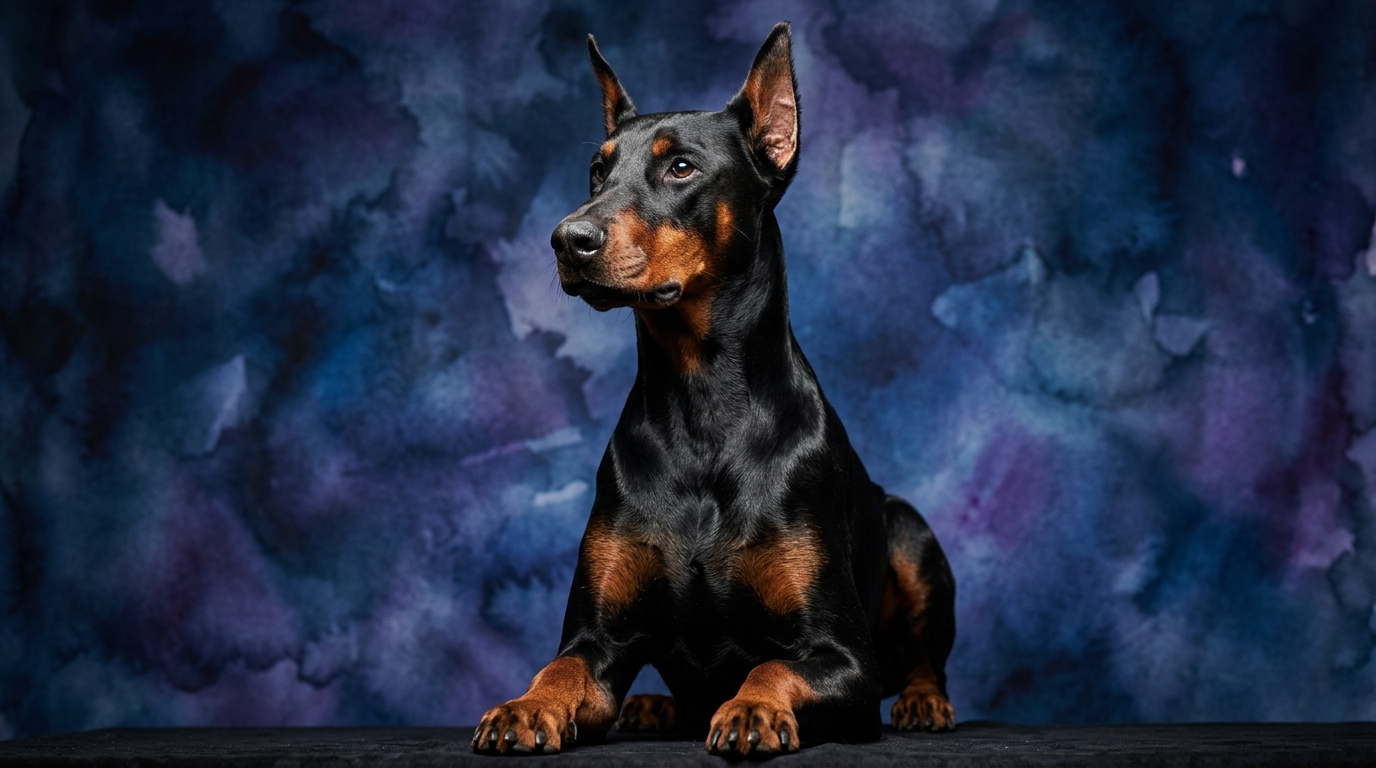
The Doberman Pinscher, a distinguished member of the Working Group, holds an impressive Coren rank of #5, signifying a profound capacity for understanding and execution. Its cognitive dimensions are notably high: Problem Solving at 5/5, indicating an exceptional ability to strategize and overcome complex obstacles; Training Speed at 5/5, meaning they grasp new commands and routines with minimal repetition; Social Intelligence at 4/5, reflecting a strong attunement to human cues and social dynamics; Instinctive Drive at 5/5, highlighting a powerful, focused inclination towards specific tasks, often related to protection or service; and Memory at 5/5, demonstrating an outstanding ability to retain learned behaviors and experiences over time.
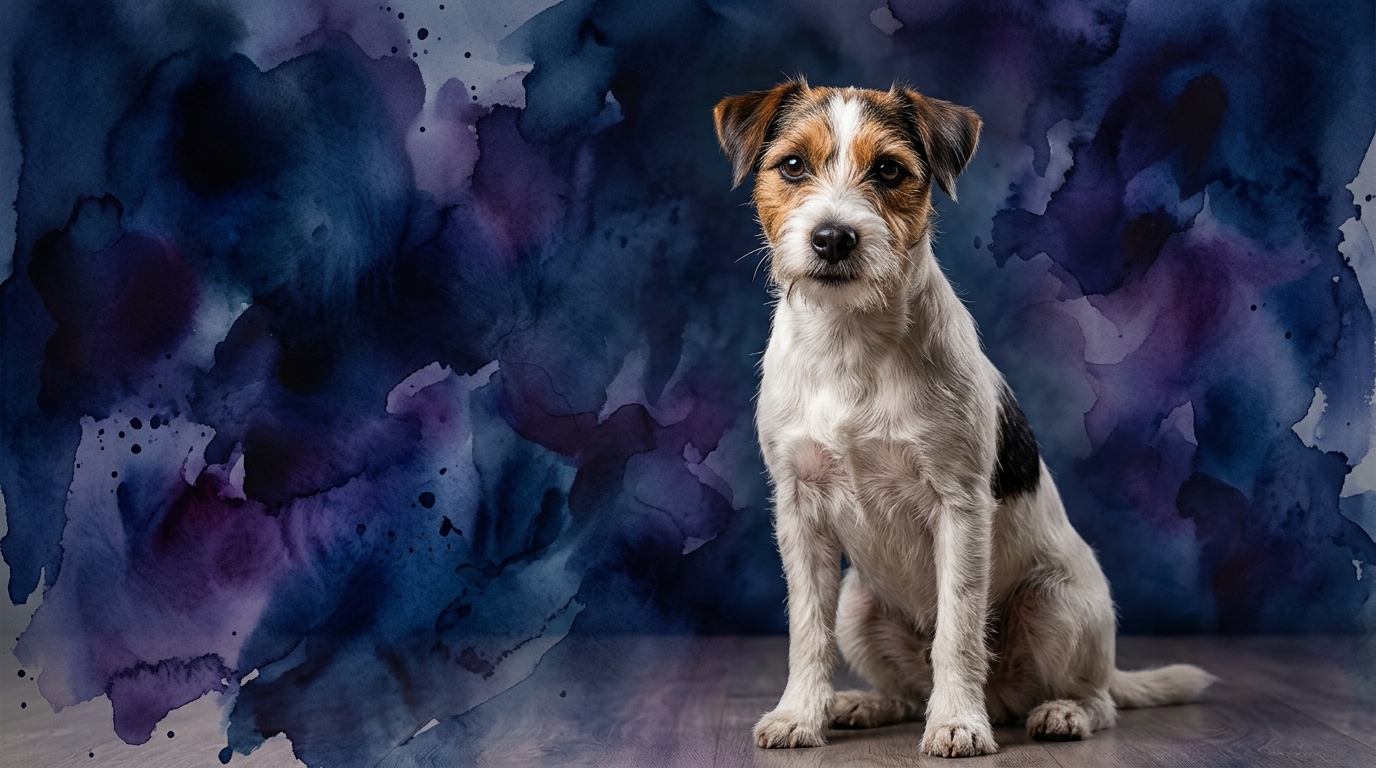
In contrast, the Parson Russell Terrier, a spirited member of the Terrier Group, is not listed within Coren's top ranks, which often reflects a different, more independent style of cognition rather than a lack of capability. Its cognitive scores are consistently moderate: Problem Solving at 3/5, suggesting they can tackle challenges, though perhaps with more trial-and-error or less abstract reasoning than a Doberman; Training Speed at 3/5, indicating they learn at a steady pace but require more consistent reinforcement; Social Intelligence at 3/5, showing they form bonds and understand basic human intentions, but might prioritize their own interests more readily; Instinctive Drive at 3/5, pointing to a natural inclination for tasks like hunting vermin, but less generalized or intense than a working breed; and Memory at 3/5, meaning they retain information adequately but may not recall complex sequences as readily as a Doberman. These profiles highlight distinct approaches to intelligence, shaped by their historical roles and breed development.
Where the Doberman Pinscher Excels Cognitively
The Doberman Pinscher's cognitive strengths are particularly evident in its capacity for structured learning and task execution. With a 5/5 in Problem Solving, they demonstrate a remarkable aptitude for navigating intricate scenarios, such as multi-stage obedience routines or complex search and rescue patterns, often anticipating steps and adapting strategies. Their 5/5 Training Speed means they absorb and internalize new commands with astonishing rapidity, requiring only a handful of repetitions before demonstrating mastery. This swift comprehension extends to generalizing behaviors, applying a learned command in various contexts seamlessly.
Furthermore, their 4/5 Social Intelligence allows them to deeply connect with their human companions, often reading subtle body language and vocal inflections, and anticipating needs or intentions. This facilitates a profound partnership, making them exceptionally responsive to handler guidance. The Doberman's 5/5 Instinctive Drive is a focused, unwavering intensity that can be channeled into specific working roles, from protection to agility, enabling sustained effort and precision. Coupled with a 5/5 Memory, they not only learn quickly but retain vast repertoires of commands, routines, and experiences, building upon their knowledge base consistently.
Where the Parson Russell Terrier Excels Cognitively
While the Doberman excels in structured, handler-directed tasks, the Parson Russell Terrier showcases a different, equally valuable set of cognitive strengths rooted in independence and tenacity. Their 3/5 Problem Solving, though lower numerically, manifests as a resourceful and persistent approach to challenges, particularly those related to their terrier heritage. They excel at figuring out how to reach a hidden toy, navigate a tricky scent trail, or outwit small quarry, often employing trial-and-error with impressive determination rather than abstract reasoning. This form of problem-solving is less about following a human-designed sequence and more about independent, creative maneuvering within their environment.
The Parson Russell's cognitive edge lies in its 'street smarts' and self-reliance. Their instinctive drive, while rated 3/5, is specifically geared towards independent pursuit and exploration, giving them an advantage in unpredictable, real-world scenarios where quick, decisive action without constant human input is required. They possess a robust adaptability, often unfazed by novel environments or sudden changes, relying on their innate curiosity and robust physical capabilities. This independence, while sometimes perceived as stubbornness in training contexts, is a valuable cognitive trait, allowing them to make quick decisions and persist in the face of obstacles, a testament to their heritage as earth dogs.
Training Dynamics: Doberman Pinscher vs. Parson Russell Terrier
When it comes to trainability, the Doberman Pinscher presents a significantly smoother journey for most handlers. Their 5/5 Training Speed means they can acquire new commands and behaviors in very few repetitions, often understanding the expectation after just one or two demonstrations. This rapid learning curve is supported by their 4/5 Social Intelligence, which makes them highly attuned to their handler’s wishes and eager to please. They thrive on clear structure, consistent guidance, and the opportunity to work alongside their human. Their 5/5 Instinctive Drive, when properly channeled, allows for intense focus during training sessions, transforming complex tasks into achievable goals. The Doberman’s 5/5 Memory ensures that once a command is learned, it is deeply ingrained, requiring minimal refreshers.
The Parson Russell Terrier, with its 3/5 Training Speed and 3/5 Social Intelligence, requires a different approach and a greater degree of patience. They are capable of learning, but often demand more repetitions and consistency to solidify a new behavior. Their independent nature, a hallmark of the terrier group, means they might not always view the handler's requests as their top priority, especially if there's an interesting scent or movement nearby. Training a Parson Russell often involves creative engagement, short, fun sessions, and a deep understanding of positive reinforcement to keep them motivated. Their moderate instinctive drive, often directed towards hunting and exploring, can make off-leash reliability a significant challenge, as their natural impulses might override learned commands. Owners must be prepared for a dog that sometimes thinks for itself and requires consistent, engaging methods to ensure compliance and build a strong working relationship.
Matching Breeds to Lifestyles: Active vs. Relaxed Owners
For owners with an active, highly structured lifestyle, the Doberman Pinscher is an exceptional match. Their profound 5/5 Instinctive Drive and 5/5 Problem Solving capabilities mean they require extensive physical exercise and, crucially, consistent mental stimulation. These dogs thrive when given a 'job' – whether it’s advanced obedience, protection sports, agility, or competitive tracking. A Doberman needs daily opportunities to engage its mind and body in meaningful ways; a relaxed owner who cannot provide this level of engagement will quickly find their Doberman becoming bored, anxious, or channeling its powerful drive into less desirable behaviors. They are partners for serious dog enthusiasts who enjoy training and challenging their canine companions.
The Parson Russell Terrier also requires an active owner, but their needs manifest differently. While their cognitive scores are moderate, their terrier heritage demands regular outlets for their energy and innate drives. They need daily walks, opportunities to run, and engaging activities that allow them to explore, dig, and chase (safely). A relaxed owner who expects a couch potato will be met with a high-energy, inquisitive dog that needs a purpose. However, their mental stimulation requirements are less about complex, multi-stage tasks and more about providing engaging, varied experiences that satisfy their natural curiosity and predatory instincts. They are well-suited for owners who enjoy hiking, earthdog trials, or agility, but who also appreciate a dog with an independent streak that might not always adhere to strict commands in every situation.
The Verdict: Choosing Your Cognitive Companion
The Verdict
Choose the Doberman Pinscher if you are an experienced owner seeking a highly trainable, intensely focused partner for advanced obedience, protection work, or competitive dog sports, prepared to provide rigorous mental and physical structure. This breed thrives with a dedicated handler who can channel its exceptional cognitive abilities and drive.
Opt for the Parson Russell Terrier if you appreciate an independent, tenacious, and spirited companion, are prepared for consistent, patient training, and enjoy engaging in activities that satisfy a terrier's natural instincts for exploration and pursuit. This breed suits active owners who value a dog's self-reliance and unique problem-solving approach.
🧠 Find Your Pet's IQ Score
Our Pet IQ Lab assessment covers 25+ tests across 5 cognitive dimensions — personalized to your breed.
Take the Full IQ Test →Frequently Asked Questions
Do Dobermans require a lot of mental stimulation?
Yes, Doberman Pinschers have a 5/5 problem-solving and instinctive drive, meaning they require extensive mental challenges like puzzle toys, advanced training, and structured activities to prevent boredom and channel their energy constructively. Their powerful minds need consistent engagement to thrive and avoid developing undesirable habits.
Are Parson Russell Terriers good at learning tricks?
Parson Russell Terriers can certainly learn tricks, but their 3/5 training speed and independent nature mean it might take more repetition and patience than with some other breeds. They often respond best to fun, engaging methods that appeal to their playful side and allow for some creative problem-solving on their part, rather than rote memorization.
Which breed is better for a first-time dog owner?
The Doberman Pinscher, despite its higher cognitive scores, is generally not recommended for first-time owners due to its intense drive and need for consistent, experienced handling and early socialization. A Parson Russell Terrier, while requiring significant training and activity, might be more manageable for a dedicated first-time owner prepared for an independent, spirited personality, provided they research terrier traits thoroughly.