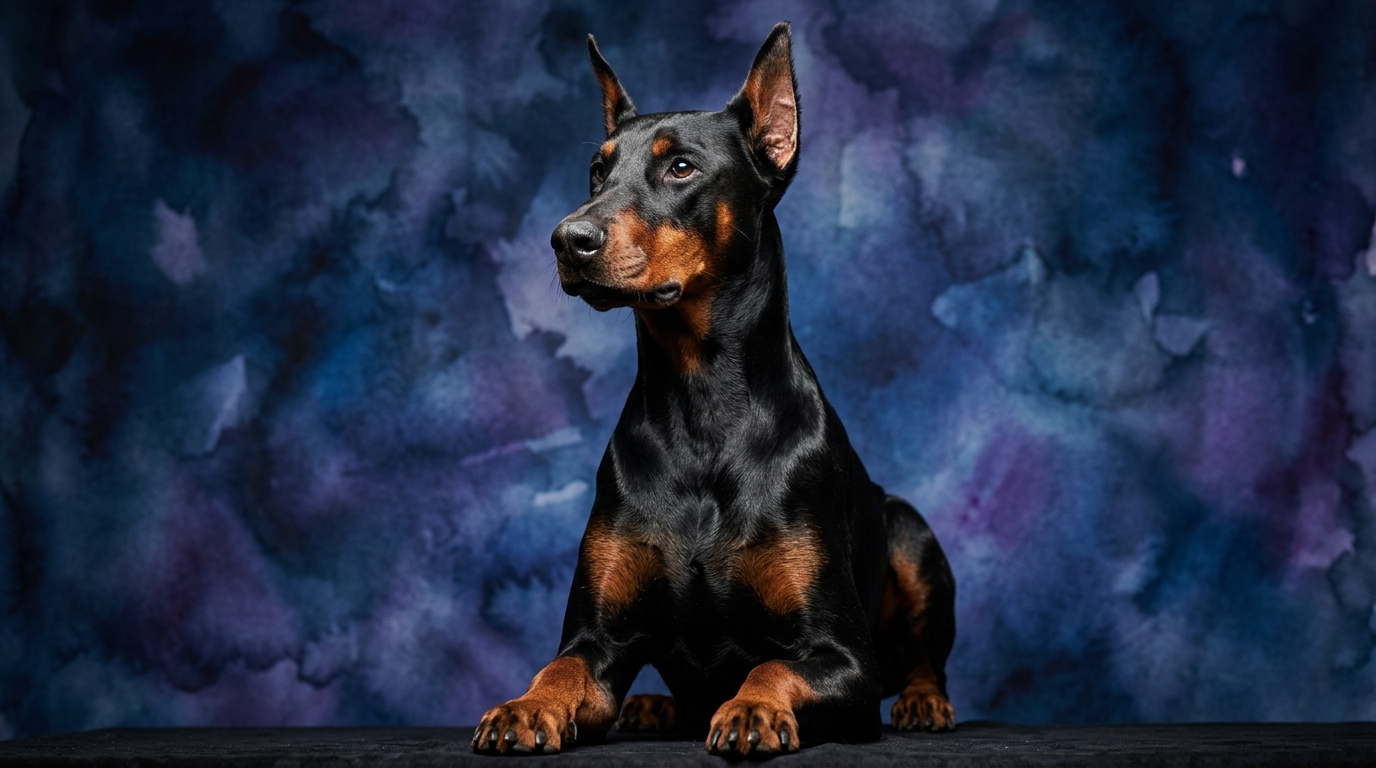
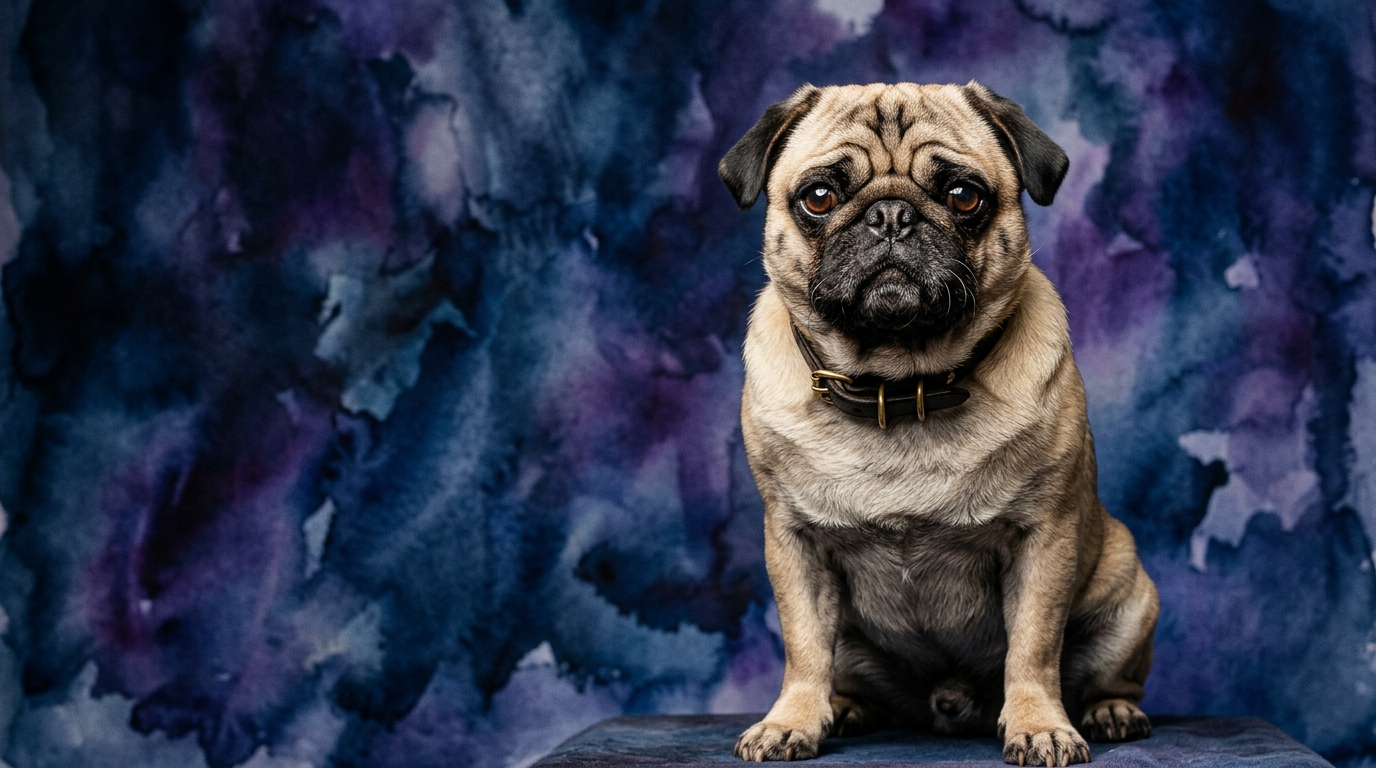
Side-by-Side Cognitive Profiles: Doberman Pinscher vs. Pug
The Cosmic Pet Pet IQ Lab employs five key dimensions to map a breed’s cognitive landscape, revealing how each dog processes information and interacts with its environment. For the Doberman Pinscher, these scores paint a picture of a highly capable and purpose-driven mind.
A Doberman's Problem Solving ability rates a perfect 5/5, indicating an exceptional capacity to analyze novel situations and devise effective strategies to overcome challenges, whether it's navigating complex obstacles or understanding intricate mechanics. Their Training Speed also scores 5/5, signifying an incredibly rapid acquisition of new commands and routines, often grasping concepts after just a few repetitions. Social Intelligence, at 4/5, suggests they are adept at reading human cues and forming strong bonds, though their social focus might be more directed than universally gregarious. An Instinctive Drive of 5/5 highlights powerful inherent motivations for tasks like protection, tracking, or obedience, making them naturally inclined towards work. Finally, their Memory, rated 5/5, ensures they retain learned behaviors, past experiences, and complex sequences over extended periods.
In contrast, the Pug's cognitive profile emphasizes different strengths, reflecting a breed primarily developed for companionship. Their Problem Solving ability is rated 2/5, indicating a preference for straightforward solutions or reliance on established routines rather than innovative problem-solving. Training Speed, also at 2/5, means they typically require more patience, repetition, and positive reinforcement to learn new commands. The Pug truly shines in Social Intelligence, earning a perfect 5/5, showcasing an unparalleled ability to connect emotionally with humans and other animals, often seeking out comfort and interaction. Their Instinctive Drive is 2/5, reflecting a low inherent motivation for complex working tasks, preferring a life of leisure and affection. A Memory score of 3/5 suggests they can retain information but might not recall intricate details or long sequences with the same precision as a Doberman.
Where the Doberman Pinscher Excels Cognitively
The Doberman Pinscher's cognitive framework is built for efficiency and purpose, making them exceptionally adept at tasks requiring mental agility and sustained focus. Their perfect scores in Problem Solving and Training Speed mean they can quickly decipher complex scenarios, such as figuring out how to unlatch a difficult crate or master an elaborate agility course with remarkable speed. This mental nimbleness translates into a dog that not only learns rapidly but also applies that learning strategically.
Furthermore, their robust Instinctive Drive, coupled with impeccable Memory, allows Dobermans to excel in roles demanding consistency and dedication. They can commit long sequences of commands to memory and execute them flawlessly, even under distracting circumstances. This makes them outstanding candidates for advanced obedience, protection sports, search and rescue, or scent detection, where their capacity for analytical thought and unwavering focus is a significant asset. A Doberman might methodically work through a multi-step puzzle toy, remembering the sequence of actions required for success.
Where the Pug's Mind Truly Shines
While the Pug may not possess the Doberman's task-oriented cognitive strengths, their perfect score in Social Intelligence reveals a profound capacity for emotional connection and social navigation. Pugs are masters of empathy, often intuitively sensing shifts in human mood and responding with comforting gestures. This makes them exceptional emotional support animals and cherished companions, fostering deep and nuanced bonds with their families.
Their cognitive strengths lie in their ability to integrate seamlessly into a human household, adapting to routines and personalities with remarkable ease. A Pug might not solve a complex puzzle, but it will almost certainly be the first to offer a reassuring presence or solicit affection when an owner feels down. Their memory, while not photographic, is perfectly adequate for remembering cherished people, familiar routines, and the locations of their favorite nap spots, ensuring a consistent and comforting presence in the home.
Training Dynamics: Doberman Pinscher vs. Pug
When it comes to training, the Doberman Pinscher generally presents a more straightforward and rapid learning experience. Their 5/5 Training Speed means they absorb new commands almost instantly, often requiring only a handful of repetitions before demonstrating proficiency. This, combined with their strong Instinctive Drive, means they are often motivated by the 'job' itself and the desire to please, making them eager participants in training sessions. For example, a Doberman can learn a complex multi-step command sequence, like 'fetch the leash and sit by the door,' in a comparatively short time, maintaining focus and precision.
The Pug, with a 2/5 Training Speed, requires a different approach. Their learning curve is gentler, necessitating more patience, shorter training sessions, and consistent positive reinforcement, often heavily relying on high-value treats and enthusiastic praise. Pugs are less driven by the inherent satisfaction of a task and more by the immediate rewards and the social interaction with their trainer. Teaching a Pug to reliably 'stay' might involve numerous short, fun sessions over several days or weeks, focusing on making the experience enjoyable and rewarding, rather than expecting rapid mastery. Their lower problem-solving score also means they are less likely to spontaneously figure out what's expected without clear, step-by-step guidance.
Matching Canine Minds to Lifestyles: Active vs. Relaxed Owners
The Doberman Pinscher's cognitive profile makes them an ideal match for active owners who seek a highly engaged and capable canine partner. Owners who thrive on structured activities like dog sports (agility, obedience, Schutzhund), hiking, or advanced training will find a Doberman's need for mental stimulation and physical exertion deeply fulfilling. Their impressive problem-solving and memory capabilities mean they flourish when consistently challenged and given a 'job' to do, preventing boredom and channeling their considerable mental energy constructively. These dogs thrive with consistent training, clear boundaries, and opportunities to use their sharp minds.
Conversely, the Pug's cognitive strengths align perfectly with a more relaxed owner or household seeking an affectionate and low-maintenance companion. Their high social intelligence means they excel at providing comfort and companionship, content to spend their days close to their human family. While they enjoy short walks and playtime, their primary cognitive need is social connection rather than complex tasks or strenuous activity. Owners who appreciate a dog that is content to nap by their side, offer gentle affection, and provide emotional support will find a Pug's demeanor and mental makeup to be a perfect fit for a quiet, loving home environment.
The Verdict
Choose the Doberman Pinscher if you desire a highly trainable, purpose-driven partner for complex activities and consistent mental challenges.
Opt for the Pug if your priority is an affectionate, socially attuned companion who thrives on emotional connection and a relaxed home life.
🧠 Find Your Pet's IQ Score
Our Pet IQ Lab assessment covers 25+ tests across 5 cognitive dimensions — personalized to your breed.
Take the Full IQ Test →Frequently Asked Questions
Do Dobermans require a lot of mental stimulation?
Yes, Doberman Pinschers have a high problem-solving ability and strong instinctive drive, meaning they absolutely thrive on consistent mental challenges. Without adequate engagement, they can become bored or destructive, so regular training and puzzle toys are beneficial.
Are Pugs difficult to train due to their lower scores?
Pugs are not inherently difficult, but their lower training speed means they require more patience, repetition, and positive reinforcement. They respond best to short, fun sessions focused on rewards and social interaction rather than rigorous, prolonged training.
Which breed is better for families with children?
Both breeds can be wonderful family dogs, but their suitability depends on the family's lifestyle. A Pug's high social intelligence makes them naturally gentle and adaptable companions for children, while a well-trained Doberman can be a protective and loyal family member, though their energy and training needs might be more demanding for new parents.