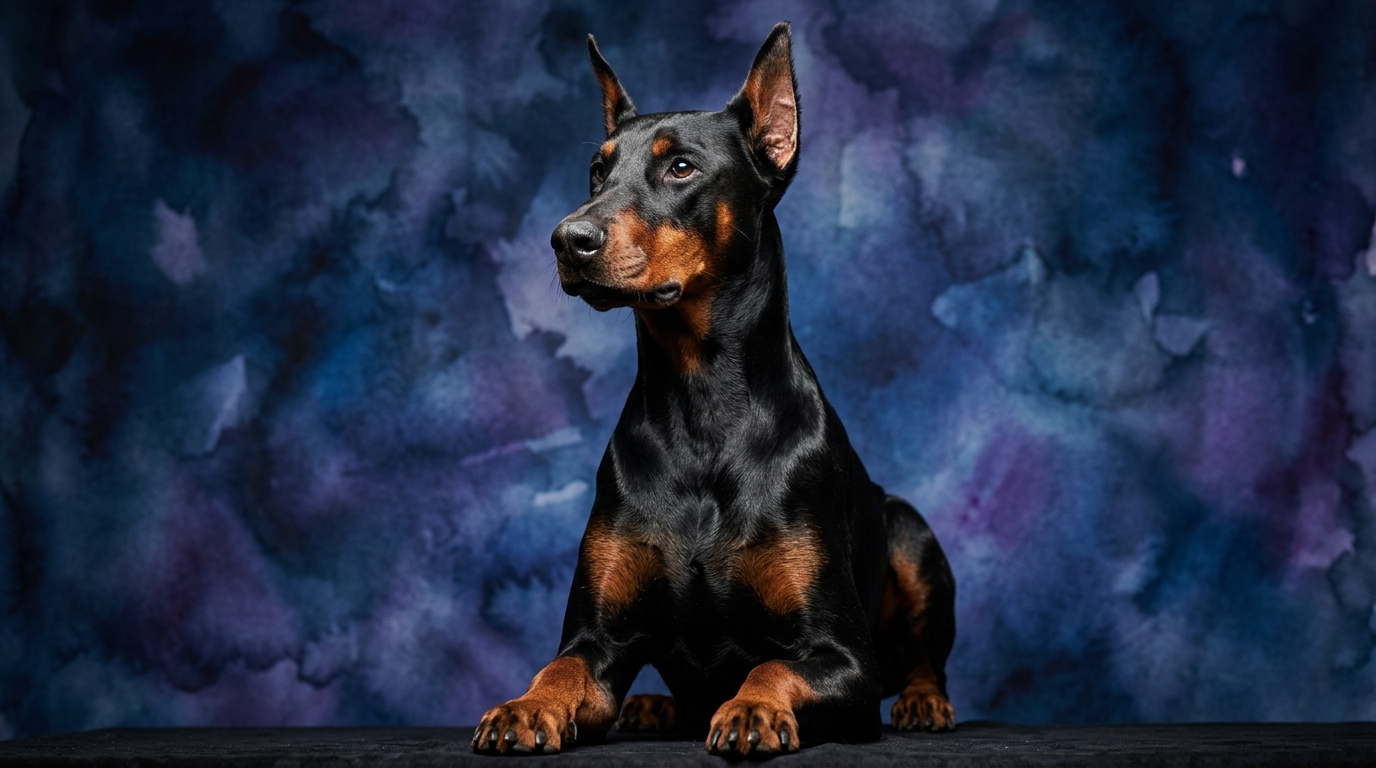
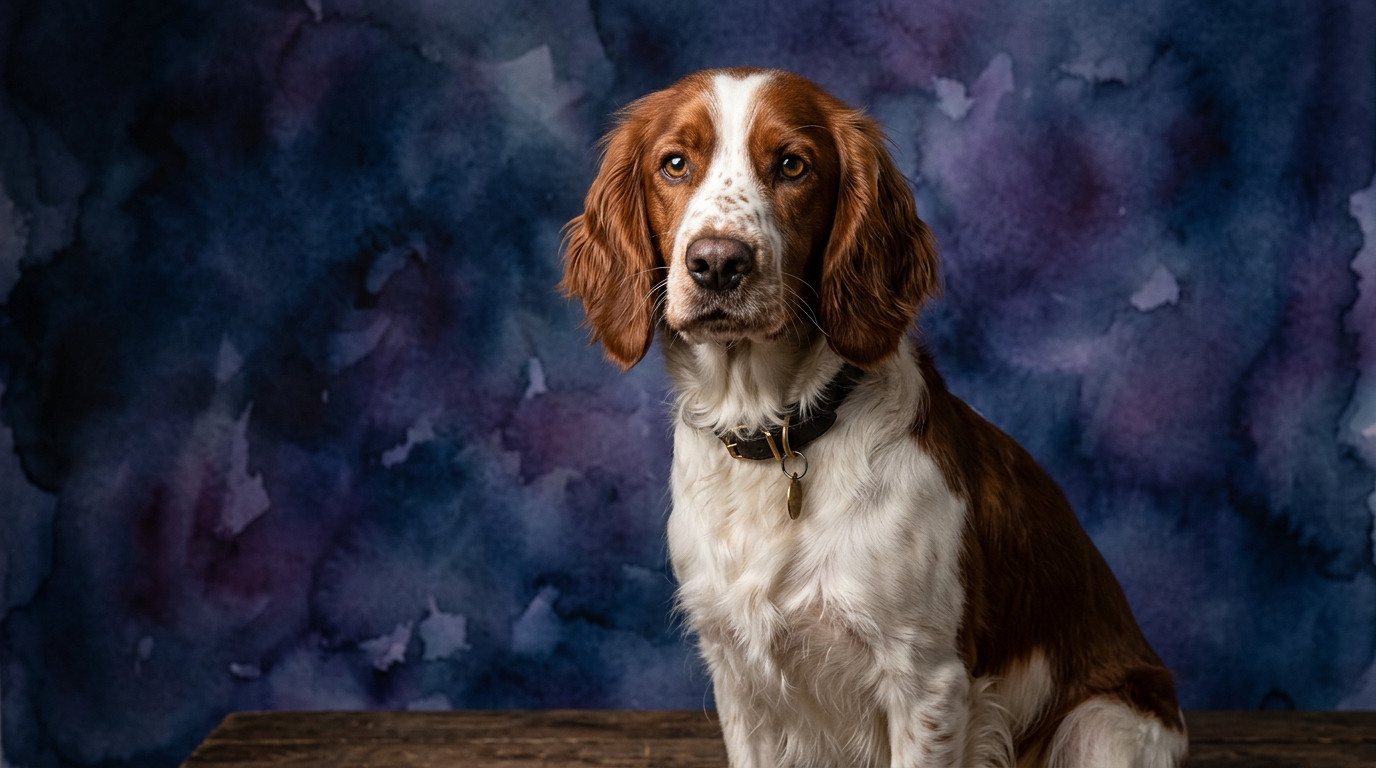
Side-by-Side IQ Profile: Doberman Pinscher vs. Welsh Springer Spaniel
The Cosmic Pet Pet IQ Lab provides a unique lens through which to examine the cognitive strengths of these two distinct breeds. While both are capable dogs, their intellectual blueprints diverge significantly, reflecting their historical roles and inherent predispositions.
The **Doberman Pinscher**, a Working breed with a Coren ranking of #5, exhibits a cognitive profile geared towards precision, protection, and complex task execution. Its Problem Solving is rated 5/5, indicating an exceptional capacity for analytical thought and strategic planning in novel situations. Training Speed also scores 5/5, meaning Dobermans grasp new commands and routines with remarkable efficiency and few repetitions. Social Intelligence, at 4/5, points to a deep attunement to their primary human companions and an understanding of social hierarchies, though they can be reserved with strangers. Their Instinctive Drive is a powerful 5/5, fueling an unwavering work ethic, protective instincts, and intense focus. Finally, Memory stands at 5/5, ensuring that learned behaviors and experiences are retained with impressive longevity.
The **Welsh Springer Spaniel**, a Sporting breed with a Coren ranking of #31, presents a cognitive makeup rooted in collaboration, environmental engagement, and amiable companionship. Its Problem Solving is rated 4/5, demonstrating good aptitude for practical challenges, especially those involving scent or retrieval in varied terrains. Training Speed, also 4/5, means Welsh Springers learn new concepts at a commendable pace, often aided by their desire to please. Social Intelligence registers at 3/5, reflecting a generally friendly and adaptable nature, typically outgoing with both family and acquaintances, though perhaps less focused on complex social navigation. Their Instinctive Drive is 3/5, primarily manifesting as a desire to explore, scent, and retrieve, aligned with their sporting heritage but less intense than a working breed's. Memory, at 4/5, ensures reliable recall of routines, commands, and familiar individuals, contributing to their consistent and agreeable temperament.
Where the Doberman Pinscher Wins Cognitively
The Doberman Pinscher’s cognitive architecture shines brightest in scenarios demanding advanced analytical prowess and unwavering focus. Its 5/5 Problem Solving isn't just about figuring things out; it’s about anticipating, strategizing, and executing multi-step solutions. Imagine a Doberman quickly learning to manipulate a series of latches to open a gate or independently devising a method to retrieve a deeply embedded toy, rather than simply reacting to the obstacle. This sophisticated problem-solving is seamlessly integrated with its 5/5 Training Speed, allowing for the rapid absorption and application of intricate command sequences, making them prime candidates for advanced obedience, protection work, or complex service roles. The Doberman's 5/5 Memory ensures that once these complex lessons are learned, they are deeply ingrained and consistently recalled, fostering a profound reliability. Furthermore, their 5/5 Instinctive Drive provides the relentless motivation and determination necessary to persevere through challenging tasks, maintaining high performance even under pressure, a hallmark of their working heritage.
Where the Welsh Springer Spaniel Wins Cognitively
While the Doberman excels in structured, analytical tasks, the Welsh Springer Spaniel's cognitive strengths are found in its adaptable, collaborative intelligence, particularly within dynamic, natural environments. Its 4/5 Problem Solving manifests as practical ingenuity, especially in tasks related to scent work or navigating varied terrains. A Welsh Springer might not strategically disassemble a puzzle toy like a Doberman, but it will persistently and resourcefully explore a field to locate a hidden retrieve item, utilizing its keen senses and adaptable approach. The 3/5 Social Intelligence, though numerically lower, translates into a generally more approachable and less intense demeanor, making them excellent family companions who readily engage with a wider range of people and situations without the Doberman's inherent reserve or protective focus. Their 3/5 Instinctive Drive, specifically for scenting and retrieving, is manageable and enthusiastic, providing ample motivation for engaging outdoor activities without the demanding intensity of a high-drive working breed. This drive is easily channeled into collaborative play and family-friendly adventures. The Welsh Springer's 4/5 Memory ensures they reliably recall beloved family members, established routines, and basic commands, contributing to their consistent, agreeable companionship and making them predictable and cherished members of a household.
Which Is Easier to Train and Why
When considering ease of training, the Doberman Pinscher generally holds an advantage for complex obedience and specialized roles, largely due to its superior cognitive scores across the board. Its 5/5 Training Speed means Dobermans absorb new information with exceptional efficiency, often mastering commands after just a few repetitions. This breed’s powerful 5/5 Problem Solving and 5/5 Memory enable them to not only learn quickly but also understand the nuances of commands and retain them over time, allowing for rapid progression to advanced behaviors. Their intense 5/5 Instinctive Drive ensures they are highly motivated by purpose and thrive on the mental engagement of structured training, often seeking to please and perform with precision. This combination makes them highly responsive to consistent, clear direction and capable of intricate tasks.
Conversely, the Welsh Springer Spaniel, with 4/5 ratings in Training Speed, Problem Solving, and Memory, is a very capable and willing learner, but typically requires more patience and repetition to achieve the same level of mastery in complex obedience. Their 3/5 Social Intelligence suggests they might be more easily distracted by environmental stimuli or other dogs during training, necessitating a trainer who can consistently capture and hold their attention. While eager to please, their 3/5 Instinctive Drive, being less intense and more generalized than the Doberman's, means their motivation for highly structured, repetitive obedience might need to be continually reinforced with positive, engaging methods, often incorporating play, scent work, or varied environments to keep them stimulated. The Doberman’s intrinsic drive for precision and intense focus often makes the path to advanced training more direct and less prone to distraction.
Which Suits Active Owners vs. Relaxed Owners
The Doberman Pinscher, with its formidable 5/5 Instinctive Drive and 5/5 Memory, is best suited for active owners who are prepared for significant and consistent commitment to both physical exercise and mental stimulation. This breed thrives when given a "job," whether that involves rigorous obedience training, agility sports, protection work, or complex problem-solving challenges. Owners who enjoy structured activities, clear routines, and have the dedication to channel the Doberman's powerful drives will find an incredibly rewarding and focused partner. A relaxed owner, or one unable to provide the necessary mental and physical outlets, might quickly find themselves overwhelmed by the Doberman's unmet needs, which can manifest as restlessness, boredom-driven behaviors, or anxiety due to lack of purpose. Their need for consistent engagement is not merely physical but deeply cognitive, requiring an owner who can match their mental intensity.
In contrast, the Welsh Springer Spaniel, with its 3/5 Instinctive Drive and 3/5 Social Intelligence, is an excellent match for active owners who appreciate a more moderately driven, amiable companion. While they certainly need regular exercise, their energy levels are generally less intense and more easily satisfied than a Doberman's. They enjoy engaging in outdoor adventures like hiking, retrieving games, or scent work, and thrive on family interaction. They are generally content with consistent daily exercise paired with engaging playtime and social interaction, without demanding the same level of rigorous, structured work or specialized training as a Doberman. A relaxed owner who enjoys regular, moderate activity and values a cheerful, cooperative companion would find the Welsh Springer Spaniel a suitable match, provided they offer consistent social interaction and opportunities for exploration and play. They are less likely to become destructive if their needs are not met with the same intensity as a Doberman, making them more forgiving companions.
The Verdict
Opt for a Doberman Pinscher if you are an experienced owner seeking a highly focused, driven canine partner for advanced training, protective roles, or demanding canine sports, and you are prepared to provide consistent, rigorous mental and physical stimulation.
Select a Welsh Springer Spaniel if you desire a cheerful, adaptable companion for an active family lifestyle, enjoying moderate outdoor adventures and consistent, positive training without the intensity or specialized demands of a high-drive working breed.
🧠 Find Your Pet's IQ Score
Our Pet IQ Lab assessment covers 25+ tests across 5 cognitive dimensions — personalized to your breed.
Take the Full IQ Test →Frequently Asked Questions
Is a Doberman Pinscher suitable for a first-time dog owner?
A Doberman's intense drives and sharp cognitive abilities mean they thrive with experienced owners who understand canine behavior and can provide consistent leadership and structured training. While capable of deep bonds, their specific needs for mental and physical engagement might overwhelm a novice owner.
How much exercise does a Welsh Springer Spaniel typically need daily?
Welsh Springer Spaniels generally require at least 60-90 minutes of moderate to vigorous exercise daily, which can include brisk walks, off-leash play in a secure area, or engaging in activities like fetch or scent games. They are active dogs but not typically demanding like some high-drive working breeds.
Do Doberman Pinschers and Welsh Springer Spaniels get along with children?
Both breeds can be good with children, but their approaches differ. Dobermans, with proper socialization and training, are often protective of their family but require supervision due to their strong presence. Welsh Springers are generally more inherently affable and playful, often integrating well into family dynamics with proper introductions.