Side-by-Side IQ Profile: Doberman Pinscher vs. Xoloitzcuintli
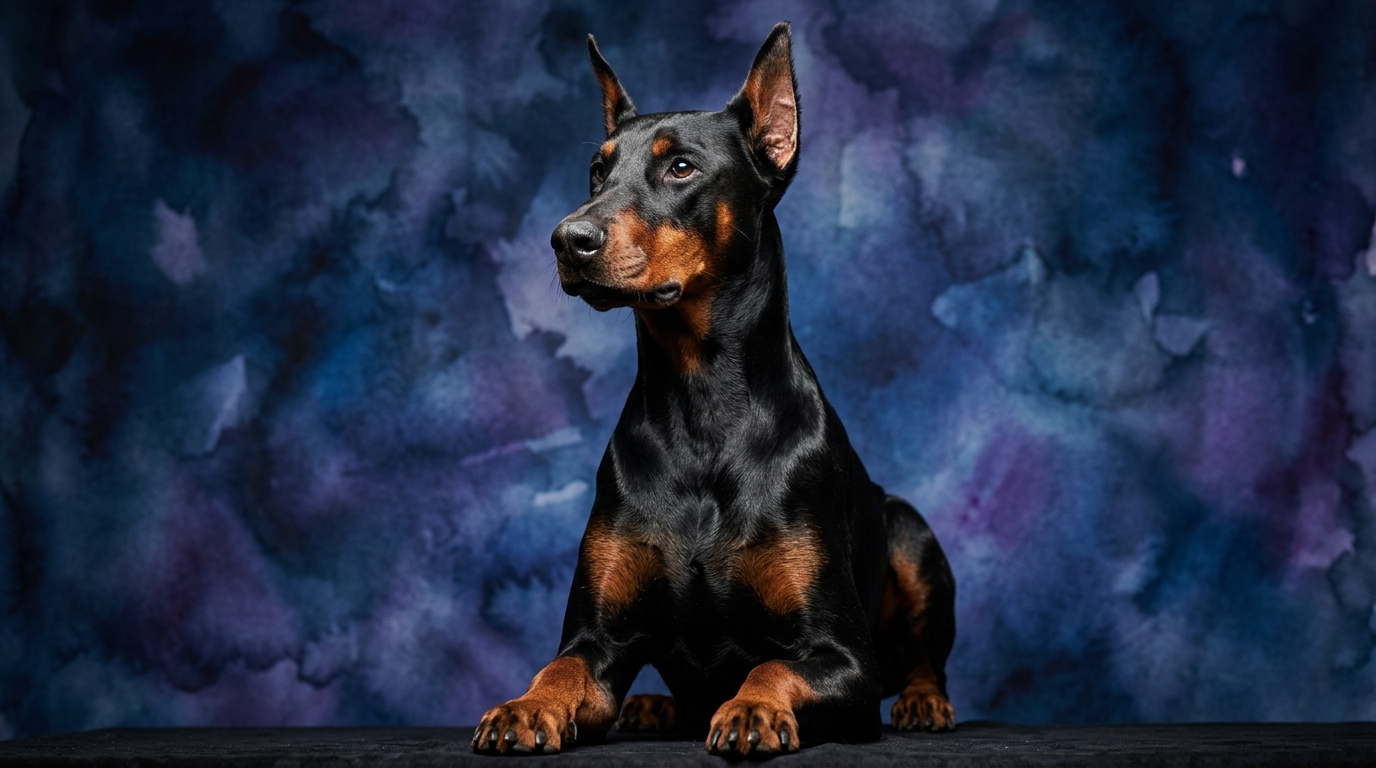
The Cosmic Pet Pet IQ Lab employs a five-dimensional framework to assess canine intelligence, offering a nuanced view beyond simplistic rankings. For the Doberman Pinscher, a breed traditionally placed at Coren rank #5, we observe a consistent peak across most cognitive dimensions. Their Problem Solving capability is rated 5/5, indicating an exceptional aptitude for navigating complex situations, understanding spatial relationships, and devising strategies to achieve goals. This manifests in their ability to quickly learn intricate tasks, understand multi-step commands, and adapt to novel challenges with minimal frustration. Their Training Speed also stands at a perfect 5/5, reflecting a remarkable eagerness to absorb new information, an inherent drive to comply, and a rapid acquisition of behaviors through repetition and positive reinforcement. This quick uptake makes them highly responsive to consistent instruction.
Social Intelligence for the Doberman Pinscher is rated 4/5, signifying a keen awareness of human emotions, body language, and subtle cues, allowing them to form deep, responsive bonds and anticipate owner needs. This makes them highly attuned companions and effective working partners. Their Instinctive Drive is a powerful 5/5, rooted in their heritage as guardians and working dogs; this translates into a strong desire for purpose, a natural inclination to protect, and an unwavering focus when engaged in a task. Finally, their Memory is rated 5/5, demonstrating an impressive capacity for long-term retention of commands, learned behaviors, and social interactions, enabling them to recall complex sequences and past experiences with precision.
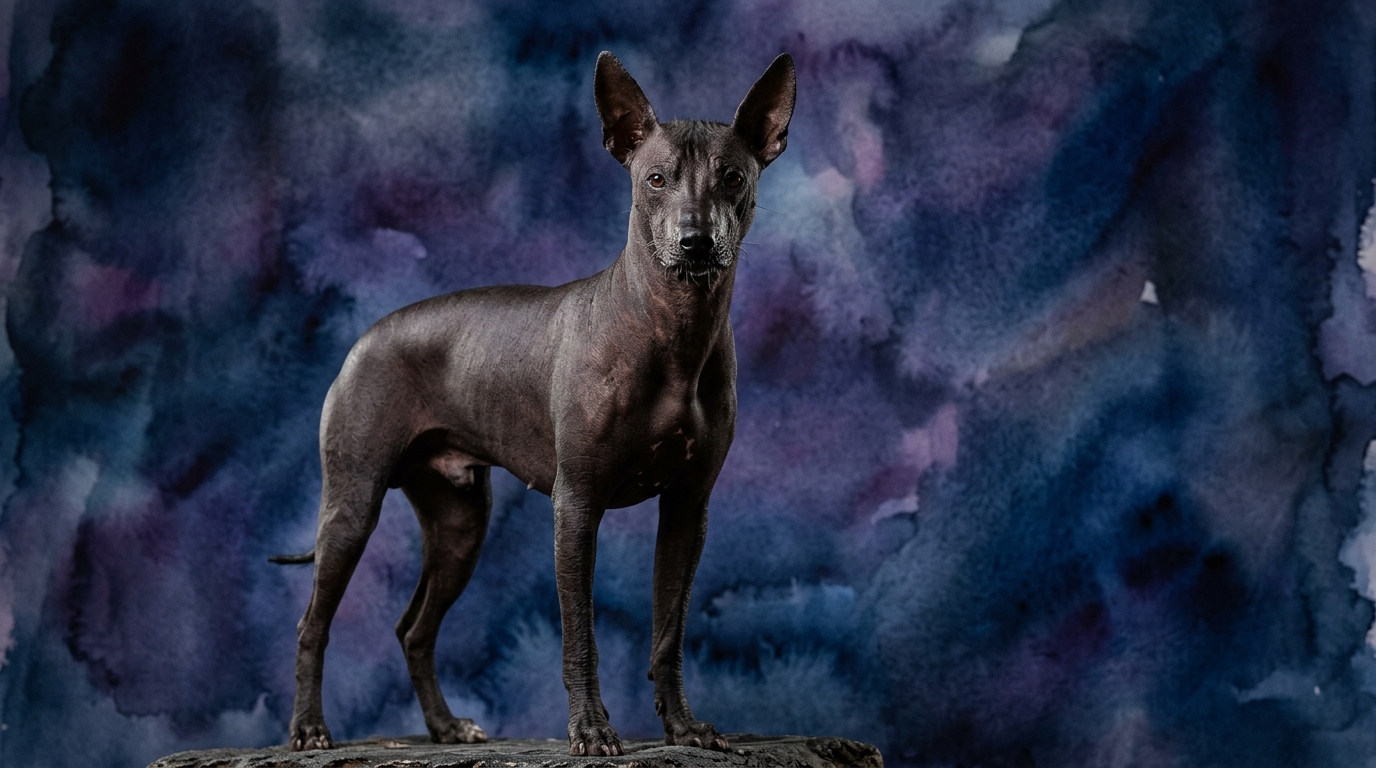
In contrast, the Xoloitzcuintli, not holding a specific Coren rank, presents a different cognitive profile, reflecting its distinct evolutionary path and purpose. Their Problem Solving ability is rated 3/5, suggesting a more straightforward approach to challenges. While capable of learning and adapting, they may require more explicit guidance and repetition to grasp complex puzzles or multi-step tasks, preferring familiar routines over constant novelty. Their Training Speed is also 3/5, indicating that while they are certainly trainable, they may not exhibit the same lightning-fast acquisition of commands as the Doberman. Patience, consistency, and clear communication are key, as they may take more sessions to solidify new behaviors.
The Xoloitzcuintli’s Social Intelligence is rated 3/5. They form incredibly deep and loyal bonds with their immediate family, often displaying a reserved or aloof demeanor towards strangers, which is not a lack of connection but rather a selective social focus. They understand their family’s emotional states but may not be as overtly responsive to subtle human cues as more socially demonstrative breeds. Their Instinctive Drive is 3/5, reflecting a generally lower working drive compared to breeds bred for specific tasks. While they possess a natural alertness and can be protective of their home, their primary drive is companionship and comfort rather than engaging in demanding, task-oriented activities. Lastly, their Memory is rated 3/5, meaning they reliably remember routines, family members, and established commands, but might not retain complex or infrequently encountered information with the same detail or duration as a Doberman.
Where the Doberman Pinscher Excels Cognitively
The Doberman Pinscher’s cognitive strengths are particularly evident in scenarios demanding rapid learning, precise execution, and a high degree of focus. Their 5/5 Problem Solving and Training Speed mean they can process new information and associate it with actions almost instantaneously, making them exceptional candidates for advanced obedience, agility, and protection sports. For instance, teaching a Doberman a complex scent discrimination task or a multi-stage obstacle course often requires fewer repetitions than many other breeds, as they quickly grasp the underlying principles and sequence of actions. Their high Instinctive Drive fuels this cognitive engagement, providing an enduring motivation to perform and work alongside their human companions, transforming challenges into rewarding collaborations. This drive ensures they remain committed to tasks even when faced with distractions.
Furthermore, their 5/5 Memory allows them to retain vast repertoires of commands and experiences over long periods, meaning lessons learned in puppyhood are not easily forgotten. This recall is crucial for sustained performance in working roles where consistency is paramount. Coupled with a 4/5 Social Intelligence, Dobermans are adept at interpreting human intentions and emotional states, allowing for nuanced communication and a deep understanding of their role within a human family or working team. They anticipate commands and respond to subtle shifts in body language, creating a seamless partnership that relies on more than just verbal cues. This cognitive agility makes them particularly suited for roles requiring quick thinking and responsive action, such as service work or search and rescue.
Where the Xoloitzcuintli Excels Cognitively
The Xoloitzcuintli’s cognitive profile, while different from the Doberman's, offers its own distinct advantages, particularly in environments that value a calmer, more self-contained intellect. Their 3/5 Problem Solving and Instinctive Drive scores, while lower than the Doberman’s, contribute to a temperament that is less prone to neuroticism or destructive behaviors stemming from under-stimulation. A Xolo is often content with established routines and familiar surroundings, demonstrating a quiet competence rather than a constant need for novel challenges. They excel in environments where their primary role is companionship and emotional support, thriving on close physical proximity and predictable interactions rather than intense intellectual tasks.
Their 3/5 Social Intelligence, characterized by a deep devotion to their immediate family and a reserved nature with strangers, allows them to filter out external stimuli and focus their emotional and cognitive resources on their inner circle. This selective social focus means they build incredibly strong, unwavering bonds with their chosen people, often acting as intuitive emotional anchors within the home. Their 3/5 Memory ensures they reliably recall beloved family members, established household rules, and daily routines, providing a sense of stability and predictability that is comforting to both dog and owner. While they may not be learning advanced tricks at breakneck speed, their cognitive strengths lie in their robust emotional intelligence within their family unit and their ability to thrive in a harmonious, stable domestic environment, making them wonderfully calm and consistent companions.
Which is Easier to Train and Why?
Based on the IQ Lab's metrics, the Doberman Pinscher is unequivocally easier to train than the Xoloitzcuintli. Their perfect 5/5 Training Speed means they grasp new commands with remarkable rapidity, often requiring only a handful of repetitions to understand and execute a behavior consistently. This is largely due to their exceptionally high Instinctive Drive (5/5), which translates into a strong desire to work, please, and engage in purposeful activity. A Doberman often views training as a fulfilling outlet for their energy and intellect, actively seeking to learn what is expected of them. Their 4/5 Social Intelligence further enhances trainability, as they are adept at reading human cues and understanding intentions, fostering a seamless communication loop during training sessions.
The Xoloitzcuintli, with a Training Speed of 3/5, requires a more patient, consistent, and reward-based approach. While trainable, they may not possess the Doberman's inherent eagerness to comply or the same quick uptake of complex tasks. Their lower Instinctive Drive (3/5) means they might not be as inherently motivated by the 'work' of training itself, often preferring comfort and companionship over rigorous lessons. Owners must be prepared to invest more time and creativity into making training engaging, relying heavily on positive reinforcement to motivate these sensitive canines. They respond best to a calm, gentle hand and clear, repetitive instructions, as their Problem Solving (3/5) and Memory (3/5) are more geared towards established routines rather than rapid adaptation to novel demands.
Which Suits Active Owners vs. Relaxed Owners?
The Doberman Pinscher is an ideal match for active, engaged owners who are prepared to provide consistent mental and physical stimulation. Their 5/5 Instinctive Drive and 5/5 Problem Solving mean they thrive when given a job to do, whether it's advanced obedience, agility, protection training, or simply engaging in vigorous daily exercise and puzzle-solving games. Owners who enjoy structured activities, want a canine partner for sports, or need a dog with a clear sense of purpose will find the Doberman's cognitive profile perfectly aligned with their lifestyle. Failure to provide adequate mental engagement can lead to boredom and potentially destructive behaviors, as their sharp minds and high energy require productive outlets.
Conversely, the Xoloitzcuintli is wonderfully suited for more relaxed owners who appreciate a devoted, calm, and affectionate companion. While they benefit from regular walks and play, their lower Instinctive Drive (3/5) means they do not demand the same intensity of daily work or constant mental challenges as the Doberman. They are content to be close to their family, often preferring quiet companionship and comfortable routines. Owners who enjoy a serene home environment, appreciate a dog that is less demanding of constant activity, and seek a deeply bonded, loyal presence will find the Xoloitzcuintli's temperament and cognitive leanings to be a perfect fit. Their reserved social nature also means they are often less interested in extensive social outings, preferring the company of their chosen few.
The Verdict
Choose the Doberman Pinscher if you are an active, experienced owner seeking a highly trainable, intelligent canine partner for sports, work, or advanced obedience, capable of rapid learning and deep engagement in complex tasks. They thrive with consistent mental challenges and a clear purpose.
Opt for the Xoloitzcuintli if you are a relaxed owner seeking a devoted, calm, and self-sufficient companion who thrives on routine, close family bonds, and a serene home environment, without the intense daily demands of a working breed.
🧠 Find Your Pet's IQ Score
Our Pet IQ Lab assessment covers 25+ tests across 5 cognitive dimensions — personalized to your breed.
Take the Full IQ Test →Frequently Asked Questions
Do Doberman Pinschers require a lot of mental stimulation?
Yes, Doberman Pinschers require significant mental stimulation due to their high Problem Solving and Instinctive Drive. They thrive on learning new commands, engaging in puzzle toys, and participating in structured activities to keep their sharp minds occupied and prevent boredom.
Are Xoloitzcuintli good family dogs with children?
Xoloitzcuintli can be excellent family dogs, especially if raised with children from a young age. Their social intelligence fosters deep bonds with their immediate family, though their reserved nature means they prefer calm interactions and may need supervision with boisterous play.
Can a Xoloitzcuintli be trained for protection or advanced obedience?
While a Xoloitzcuintli can certainly be trained for basic obedience, their lower Instinctive Drive and Training Speed mean they are not typically suited for advanced protection work or complex obedience routines that a Doberman Pinscher excels at. They respond best to patient, positive reinforcement for foundational skills.