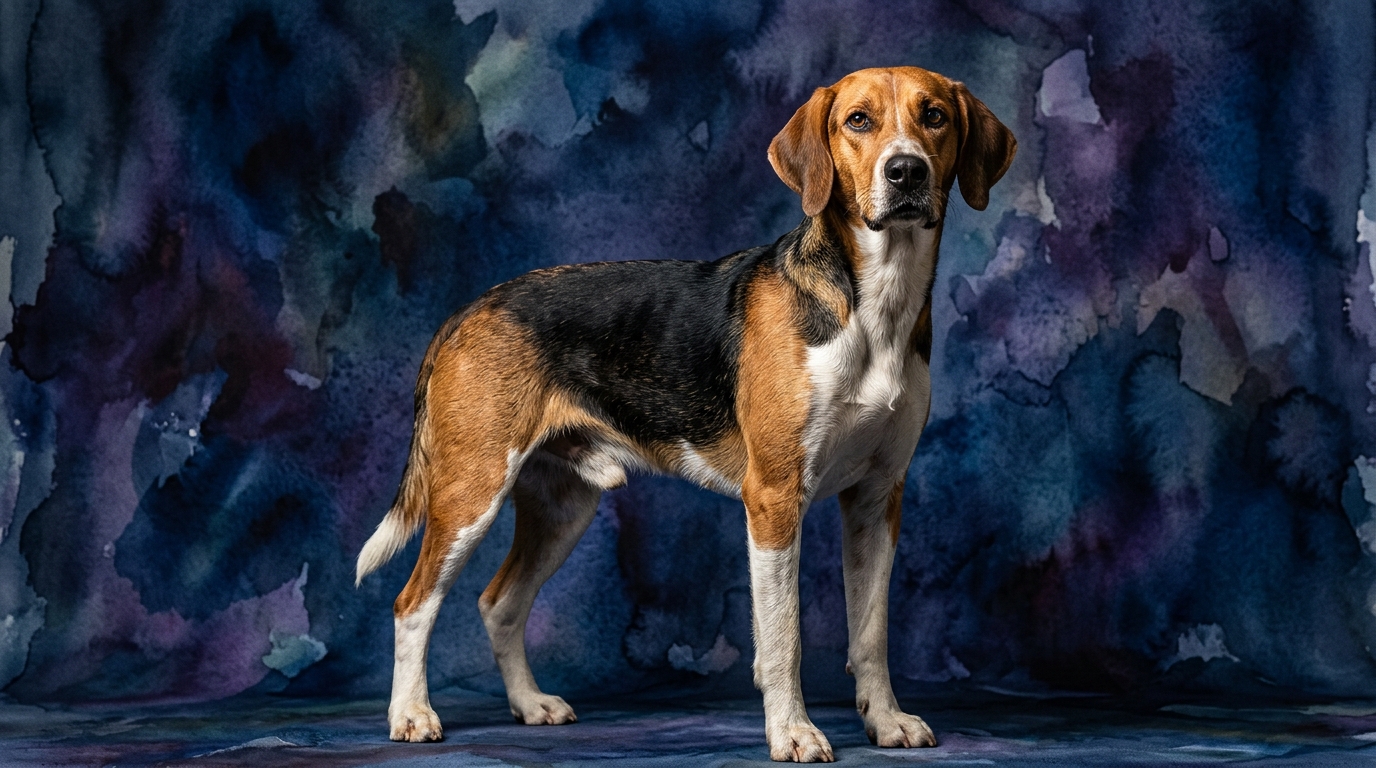

Side-by-Side IQ Profile: English Foxhound vs. Otterhound
The Cosmic Pet Pet IQ Lab's assessment places both the English Foxhound and Otterhound squarely in the middle of the cognitive spectrum, each earning a 3/5 across problem-solving, training speed, social intelligence, instinctive drive, and memory. For the English Foxhound, this means a moderate capacity for independent thought in complex situations, often relying on their powerful scenting ability rather than intricate strategizing. Their training speed reflects a capability to learn commands with consistent repetition, though their strong prey drive presents a significant distraction, requiring persistent effort. Social intelligence suggests they form bonds and understand pack dynamics, particularly within a hunting context, but might not always be attuned to subtle human cues. Their instinctive drive is profoundly rooted in their heritage as scent hounds, compelling them to follow a trail relentlessly. Memory indicates they can retain learned behaviors and recognize familiar people and places, but perhaps aren't exceptional in recalling every detail.
The Otterhound mirrors these scores, but the expression of these traits differs. Their problem-solving often involves navigating varied terrain and water obstacles during a hunt, suggesting a practical, adaptable form of intelligence rather than abstract reasoning. A training speed of 3/5 implies they too require patience and positive reinforcement, often more responsive to engaging, game-like sessions that appeal to their playful nature. Their social intelligence allows them to bond closely with their human family, often displaying boisterous affection, though they maintain an independent spirit. The instinctive drive is powerfully directed towards scenting, particularly for aquatic prey, and their stamina is legendary. Their memory reflects a similar capacity to the Foxhound, remembering routines and relationships, aiding in their integration into a family setting.
Where the English Foxhound Wins Cognitively
While raw scores are identical, the English Foxhound's cognitive strengths shine in areas demanding sustained focus and cooperative effort within a pack. Their 3/5 problem-solving is acutely specialized for tracking a scent over vast distances, requiring a singular, unwavering determination that few breeds match. This isn't about complex puzzles, but intense, continuous application of a primary skill. Their social intelligence, also 3/5, is perfectly adapted for traditional pack hunting, where understanding fellow hounds and working in unison is paramount. This specialized social cognition allows for effective group coordination, a subtle advantage over more independently minded hounds. Furthermore, their memory (3/5) is particularly adept at recalling specific scent trails and routes during past pursuits, contributing to their efficiency. This breed excels when their environment allows them to lean into their deeply ingrained purpose, demonstrating a focused cognitive drive.
Where the Otterhound Wins Cognitively
The Otterhound, despite identical scores, demonstrates a distinct cognitive edge in adaptability and versatile problem-solving, particularly involving their unique hunting environment. Their 3/5 problem-solving is often applied to navigating complex, multi-element terrains including water, requiring them to assess and overcome diverse physical challenges like strong currents or dense undergrowth. This suggests practical, on-the-fly decision-making broader than the Foxhound's single-minded pursuit. Their instinctive drive (3/5) is not only powerful but uniquely attuned to aquatic scents, demanding a different kind of sensory processing and environmental interpretation. The Otterhound's social intelligence, while also 3/5, often manifests as a more overtly affectionate and sometimes clownish demeanor with human companions, indicating flexible social engagement beyond just pack dynamics. Their memory (3/5) is effective in recalling potential prey locations or hunting ground features, contributing to their playful and sometimes mischievous nature. The Otterhound's cognitive strengths lie in their ability to integrate varied sensory input and adapt actions to dynamic, challenging environments.
Which Is Easier to Train and Why
Assessing which breed is “easier” to train when both score 3/5 in Training Speed requires looking beyond the number to their behavioral predispositions. The English Foxhound, with its intense focus on scent and strong pack drive, can be challenging. Their independent nature on the trail means they often prioritize a compelling scent over a handler's command, making recall particularly difficult without extensive, consistent training. They respond well to structure and repetition but require an owner who can channel their deep-seated hunting instincts into cooperative tasks. Their social intelligence, while excellent for pack work, doesn't always translate into eagerness to please a single human.
The Otterhound, while equally independent and scent-driven, sometimes presents a slightly different training dynamic. Their social intelligence often includes a more overt playfulness and desire for interaction with their human family, which can be leveraged in training. They might be more amenable to positive reinforcement and game-based learning, as these methods appeal to their jovial personality. However, their stubborn “hound” streak is still prominent, and their tendency to follow an interesting scent can override commands. Ultimately, neither is for the faint of heart in training; both demand immense patience, consistency, and a deep understanding of hound motivation. The Otterhound might offer more opportunities for engaging, fun training sessions, but both will test an owner's dedication.
Which Suits Active Owners vs. Relaxed Owners
Neither the English Foxhound nor the Otterhound is suited for truly relaxed owners; both are robust, energetic scent hounds requiring substantial daily engagement. However, their activity needs differ in nuance. The English Foxhound is built for endurance and sustained running. They thrive with active owners who can provide daily long runs, hikes, or scent work that mimics their traditional hunting role. Their exercise needs are not easily met with just a backyard; they require consistent, purposeful activity to remain content. An owner who enjoys structured outdoor adventures and can commit to managing a powerful, singular focus would find a compatible partner.
The Otterhound also demands significant exercise, but their activity profile is often more varied. They enjoy swimming, exploring diverse terrains, and participating in family activities. While possessing endurance, their shaggy coat and sometimes more boisterous playfulness suggest adaptability to different forms of exercise, including water sports. Indoors, after sufficient exercise, some Otterhounds can be surprisingly calm and affectionate, though their size means they are not exactly “lap dogs.” An active owner who enjoys varied outdoor pursuits, including water activities, and appreciates a playful, sometimes goofy, personality would find the Otterhound suitable. For genuinely relaxed owners, both breeds would likely prove overwhelming.
The Verdict
Choose the English Foxhound if you are a dedicated, active individual or family committed to providing consistent, structured exercise, particularly long runs and scent-based activities, and can patiently manage a dog with an intense, independent drive for pursuit.
Choose the Otterhound if you seek a versatile, active companion for varied outdoor adventures including water activities, appreciate a playful and affectionate yet independent personality, and are prepared to manage a large, boisterous dog with a powerful scenting instinct.
🧠 Find Your Pet's IQ Score
Our Pet IQ Lab assessment covers 25+ tests across 5 cognitive dimensions — personalized to your breed.
Take the Full IQ Test →Frequently Asked Questions
Are English Foxhounds good family pets?
English Foxhounds can be good family pets for experienced owners who understand their high energy and strong prey drive. They generally get along well with children and other dogs, particularly if raised with them, but require consistent training and ample exercise to prevent boredom and destructive behaviors.
Do Otterhounds shed a lot?
Yes, Otterhounds do shed, and their shaggy, double coat requires regular grooming to prevent matting and keep it healthy. While not excessive year-round, they will have heavier shedding periods, necessitating consistent brushing to manage loose hair.
How much exercise do these breeds need daily?
Both English Foxhounds and Otterhounds require substantial daily exercise, typically one to two hours of vigorous activity, such as running, hiking, or swimming. Their strong instinctive drives mean that mental stimulation through scent games and training is just as important as physical exertion to keep them content.