
Side-by-Side Cognitive Profiles
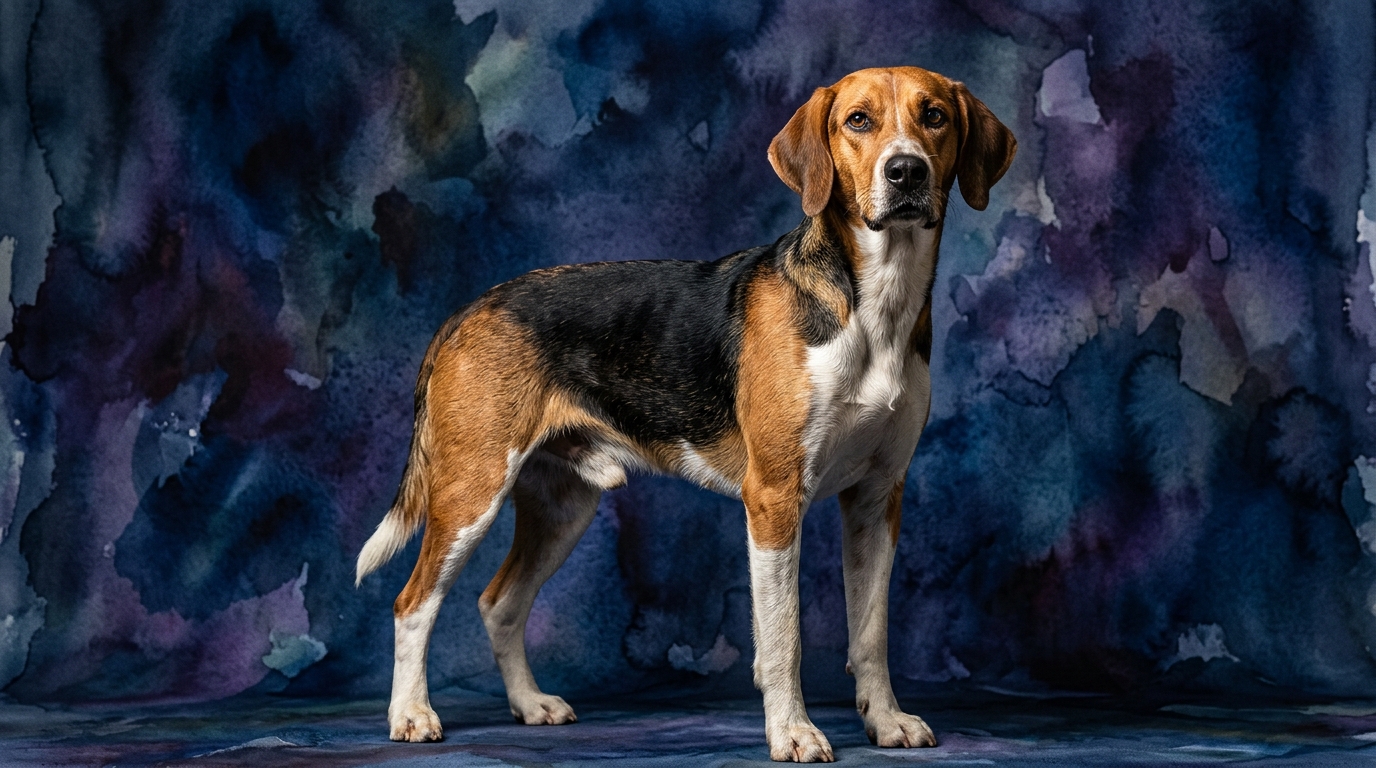
The English Foxhound, a dog bred for endurance and pursuit, exhibits a balanced cognitive profile across our five dimensions. Their Problem Solving is rated at 3/5, indicating an ability to navigate practical challenges encountered during a long hunt, such as finding a path through dense undergrowth or overcoming minor obstacles, rather than complex abstract puzzles. Training Speed also sits at 3/5, suggesting they can learn routines and commands, but often require consistent repetition and patience due to their independent nature. Social Intelligence is 3/5, reflecting their capacity to operate within a pack structure and respond to handler cues in a working context. Their Instinctive Drive, also 3/5, is powerfully geared towards scent tracking and pursuit, allowing them sustained focus on a trail. Finally, their Memory is 3/5, sufficient for retaining hunting routes and basic commands but perhaps not for intricate sequences.
In contrast, the Schipperke, a vigilant 'little captain' originally guarding barges, presents a sharper cognitive edge in several areas. They score an impressive 5/5 in Problem Solving, demonstrating a strong aptitude for figuring out novel situations and puzzles, often with a clever, independent streak. Their Training Speed mirrors this at 5/5, meaning they pick up new commands and routines with remarkable quickness and enthusiasm. Social Intelligence is 3/5, similar to the Foxhound, indicating they form bonds and understand social cues but maintain a degree of self-reliance. Their Instinctive Drive, also 3/5, manifests as an intense alertness, a strong territorial instinct, and a propensity for vermin control. Their Memory, at 5/5, is exceptional, enabling them to retain a vast repertoire of commands and experiences over time, contributing to their rapid learning.
Where the English Foxhound Excels Cognitively
While the Schipperke outscores the Foxhound in several metrics, the English Foxhound’s cognitive strengths are uniquely tailored to its historical role. Their 3/5 in Instinctive Drive, though numerically equal to the Schipperke, represents a highly specialized and enduring focus on scent work. This isn't a general alertness but a deep, persistent drive to follow a trail, often for hours without distraction, demonstrating a profound cognitive specialization for sustained olfactory pursuit. This tenacity and singular focus are unparalleled when it comes to their specific function, allowing them to process and follow complex scent data where other breeds might falter or lose interest.
Furthermore, their 3/5 in Problem Solving, while not indicative of abstract puzzle-solving, signifies a remarkable ability to navigate complex, dynamic outdoor environments. A Foxhound's problem-solving skills are applied in real-time to overcome physical obstacles like fallen logs or dense thickets while maintaining a scent trail, requiring immediate, practical spatial reasoning and an understanding of their physical capabilities. Their Social Intelligence (3/5) also shines within a pack context, demonstrating cooperative understanding and communication with fellow hounds, a nuanced social skill often overlooked in individual obedience metrics. This allows for seamless coordination during a hunt, where individual initiative must align with group effort.
Where the Schipperke Shows Cognitive Superiority
The Schipperke’s cognitive profile clearly distinguishes it with superior scores in several key areas. Their 5/5 in Problem Solving means they are adept at analyzing new situations and devising solutions quickly. This manifests as a knack for opening latches, figuring out how to access forbidden areas, or manipulating objects to achieve a goal. This high rating suggests a flexible and adaptive mind, eager to engage with mental challenges beyond simple obedience.
Coupled with their 5/5 Training Speed, Schipperkes absorb new information and commands with remarkable efficiency. They grasp concepts rapidly, often requiring fewer repetitions than many other breeds to master a new skill or trick. This rapid acquisition of knowledge is further bolstered by their 5/5 Memory, allowing them to retain a vast repertoire of learned behaviors and experiences over extended periods. This combination of quick learning and strong retention makes them highly receptive to advanced training and complex tasks, enabling them to excel in dog sports or intricate obedience routines where sustained information processing and recall are paramount.
Training: English Foxhound vs. Schipperke
When it comes to ease of training, the Schipperke holds a distinct advantage. Their 5/5 scores in both Training Speed and Memory mean they are quick to understand what is asked of them and reliably retain that information. Schipperkes thrive on mental stimulation and respond well to positive reinforcement, often eager to learn new tricks and commands. Their natural curiosity and independent problem-solving skills, while sometimes leading to mischief, can be channeled effectively into productive learning, making them a rewarding student for those who enjoy engaging in varied training activities.
The English Foxhound, with 3/5 in Training Speed and Memory, presents a different training challenge. Their strong, independent instinctive drive to follow a scent can often override human commands, especially in stimulating environments. Training requires exceptional patience, consistency, and a deep understanding of their hound nature. While capable of learning, they are not typically motivated by the desire to please in the same way a Schipperke might be. Owners must be prepared for a longer training journey, focusing on building a strong bond and making training exercises more engaging than the allure of a compelling scent trail. Their behavioral tendency is to prioritize their nose, which can lead to selective hearing when a fascinating odor is present.
Owner Lifestyle Suitability
The English Foxhound is unequivocally suited for active owners who can provide ample opportunities for physical exertion and outlet for their profound instinctive drive. These dogs require vast spaces to run and explore safely, ideally with access to secure, large yards or rural properties. Their stamina is legendary, meaning short walks are insufficient; they thrive on long runs, extensive hikes, or participation in activities like scent work or endurance sports that mimic their historical hunting roles. A relaxed owner who prefers sedentary hobbies would find it challenging to meet the Foxhound's significant energy requirements, potentially leading to boredom and destructive behaviors.
The Schipperke, while smaller, is also an active breed, but their energy can be channeled more diversely. They suit active owners who enjoy engaging their dogs in various mental and physical activities, such as agility, obedience trials, or engaging puzzle toys. Their cleverness and alertness mean they need mental stimulation as much as physical exercise. While they enjoy vigorous play and walks, their exercise needs can often be met within a more typical suburban environment, provided they receive consistent daily engagement. A relaxed owner might struggle with the Schipperke's persistent curiosity and demand for engagement, which can manifest as barking or incessant 'supervision' if not adequately stimulated.
The Verdict
Choose an English Foxhound if you are a highly active individual or family seeking a dedicated, enduring companion for extensive outdoor pursuits, and you appreciate their independent, scent-driven nature.
Opt for a Schipperke if you desire a quick-witted, highly trainable dog for advanced obedience, dog sports, or a vigilant companion who thrives on mental engagement and consistent interaction.
🧠 Find Your Pet's IQ Score
Our Pet IQ Lab assessment covers 25+ tests across 5 cognitive dimensions — personalized to your breed.
Take the Full IQ Test →Frequently Asked Questions
Do English Foxhounds make good family pets?
English Foxhounds can be affectionate with their families, but their strong drive and need for extensive exercise mean they require a specific lifestyle. They are best suited for active households that can provide ample space and consistent outlets for their energy, and may be too robust for very young children without close supervision.
Are Schipperkes prone to barking?
Yes, Schipperkes are known for their alertness and can be quite vocal, often barking to signal anything new or unusual in their environment. This trait stems from their historical role as watchdogs, so consistent training from a young age is essential to manage their propensity for barking.
What kind of mental stimulation do these breeds need?
English Foxhounds benefit from scent games, long-line exploration, and activities that engage their powerful nose and stamina. Schipperkes thrive on puzzle toys, learning new tricks, agility training, and any activity that challenges their keen problem-solving abilities and quick memory.