
Side-by-Side IQ Profile: Unpacking the Nuances
The Cosmic Pet Pet IQ Lab data presents both the English Foxhound and the Tibetan Terrier with identical scores across five key cognitive dimensions: Problem Solving (3/5), Training Speed (3/5), Social Intelligence (3/5), Instinctive Drive (3/5), and Memory (3/5). While these scores appear similar on paper, their manifestation in each breed's behavior and inherent predispositions tells a richer story.
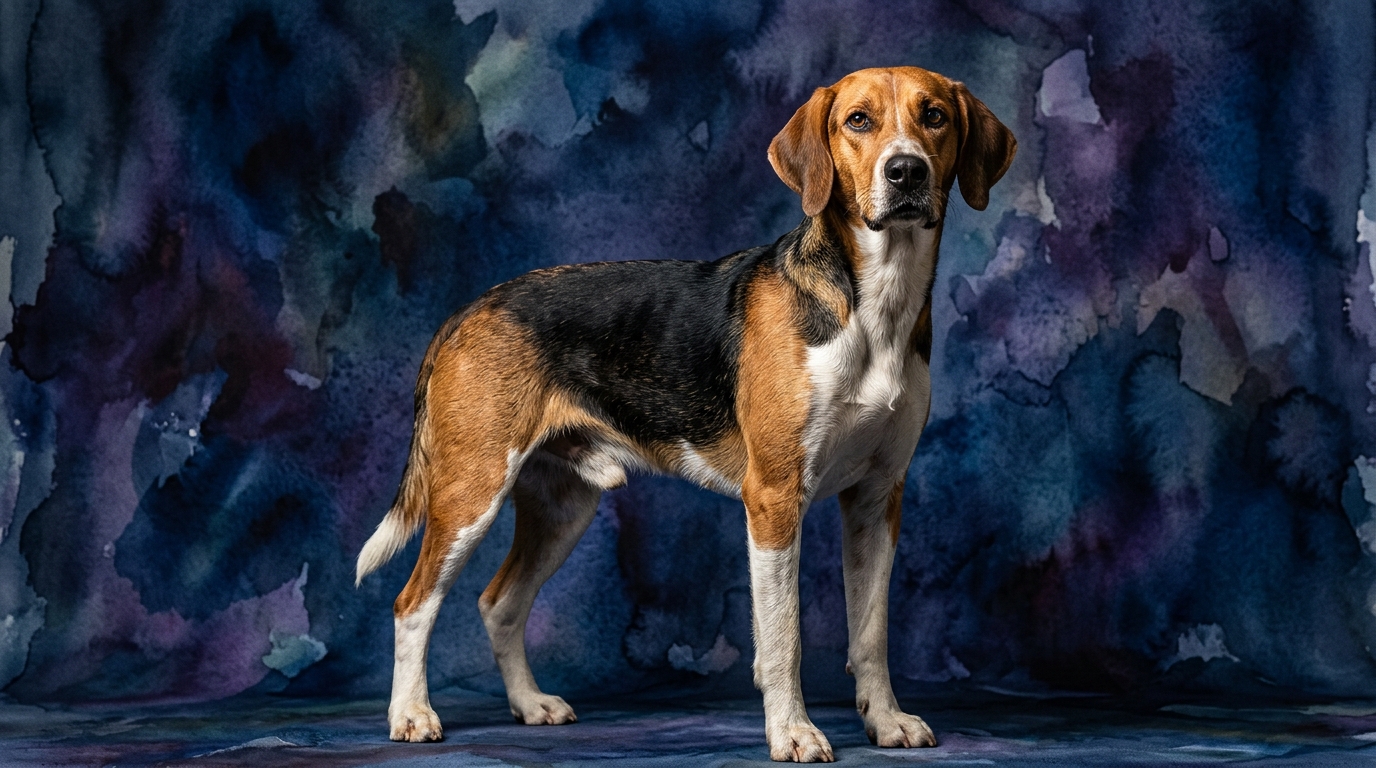
For the English Foxhound, a score of 3/5 in Problem Solving reflects a proficiency in navigating complex scent trails and overcoming environmental obstacles during a hunt, rather than abstract puzzle-solving. Their Training Speed at 3/5 indicates a moderate pace for learning commands, often tempered by their powerful independent drive to follow a scent. Social Intelligence (3/5) in a Foxhound typically revolves around understanding pack dynamics and communicating effectively with fellow hounds and their human handler within a working context. Their Instinctive Drive (3/5) is overwhelmingly focused on scenting and pursuit, a deeply ingrained motivation that shapes much of their cognitive output. Memory (3/5) for a Foxhound is particularly strong for recalling scent patterns, hunting routes, and the locations of prey.
The Tibetan Terrier, conversely, exhibits its 3/5 Problem Solving capacity through clever manipulation of its environment to achieve comfort or attention, or figuring out household routines. Their 3/5 Training Speed suggests they learn commands at a moderate rate, though their occasional stubborn streak can influence consistency. Social Intelligence (3/5) for a Tibetan Terrier is often directed towards discerning human emotions and navigating complex family hierarchies, making them adept at adapting to domestic life. Their Instinctive Drive (3/5) is rooted in their historical role as companion and alert dog, manifesting as a strong protective instinct towards their family and a watchful eye over their territory. Memory (3/5) in a Tibetan Terrier is strong for remembering routines, specific commands, and the preferences of their human companions.
Where the English Foxhound Excels Cognitively
The English Foxhound's cognitive strengths are deeply intertwined with its heritage as a scent hound. Its Problem Solving at 3/5 truly shines in scenarios demanding sequential deduction based on olfactory information. For instance, a Foxhound can expertly follow a cold trail, discerning subtle changes in scent concentration and direction, a task requiring considerable mental mapping and persistence that many other breeds would find impossible. This specialized problem-solving ability, coupled with its robust 3/5 Memory for intricate scent patterns and geographical layouts, allows it to excel in prolonged, complex tracking endeavors. Their social intelligence, while rated 3/5, is particularly refined within a pack structure, facilitating seamless cooperation and communication during a hunt, a specialized form of group cognition.
Furthermore, the Foxhound's powerful 3/5 Instinctive Drive for scenting isn't merely a physical attribute; it's a profound cognitive motivator. This drive fuels an unwavering focus and determination when engaged in scent work, allowing them to block out distractions and concentrate on a singular task for extended periods. This makes them exceptional at activities like scent detection or specific tracking sports, where their cognitive energy is channeled directly into their primary instinct. Their moderate Training Speed (3/5) in this context means they rapidly assimilate cues and commands related to their hunting purpose, demonstrating a focused learning curve when the task aligns with their inherent drives.
Where the Tibetan Terrier Shows its Cognitive Edge
The Tibetan Terrier, with its 3/5 scores across the board, demonstrates a distinct cognitive profile that favors adaptability and nuanced human interaction. Their Problem Solving at 3/5 often manifests as cleverness in domestic settings; they might figure out how to open a cupboard for a treat or devise strategies to gain a favorite human's attention. This form of problem-solving is less about following a trail and more about navigating social and environmental challenges within a home. Their Social Intelligence (3/5) is particularly adept at reading human body language and emotional states, allowing them to adjust their behavior to household moods and dynamics. This makes them highly attuned companions, capable of forming deep, intuitive bonds.
The Tibetan Terrier's 3/5 Instinctive Drive, while not as singularly focused as a Foxhound's, includes a strong territorial and protective streak, coupled with a deep desire for companionship. This drive translates into an alert awareness of their surroundings and a ready willingness to engage with their family. Their Memory (3/5) excels in recalling routines, specific verbal cues, and the likes and dislikes of their human companions, contributing to their smooth integration into family life. This cognitive blend makes them particularly good at learning complex household rules and anticipating daily events, showcasing a practical, relationship-oriented intelligence.
Training Dynamics: Foxhound vs. Tibetan Terrier
Despite both breeds scoring 3/5 in Training Speed, the ease of training varies significantly due to their differing motivations and inherent drives. The English Foxhound's strong 3/5 Instinctive Drive for scenting means that while they can learn commands at a moderate pace, their focus is often elsewhere. Training a Foxhound frequently involves competing with the allure of a compelling scent, making off-leash reliability a significant challenge. Their problem-solving is geared towards the hunt, not necessarily pleasing a handler in a structured obedience class. Successful training requires immense patience, consistency, and methods that either incorporate their scent drive or are powerful enough to override it, often through high-value rewards and engaging, varied sessions.
The Tibetan Terrier, also at 3/5 for Training Speed, can be moderately quick to pick up commands, but their independent and sometimes stubborn nature, combined with their 3/5 Instinctive Drive for companionship and alertness, means they respond best to positive reinforcement and clear, consistent boundaries. They are often more motivated by human approval and treats than a Foxhound, but their independent streak means they might choose to ignore a command if they don't see the immediate benefit or are otherwise occupied. Training success with a Tibetan Terrier often hinges on making the process fun and engaging, utilizing their social intelligence and memory for routines to build strong habits, while patiently working through their occasional willfulness.
Lifestyle Suitability: Active Owners vs. Relaxed Owners
The English Foxhound, with its potent 3/5 Instinctive Drive for scenting and pursuit, is unequivocally suited for highly active owners who can provide ample opportunities for physical and mental exertion. Their cognitive profile thrives on activities that engage their primary drive, such as long-distance running, extensive hiking, or participation in scent work and tracking sports. A Foxhound's problem-solving and memory are wired for endurance and focused tasks related to their heritage, meaning they require consistent, vigorous exercise to prevent boredom and destructive behaviors. They are not content with short walks; they need to run, explore, and utilize their profound sense of smell daily.
The Tibetan Terrier, while not a couch potato, is far more adaptable to a range of owner activity levels. Their 3/5 Instinctive Drive includes a strong desire for companionship and alertness, making them happy with regular walks, playful indoor sessions, and engaging family activities. They appreciate mental stimulation through puzzle toys and training, but their exercise needs are generally moderate compared to a Foxhound. They are well-suited for owners who enjoy daily walks and interactive play but might not be marathon runners or avid hikers. Their social intelligence and memory for routines make them excellent family companions who enjoy being included in daily life, whether it's an active outing or a relaxed evening at home.
The Verdict
Choose an English Foxhound if you are an exceptionally active owner seeking a dedicated, enduring partner for outdoor adventures, scent work, or a pack-oriented lifestyle.
Opt for a Tibetan Terrier if you desire a clever, adaptable, and socially intelligent companion who thrives on family interaction and offers a balanced blend of activity and relaxed companionship.
🧠 Find Your Pet's IQ Score
Our Pet IQ Lab assessment covers 25+ tests across 5 cognitive dimensions — personalized to your breed.
Take the Full IQ Test →Frequently Asked Questions
Are English Foxhounds good family pets despite their strong drive?
English Foxhounds can be good family pets, especially if raised with children, but require experienced owners who understand their strong 3/5 instinctive drive for scenting. They need extensive exercise and mental stimulation to prevent boredom, and their independent nature means consistent training is vital for harmonious family living.
Do Tibetan Terriers bark a lot due to their alert nature?
Tibetan Terriers, with their 3/5 instinctive drive for alertness, can be prone to barking to signal new arrivals or unusual sounds. While not excessive, their vocal tendencies can be managed with early training and socialization, teaching them appropriate times to alert their family.
Given their similar IQ scores, which breed is better for first-time dog owners?
Given their similar IQ scores but differing behavioral profiles, the Tibetan Terrier is generally a more suitable choice for first-time dog owners. Their adaptability, stronger human-centric social intelligence, and more manageable exercise needs make them less demanding than the highly independent and driven English Foxhound.