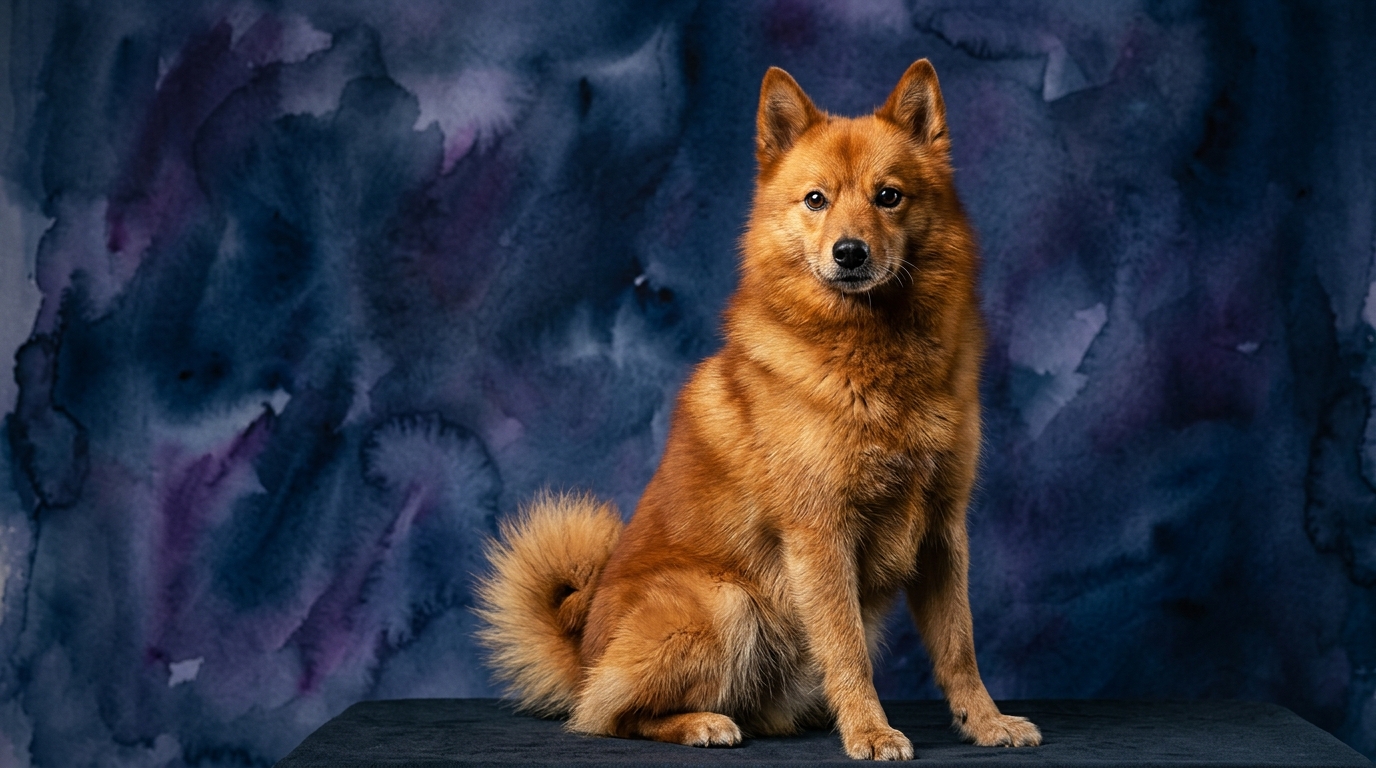

Side-by-Side IQ Profile: Finnish Spitz vs. Polish Lowland Sheepdog
**Problem Solving (3/5):** The Finnish Spitz exhibits practical, independent problem-solving, often focused on personal goals like finding the best vantage point for barking or locating hidden objects. Their solutions are direct and reflect a self-reliant hunting heritage. The Polish Lowland Sheepdog demonstrates a more analytical, often collaborative problem-solving style, particularly concerning resource management or group dynamics. They might strategize to "gather" family members or manipulate objects to achieve a specific outcome, showing a systematic, observant nature.
**Training Speed (3/5):** The Finnish Spitz learns new commands steadily but requires consistent, engaging motivation. Their independence means compliance often depends on perceived benefit, making positive reinforcement and repetition crucial. The Polish Lowland Sheepdog acquires new tasks at a moderate pace, excelling when training offers purpose or mimics real-world duties. Their innate desire to work with handlers aids learning, though stubbornness can arise if they don't grasp a command's utility.
**Social Intelligence (3/5):** The Finnish Spitz displays moderate social awareness, primarily within their trusted family and territory. They are adept at reading familiar human emotions and use their distinct bark for expressive communication. The Polish Lowland Sheepdog shows a solid understanding of social dynamics within their family and with other animals. Observant of hierarchies, they often act as protectors, interpreting and responding to social cues effectively.
**Instinctive Drive (3/5):** The Finnish Spitz is driven by strong hunting instincts, particularly vocalizing at perceived prey. This manifests as alert vigilance and powerful barking, making them vigilant, if loud, watchdogs. The Polish Lowland Sheepdog's drive is rooted in herding, expressed as a desire to gather, control, and protect. This translates into "herding" family members or patrolling property, demonstrating a strong sense of responsibility.
**Memory (3/5):** The Finnish Spitz possesses reliable memory for routines, significant locations (like barking spots), and past interactions. They quickly recall behaviors linked to rewards or negative outcomes. The Polish Lowland Sheepdog demonstrates good memory for complex sequences, spatial layouts, and social roles. They recall commands and boundaries with practical, long-term retention, aiding their protective and organizational duties.
Where the Finnish Spitz Wins Cognitively
Despite identical IQ scores, the Finnish Spitz distinctively applies its cognitive abilities in self-reliant ways. Their independent problem-solving (3/5) is geared towards personal objectives, such as devising clever routes to a high vantage point for territorial oversight, showcasing resourceful, opportunistic ingenuity. This isn't about superior intellect but a unique expression of their moderate problem-solving capacity. Their social intelligence (3/5) is particularly acute in identifying and communicating about perceived threats within their domain. The Finnish Spitz’s varied bark functions as a sophisticated vocal communication system, signaling different levels of alarm or interest with impressive specificity, a nuanced social interaction with their human guardians. Furthermore, their memory (3/5) is exceptionally attuned to spatial details and the locations of intriguing scents or potential 'prey,' making them remarkably adept at navigating and recalling significant environmental spots relevant to their instinctive drives.
Where the Polish Lowland Sheepdog Wins Cognitively
The Polish Lowland Sheepdog, while sharing numerical scores, exhibits cognitive strengths that diverge significantly. Their 3/5 problem-solving capability often manifests as a strategic, organized approach, particularly when managing groups or situations. A Polish Lowland Sheepdog might intuitively guide children away from danger or gently 'herd' family members, showcasing a proactive, guardian-like intelligence distinct from the Spitz's solitary problem-solving. Their social intelligence (3/5) is strong in understanding complex group dynamics and maintaining order. They are astute at reading social cues, assessing hierarchies, and subtly intervening to de-escalate tension, a testament to their heritage as flock managers. Moreover, their memory (3/5) is remarkably strong for household routines and 'flock' rules, allowing them to anticipate events and maintain a consistent environment, crucial for their protective instincts. They recall complex learned behaviors with precision, often driven by a desire for correct execution.
Which is Easier to Train and Why
Considering ease of training, the Polish Lowland Sheepdog generally offers a smoother experience for obedience and task-oriented commands. Their herding instinct drives them to work collaboratively and be attentive to handler cues, finding purpose in training. While they can be stubborn if they don't see the point, their desire to please and strong memory (3/5) for learned sequences make them responsive to consistent positive reinforcement. They thrive on having a 'job' and being part of a team. In contrast, the Finnish Spitz, while capable of learning at a similar 3/5 pace, is inherently more independent. Its training speed is influenced by a self-reliant nature and strong prey drive. They learn quickly with high motivation, but focus can easily shift to environmental stimuli. Training a Finnish Spitz often feels more like a negotiation, requiring an owner who understands how to harness their independent spirit rather than suppress it. For general obedience and reliability, the Polish Lowland Sheepdog's cooperative tendencies typically lead to an easier training journey.
Which Suits Active Owners vs. Relaxed Owners
The suitability for active versus relaxed owners depends on how each breed's instinctive drives translate into daily needs. The Polish Lowland Sheepdog thrives with active engagement that provides mental stimulation and purpose. While not needing extreme exertion, they require regular, structured activities like advanced obedience, agility, or consistent training sessions to challenge their problem-solving and memory (both 3/5). Their moderate but persistent instinctive drive (3/5) for organizing and protecting means they can become bored or destructive if neglected. Genuinely relaxed owners seeking minimal interaction would find the Polish Lowland Sheepdog too demanding. The Finnish Spitz, needing exercise, channels its 3/5 instinctive drive differently, primarily through vocalization and hunting-related exploration. They enjoy walks and scent work but aren't built for endurance tasks. They are content with moderate daily exercise and opportunities to survey their surroundings. A 'relaxed owner' for a Finnish Spitz understands and manages their barking tendencies, appreciating their independent, watchful nature, rather than seeking a highly biddable companion for strenuous activities. Their needs are more about consistent engagement and managing vocal expression than high-octane physical exertion.
The Verdict
Opt for a Finnish Spitz if you appreciate an independent, vocal companion who excels in alerting and surveying, and you are prepared to manage their distinctive barking and self-reliant nature with patience and consistent, engaging training.
Select a Polish Lowland Sheepdog if you desire a collaborative, protective companion eager for purposeful activities and consistent mental engagement, and you can provide structured training and opportunities for them to utilize their herding-based problem-solving and social intelligence.
🧠 Find Your Pet's IQ Score
Our Pet IQ Lab assessment covers 25+ tests across 5 cognitive dimensions — personalized to your breed.
Take the Full IQ Test →Frequently Asked Questions
Is the Finnish Spitz truly as trainable as the Polish Lowland Sheepdog, given their independence?
Both breeds have a 3/5 training speed, meaning they learn at a moderate pace. However, the Finnish Spitz's independent nature means training requires more creative motivation and consistency to overcome their tendency to prioritize self-interest. The Polish Lowland Sheepdog, driven by a desire to work with its handler, often finds training more intrinsically rewarding, making the process feel smoother for many owners.
How do their problem-solving abilities differ in a home environment?
A Finnish Spitz (3/5 problem solving) might independently figure out how to access a forbidden countertop to investigate a smell, demonstrating self-serving ingenuity. A Polish Lowland Sheepdog (3/5 problem solving) might instead devise a method to organize toys or "herd" family members into a specific room, showcasing a more group-oriented, strategic approach to managing their environment.
Do their social intelligence scores mean they are equally good with children or other pets?
While both score 3/5 in social intelligence, their expression differs. The Finnish Spitz is generally good with its immediate family but can be reserved with strangers and other animals, focusing on its core group. The Polish Lowland Sheepdog, with its herding and protective instincts, often excels at managing and overseeing a "flock," including children and other pets, displaying a more nuanced awareness of group dynamics and a desire to maintain harmony.