Side-by-Side Cognitive Profile
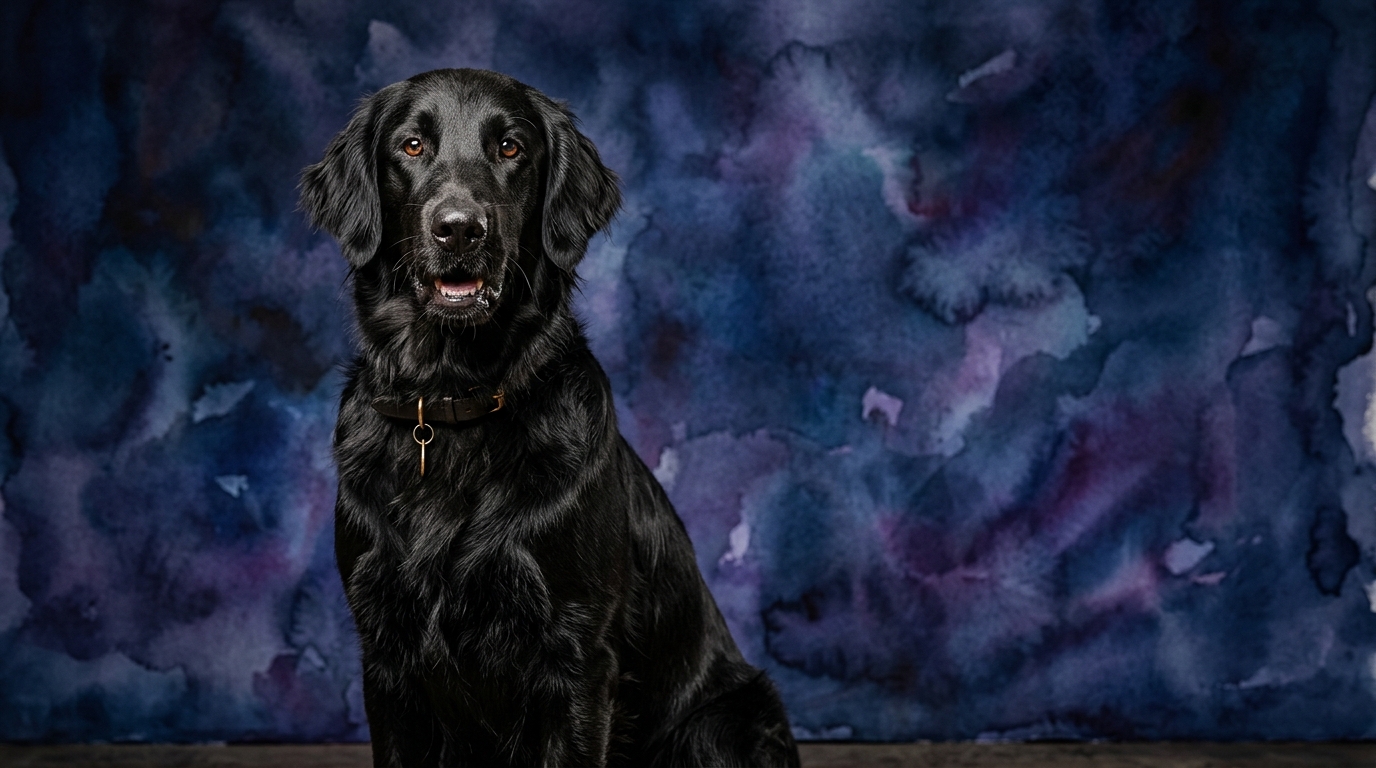
**Flat-Coated Retriever:**
**Problem Solving (4/5):** Flat-Coats demonstrate a robust capacity for analytical thought, readily figuring out complex puzzle toys or devising strategies to access desired items. Their historical role in retrieving game often demanded quick assessment and adaptation in varied environments, contributing to their adeptness at resolving novel challenges.
**Training Speed (4/5):** These retrievers are remarkably quick studies, absorbing new commands and routines with impressive alacrity. Their eagerness to engage and their cooperative nature mean they often pick up concepts in fewer repetitions than many other breeds, making them highly responsive training partners.
**Social Intelligence (3/5):** Flat-Coats possess a solid understanding of human social cues and group dynamics, readily integrating into family structures. While they build strong bonds, their social interactions are typically geared towards a harmonious working partnership rather than exhibiting the most nuanced emotional sensitivity of some companion breeds.
**Instinctive Drive (3/5):** Their primary instinctive drive revolves around retrieving, a deeply ingrained desire to carry and return objects. While they possess a general prey drive, it is typically manageable and channeled into play or structured activities, rather than dominating their behavior or creating overwhelming distractions.
**Memory (5/5):** Outstanding memory is a hallmark of the Flat-Coated Retriever. They retain a vast repertoire of commands, learned sequences, and environmental details with exceptional precision and longevity, making them incredibly reliable in tasks requiring consistent recall over time.
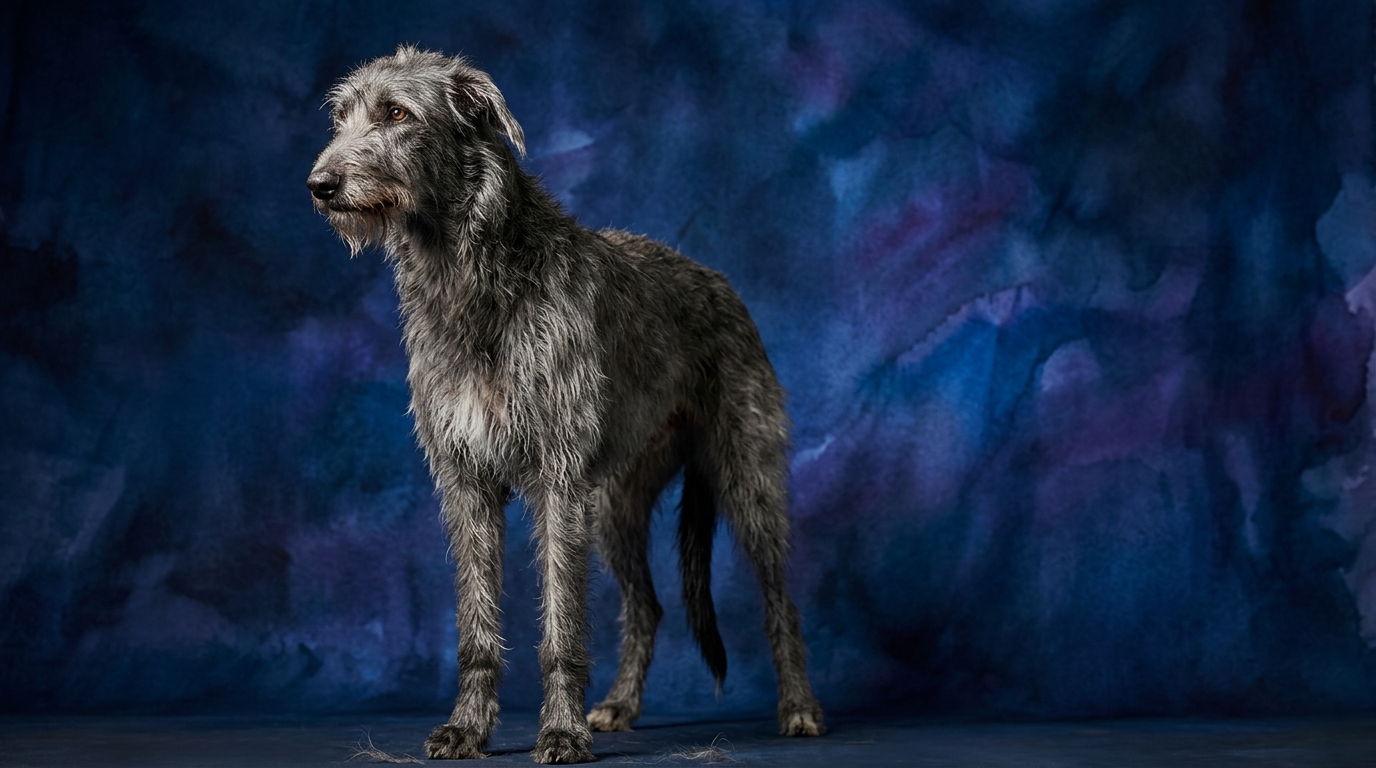
**Scottish Deerhound:**
**Problem Solving (3/5):** Scottish Deerhounds approach problems with a more pragmatic, often physically-oriented mindset. They can certainly navigate obstacles and achieve goals, but their solutions might be less about intricate cognitive strategy and more about direct action, especially if it involves utilizing their physical prowess or speed.
**Training Speed (3/5):** Deerhounds learn at a moderate pace, often requiring more patience and consistent reinforcement to solidify new behaviors. Their independent spirit means they may not always see the immediate benefit in rigorous obedience, necessitating a trainer who understands how to make learning engaging and rewarding from their perspective.
**Social Intelligence (3/5):** While their social intelligence rating matches the Flat-Coat, its manifestation differs. Deerhounds form deep, often subtle bonds with their human companions, demonstrating a quiet understanding and loyalty. They observe their family dynamics closely, often reacting to unspoken cues, but their social expressions can be more reserved and less overtly effusive than a retriever's.
**Instinctive Drive (3/5):** The Deerhound's instinctive drive is profoundly rooted in their sighthound heritage: the powerful urge to spot, chase, and pursue. This drive is a fundamental part of their being and can be highly compelling, sometimes overriding learned behaviors when a strong visual stimulus triggers their ancient hunting instincts.
**Memory (3/5):** Scottish Deerhounds possess a functional memory for established routines, familiar environments, and beloved people. However, they may not retain extensive, complex command sequences or intricate learned behaviors with the same immediate recall or long-term precision as breeds with a higher memory score, often requiring refreshers.
Where the Flat-Coated Retriever Wins Cognitively
The Flat-Coated Retriever's cognitive profile showcases several distinct advantages, primarily in areas emphasizing cooperation and structured learning. Their exceptional 5/5 memory rating means they excel at retaining vast amounts of information, from complex agility sequences to a wide vocabulary of object names, making them exceptionally reliable for tasks requiring consistent recall and precision. This superior memory also underpins their 4/5 training speed, allowing them to grasp new concepts with fewer repetitions and build an extensive repertoire of behaviors more quickly. Furthermore, their 4/5 in problem-solving often manifests as an efficient, goal-oriented approach to challenges, whether figuring out how to open a gate or strategizing to retrieve a toy from a difficult spot, consistently seeking practical solutions.
Where the Scottish Deerhound Wins Cognitively
The Scottish Deerhound's cognitive strengths, while different from the Flat-Coat's, are equally compelling within their own framework. Their 3/5 instinctive drive, deeply ingrained for spotting and pursuing, represents a profound connection to their ancient purpose and a distinct cognitive strength for their breed. This translates to an unparalleled focus and determination when pursuing a visual target, showcasing a unique form of environmental awareness and decisive action in high-stakes situations. While their problem-solving is rated 3/5, this often manifests as independent decision-making when their sighthound instincts are engaged; they are capable of assessing a situation and acting decisively without constant human input. Their 3/5 social intelligence, though not outwardly effusive, allows for a quiet, deep understanding of their family, demonstrating a subtle acuity where they often observe and react to shifts in human mood or routine without needing explicit commands.
Which is Easier to Train and Why
When considering ease of training, the Flat-Coated Retriever holds a clear advantage. Their 4/5 training speed, combined with their exceptional 5/5 memory, means they not only grasp new information quickly but also retain it reliably over time. Flat-Coats are typically eager to please, thrive on positive reinforcement, and possess a strong desire to work collaboratively with their human partners, making them highly responsive to structured lessons and consistent guidance. Their history as cooperative gun dogs has predisposed them to attentive listening and following directions, leading to a generally smoother training experience across various disciplines.
In contrast, the Scottish Deerhound presents a more nuanced training journey. Their 3/5 training speed and 3/5 memory mean that new behaviors often require more repetition and patience to solidify. Deerhounds, as sighthounds, possess a powerful instinctive drive (3/5) to chase moving objects, which can lead to moments of selective deafness when a squirrel or distant movement catches their eye, overriding even well-learned commands. They are less inherently driven to "please" in the traditional sense and often require trainers to find highly motivating rewards and make training engaging and varied to counteract their independent streak and occasional aloofness. Consistency and understanding their sighthound nature are key to successful Deerhound training.
Which Suits Active Owners vs. Relaxed Owners
The Flat-Coated Retriever is an ideal match for active owners who are prepared to provide consistent, vigorous physical exercise and engaging mental stimulation. Their high energy levels, strong desire to work, and rapid learning capacity make them excellent partners for various dog sports like agility, obedience, flyball, or field trials. These dogs thrive when given a "job" and require daily opportunities for running, swimming, and interactive play to prevent boredom and potential destructive behaviors; they are not content with merely a short walk around the block.
The Scottish Deerhound, while appearing stately and calm indoors, suits owners who understand their profound need for specific types of activity. They are often described as "45 mph couch potatoes," meaning they enjoy lounging inside but require consistent, safe opportunities for high-speed running in a securely fenced area. Their sighthound heritage demands bursts of intense, galloping exercise to satisfy their instinctive drive, even if their general demeanor is calm and relaxed indoors. Therefore, they are suited for owners who can provide these essential outlets for their speed, even if the owner's own lifestyle is otherwise more relaxed. They are not a good fit for owners who cannot offer secure, expansive spaces for them to stretch their legs at full speed.
The Verdict
Choose a Flat-Coated Retriever if you seek a highly trainable, cooperative companion eager to engage in consistent mental and physical activities, thriving on a shared working partnership and demonstrating impressive memory and problem-solving skills.
Opt for a Scottish Deerhound if you appreciate a noble, independent companion with a calm indoor presence, understanding that their cognitive strengths lie in their instinctual drive for bursts of speed and that they require specific, secure outlets for their unique exercise needs.
🧠 Find Your Pet's IQ Score
Our Pet IQ Lab assessment covers 25+ tests across 5 cognitive dimensions — personalized to your breed.
Take the Full IQ Test →Frequently Asked Questions
Do Flat-Coated Retrievers require a lot of mental stimulation?
Yes, their high problem-solving ability and exceptional memory mean they benefit greatly from engaging activities like puzzle toys, advanced training games, and varied learning experiences. Without adequate mental engagement, Flat-Coats can become bored and potentially destructive, seeking their own entertainment and "work."
Are Scottish Deerhounds difficult to train off-leash?
Training a Scottish Deerhound for reliable off-leash recall can be quite challenging due to their strong instinctive drive (3/5) to chase. Their sighthound nature means a visual stimulus, like a distant animal, can trigger an immediate, powerful pursuit instinct, often overriding even well-learned commands, making secure containment crucial.
How do their social intelligence ratings impact family life?
Both breeds have a 3/5 social intelligence, meaning they generally integrate well into family life, understanding dynamics and forming strong bonds. The Flat-Coat might be more overtly interactive and seek to participate in family activities, while the Deerhound's connection might be expressed more subtly, through quiet companionship and observant loyalty.