
Side-by-Side IQ Profile: Unpacking Canine Cognition
The Cosmic Pet Pet IQ Lab employs a comprehensive five-dimensional framework to assess canine intelligence, moving beyond simple obedience to capture a breed's full cognitive scope. Let's examine how the French Bulldog and Tibetan Spaniel measure up across these specific metrics, revealing their inherent aptitudes.
For the French Bulldog, we observe a Problem Solving score of 3/5, indicating they can navigate moderate challenges but might not independently devise complex solutions. Their Training Speed is also 3/5, suggesting a reasonable pace for learning new commands, neither exceptionally quick nor particularly slow. Where the French Bulldog truly shines is in Social Intelligence, scoring a remarkable 5/5, reflecting their deep attunement to human emotions and social cues. Their Instinctive Drive is a modest 2/5, meaning they are less driven by primal urges like hunting or guarding, while their Memory stands at a solid 3/5, allowing them to retain learned behaviors and experiences adequately.
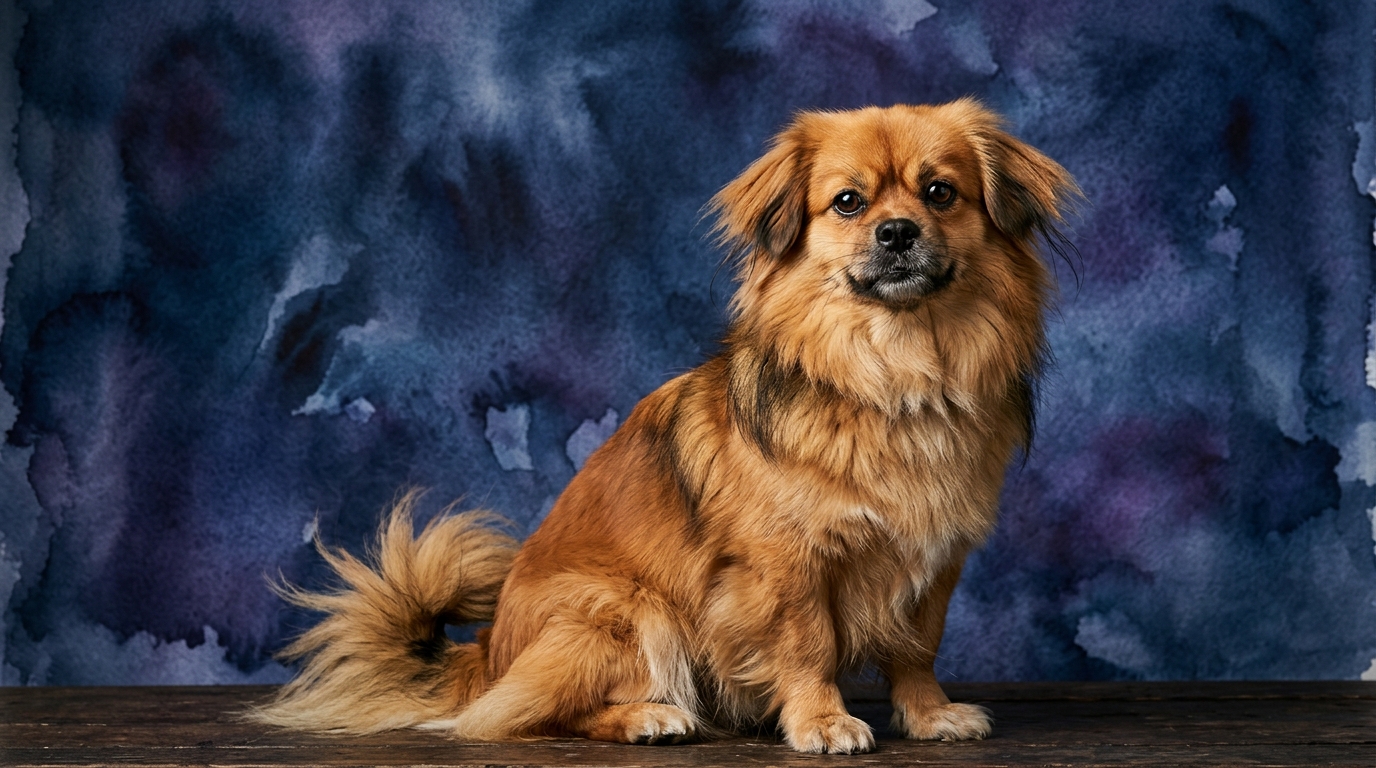
In contrast, the Tibetan Spaniel shows a similar Problem Solving capacity at 3/5, demonstrating an equal ability to tackle moderate cognitive puzzles. Their Training Speed also matches the French Bulldog at 3/5, suggesting a comparable learning curve for new tasks. However, the Tibetan Spaniel's Social Intelligence is rated 3/5, indicating they are certainly aware of human interaction but perhaps less intensely focused on it than their French counterpart. Their Instinctive Drive is slightly higher at 3/5, hinting at a more pronounced natural curiosity or self-preservation instinct. Finally, their Memory aligns with the French Bulldog at 3/5, providing a comparable capacity for recall and learning retention.
Where the French Bulldog Excels Cognitively
The French Bulldog's preeminent cognitive strength lies in their exceptional Social Intelligence, scoring a perfect 5/5 compared to the Tibetan Spaniel's 3/5. This isn't just about being friendly; it signifies a profound capacity to read and respond to human emotions, intentions, and body language. French Bulldogs are masters of non-verbal communication, often seeming to anticipate their owner's moods or desires. This high social acumen means they are incredibly people-oriented, thriving on interaction and forming exceptionally strong, almost empathetic, bonds with their human companions. They are more likely to seek out human companionship proactively, often placing themselves physically close to their owners, and demonstrating a clear understanding of social routines and expectations within the household.
This elevated social intelligence translates into a dog that is highly motivated by human approval and connection. When a French Bulldog performs a trick or follows a command, the reward of a happy owner or a gentle praise is often as potent as a treat. They are adept at using their charm and expressive faces to communicate their needs or desires, making them remarkably easy to understand for attentive owners. Their sensitivity to social dynamics means they are often very adaptable to household changes, as long as their primary human relationships remain stable and supportive. This deep social awareness makes them exceptional emotional support animals and cherished family members who are truly integrated into the human fabric of their homes.
Where the Tibetan Spaniel Shows Unique Cognitive Strengths
While sharing comparable scores in Problem Solving, Training Speed, and Memory, the Tibetan Spaniel differentiates itself with a slightly higher Instinctive Drive (3/5 vs. French Bulldog's 2/5) and a more independent Social Intelligence (3/5 vs. 5/5). This combination suggests a dog with a more self-reliant cognitive approach. Their elevated instinctive drive means they possess a stronger inherent curiosity and a greater inclination towards independent exploration of their environment. They might be more inclined to investigate new smells, sounds, or visual stimuli on their own terms, rather than solely relying on human direction.
This independent streak, coupled with their moderate social intelligence, points to a breed that is thoughtful and observant of its surroundings, often taking a more 'watchful' role. Tibetan Spaniels were historically companions and watchdogs in monasteries, a role that demanded alertness and a certain degree of self-sufficiency. This background manifests in their cognitive profile, where they are capable of making their own assessments and decisions, rather than constantly seeking human input. While they form deep bonds, their affection often comes with an air of dignified independence, making them excellent companions for those who appreciate a dog with a distinct personality and a mind of its own.
Ease of Training: Behavioral Nuances
When considering ease of training, both breeds share a Training Speed score of 3/5, implying they learn at a similar, steady pace. However, the underlying behavioral motivations for learning differ significantly due to their distinct social intelligence and instinctive drive scores. A French Bulldog, with its 5/5 social intelligence, is often highly motivated by pleasing its owner and receiving praise or physical affection. They are more likely to maintain focus during training sessions because the human interaction itself is a powerful reward. This means they might respond particularly well to positive reinforcement techniques centered around verbal encouragement, petting, and shared attention. Their desire to be involved and understood makes them generally eager participants in structured learning, as long as the training is consistent and positive.
The Tibetan Spaniel, with its 3/5 social intelligence and 3/5 instinctive drive, might present a different training dynamic. While they are certainly capable of learning, their motivation might stem less from an overwhelming desire to please and more from a combination of curiosity and the practical benefits of the reward. They might require more varied reinforcement, such as high-value treats or engaging toys, to maintain their interest, especially if the task feels repetitive or unstimulating. Their slightly higher instinctive drive means they can sometimes be more easily distracted by environmental stimuli, requiring a trainer to be particularly engaging and creative to hold their attention. Consistency is paramount for both, but the French Bulldog's inherent people-focus might make them appear more 'eager to please,' while the Tibetan Spaniel's independence means trainers need to tap into their self-motivation.
Matching Canine Cognition to Owner Lifestyles
The distinct cognitive profiles of the French Bulldog and Tibetan Spaniel lend themselves to different owner lifestyles. For active owners, or more accurately, owners seeking an intensely interactive and emotionally responsive companion, the French Bulldog is an exceptional choice. Their 5/5 social intelligence means they thrive in environments where they receive ample human attention, conversation, and participation in family activities. They are at their happiest when they are an integral part of their owner's daily life, often following them from room to room, and acting as a constant, affectionate shadow. Owners who enjoy a dog that is deeply attuned to their emotional state and expresses affection openly will find the French Bulldog's cognitive makeup perfectly aligned with their desires.
Conversely, for more relaxed owners who appreciate a companion with a bit more self-possession and an observant nature, the Tibetan Spaniel might be a better fit. While they are affectionate and form strong bonds, their 3/5 social intelligence means they are not as overtly demanding of constant human interaction. Their slightly higher instinctive drive might lead them to enjoy independent exploration of a secure yard or a curious investigation of new toys, rather than being solely focused on human-initiated play. Owners who value a dog that is content to observe from a comfortable perch, offering affection on its own terms, and possessing a quiet dignity, will find the Tibetan Spaniel's cognitive independence a delightful match for their more laid-back lifestyle. They are wonderful companions for those who appreciate a dog with a thoughtful and sometimes whimsical presence, without the constant need for validation or emotional mirroring.
The Verdict
Choose the French Bulldog if you prioritize a deeply empathetic, highly interactive companion who thrives on social connection and mirrors your emotions with exceptional clarity.
Opt for the Tibetan Spaniel if you appreciate a dog with a thoughtful, independent spirit, capable of self-directed engagement, and offering affection with a charming, dignified autonomy.
🧠 Find Your Pet's IQ Score
Our Pet IQ Lab assessment covers 25+ tests across 5 cognitive dimensions — personalized to your breed.
Take the Full IQ Test →Frequently Asked Questions
Are French Bulldogs good at understanding human commands?
Yes, French Bulldogs, with their 5/5 social intelligence, are generally very adept at understanding human commands and intentions. They are highly attuned to their owner's cues, making them responsive and eager to engage in communication, though their training speed is moderate.
Do Tibetan Spaniels enjoy learning new tricks?
Tibetan Spaniels have a 3/5 training speed and 3/5 problem-solving ability, meaning they are capable of learning new tricks at a reasonable pace. They may be motivated by curiosity and engaging rewards, though perhaps less by the sole desire to please compared to more socially driven breeds.
Which breed is more prone to independent thinking?
The Tibetan Spaniel, with its 3/5 instinctive drive and moderate social intelligence, tends to exhibit more independent thinking. They are observant and capable of making their own assessments, contrasting with the French Bulldog's greater reliance on human guidance and social cues.