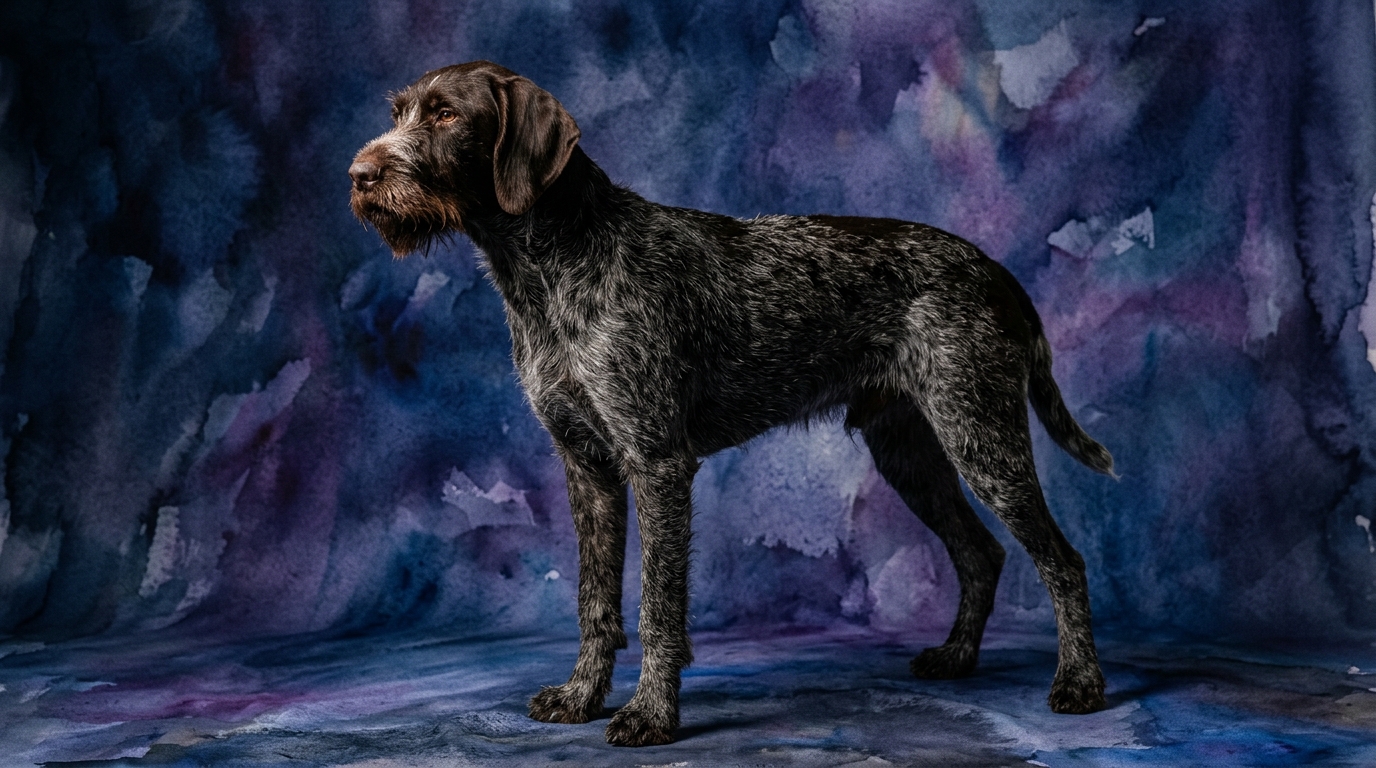
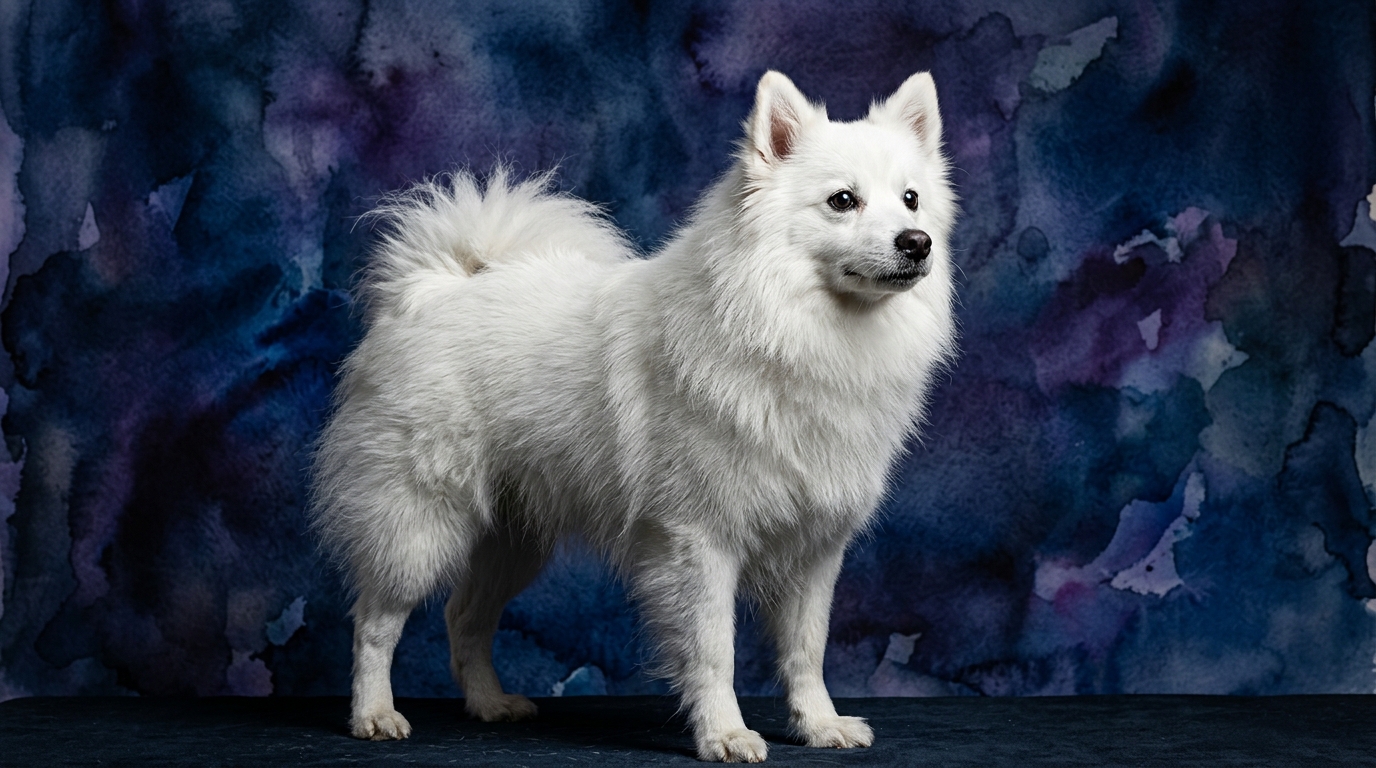
Side-by-Side IQ Profile: GWP vs. American Eskimo Dog
The German Wirehaired Pointer (GWP), a dedicated Sporting group member, holds a respectable Coren rank of #28, indicating a strong capacity for obedience and working intelligence. Its cognitive profile is marked by high scores in practical application: Problem Solving at 4/5, Training Speed at 4/5, and Memory also at 4/5. Social Intelligence stands at 3/5, suggesting a solid understanding of interactions, while its Instinctive Drive is a moderate 3/5, channelled specifically towards its hunting heritage. This breed is wired for purposeful engagement and efficient learning.
In contrast, the American Eskimo Dog (AED), a charming member of the Non-Sporting group, does not appear on Coren's traditional ranking, which focuses primarily on working and obedience intelligence. However, our Pet IQ Lab assessment provides a clear picture of its cognitive abilities. The AED shows a consistent and balanced profile across the board, with Problem Solving, Training Speed, Social Intelligence, Instinctive Drive, and Memory all rated at 3/5. This suggests a capable, adaptable companion dog whose cognitive strengths lean towards general domestic life and companionship rather than specialized tasks.
Where the German Wirehaired Pointer Wins Cognitively
The German Wirehaired Pointer demonstrably pulls ahead in several key cognitive areas, reflecting its heritage as a versatile hunting dog. Its Problem Solving score of 4/5, compared to the American Eskimo Dog's 3/5, highlights a superior ability to independently assess and navigate complex situations, such as tracking game through varied terrain or figuring out how to retrieve a downed bird from a challenging spot. This isn't just about solving puzzles, but applying intellect to real-world, dynamic challenges.
Furthermore, the GWP’s Training Speed, also at 4/5 against the AED’s 3/5, signifies a quicker grasp of new commands and multi-step routines. This breed often exhibits an eagerness to learn and a strong desire to work alongside its handler, making it highly receptive to instruction. This accelerated learning curve is invaluable for advanced obedience, field trials, or any activity requiring rapid acquisition of new skills. Their superior Memory (4/5 vs. 3/5) complements this, allowing them to retain complex sequences, scent trails, and learned behaviors over extended periods, crucial for consistent performance in demanding roles.
Where the American Eskimo Dog's Cognitive Strengths Shine
While the American Eskimo Dog's scores are consistently 3/5, this balanced profile offers its own distinct advantages, particularly for a companion animal. Its moderate Instinctive Drive (3/5) means it possesses enough inherent motivation to engage in play and learn routines, but typically without the intense, specialized drive that can sometimes manifest as restlessness or destructive tendencies in an under-exercised sporting dog. This drive is often channeled into alertness and companionship, making them excellent watchdogs.
The AED's Social Intelligence, rated at a solid 3/5, ensures it can form strong, affectionate bonds with family members and understand household dynamics. While a GWP's social intelligence might be more handler-focused for work, the Eskie's is geared towards being an integrated, emotionally attuned part of a family unit, often displaying empathy and a desire to be involved in daily activities. Its Problem Solving and Memory, both at 3/5, are perfectly adequate for navigating the nuances of home life, understanding routines, and remembering house rules, without the constant need for highly stimulating, complex mental tasks that a GWP might demand.
Which is Easier to Train and Why
When considering ease of training, the distinction between these two breeds lies in the *type* of training an owner seeks. The German Wirehaired Pointer, with its Training Speed of 4/5 and Problem Solving of 4/5, generally responds more quickly and enthusiastically to complex, task-oriented training. Their genetic predisposition to work and please a handler means they often excel in advanced obedience, agility, and field work, eagerly absorbing multi-step commands and demonstrating impressive retention. However, this also means they require consistent, challenging training to prevent boredom and channel their considerable mental energy constructively.
The American Eskimo Dog, with a Training Speed of 3/5, learns steadily but may require more repetition and patience for complex commands. They are known for their independent streak and can sometimes be 'selective listeners' if not properly motivated. Their training thrives on positive reinforcement, consistency, and making learning feel like a fun, bonding experience rather than a demanding task. While they might not pick up advanced tricks as rapidly as a GWP, they are perfectly capable of mastering basic obedience, house manners, and even some fun tricks when approached with a gentle, encouraging hand, focusing on their desire for companionship.
Which Suits Active Owners vs. Relaxed Owners
For the truly active owner, the German Wirehaired Pointer is an ideal match. Its high Problem Solving, Training Speed, and inherent Instinctive Drive (even at 3/5, it's directed and purposeful) mean it thrives on extensive physical and mental stimulation. This breed needs daily outlets for its energy, whether it's long hikes, running, swimming, hunting excursions, or participating in dog sports like agility, obedience, or tracking. An owner who can provide consistent, engaging activities and mental challenges will find the GWP to be an incredibly rewarding and dedicated partner, but anything less can lead to a bored, potentially destructive companion.
The American Eskimo Dog, with its balanced 3/5 scores across the board, is better suited for owners who are active but perhaps not seeking a full-time working partner. While they certainly enjoy daily walks, playtime, and being involved in family activities, their exercise and mental stimulation requirements are generally more moderate than a GWP's. They are content with regular outings, puzzle toys, and consistent interaction within the home. This makes them a great fit for individuals or families who enjoy a routine of moderate outdoor activity and cherish an attentive, charming companion without the intense demands of a high-drive sporting breed.
The Verdict
Choose the German Wirehaired Pointer if you are an active individual or family seeking a dedicated, highly trainable working partner for hunting, dog sports, or a demanding outdoor lifestyle, prepared to provide extensive mental and physical challenges.
Opt for the American Eskimo Dog if you desire a charming, attentive companion who thrives on family interaction, requires moderate exercise, and appreciates consistent, positive training to become a well-adjusted member of the household.
🧠 Find Your Pet's IQ Score
Our Pet IQ Lab assessment covers 25+ tests across 5 cognitive dimensions — personalized to your breed.
Take the Full IQ Test →Frequently Asked Questions
Is the German Wirehaired Pointer prone to problem behaviors if not challenged?
Yes, with its high problem-solving and training speed, an understimulated German Wirehaired Pointer can develop destructive habits, excessive barking, or anxiety due to boredom and unfulfilled mental needs. Regular, engaging activities are crucial for their well-being.
Does the American Eskimo Dog require a lot of grooming due to its coat?
Yes, the American Eskimo Dog's dense double coat requires regular grooming to maintain its health and appearance. Brushing 2-3 times a week is typically needed to prevent matting and manage their seasonal shedding.
How do their social intelligence scores impact their interactions with strangers?
Both breeds score 3/5 in social intelligence, meaning they are generally good with people but may exhibit some initial reservation or watchfulness with strangers. The GWP might be more focused on its handler's cues, while the AED can be more vocal as a natural alert dog, needing proper socialization to be comfortable.