
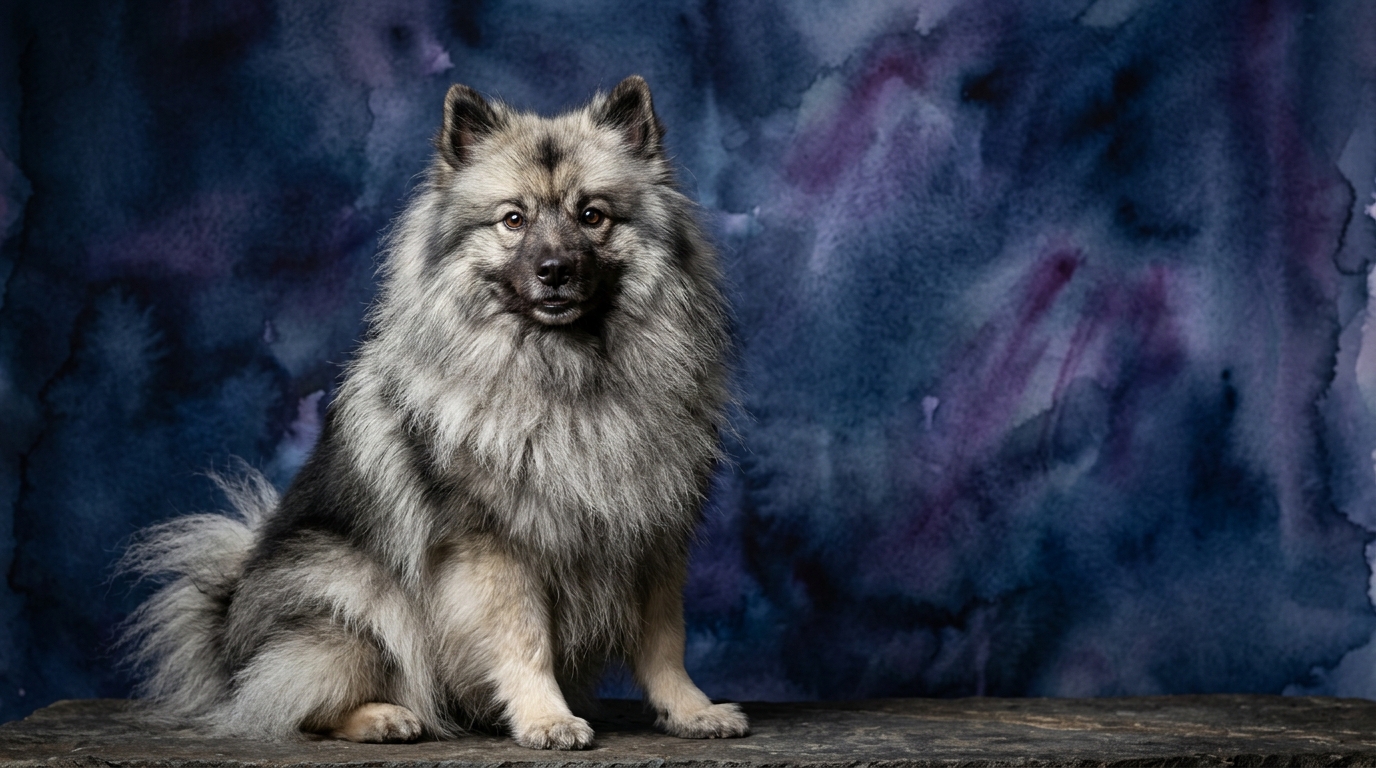
Side-by-Side IQ Profile: German Wirehaired Pointer vs. Keeshond
**German Wirehaired Pointer IQ Profile**
**Problem Solving (4/5):** This score reflects the German Wirehaired Pointer's capacity for independent thought and strategic action in challenging environments. In the field, this manifests as navigating complex scent trails, flushing game from dense cover, and adapting hunting tactics to varied terrain, all requiring on-the-spot decision-making.
**Training Speed (4/5):** German Wirehaired Pointers absorb commands with efficiency, especially when instructions are clear, consistent, and tied to their inherent working drives. They learn complex sequences of hunting behaviors and obedience cues quickly, demonstrating a readiness to integrate new information for practical application.
**Social Intelligence (3/5):** Their social intelligence is primarily geared towards a working partnership with their handler. They are attuned to human direction and intent within a task-oriented framework, understanding their role in a team. While loyal to their family, their focus is often more on the task at hand than on nuanced human emotional states.
**Instinctive Drive (3/5):** The German Wirehaired Pointer possesses a balanced yet persistent instinctive drive, encompassing strong pointing, retrieving, and tracking behaviors crucial for hunting. This drive is purposeful, allowing them to sustain focus on a task without becoming easily overstimulated or distracted, making them tenacious workers.
**Memory (4/5):** Their memory serves their working functions well, allowing them to recall specific commands, intricate hunting routes, and learned routines over time. This enables them to build on past experiences, improving their efficiency and reliability in the field and reinforcing their training.
**Keeshond IQ Profile**
**Problem Solving (4/5):** Keeshonden exhibit a clever approach to problem-solving within their domestic sphere. This can range from figuring out how to access desired toys or treats to understanding complex household routines and adapting to new situations with thoughtful observation, often demonstrating a resourceful and independent mind.
**Training Speed (4/5):** Keeshonden learn new commands and tricks with notable speed, thriving on mental engagement and positive reinforcement. Their eagerness to please their family and participate in activities makes them receptive pupils, quickly picking up on verbal cues and hand signals for a variety of tasks.
**Social Intelligence (3/5):** The Keeshond's social intelligence shines in its deep connection with its human family. They are perceptive of mood changes and subtle social cues within their household, often positioning themselves as watchful, empathetic companions. While devoted to their own, they can be reserved or discerning with strangers.
**Instinctive Drive (3/5):** Their instinctive drive is rooted in their heritage as watchdogs and companions. This manifests as an innate alertness, an inclination to bark and alert their family to novel sounds or visitors, and a strong desire for close companionship. It's a drive for engagement and protection within their domestic sphere rather than prey pursuit.
**Memory (5/5):** The Keeshond's exceptional memory is a distinguishing cognitive trait. They recall people, places, routines, and past experiences with remarkable clarity, often remembering specific events or commands from long ago. This deep memory contributes to their consistency in behavior and their ability to forge lasting bonds.
Where the German Wirehaired Pointer Wins Cognitively
The German Wirehaired Pointer's cognitive edge lies in its specialized application of intelligence for sustained, independent work in dynamic outdoor environments. While both breeds score 4/5 in Problem Solving, the GWP's prowess is specifically tailored to navigating complex natural landscapes, interpreting subtle scent cues, and making autonomous decisions vital for successful game retrieval. This isn't just about solving a puzzle; it's about solving a living, evolving puzzle over extended periods, often far from direct human guidance.
Furthermore, the GWP's combination of 4/5 Training Speed and 3/5 Instinctive Drive creates a unique cognitive blend for a working dog. This means they are not only quick to learn intricate field commands but also possess the intrinsic motivation and stamina to execute them consistently under challenging conditions, demonstrating a focused determination that is purpose-bred. Their memory (4/5) is particularly adept at recalling the nuances of specific hunting grounds and the sequence of complex tasks, allowing them to refine their approach with each outing.
Where the Keeshond Wins Cognitively
The Keeshond truly stands out with its superior Memory score of 5/5, surpassing the German Wirehaired Pointer's 4/5. This enhanced capacity for recall means a Keeshond remembers commands, routines, and social interactions with remarkable clarity and longevity. This deep memory fosters strong, consistent bonds with their family, as they recall past positive experiences and learned expectations, making them exceptionally reliable in established household routines.
Moreover, while both breeds share a 4/5 in Problem Solving, the Keeshond applies this intelligence within a more socially intricate context. They are adept at "reading" their family's dynamics, figuring out how to gain attention, or subtly manipulating situations to their advantage within the home environment. Their 3/5 Social Intelligence, combined with their exceptional memory, allows them to develop nuanced relationships and adapt their behavior based on past interactions, making them highly attuned and responsive companions. Their Coren rank of #16 also reflects a higher general 'working and obedience' intelligence, suggesting a greater capacity for understanding and executing human commands in a domestic setting.
Which is Easier to Train and Why
Both the German Wirehaired Pointer and the Keeshond score 4/5 in Training Speed, indicating that both breeds learn new commands efficiently. However, the "ease" of training often depends on the owner's goals and the dog's inherent motivations. The German Wirehaired Pointer excels in task-oriented training, particularly when it aligns with their strong working drives. They respond well to clear, consistent instruction and can quickly master complex sequences of commands essential for field work, driven by their desire to perform and retrieve.
Conversely, the Keeshond, with its exceptional 5/5 Memory and strong desire for companionship, often proves "easier" for general household obedience and trick training. Their ability to retain information over long periods means learned behaviors stick, and their social nature motivates them to engage with their family through training sessions. While they can be clever and may occasionally exhibit selective hearing if not properly motivated, their profound memory ensures they fundamentally understand what is expected, making consistent positive reinforcement highly effective for shaping their behavior in a domestic setting.
Which Suits Active Owners vs. Relaxed Owners
For active owners, the German Wirehaired Pointer is an ideal match. This breed requires substantial physical exercise and mental engagement that taps into its sporting heritage. Owners who enjoy long runs, hiking, hunting, or participating in demanding dog sports like agility or field trials will find the GWP's stamina and drive a perfect companion. A GWP thrives when given a job to do and needs consistent opportunities to channel its instinctive energy, making it unsuitable for a predominantly sedentary lifestyle.
The Keeshond, on the other hand, is generally better suited for more relaxed owners who still appreciate an engaged companion. While they are playful and enjoy daily walks and playtime, their exercise requirements are moderate compared to the GWP. Keeshonden are content to be involved in family activities indoors, thriving on social interaction and mental stimulation through games and puzzle toys. Their strong memory and social intelligence make them excellent companions for owners who prefer a dog that is deeply integrated into the household and enjoys a comfortable, interactive domestic life without needing extensive outdoor exertion.
The Verdict
Choose the German Wirehaired Pointer if you are an adventurous, active individual or family committed to providing extensive outdoor activity, specialized training, and a clear purpose for a dog with robust working intelligence and stamina.
Opt for the Keeshond if you desire a deeply bonded, watchful, and highly interactive companion who thrives on consistent social engagement, moderate activity, and appreciates a dog with an exceptional memory for family routines and experiences.
🧠 Find Your Pet's IQ Score
Our Pet IQ Lab assessment covers 25+ tests across 5 cognitive dimensions — personalized to your breed.
Take the Full IQ Test →Frequently Asked Questions
Does a higher Coren rank mean one breed is definitively "smarter"?
Coren rank primarily measures "working and obedience intelligence," reflecting how quickly a dog learns and obeys human commands. While the Keeshond's higher rank (#16 vs GWP's #28) suggests a greater general aptitude for human instruction, it doesn't fully capture the specialized cognitive strengths or instinctive intelligence of a breed like the GWP in its intended working domain.
How does the Keeshond's superior memory manifest in daily life?
A Keeshond's 5/5 memory means they recall past training, routines, and social interactions with remarkable clarity. This translates to consistent obedience over time, remembering specific people or places even after long absences, and often anticipating household events, making them very predictable and reliable companions once behaviors are established.
Can a German Wirehaired Pointer adapt to a non-hunting home?
Yes, a German Wirehaired Pointer can adapt to a non-hunting home, but it requires an owner dedicated to providing alternative outlets for their strong physical and mental drives. Activities like scent work, advanced obedience, agility, or extensive hiking can fulfill their need for purpose and exercise, preventing boredom and potential behavioral issues.