Side-by-Side IQ Profile
At The Cosmic Pet Pet IQ Lab, we understand that canine cognition is a rich tapestry, not a monolithic trait. Our five-dimensional framework allows us to evaluate specific cognitive strengths: problem-solving, the ability to navigate novel challenges; training speed, how quickly new commands are learned; social intelligence, the capacity for effective interaction with humans and other animals; instinctive drive, the strength of innate behavioral patterns; and memory, the ability to retain information over time. This approach provides a nuanced view of what makes each breed uniquely capable.
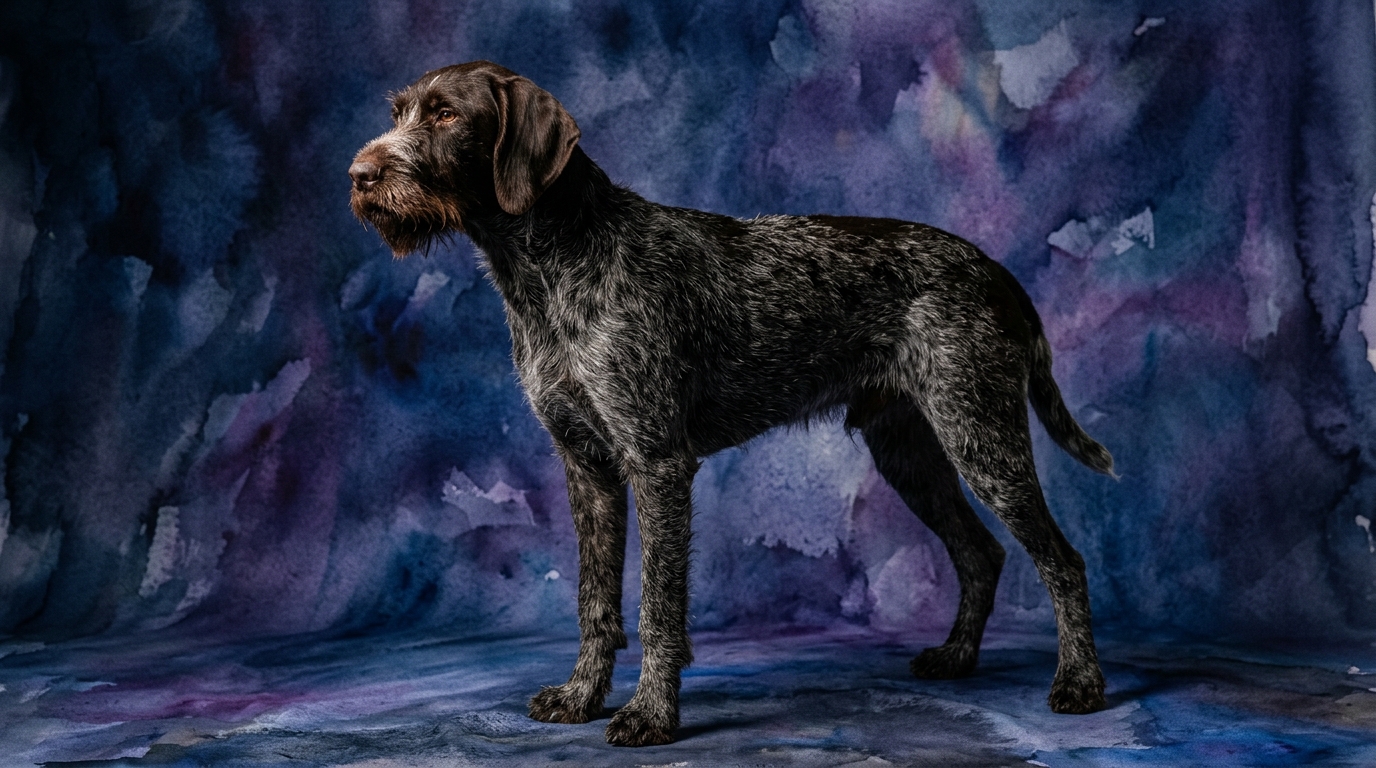
The German Wirehaired Pointer (GWP), with a Coren ranking of #28, exhibits a cognitive profile tailored for adaptability and partnership. Their problem-solving score of 4/5 reflects their capacity to independently assess and overcome obstacles in diverse hunting environments, from dense cover to open fields. A training speed of 4/5 indicates a readiness to absorb new commands and tasks, a crucial trait for a breed expected to perform a variety of roles from pointing to retrieving. Their social intelligence, rated at 3/5, suggests a balanced nature, cooperative with their handler without being overly dependent, while an instinctive drive of 3/5 points to strong but manageable hunting instincts. Finally, a memory score of 4/5 underpins their ability to recall complex sequences and past experiences, essential for consistent performance.
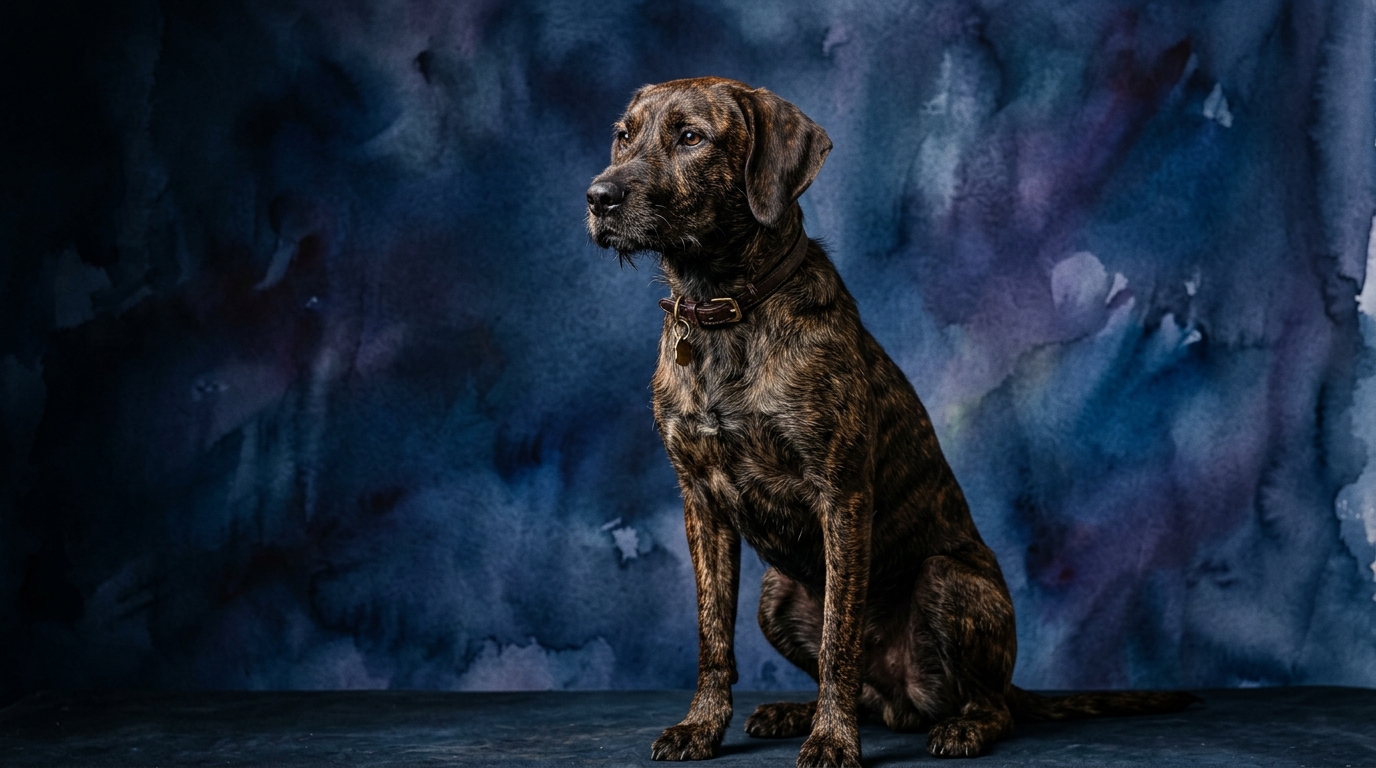
The Plott Hound, a breed not typically assessed by Coren's obedience-focused ranking, presents a cognitive blueprint finely tuned for specialized tracking. Their problem-solving capacity, rated at 3/5, is primarily directed towards unraveling intricate scent puzzles, demonstrating tenacity rather than broad environmental adaptability. A training speed of 3/5 indicates they are capable learners, though their deep-seated instinctive drive often requires more specialized motivation. Their social intelligence, also 3/5, allows for effective teamwork within a pack and with a handler, yet maintains an independence vital for leading the chase. An instinctive drive of 3/5, while numerically matching the GWP, manifests as an intense, singular focus on scent, driving them relentlessly. Their memory score of 3/5 is adept at retaining scent trails and established hunting routines, though perhaps less focused on abstract command sequences.
Where German Wirehaired Pointer Wins Cognitively
The German Wirehaired Pointer demonstrates clear cognitive advantages in areas demanding broad adaptability and collaborative learning. Their superior problem-solving score (4/5 versus Plott Hound's 3/5) reflects a greater capacity to innovate solutions across varied, unpredictable scenarios encountered during versatile hunting. Unlike the Plott Hound's specialized scent-driven problem-solving, the GWP must assess diverse terrains, retrieve game from water or dense cover, and adjust tactics based on the situation, requiring a more generalized cognitive flexibility. Furthermore, the GWP's higher training speed (4/5 versus 3/5) and memory (4/5 versus 3/5) combine to make them quicker studies for new commands and more consistent in recalling complex routines. This allows for a wider repertoire of learned behaviors and a more fluid partnership in various activities, from field trials to dog sports, where rapid learning and accurate recall are paramount.
Where Plott Hound Wins Cognitively
While the Plott Hound's overall IQ scores may appear lower in some general categories, their cognitive strengths are profoundly specialized for their dedicated purpose. Their instinctive drive, rated at 3/5, while numerically matching the GWP, is characterized by an unparalleled tenacity and singular focus on scent that is truly exceptional. This isn't just a physical drive, but a cognitive filtering ability: the Plott Hound can ignore myriad environmental distractions to meticulously follow a faint trail for hours, a form of sustained cognitive effort and problem-solving (their 3/5 score) that is highly specific and deeply ingrained. Their independence, stemming from this drive, allows them to make critical decisions autonomously on the trail, leading the hunt without constant human direction—a specialized cognitive adaptation for big game tracking that prioritizes relentless pursuit over direct handler control. This depth of focus, rather than breadth of versatility, is where the Plott Hound’s cognitive design truly shines.
Which is Easier to Train and Why
Based on their respective IQ profiles, the German Wirehaired Pointer is generally considered easier to train than the Plott Hound. The GWP's training speed of 4/5, coupled with a memory score of 4/5, indicates a breed that readily grasps and retains new commands and concepts. Their temperament is typically oriented towards partnership and a desire to please, making them responsive to traditional reward-based training methods and amenable to learning a wide array of tasks. In contrast, the Plott Hound's training speed of 3/5 and memory of 3/5 suggest a more deliberate learning process. Their powerful instinctive drive for scent can often take precedence over handler commands, requiring trainers to be exceptionally patient, consistent, and creative in leveraging their natural motivations. While capable of learning, Plott Hounds often demand a training approach that acknowledges and integrates their independent, scent-driven nature, making them less "biddable" in a general obedience context.
Which Suits Active Owners vs. Relaxed Owners
Neither the German Wirehaired Pointer nor the Plott Hound are suitable companions for relaxed owners; both breeds demand significant engagement and activity. The German Wirehaired Pointer, with its versatile hunting background, thrives with active owners who can provide a diverse range of physical and mental stimulation. They excel in activities like hiking, running, swimming, and various dog sports such as agility, obedience, and field work, requiring owners who appreciate a partner for varied outdoor adventures. Their cognitive profile, particularly in problem-solving and training speed, means they benefit from learning new skills and having their minds challenged regularly. The Plott Hound also requires an exceptionally active lifestyle, but one often geared towards endurance and scent work. Owners must be prepared for long, focused walks or runs, and ideally, opportunities for tracking or trailing activities. Their intense instinctive drive means they need outlets for their nose, and owners must understand that their physical activity is often tied to this deep-seated need to follow a scent, making them excellent companions for those dedicated to specific outdoor pursuits.
The Verdict
For owners seeking a highly versatile, responsive partner eager to engage in diverse outdoor activities and dog sports, valuing adaptability and quicker learning, the German Wirehaired Pointer is an excellent choice.
If you are an owner deeply committed to providing an outlet for an intense, specialized scent drive, appreciating an independent and tenacious companion for tracking and endurance, and prepared for a more specialized training journey, the Plott Hound will be a deeply rewarding companion.
🧠 Find Your Pet's IQ Score
Our Pet IQ Lab assessment covers 25+ tests across 5 cognitive dimensions — personalized to your breed.
Take the Full IQ Test →Frequently Asked Questions
Are Plott Hounds stubborn during training?
Plott Hounds often exhibit an independent streak rooted in their powerful scent drive, which can appear as stubbornness; they prioritize following a trail over immediate obedience, requiring consistent, patient, and highly motivating training.
How much exercise does a German Wirehaired Pointer need daily?
German Wirehaired Pointers need substantial daily exercise, typically 60-90 minutes of vigorous activity like running, hiking, or field work, combined with mental challenges to satisfy their active minds.
How do their social intelligence scores (3/5) affect their family life?
Both breeds' 3/5 social intelligence scores suggest they are generally good-natured and capable of forming strong bonds with their families, but neither is typically overly clingy; they enjoy interaction but also possess a degree of independence.