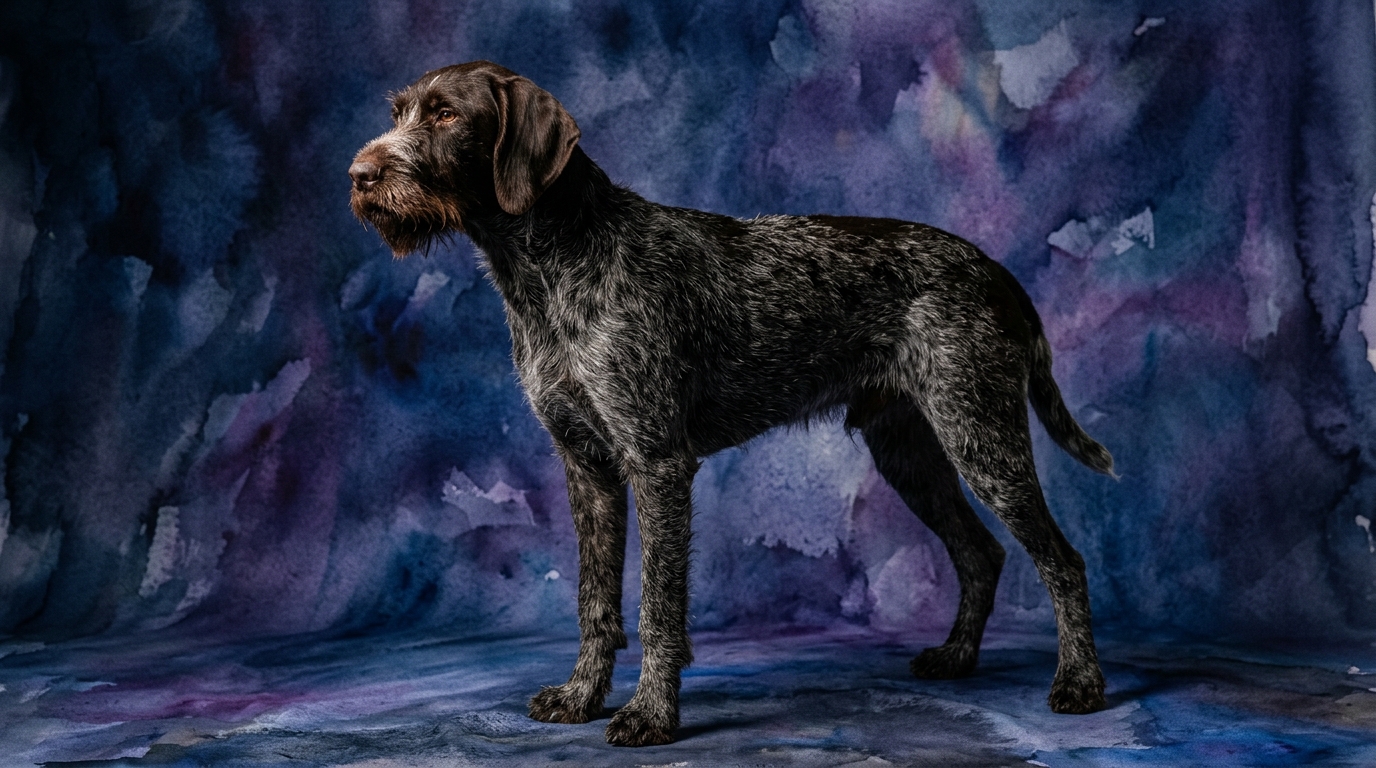
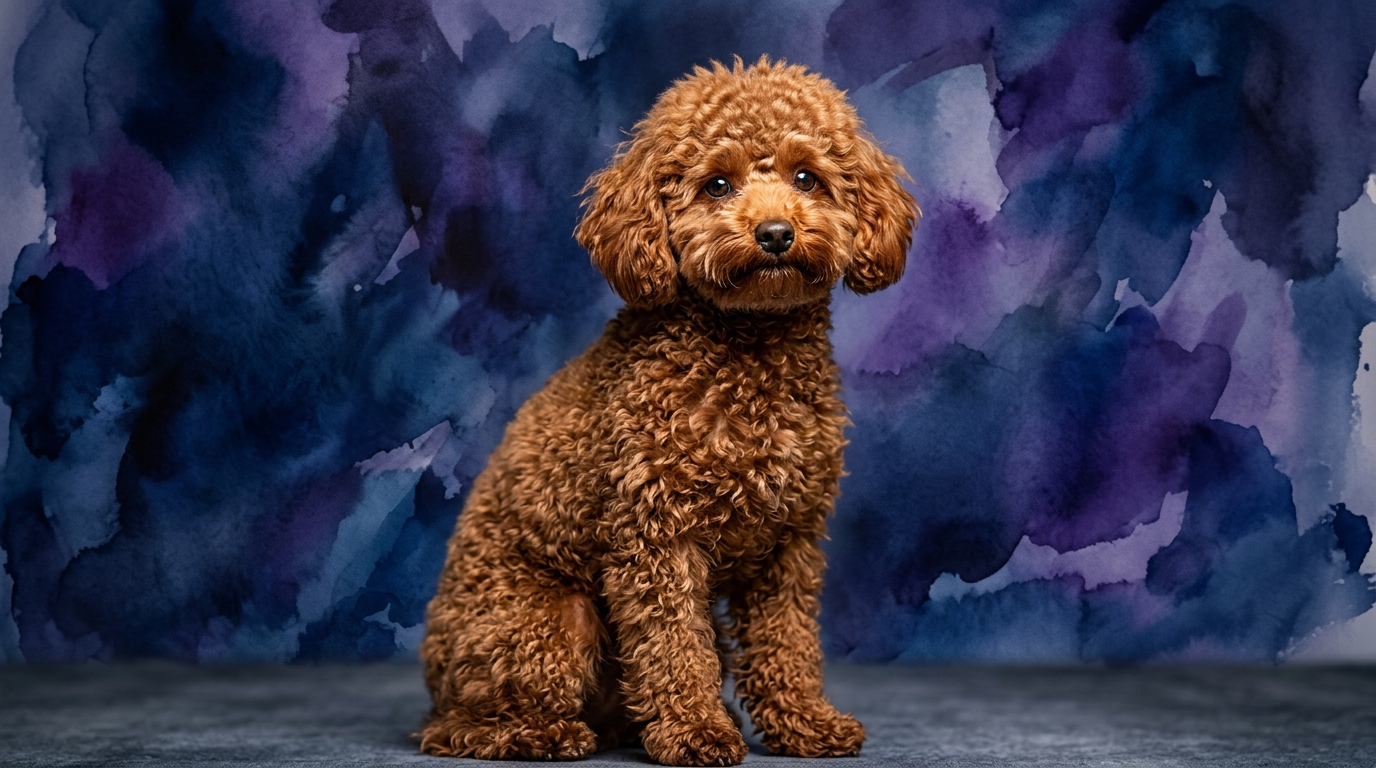
Side-by-Side IQ Profile
The Cosmic Pet Pet IQ Lab assesses canine intelligence across five critical dimensions, offering a nuanced view beyond simple rankings. For the German Wirehaired Pointer, a Sporting group dog with a Coren rank of #28, their profile highlights a balanced and robust intellect. Their Problem Solving score of 4/5 indicates a strong capacity for independent thought and navigating complex situations, often seen in their ability to locate game in varied terrain. Training Speed, also at 4/5, suggests they learn new commands and routines effectively, though perhaps not with the instantaneous grasp of some breeds. Social Intelligence stands at 3/5, meaning they are generally receptive to human communication and emotions but might occasionally prioritize their task-oriented drive over subtle social cues. Their Instinctive Drive, rated 3/5, reflects a purposeful hunting instinct, directing their focus and energy. Finally, a Memory score of 4/5 ensures they retain learned behaviors and spatial information over time, crucial for their working roles.
In stark contrast, the Toy Poodle, a member of the Toy group and an impressive Coren rank #2, showcases a truly exceptional cognitive toolkit. Their Problem Solving capability is rated a perfect 5/5, indicating an extraordinary aptitude for understanding new concepts, adapting to novel situations, and figuring out solutions to complex challenges. This is complemented by a Training Speed score of 5/5, making them incredibly quick to pick up new commands, tricks, and routines, often requiring fewer repetitions than most breeds. Like the GWP, their Social Intelligence is 3/5, meaning they are responsive companions but not necessarily hyper-attuned to every human nuance, often focusing on interactions that involve learning or play. Their Instinctive Drive is also 3/5, manifesting less as a hunting drive and more as a keenness for retrieving, play, and engaging with their environment. A Memory score of 5/5 underscores their ability to recall a vast repertoire of commands and experiences with remarkable accuracy.
Where German Wirehaired Pointer Wins Cognitively
The German Wirehaired Pointer's cognitive strengths truly shine in environments demanding resilience, independence, and sustained focus. While the Toy Poodle might outpace them in pure learning speed, the GWP's unique blend of Problem Solving (4/5) and Instinctive Drive (3/5) allows them to excel in practical, real-world applications, particularly those involving scent work and endurance. Their ability to independently assess and navigate challenging outdoor conditions, making decisions without constant human direction, is a hallmark of their intelligence. This isn't just about following commands; it's about applying learned skills and innate abilities to achieve a goal, like tracking a scent trail through dense underbrush. Their robust Memory (4/5) enables them to recall specific locations, past experiences, and complex sequences of actions vital for effective fieldwork. This self-reliant cognitive style makes them exceptional partners for tasks requiring stamina and a degree of autonomy.
Where Toy Poodle Wins Cognitively
The Toy Poodle's cognitive profile is a testament to their remarkable adaptability and capacity for abstract learning, placing them at the pinnacle of canine understanding. Their perfect 5/5 scores in both Problem Solving and Training Speed mean they grasp new concepts with astonishing rapidity and can master complex sequences of actions with minimal effort. This makes them unparalleled in obedience, agility, and trick training, where they can learn and execute intricate routines that challenge many other breeds. Their superior Memory (5/5) allows them to retain an extensive vocabulary of commands and recall detailed training sequences, making them highly versatile for various performance sports. Unlike the GWP's more field-oriented application of intellect, the Toy Poodle's cognitive prowess is highly generalized, enabling them to excel in diverse learning environments, from competitive obedience rings to therapy work, where their sharp minds are constantly engaged.
Which is Easier to Train and Why
When considering ease of training, the Toy Poodle unequivocally holds an advantage, primarily due to their stellar 5/5 scores in both Problem Solving and Training Speed. They possess an innate eagerness to learn and a profound ability to quickly connect actions with consequences, often picking up new commands in just a few repetitions. This rapid assimilation means training sessions can be shorter, more varied, and less repetitive, making the process highly rewarding for both dog and owner. Their generalized cognitive strength allows them to apply learning across different contexts. In contrast, the German Wirehaired Pointer, with its 4/5 scores in both dimensions, is certainly a capable learner, but their training requires more patience and consistency. Their strong Instinctive Drive (3/5) and independent nature mean they might occasionally be more focused on their environment or a potential scent than on the trainer's commands, demanding a more structured approach to maintain engagement. While they will learn, their progress might be steadier rather than instantaneous, and their hunting instincts often require careful channeling.
Which Suits Active Owners vs Relaxed Owners
The choice between these two breeds also hinges significantly on an owner's lifestyle and activity level. The German Wirehaired Pointer is ideally suited for genuinely active owners who embrace outdoor adventures and have a passion for structured activities. Their background as a Sporting dog means they possess considerable stamina and a deep-seated need for both physical exertion and mental engagement through tasks like hiking, hunting, competitive dog sports, or extensive daily walks. An owner who enjoys long trail runs or spending weekends in nature will find an unparalleled companion in the GWP, as their cognitive profile thrives when given a purpose and ample opportunity to explore. Without adequate outlets for their energy and intellect, a GWP can become restless.
The Toy Poodle, while physically less demanding than the GWP, is far from a purely 'relaxed' companion in the cognitive sense. Their high Problem Solving (5/5) and Memory (5/5) scores mean they require significant mental stimulation to prevent boredom. They can adapt well to urban living or apartment life, and their exercise needs can often be met with regular walks, playtime, and indoor games. However, a 'relaxed' owner for a Toy Poodle still needs to be prepared to engage their sharp mind through training, puzzle toys, and interactive play. They excel with owners who enjoy teaching new tricks, participating in obedience or agility at a recreational level, or simply providing consistent mental challenges. While they might tolerate a more sedentary lifestyle physically, their mental well-being depends on intellectual engagement, making them suitable for owners who are mentally active and enjoy interactive companionship, even if their physical demands are moderate.
The Verdict
For the owner seeking a robust, self-reliant partner for demanding outdoor pursuits and structured work, the German Wirehaired Pointer's balanced cognitive strengths and enduring spirit are an ideal match.
If your preference is for a remarkably quick learner, adept at complex tasks, and a highly adaptable companion who thrives on intellectual engagement in varied settings, then the Toy Poodle is the clear choice.
🧠 Find Your Pet's IQ Score
Our Pet IQ Lab assessment covers 25+ tests across 5 cognitive dimensions — personalized to your breed.
Take the Full IQ Test →Frequently Asked Questions
Are Toy Poodles "smarter" than German Wirehaired Pointers?
The Cosmic Pet IQ Lab data shows Toy Poodles excel in raw Problem Solving and Training Speed (5/5), making them incredibly quick learners of commands and tricks. German Wirehaired Pointers exhibit strong practical intelligence (4/5 in both), particularly in field-specific tasks requiring independence and endurance.
Which breed is better for first-time dog owners?
The Toy Poodle's high Training Speed and Problem Solving often make them easier for first-time owners to train and manage, provided their mental stimulation needs are met. The German Wirehaired Pointer's independent nature and strong drive require a more experienced and committed owner prepared for consistent training and significant activity.
Do German Wirehaired Pointers need more exercise than Toy Poodles?
Yes, German Wirehaired Pointers, as a Sporting breed, require significantly more physical exercise and outdoor activity to thrive, often needing extensive daily runs or walks. Toy Poodles, while needing regular exercise and mental engagement, have much lower physical demands and can adapt better to less expansive environments.