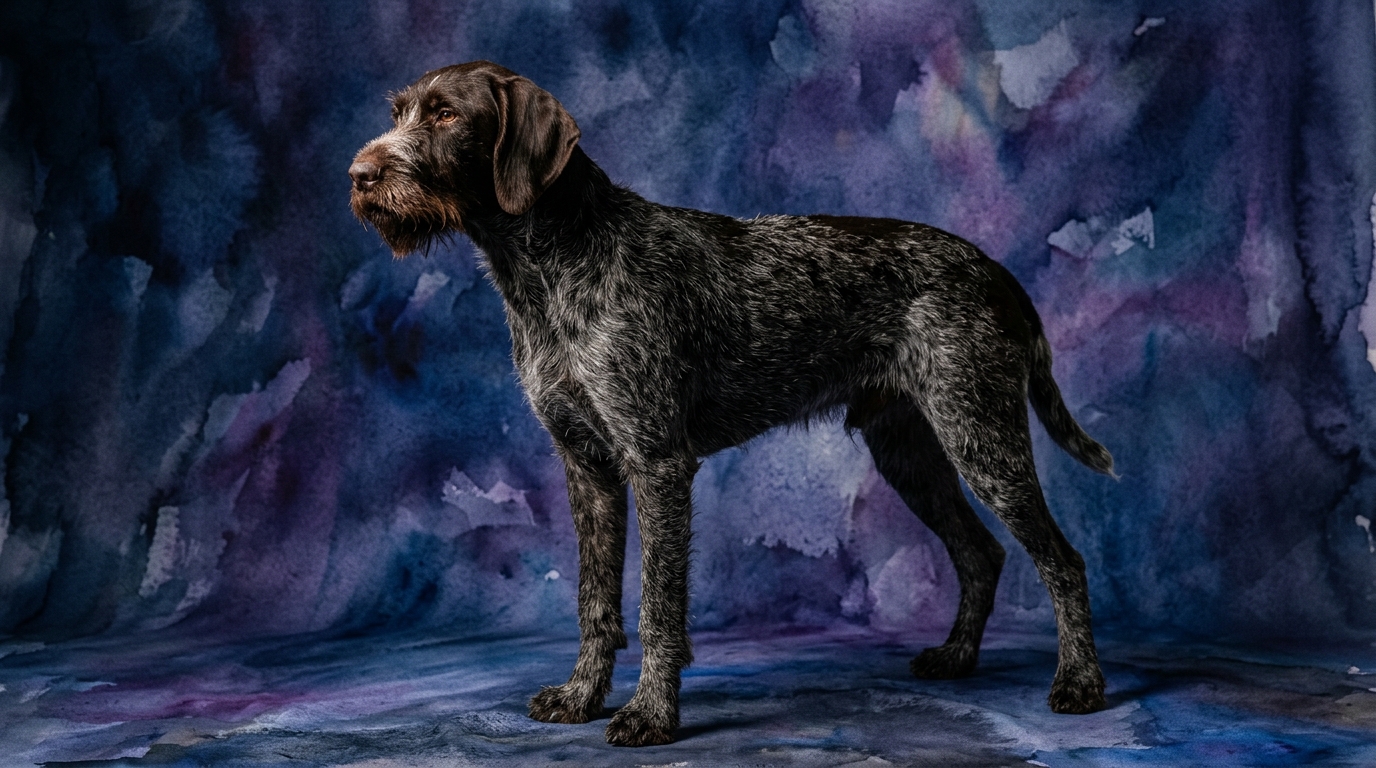
Side-by-Side IQ Profile: German Wirehaired Pointer
The German Wirehaired Pointer (GWP) is recognized for its broad working intelligence, holding a Coren Rank of #28, indicating a breed that generally grasps new commands quickly and retains them efficiently. Their Problem Solving score of 4/5 suggests they are adept at navigating and strategizing through complex hunting scenarios, adapting solutions to locate and retrieve game effectively. With a Training Speed of 4/5, GWPs typically grasp new commands with few repetitions, driven by an inherent eagerness to please and strong focus on their handler. Their Social Intelligence, rated 3/5, reflects a moderate ability to interpret human cues and interact appropriately, generally making them cooperative and responsive to their family. The GWP possesses an Instinctive Drive of 3/5, a strong yet manageable drive for hunting and tracking that is potent enough for work but channelable through training. Finally, their Memory score of 4/5 denotes excellent retention of learned commands, routines, and past experiences, ensuring consistent performance in various tasks.
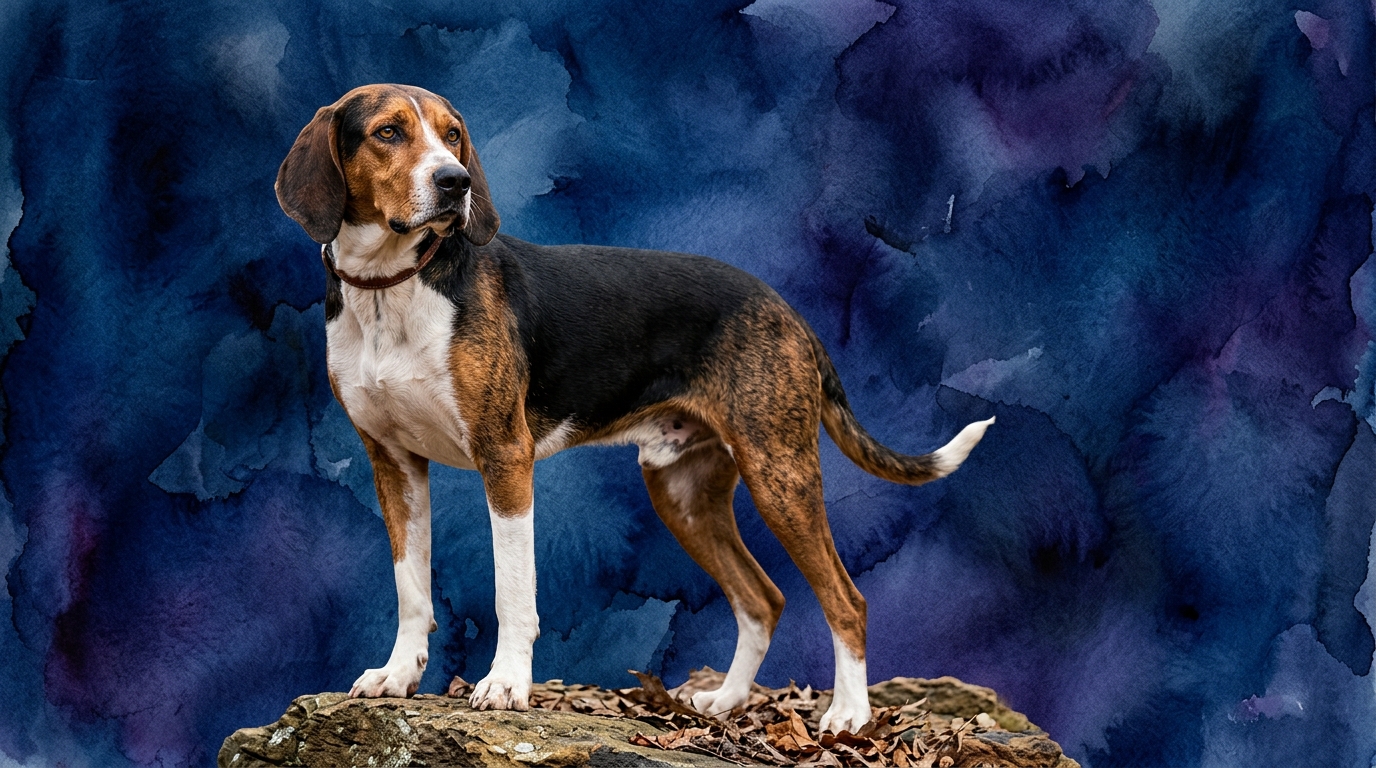
Side-by-Side IQ Profile: Treeing Walker Coonhound
The Treeing Walker Coonhound (TWC), while not appearing on Coren's list, possesses an intelligence highly specialized for scent work, not typically measured by obedience-focused rankings. Their Problem Solving score of 3/5 indicates competence in scent-driven tasks, such as navigating obstacles to follow a trail and strategizing to 'tree' quarry, often relying heavily on instinct. With a Training Speed of 3/5, TWCs learn commands moderately, but their independent nature and profound focus on scent can demand significant patience and consistency from trainers, especially amidst distractions. Their Social Intelligence, also 3/5, shows a moderate capacity for social understanding, typically making them affable with family and other dogs, reflecting their historical pack hunting role. The TWC's Instinctive Drive, rated 3/5, represents an intense, specialized prey drive for tracking and treeing, making them highly persistent and singularly focused on scent. Their Memory score of 3/5 indicates a functional memory for routines and familiar places, with particularly strong recall for scent patterns and hunting territories.
Where the German Wirehaired Pointer Wins Cognitively
The German Wirehaired Pointer clearly demonstrates a cognitive edge in areas demanding adaptable learning and precise execution. Their Problem Solving score of 4/5, combined with a Training Speed of 4/5, enables them to rapidly internalize complex sequences of commands and apply them flexibly across varied hunting scenarios. For instance, a GWP can quickly learn to quarter a field, retrieve a downed bird from water, and then transition to pointing game, all while responding promptly to handler signals. This multifaceted adaptability is a hallmark of their intellect. Furthermore, their Memory score of 4/5 ensures that these learned behaviors are retained over time, making them consistently reliable partners in the field. They remember specific training cues, past successful strategies, and even the locations of previous finds, building a robust internal database for future endeavors. This strong recall contributes to their consistent performance and makes them excellent candidates for advanced obedience, agility, and competitive hunting trials where precision and memory are paramount.
Where the Treeing Walker Coonhound Excels Cognitively
While the Treeing Walker Coonhound's general IQ scores might appear lower than the GWP's, their cognitive strengths lie in a highly specialized domain: scent detection and relentless pursuit. Their Instinctive Drive, while numerically similar at 3/5, manifests as an unparalleled tenacity and focus when on a scent trail. A TWC's ability to 'puzzle out' an old or faint trail, discriminating it from countless other environmental odors, is a testament to a form of cognitive processing that general IQ tests don't fully capture. They excel at pattern recognition in scents, remembering specific quarry trails and developing strategies to isolate and follow them over vast distances and varied terrain. Their Problem Solving (3/5) in this context involves intricate pathfinding and persistent effort, often working independently for hours. This breed truly shines in tasks requiring sustained, independent thought driven by an olfactory challenge, demonstrating a sophisticated sensory intelligence that is unmatched by many other breeds. Their social intelligence, also 3/5, means they are affable pack animals, capable of cooperative hunting strategies within a group, understanding the roles and communications of their canine companions.
Training Ease: GWP vs. TWC
In terms of training ease, the German Wirehaired Pointer generally offers a smoother, more direct learning experience. Their Training Speed of 4/5 reflects an inherent eagerness to cooperate and a strong focus on their handler, traits that make them receptive to command learning with fewer repetitions. GWPs are typically motivated by praise, toys, and food, and their desire to perform tasks alongside their human partners is a powerful driver. They are less prone to distraction by environmental stimuli once engaged in a training session, allowing for more consistent progress. Conversely, the Treeing Walker Coonhound, with a Training Speed of 3/5, presents a different training dynamic. Their primary motivation is often their powerful scent drive. While they are capable of learning, their independent nature and profound focus on olfactory input mean that a compelling scent can easily override a handler's command. Training a TWC requires exceptional patience, consistency, and often involves incorporating their natural scent drive into the training process itself, recognizing their dedication to ancestral purpose rather than 'stubbornness'.
Matching Breeds to Owner Lifestyles
Neither the German Wirehaired Pointer nor the Treeing Walker Coonhound is suited for a truly 'relaxed' owner, as both are breeds with substantial energy levels and specific needs for mental and physical engagement. However, the *type* of activity they thrive on differs significantly. The GWP suits active owners who enjoy structured activities and a canine partner eager for collaborative work. These owners might engage in competitive dog sports like agility, obedience, dock diving, or, of course, active hunting. GWPs require consistent mental stimulation through training and problem-solving games, alongside vigorous daily exercise like long runs, hikes, or swimming. Their cognitive profile makes them excellent companions for owners who want a dog to actively participate in their hobbies and learn new skills regularly. The TWC, conversely, is ideal for active owners who appreciate a dog with immense endurance and a passion for independent exploration driven by scent. These owners might be avid hunters themselves, or individuals who can provide extensive opportunities for scent work, long leash walks in varied terrain, or secure, fenced areas for off-leash exploration (where legal and safe). While they need physical exertion, their mental satisfaction often comes from following a trail, rather than performing complex obedience routines. An owner who understands and respects the TWC's deep-seated need to 'hunt' with their nose will find a rewarding, albeit sometimes challenging, companion.
The Verdict
Choose the German Wirehaired Pointer if you seek a versatile, biddable partner eager to learn complex tasks and participate in a wide range of structured activities, from hunting to competitive dog sports. Their cognitive agility and strong memory make them excellent companions for owners who value a responsive, cooperative dog.
Opt for the Treeing Walker Coonhound if you are an experienced owner prepared to harness an intense, independent scent drive, appreciating a dog whose intellect shines brightest when solving olfactory puzzles over vast distances. They thrive with owners who can provide ample opportunities for their natural hunting instincts in a safe and controlled manner.
🧠 Find Your Pet's IQ Score
Our Pet IQ Lab assessment covers 25+ tests across 5 cognitive dimensions — personalized to your breed.
Take the Full IQ Test →Frequently Asked Questions
Are German Wirehaired Pointers good family dogs despite their hunting instincts?
Yes, German Wirehaired Pointers can be excellent family dogs. Their moderate social intelligence (3/5) allows them to bond well with their human family, and their biddable nature makes them responsive to household rules, provided they receive sufficient mental and physical exercise. Early socialization and consistent training are key to integrating them smoothly into a family environment.
Can a Treeing Walker Coonhound live in an urban environment?
A Treeing Walker Coonhound can adapt to urban living, but it requires significant commitment from their owner. Their intense instinctive drive (3/5) and need for extensive physical activity, particularly scent work, mean they require daily, prolonged opportunities to exercise their nose and body, ideally in secure, open spaces or through structured scent games. A large, securely fenced yard is often beneficial, and owners must be prepared for their distinctive vocalizations.
How do the memory skills of these two breeds differ in practical terms?
The German Wirehaired Pointer's 4/5 memory translates to excellent retention of complex commands, multi-step routines, and specific hunting strategies, making them highly consistent performers. The Treeing Walker Coonhound's 3/5 memory is more selectively focused; while they may not recall abstract commands with the same precision, they possess a remarkable, deep-seated memory for scent patterns, hunting territories, and the intricacies of a specific trail.