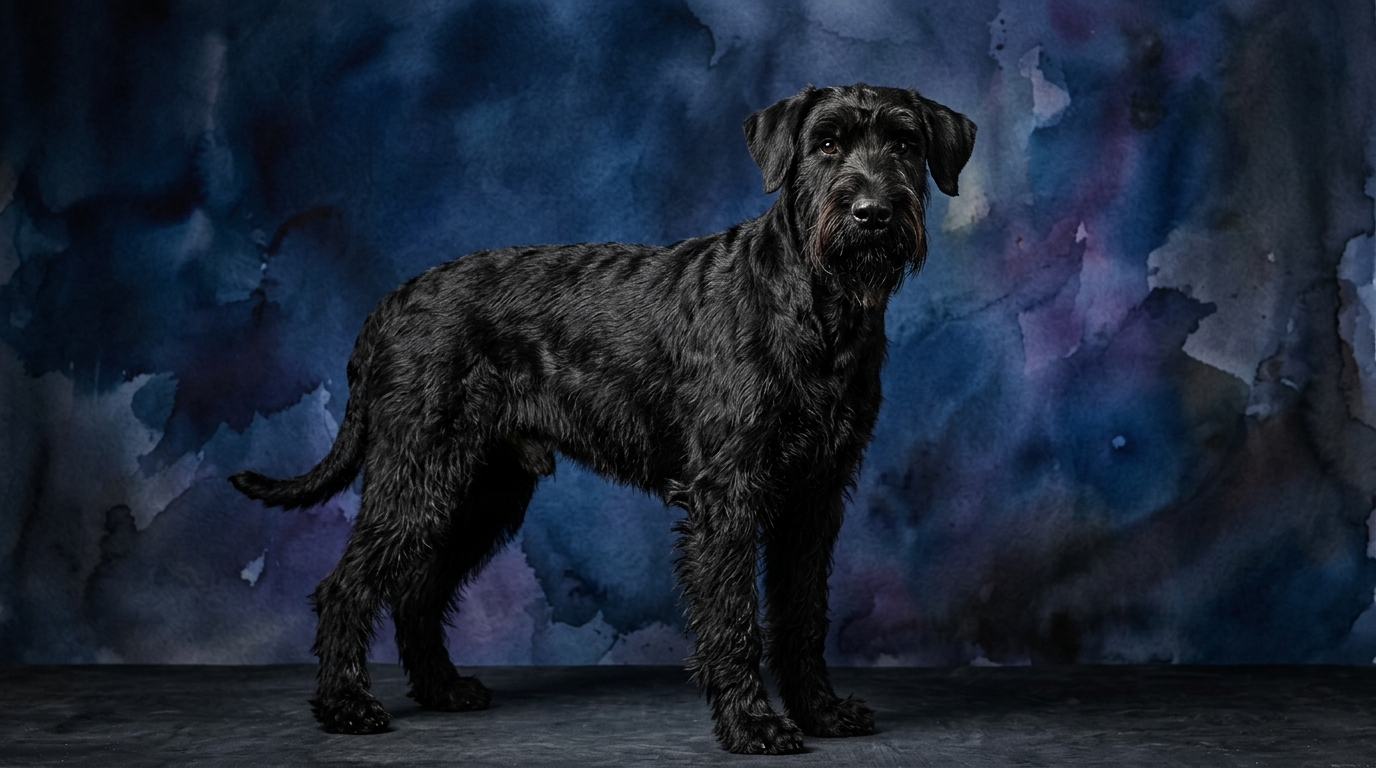
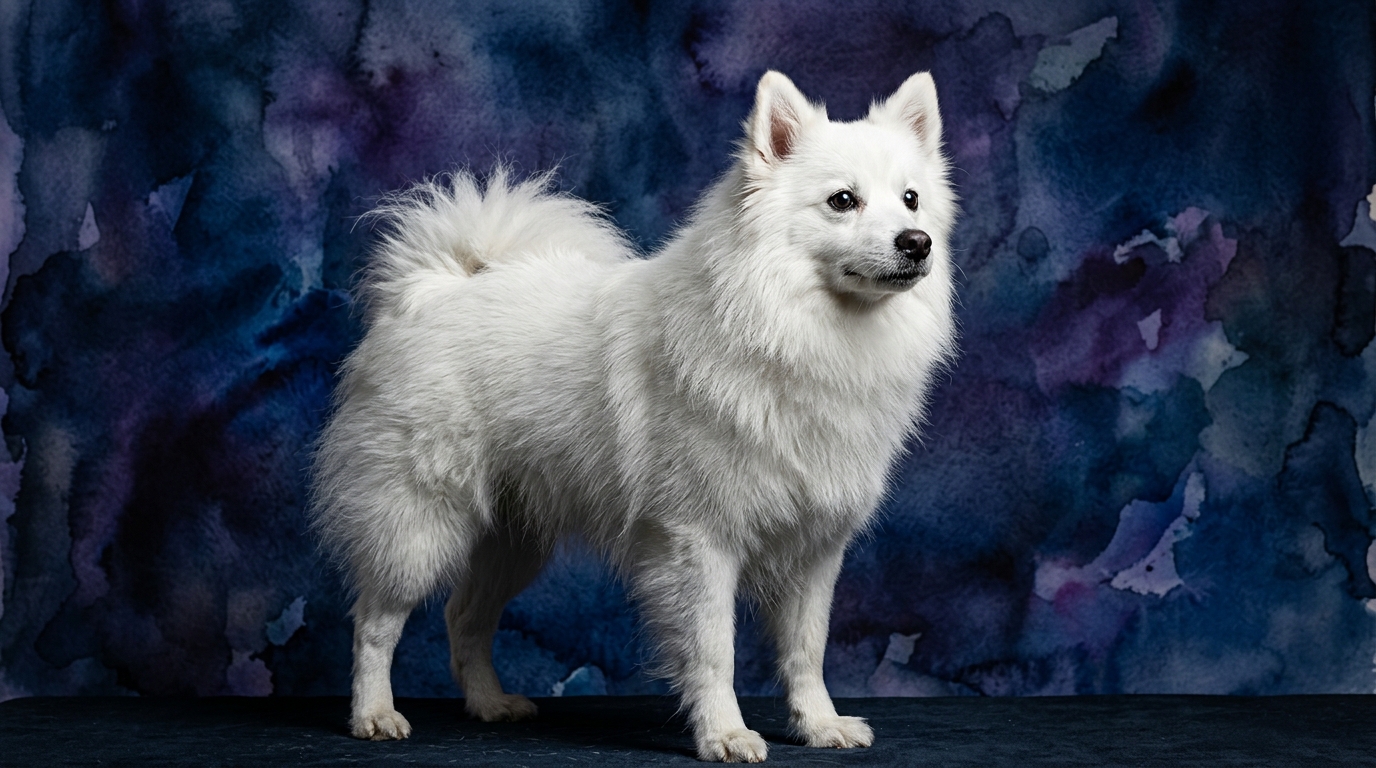
Side-by-Side IQ Profile: Giant Schnauzer vs. American Eskimo Dog
To understand the cognitive strengths of these two breeds, let's examine their individual IQ dimensions as assessed by The Cosmic Pet Pet IQ Lab.
**Giant Schnauzer:** This breed, a member of the Working Group and ranked #28 by Coren for working and obedience intelligence, displays a robust and multifaceted cognitive profile.
**Problem Solving (4/5):** Giant Schnauzers exhibit a strong aptitude for navigating complex situations and devising solutions. They are adept at understanding cause-and-effect, often figuring out how to open gates or retrieve hidden items through logical deduction, showcasing a strategic approach to novel challenges.
**Training Speed (4/5):** With a quick grasp of new concepts, Giant Schnauzers learn commands and routines efficiently. They often require fewer repetitions than many other breeds to solidify a behavior, making them highly responsive to structured instruction and advanced training.
**Social Intelligence (3/5):** While capable of forming deep bonds, their social intelligence leans towards understanding human directives and family dynamics rather than being overtly people-pleasing. They read cues well but maintain a degree of independence in their interactions.
**Instinctive Drive (3/5):** Their drives are balanced, encompassing protective instincts and a moderate prey drive. This contributes to their historical roles in guarding and herding, manifesting as an attentive awareness of their surroundings and a readiness to act.
**Memory (4/5):** Giant Schnauzers possess a robust memory, recalling past training, routines, and experiences with remarkable accuracy. This strong recall supports their ability to perform complex sequences and retain a wide repertoire of learned behaviors over time.
**American Eskimo Dog:** A member of the Non-Sporting Group, the American Eskimo Dog is not specifically Coren-ranked, but its cognitive profile highlights a balanced and adaptable intelligence well-suited for companionship.
**Problem Solving (3/5):** American Eskimo Dogs demonstrate competent problem-solving skills, capable of learning to navigate their environment and overcome simple obstacles. While not as innately strategic as some working breeds, they can learn to apply learned solutions effectively with guidance.
**Training Speed (3/5):** They learn at a steady, consistent pace, responding well to clear, positive reinforcement. While not as rapid in acquisition as the Schnauzer, their willingness to engage ensures progress with patient, consistent guidance, making them enjoyable to teach.
**Social Intelligence (3/5):** American Eskimo Dogs are generally attuned to human emotions and social cues, often seeking interaction and connection. They excel at being responsive companions, understanding and reacting to their owner's moods and intentions, fostering strong bonds.
**Instinctive Drive (3/5):** Their instinctive drives are moderately expressed, including a notable watchdog tendency to alert their families to novelties. Their prey drive is typically manageable, focused more on playful chasing than intense hunting, suitable for a companion animal.
**Memory (3/5):** This breed holds onto learned commands and routines adequately, remembering familiar people and places. Their memory serves their companion role well, allowing them to maintain a consistent behavioral repertoire within their family unit and recall past interactions.
Where the Giant Schnauzer Wins Cognitively
The Giant Schnauzer's cognitive profile showcases a distinct advantage in areas demanding advanced processing and retention. Their problem-solving score of 4/5, paired with a memory of 4/5, positions them as formidable learners capable of intricate thought. This breed excels at tasks requiring multi-step planning and execution, such as advanced obedience routines, agility courses, or even complex scent work where they must discriminate between various odors and follow specific trails. Their Coren ranking at #28 further underscores their capacity for understanding and executing commands with minimal repetition, a hallmark of what is often termed 'working intelligence.' This means a Giant Schnauzer can not only grasp a new command quickly but also apply it reliably across different contexts and retain it over long periods, making them highly adaptable to varied training challenges. Owners often observe them 'thinking through' situations, like figuring out how to manipulate a latch or bypass an obstacle, rather than relying solely on trial and error. This strategic approach to novel problems is a significant cognitive strength, enabling them to excel in roles that demand initiative and independent decision-making within a structured framework.
Where the American Eskimo Dog Wins Cognitively
While the American Eskimo Dog's individual IQ scores are generally balanced at 3/5, their cognitive profile presents a compelling case for their strengths, particularly in adaptability and companion roles. Their 'wins' are not necessarily about outperforming in raw cognitive power but in how their intelligence harmonizes with their role as a devoted family member. The consistent 3/5 across all categories suggests a well-rounded and predictable cognitive makeup, which can be a significant advantage for many households. Their social intelligence, while rated 3/5, combined with their instinctive drive (also 3/5) for alertness, makes them exceptional at understanding and responding to their family's needs while also serving as vigilant, albeit vocal, watchdogs. This balance allows them to be highly interactive and emotionally intelligent companions without the intense working drive that might demand constant, complex mental engagement. They thrive on connection and consistent routines, demonstrating a steady learning curve that rewards patient, positive training. Their moderate problem-solving and memory skills mean they are capable of learning a wide range of commands and tricks, making them engaging family members who are eager to please and participate in household activities, without requiring the intellectual challenges of a specialized working dog.
Training Dynamics: Which Breed is Easier to Train?
When comparing ease of training, the Giant Schnauzer holds a distinct edge due to its superior training speed (4/5) and problem-solving abilities (4/5). This breed's inherent drive to work and grasp new concepts rapidly means they often pick up commands in fewer repetitions. For instance, teaching a 'stay' command might take a Giant Schnauzer just a handful of sessions to solidify, even with distractions, because they quickly understand the desired outcome and the reward associated with it. Their robust memory further ensures that once a behavior is learned, it is retained effectively, reducing the need for constant refreshers. This makes them excellent candidates for advanced obedience, protection sports, or complex trick training, where layered commands and precise execution are paramount.
Conversely, the American Eskimo Dog, with a training speed of 3/5, learns at a steady but less rapid pace. While perfectly capable of mastering commands, they generally benefit from more consistent repetition and positive reinforcement to embed new behaviors. An Eskie might take more sessions to reliably perform a 'stay' in varied environments, not due to a lack of understanding, but because their learning style often thrives on incremental progress and consistent reinforcement. They are often motivated by praise and social interaction, whereas the Schnauzer might be more driven by the intrinsic reward of completing a task or the handler's approval for a job well done. The Eskie's training journey, while rewarding, typically requires more patience and a greater emphasis on building a strong, positive relationship to maintain engagement, rather than relying on an innate drive for complex work.
Matching Breeds to Lifestyles: Active vs. Relaxed Owners
The choice between these two breeds significantly depends on an owner's lifestyle and their capacity for providing mental and physical stimulation. The Giant Schnauzer, with its working heritage and high cognitive scores (4/5 problem-solving, 4/5 memory, 4/5 training speed), is best suited for highly active owners who are prepared to engage in consistent, structured activities. These dogs thrive on having a 'job' to do, whether it's advanced obedience, agility, tracking, or even protection work. Their cognitive prowess means they need intellectual challenges to prevent boredom and destructive behaviors. A Giant Schnauzer will flourish with an owner who enjoys daily rigorous exercise, advanced training classes, and integrating their dog into a mentally stimulating routine, perhaps even aspiring to competitive dog sports. They require an owner who understands the demands of a working breed and is committed to channeling their intelligence and energy productively.
The American Eskimo Dog, while certainly energetic and playful, presents a more adaptable profile for owners with varying activity levels. Their balanced IQ scores (3/5 across the board) indicate a dog that enjoys activity and companionship but doesn't typically demand the intense, specialized mental engagement of a working breed. They are well-suited for active owners who enjoy regular walks, interactive play sessions, and consistent training for basic to intermediate obedience. However, they can also adapt to slightly more relaxed households, provided they receive sufficient daily exercise and plenty of human interaction. They thrive on being a central part of the family, enjoying games in the yard and accompanying their owners on errands. While not a 'couch potato,' an Eskie can be content with a good routine that includes regular physical activity and ample attention, making them a good fit for owners who appreciate a lively companion without the need for constant, high-level cognitive challenges.
The Verdict
When seeking a dog that excels in complex tasks, learns at an accelerated pace, and thrives on structured mental challenges, the Giant Schnauzer is the clear choice for an experienced, active owner.
For those desiring a loyal, engaging companion with a balanced cognitive profile that adapts well to a variety of active family lifestyles without demanding intensive specialized training, the American Eskimo Dog is an excellent match.
🧠 Find Your Pet's IQ Score
Our Pet IQ Lab assessment covers 25+ tests across 5 cognitive dimensions — personalized to your breed.
Take the Full IQ Test →Frequently Asked Questions
Does the Coren rank indicate overall intelligence?
Coren's ranking primarily assesses 'working and obedience intelligence,' measuring a breed's ability to learn and execute human commands. It reflects a specific facet of intelligence, not the full spectrum of a dog's cognitive capabilities, which include problem-solving, social understanding, and instinctive drives.
Are American Eskimo Dogs difficult to train because they aren't Coren-ranked?
Not at all; the American Eskimo Dog is a capable learner, though perhaps at a steadier pace than some highly ranked breeds. Their 3/5 training speed indicates they respond well to consistent, positive reinforcement, making them trainable for a wide range of commands and tricks.
How important is 'instinctive drive' in a family pet?
Instinctive drive, rated 3/5 for both breeds here, refers to innate behaviors like guarding, herding, or prey drive. For a family pet, understanding this helps manage behaviors; a moderate drive means they might be alert watchdogs or enjoy chasing, but typically without the intense focus requiring specialized outlets.