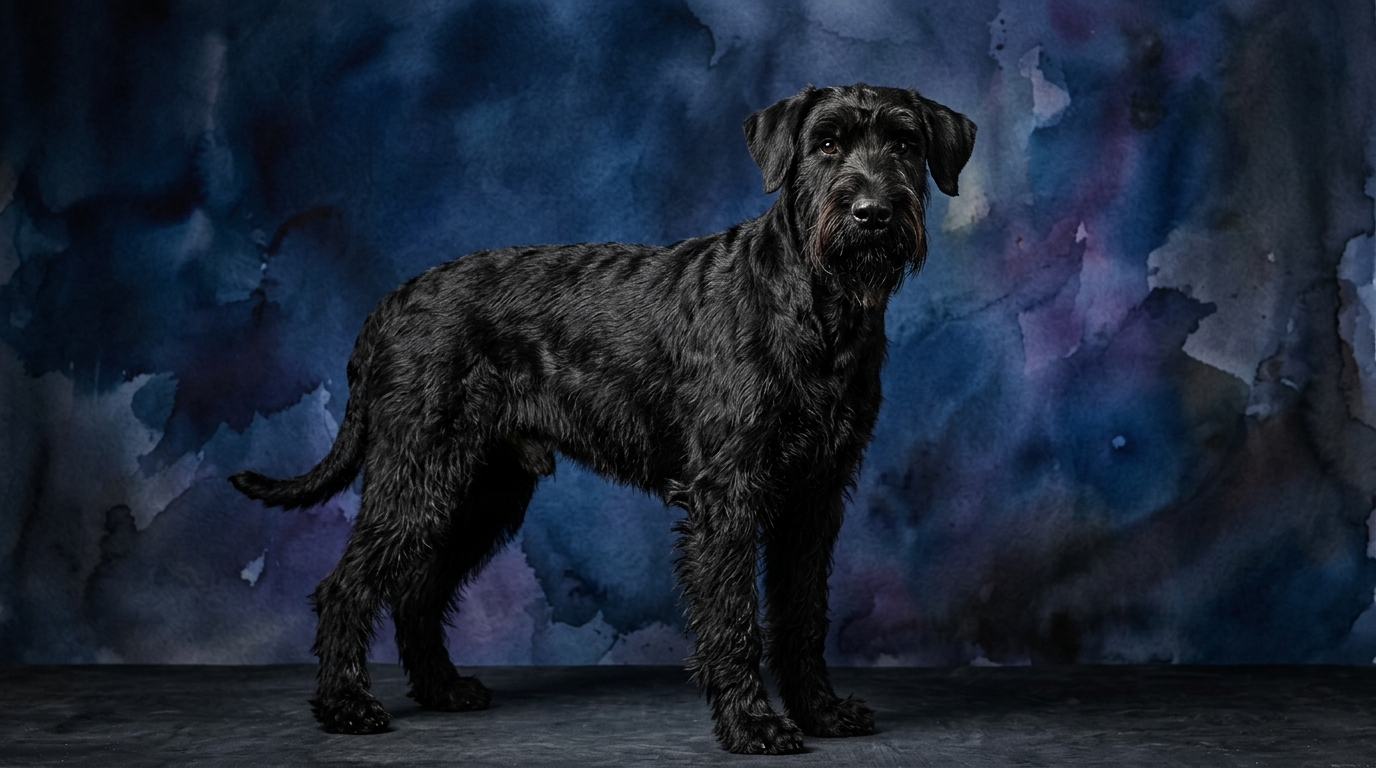
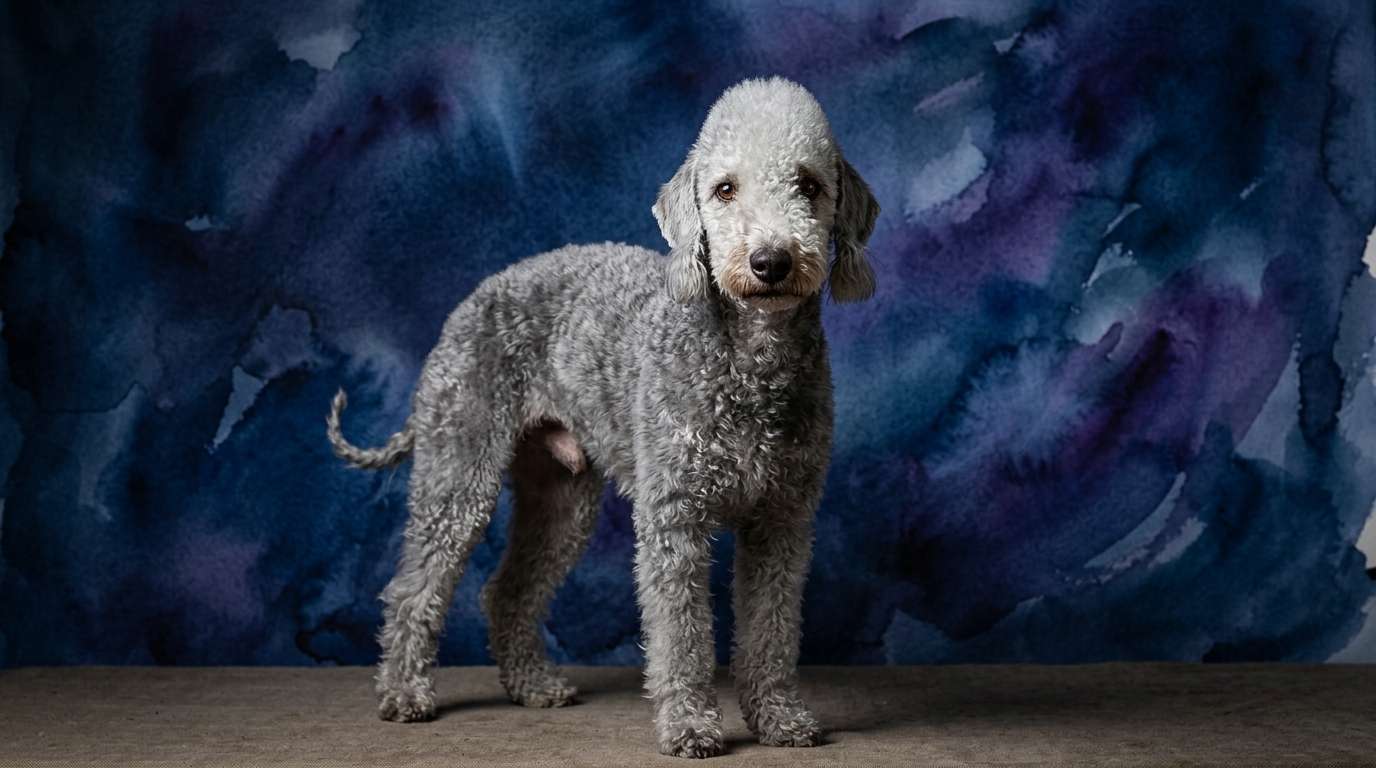
Side-by-Side IQ Profile: Giant Schnauzer vs. Bedlington Terrier
A robust working dog, the Giant Schnauzer exhibits a formidable cognitive profile. Its Problem Solving at 4/5 indicates a strong capacity for navigating complex situations and learning through experience, a hallmark of its historical roles in guarding and herding. Training Speed, also at 4/5, highlights its readiness to absorb new commands and routines efficiently, making it a responsive pupil. While its Social Intelligence at 3/5 suggests a discerning nature, capable of forming deep bonds but potentially reserved with unfamiliar faces, its Instinctive Drive, rated 3/5, speaks to a purposeful motivation, whether in protection or sport. The breed's Memory at 4/5 solidifies its ability to retain learned behaviors and recall past experiences, contributing to its consistent performance.
The Bedlington Terrier presents a distinct, balanced intelligence profile, reflective of its terrier heritage. With Problem Solving rated 3/5, it demonstrates a practical aptitude for overcoming immediate challenges, often with a clever, independent streak. Its Training Speed at 3/5 indicates a solid ability to learn, though perhaps requiring more consistent engagement than some working breeds, characteristic of the terrier's independent spirit. Social Intelligence, at 3/5, shows it can be an affectionate and perceptive family member, attuned to its human companions. Its Instinctive Drive, also 3/5, is typically channeled into keen observation and focused pursuit, a legacy from its vermin-hunting past. A Memory score of 3/5 suggests a reliable recall of experiences and training, forming a stable foundation for a well-adjusted companion.
Where the Giant Schnauzer Wins Cognitively
The Giant Schnauzer, a breed forged for demanding tasks, demonstrates clear cognitive strengths that set it apart. Its superior Problem Solving ability, rated 4/5 compared to the Bedlington Terrier's 3/5, means it can more readily analyze new environments or situations and devise effective strategies. This manifests in its capacity to understand multi-step commands, navigate intricate obedience courses, or adapt to novel challenges without extensive guidance. Owners often observe this in their ability to 'figure things out,' whether it's opening a complex latch or understanding a nuanced request.
Furthermore, the Giant Schnauzer's Training Speed, also a 4/5, significantly outpaces the Bedlington Terrier's 3/5. This translates into a quicker grasp of new commands and a more efficient learning curve during training sessions. Its strong Memory (4/5 versus 3/5) complements this, ensuring that once a lesson is learned, it is retained with remarkable consistency. This combination makes the Giant Schnauzer particularly adept at advanced obedience, protection work, or competitive dog sports where rapid learning and reliable recall are paramount. Its cognitive architecture is geared towards high-performance execution and retention of complex skill sets.
Where the Bedlington Terrier Wins Cognitively
While the Bedlington Terrier's individual IQ scores might not numerically surpass the Giant Schnauzer's, its cognitive profile is uniquely optimized for its specific historical and companionship roles, presenting distinct advantages. Its Instinctive Drive, rated 3/5, is a powerful asset, honed over generations for focused pursuit and keen observation. This drive, while equal in score to the Schnauzer, manifests differently, translating into an exceptional tenacity and single-mindedness when engaged in a task that aligns with its terrier nature, such as scent work or agility, where its quick decision-making and focused energy shine.
The Bedlington's Problem Solving at 3/5, coupled with its distinctive terrier wit, often means it finds creative, sometimes mischievous, solutions to challenges, reflecting an independent thought process rather than simply following a learned pattern. This breed's balanced cognitive scores (3/5 across the board) suggest a functional intelligence that is robust without being overwhelming, making it highly adaptable to various home environments. Its Social Intelligence at 3/5 enables it to form deep, perceptive bonds with its family, often displaying a nuanced understanding of household dynamics and emotional cues, thriving as a sensitive and engaged companion within its chosen circle. This blend of focused drive, practical problem-solving, and perceptive social engagement allows the Bedlington to 'win' in contexts requiring independent thought and adaptable, companion-oriented intelligence.
Ease of Training: Behavioral Differences
When evaluating ease of training, the Giant Schnauzer generally presents a more straightforward path due to its higher scores in Training Speed (4/5), Problem Solving (4/5), and Memory (4/5). These factors combine to create a dog that is eager to learn, quick to understand new commands, and consistent in its recall. Their working dog heritage means they are often inherently driven to collaborate with their handler and thrive on structured tasks. They respond well to clear, consistent instruction and positive reinforcement, quickly building a repertoire of behaviors. However, their physical and mental robustness also means they require an engaged trainer who can provide ample mental stimulation and consistent expectations to prevent boredom or the development of independent problem-solving that might not align with human desires.
The Bedlington Terrier, with scores of 3/5 across these dimensions, will typically require a more nuanced and patient approach to training. While capable of learning, their terrier independence means they might not always perceive the immediate value in complying with a command unless it's presented in an engaging and rewarding manner. Their problem-solving might lead them to experiment with alternative behaviors, and their memory, while reliable, might not retain complex sequences as quickly as a Schnauzer's. Trainers must be creative, utilizing play-based methods and tapping into their innate drive and curiosity to maintain engagement. Consistent, short, and fun sessions are often more effective than lengthy, repetitive drills for the Bedlington, who might otherwise become bored or stubborn.
Matching Canine Cognition to Owner Lifestyles
The choice between a Giant Schnauzer and a Bedlington Terrier significantly hinges on an owner's lifestyle and their capacity for engagement. The Giant Schnauzer, with its substantial cognitive abilities in problem-solving and training speed, coupled with a purposeful instinctive drive (3/5), is best suited for active owners. These dogs require consistent mental engagement through advanced training, dog sports like agility or obedience, or roles that challenge their intellect and physical endurance. A working breed by nature, they benefit immensely from having a "job" to do, whether it's guarding the home, participating in Schutzhund, or simply accompanying their owner on strenuous hikes and runs. Owners who can dedicate significant time daily to structured exercise and cognitive tasks will find the Giant Schnauzer a rewarding and well-adjusted companion; otherwise, their unmet mental and physical needs can lead to undesirable behaviors.
Conversely, the Bedlington Terrier, while possessing an instinctive drive (3/5) that needs an outlet, generally fits a broader range of owner activity levels, including those who are more relaxed but still committed to engagement. Their balanced intelligence profile means they appreciate consistent walks, interactive play, and puzzle toys, but typically do not demand the same intensity or duration of structured work as a Giant Schnauzer. Their problem-solving (3/5) and social intelligence (3/5) make them adept at adapting to family routines and enjoying quieter moments, provided their core needs for mental stimulation and exercise are met. A relaxed owner who enjoys regular, moderate activities and values a perceptive, affectionate companion who also possesses a spark of terrier independence would find the Bedlington Terrier a delightful match.
The Verdict
Choose the Giant Schnauzer if you are an experienced, active owner seeking a highly trainable, mentally robust companion eager for demanding tasks and consistent intellectual challenges.
Choose the Bedlington Terrier if you appreciate an independent, perceptive companion with a balanced intelligence, suitable for owners who can provide consistent moderate engagement and value terrier wit.
🧠 Find Your Pet's IQ Score
Our Pet IQ Lab assessment covers 25+ tests across 5 cognitive dimensions — personalized to your breed.
Take the Full IQ Test →Frequently Asked Questions
Does Coren rank apply to both breeds?
The Giant Schnauzer is ranked #28 by Stanley Coren, indicating its high working and obedience intelligence. The Bedlington Terrier, while intelligent, is not specifically included in Coren's traditional ranking system.
How does 'Instinctive Drive' differ between these breeds?
While both score 3/5, the Giant Schnauzer's drive often manifests as a strong desire for purposeful work and protection, whereas the Bedlington Terrier's drive is typically channeled into focused prey drive, agility, and keen observation.
Are Bedlington Terriers difficult to train due to their independence?
Bedlington Terriers are capable learners, but their independent terrier nature means training requires patience, creativity, and positive reinforcement to keep them engaged, rather than relying solely on rote commands.