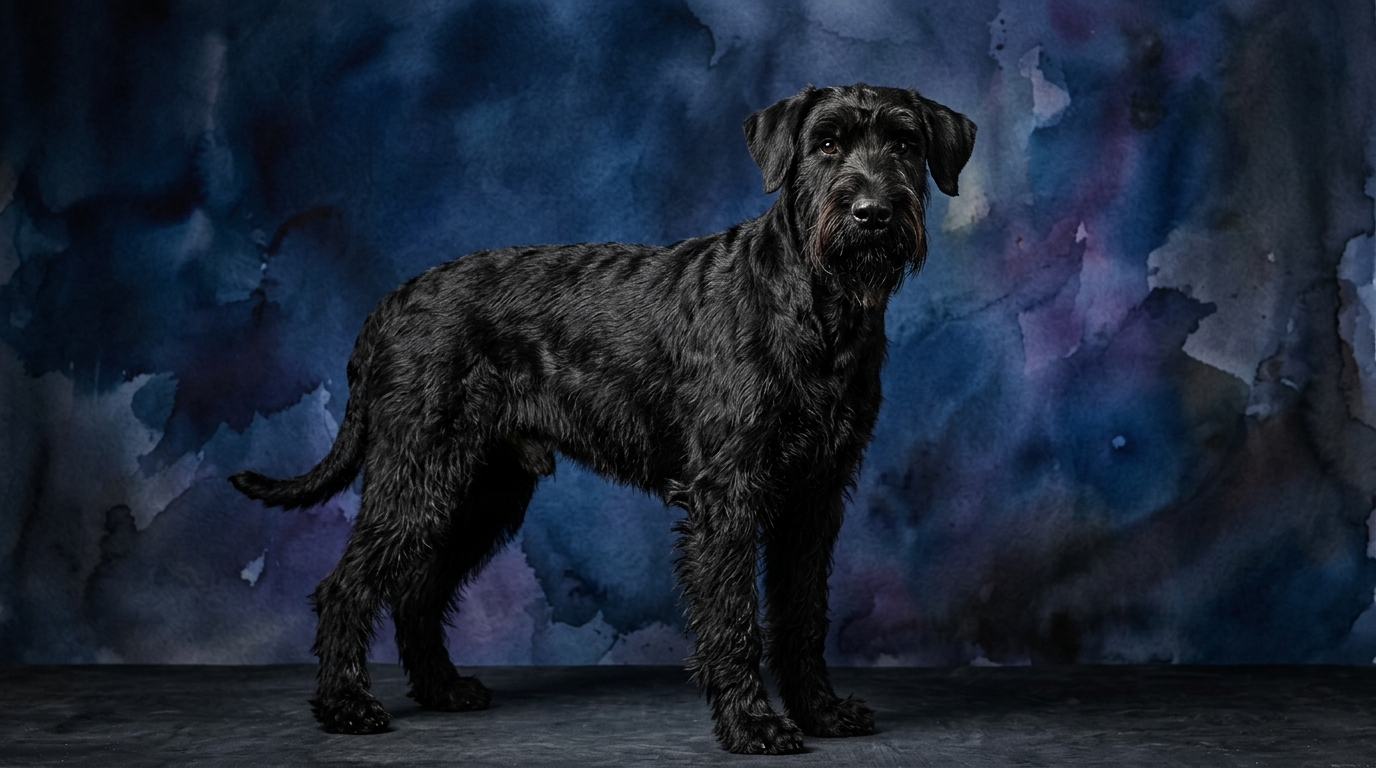
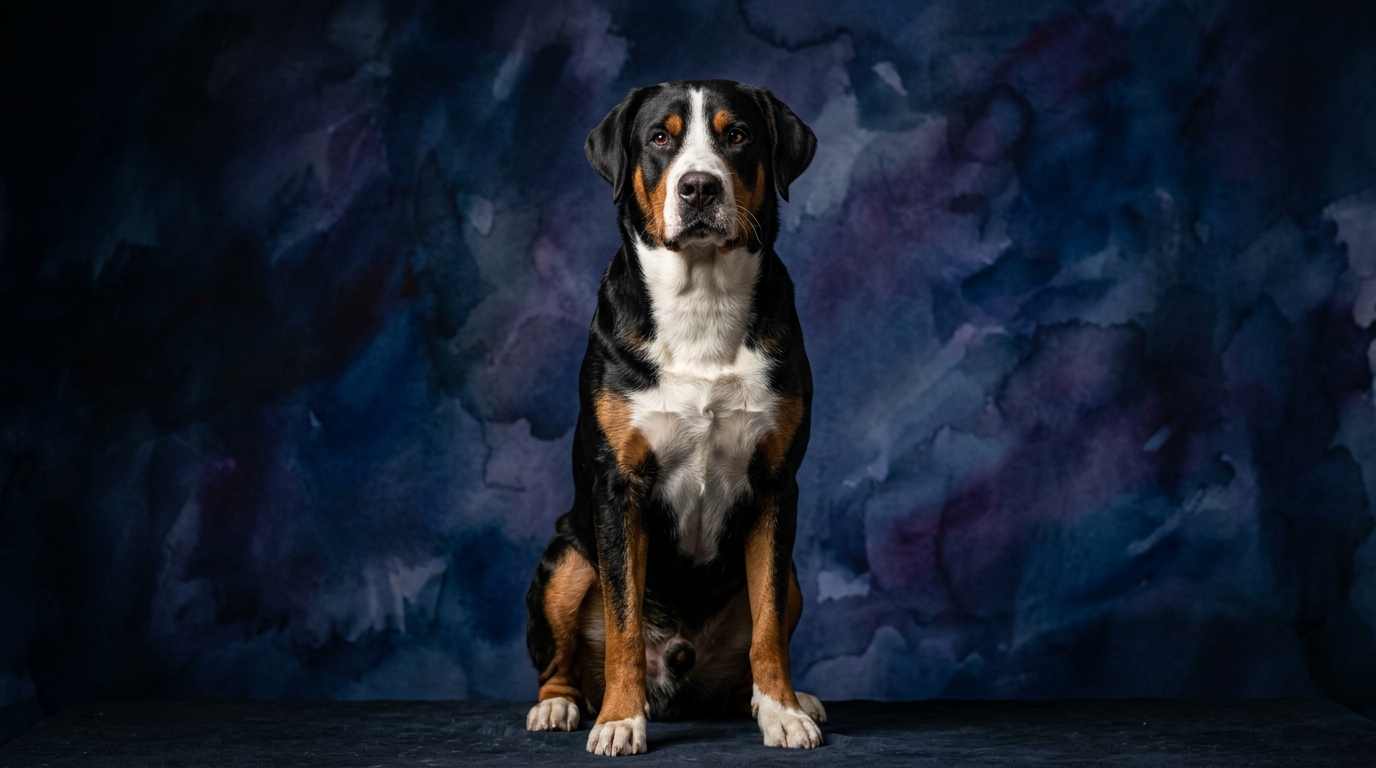
Side-by-Side IQ Profile
The Cosmic Pet Pet IQ Lab employs five core dimensions to map a breed's cognitive landscape. For the Giant Schnauzer, we observe a Problem Solving score of 4/5, indicating independent thought and strategic action to overcome obstacles. Their Training Speed also rates 4/5, reflecting a quick grasp of new commands and rapid association. Social Intelligence stands at 3/5, suggesting a solid understanding of human cues and pack dynamics without excessive people-pleasing. Their Instinctive Drive, at 3/5, points to a purposeful disposition, driven by heritage but generally manageable. Finally, their Memory scores 4/5, highlighting excellent retention of learned behaviors and complex sequences.
In contrast, the Greater Swiss Mountain Dog, though not specifically Coren-ranked, presents a consistent profile across the board, with each dimension scoring 3/5. Their Problem Solving at 3/5 indicates capability for straightforward challenges but reliance on routines rather than spontaneous innovation. A Training Speed of 3/5 means they learn at a steady, deliberate pace, requiring clear, consistent repetition. Their Social Intelligence at 3/5 suggests a reliable ability to interpret social signals and integrate into family life. An Instinctive Drive of 3/5 reflects a grounded, working temperament, driven by purpose but not to an extreme degree. Lastly, their Memory, also 3/5, indicates good recall for frequently practiced behaviors, though less complex retention.
Where Giant Schnauzer Wins Cognitively
The Giant Schnauzer's cognitive strengths truly shine in areas demanding mental agility and independent thought. Their Problem Solving score of 4/5 means they are highly adept at figuring things out, whether manipulating a complex puzzle toy or devising a strategy to access a desired area. This capacity for self-directed solutions is an asset in tasks requiring initiative, such as advanced search and rescue or intricate obedience routines. The Schnauzer's 4/5 Training Speed is a distinct advantage for owners pursuing diverse dog sports or professional working roles.
They absorb new commands and complex sequences with remarkable alacrity, often making connections after only a few repetitions. This quick uptake allows for rapid progression. Their 4/5 Memory complements this, ensuring learned behaviors are retained effectively over long periods, minimizing constant refreshers. This combination of swift learning, deep retention, and resourceful problem-solving positions the Giant Schnauzer as a formidable cognitive partner.
Where Greater Swiss Mountain Dog Wins Cognitively
While the Greater Swiss Mountain Dog doesn't boast higher individual scores, their consistent 3/5 across all dimensions presents a distinct advantage in terms of balanced predictability. This breed "wins" in scenarios where an owner values a reliable, even-keeled cognitive approach over flashes of independent brilliance. Their 3/5 Problem Solving means they are less likely to spontaneously invent novel, potentially inconvenient, solutions, preferring established patterns. This translates to a more predictable companion less inclined to outsmart their owner.
Their 3/5 Social Intelligence and 3/5 Instinctive Drive contribute to a grounded, stable temperament. They possess sufficient awareness to integrate well into family dynamics and respond appropriately to social cues, but without intense sensitivity or manipulative tendencies. This balanced drive means they are purpose-driven without being overly reactive or possessing extreme prey drive. The Greater Swiss Mountain Dog's cognitive profile fosters a solid, dependable companion, less prone to complex mental quirks, offering a steady presence for owners who appreciate consistency.
Which is Easier to Train and Why
Assessing which breed is "easier" to train depends on an owner's definition of ease and training philosophy. The Giant Schnauzer, with its 4/5 Training Speed, is undeniably quicker to acquire new commands and complex behaviors. They form associations rapidly, making them appear "easy" initially. However, their 4/5 Problem Solving and 3/5 Instinctive Drive mean they possess a strong independent streak. They might quickly understand *what* you want but then decide *if* they want to comply, especially if they perceive a more rewarding alternative. Training a Giant Schnauzer requires consistent motivation, firm leadership, and engaging methods to channel their mental energy away from self-directed mischief. They learn fast, including undesirable behaviors if not properly guided.
The Greater Swiss Mountain Dog, with its 3/5 Training Speed, will generally require more repetition and patience. Their learning curve is more gradual. However, their consistent 3/5 scores in Problem Solving and Instinctive Drive often translate to a more straightforward training experience. They are typically less inclined to question authority or creatively circumvent rules. While they might take longer to grasp a concept, once learned, they are often more reliable in execution because they are less prone to independent problem-solving or testing boundaries. Their training might be slower, but it tends to be more consistent and less prone to "clever disobedience." For an owner valuing steady progress and reliability, the Greater Swiss Mountain Dog might ultimately prove the "easier" companion for consistent daily behaviors.
Which Suits Active Owners vs Relaxed Owners
The choice between these two breeds often hinges on the owner's lifestyle and how much mental and physical engagement they can provide. The Giant Schnauzer is an ideal match for active owners who thrive on continuous interaction and mental stimulation. Their 4/5 Problem Solving and 4/5 Memory mean they require more than just physical exercise; they need a "job" or consistent mental challenges to prevent boredom. Owners who enjoy advanced obedience, agility, or complex trick training will find the Giant Schnauzer an eager partner. They demand an owner as mentally engaged as they are, prepared to constantly stimulate their quick minds and provide outlets for independent thinking.
Conversely, while still a robust working breed, the Greater Swiss Mountain Dog is often better suited for owners who might be described as more "relaxed" in their approach to daily routine, though certainly not sedentary. Their balanced 3/5 scores suggest a dog that appreciates routine and moderate activity. While they need regular exercise, they are less likely to become restless or destructive from a *lack of complex mental tasks*. Owners who enjoy regular walks, consistent basic training, and a loyal, predictable companion will find the Greater Swiss rewarding. They are content with a structured life that includes sufficient physical activity and clear guidance, without the constant demand for novel cognitive challenges the Giant Schnauzer often presents.
The Verdict
Opt for the Giant Schnauzer if you are an experienced owner who thrives on engaging a cognitively agile partner in advanced training, dog sports, or a demanding working role, and can consistently provide the mental challenges this quick-thinking, resourceful breed requires.
Select the Greater Swiss Mountain Dog if you seek a steadfast, dependable companion who learns at a measured pace, appreciates a predictable routine, and offers a balanced temperament, providing loyalty and presence without constantly demanding novel cognitive engagement.
🧠 Find Your Pet's IQ Score
Our Pet IQ Lab assessment covers 25+ tests across 5 cognitive dimensions — personalized to your breed.
Take the Full IQ Test →Frequently Asked Questions
Do Giant Schnauzers need more mental stimulation than Greater Swiss Mountain Dogs?
Yes, the Giant Schnauzer's higher scores in problem-solving and memory indicate a greater need for consistent mental challenges, complex training, and engaging activities to prevent boredom and channel their independent thinking. The Greater Swiss Mountain Dog, while still needing activity, is generally content with more routine mental engagement.
How do their social intelligence scores impact their family life?
Both breeds score 3/5 in social intelligence, meaning they possess a solid ability to understand human cues and integrate into family dynamics. They are aware of their surroundings and typically loyal, but neither breed is excessively prone to "people-pleasing" or manipulative behaviors, offering a balanced and straightforward social presence.
Is a Coren ranking important when comparing these two breeds?
The Coren ranking (Giant Schnauzer #28) offers a general indication of working and obedience intelligence, but our IQ Lab scores provide a more nuanced, multi-dimensional view. The Greater Swiss Mountain Dog not being Coren-ranked doesn't imply a lack of intelligence, but rather that its specific cognitive profile might not align as directly with the criteria used for that specific ranking, which often emphasizes rapid obedience learning.