Side-by-Side IQ Profile: Giant Schnauzer vs. Toller
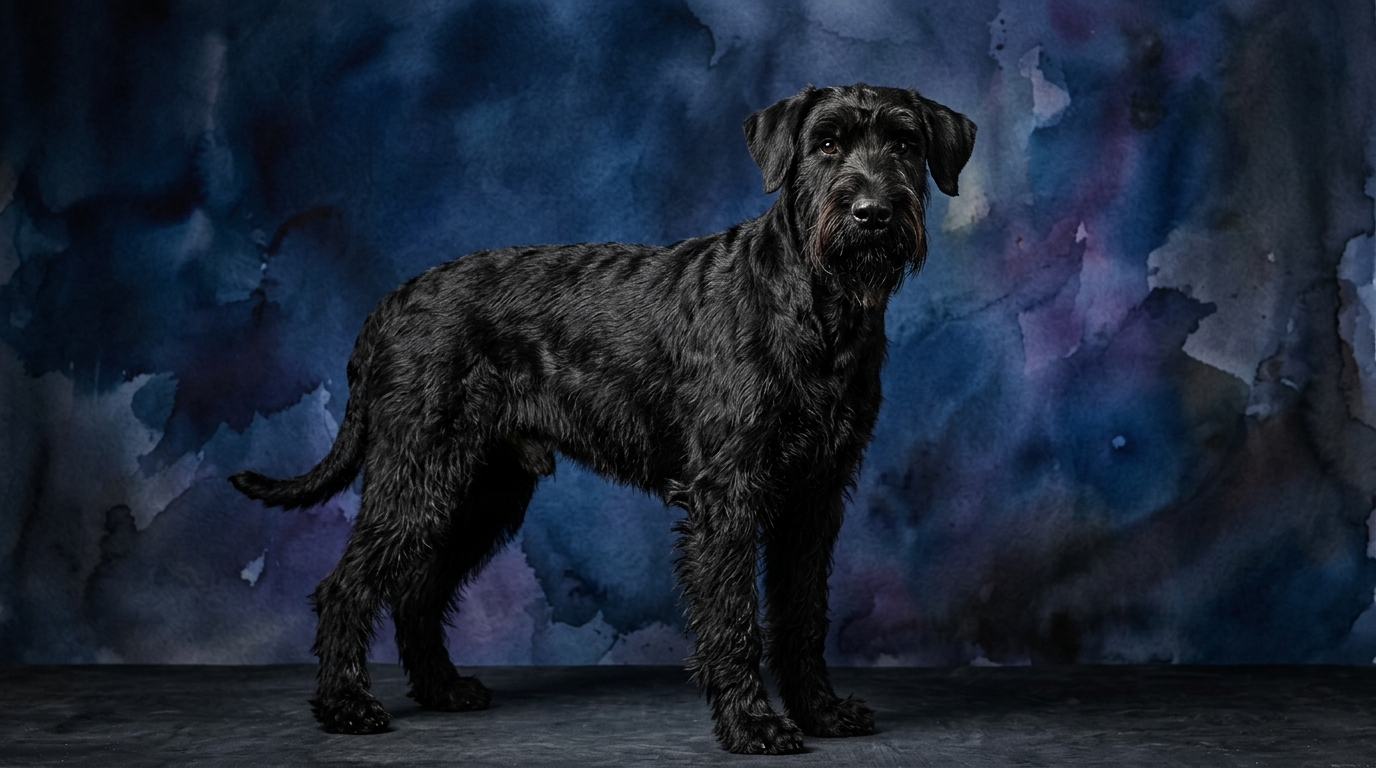
The Giant Schnauzer, a proud member of the Working Group and ranked #28 by Coren for working and obedience intelligence, showcases a robust cognitive makeup. Our Cosmic Pet Pet IQ Lab assessment reveals a Problem Solving score of 4/5, indicating a strong capacity for independent thought and navigating complex situations, from intricate obedience routines to practical security tasks. Their Training Speed, also at 4/5, suggests a quick grasp of new commands and sequences, often requiring fewer repetitions to solidify learning. Social Intelligence at 3/5 points to a discerning nature; while they form deep bonds, their guarding instincts mean they are often reserved with strangers. An Instinctive Drive of 3/5 reflects their protective and territorial tendencies, which, while manageable, require consistent guidance. Finally, a Memory score of 4/5 underscores their ability to retain complex information, routines, and experiences over time, making them reliable partners once concepts are learned.
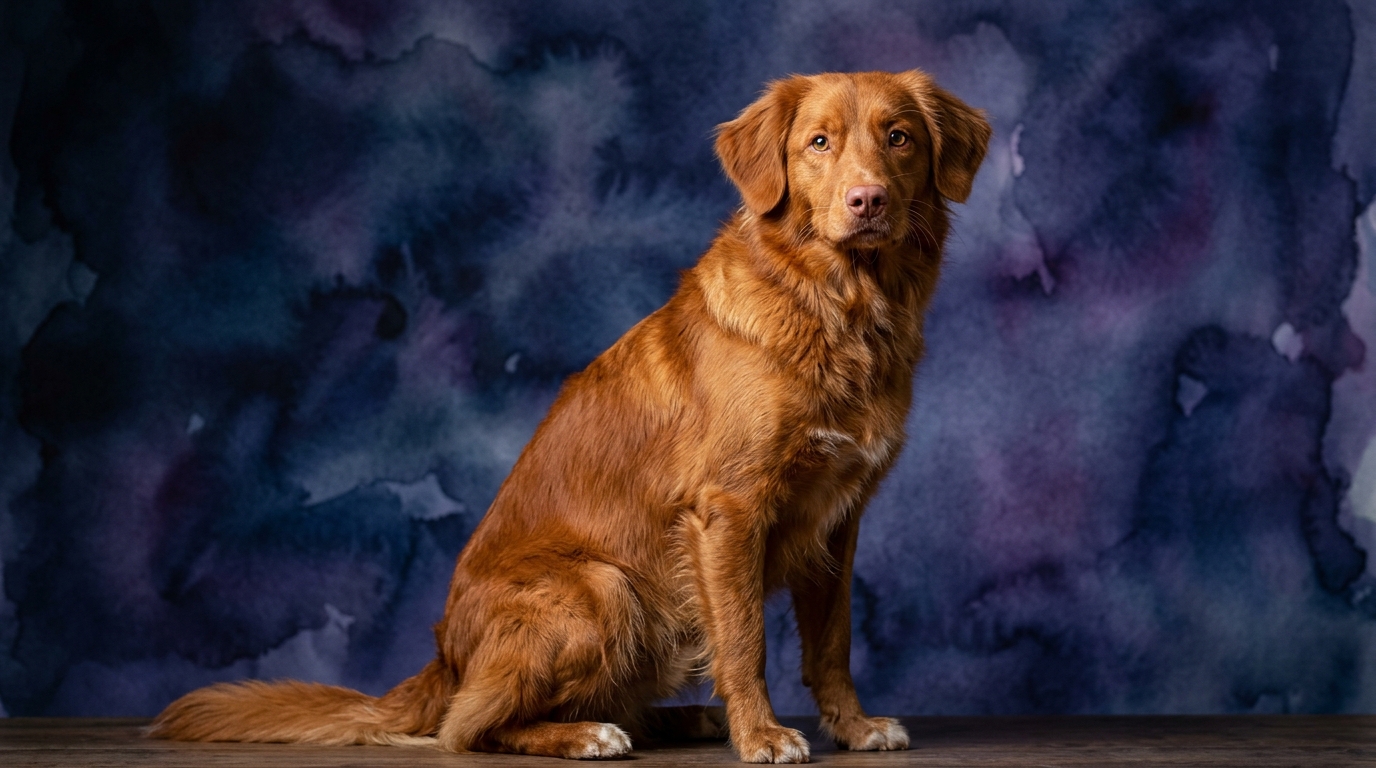
In contrast, the Nova Scotia Duck Tolling Retriever, a vibrant Sporting Group dog not ranked by Coren, presents a different cognitive signature tailored to its retrieving heritage. Their Problem Solving ability rates 3/5, demonstrating practical intelligence focused on task completion, particularly in retrieving scenarios, but perhaps less inclined towards abstract problem-solving without direct incentive. A Training Speed of 3/5 means they learn at a steady pace, benefiting from positive reinforcement and engaging methods, though they might not pick up new cues as rapidly as some breeds. Social Intelligence, also at 3/5, indicates a generally friendly and adaptable nature, especially with their immediate human family, though they can be sensitive. Their Instinctive Drive, rated 3/5, is strongly channeled towards prey drive and retrieving, making them highly motivated by games involving chase and fetch. A Memory score of 3/5 suggests they retain information well enough for their specialized tasks, but might require more refreshers for less frequently practiced commands compared to breeds with higher memory scores.
Where the Giant Schnauzer Wins Cognitively
The Giant Schnauzer's cognitive profile provides distinct advantages, particularly in areas demanding independent strategic thinking and rapid acquisition of intricate skills. With a Problem Solving score of 4/5, they exhibit a greater propensity for analyzing novel situations and devising solutions without constant human intervention, a trait honed by their historical roles as guardians and cattle drivers. This translates into an ability to figure out puzzle toys more quickly or to assess potential threats in their environment. Their 4/5 Training Speed means they often learn complex multi-step commands and advanced obedience routines with remarkable efficiency, often mastering new cues in fewer sessions than many other breeds. Furthermore, their 4/5 Memory score ensures that once a lesson is learned, it tends to stick, making them highly consistent in their trained behaviors even after periods of inactivity. This combination of swift learning, deep retention, and independent problem-solving sets them apart for roles requiring sophisticated cognitive engagement.
Where the Nova Scotia Duck Tolling Retriever Wins Cognitively
While the Giant Schnauzer excels in broad cognitive applications, the Nova Scotia Duck Tolling Retriever's intelligence is uniquely optimized for its specialized purpose, representing a distinct cognitive 'win' in its niche. Their 3/5 Problem Solving and 3/5 Social Intelligence scores, when combined with their 3/5 Instinctive Drive, create a finely tuned machine for cooperative retrieving tasks. Tollers demonstrate superior cognitive efficiency in scenarios demanding focused attention on a specific objective, like locating and retrieving game in challenging terrain or water, where their intelligence allows them to filter environmental distractions effectively. Their social intelligence shines in the collaborative dynamic with a hunter, accurately reading subtle cues and maintaining a dedicated work ethic. This specialized cognitive packaging makes them exceptionally adept at their intended role, winning in operational efficiency and dedicated task performance within the sporting field, where their focused intellect is a paramount asset.
Which Is Easier to Train and Why
Based on their respective IQ scores, the Giant Schnauzer generally presents as the breed that is easier to train, particularly for a wide range of commands and advanced tasks. Their 4/5 Training Speed means they typically absorb new information and commands more quickly than the Toller's 3/5, requiring fewer repetitions to achieve mastery. This rapid learning curve, coupled with a 4/5 in Problem Solving, allows them to grasp complex sequences and generalize learned behaviors to new situations with greater ease. For example, a Giant Schnauzer might more readily understand the concept of 'stay' in varying environments after initial training. However, the Toller's training, while potentially slower in initial acquisition, is often highly effective when channeled through their strong retrieving drive and desire to please. Tollers thrive on positive reinforcement and engagement that taps into their natural instincts, making training feel like a game. While the Giant Schnauzer might learn faster, the Toller's willingness to work for a reward, often a retrieve, makes them highly trainable for their specific activities. The Giant Schnauzer's inherent stubbornness and strong will, stemming from their working heritage, can occasionally pose a challenge if not met with consistent and confident leadership, whereas the Toller, while energetic, is generally more biddable when motivated correctly.
Which Suits Active Owners vs. Specific Activity Preferences
Both the Giant Schnauzer and the Nova Scotia Duck Tolling Retriever are undeniably active breeds, making neither suitable for truly 'relaxed' owners in the sense of minimal engagement. Instead, they suit different types of active owners based on their specific needs and cognitive drives. The Giant Schnauzer, with its working background, thrives with owners who can provide consistent mental challenges and a 'job' to do, whether that's advanced obedience, protection work, or demanding dog sports like agility orschutzhund. Their need for purpose aligns with owners who enjoy structured training, long walks with a purpose, and a steadfast companion ready for varied activities requiring strength and focus. They are an excellent match for individuals or families seeking a formidable partner for active, engaged lifestyles that appreciate a dog with a strong presence and discerning social intelligence.
The Nova Scotia Duck Tolling Retriever, on the other hand, is an ideal fit for active owners with a passion for outdoor and water-based activities that leverage their retrieving instincts. Their boundless energy and enthusiastic nature make them superb partners for hiking, swimming, kayaking, and especially retrieving games or competitive dog sports like dock diving and field trials. Owners who enjoy spending significant time outdoors, engaging their dog in interactive play and activities that mimic hunting scenarios, will find the Toller an unparalleled companion. They thrive on human interaction and tasks that allow them to use their focused problem-solving and instinctive drive, making them perfect for those who want a lively, engaged partner for sporting adventures.
The Verdict: When to Choose Each Breed
The Verdict
Choose the Giant Schnauzer if you seek a highly trainable, independent thinker capable of complex tasks and protective duties, and are prepared to offer consistent leadership and mental engagement. This breed excels as a steadfast partner for an active owner who appreciates a dog with a strong presence and discerning intellect.
Opt for the Nova Scotia Duck Tolling Retriever if your lifestyle revolves around active, outdoor, and water-based pursuits, and you desire an enthusiastic, focused companion for retrieving games or dog sports. They thrive with owners who can channel their spirited energy and specialized intelligence into purposeful activities.
🧠 Find Your Pet's IQ Score
Our Pet IQ Lab assessment covers 25+ tests across 5 cognitive dimensions — personalized to your breed.
Take the Full IQ Test →Frequently Asked Questions
Are Giant Schnauzers good family dogs?
Yes, Giant Schnauzers can be excellent family dogs, forming deep bonds with their immediate family members. However, their guarding instincts and need for consistent training mean they thrive best in homes that understand and can manage a strong-willed, protective breed, especially around new visitors or children outside their immediate circle.
Do Nova Scotia Duck Tolling Retrievers bark a lot?
Tollers are known for their distinctive 'Toller scream' or 'squeal,' especially when excited or anticipating a retrieve. While they aren't typically excessive barkers in general, their vocalizations are a unique part of their communication and can be quite loud when their excitement or frustration levels are high, requiring management and training.
Which breed requires more grooming?
The Giant Schnauzer generally requires more involved grooming due to their dense, wiry double coat, which needs regular brushing, hand-stripping or professional clipping every 6-8 weeks, and beard/brow maintenance. The Nova Scotia Duck Tolling Retriever has a medium-length double coat that requires less intensive grooming, typically needing weekly brushing and occasional trimming to keep it healthy and free of mats.