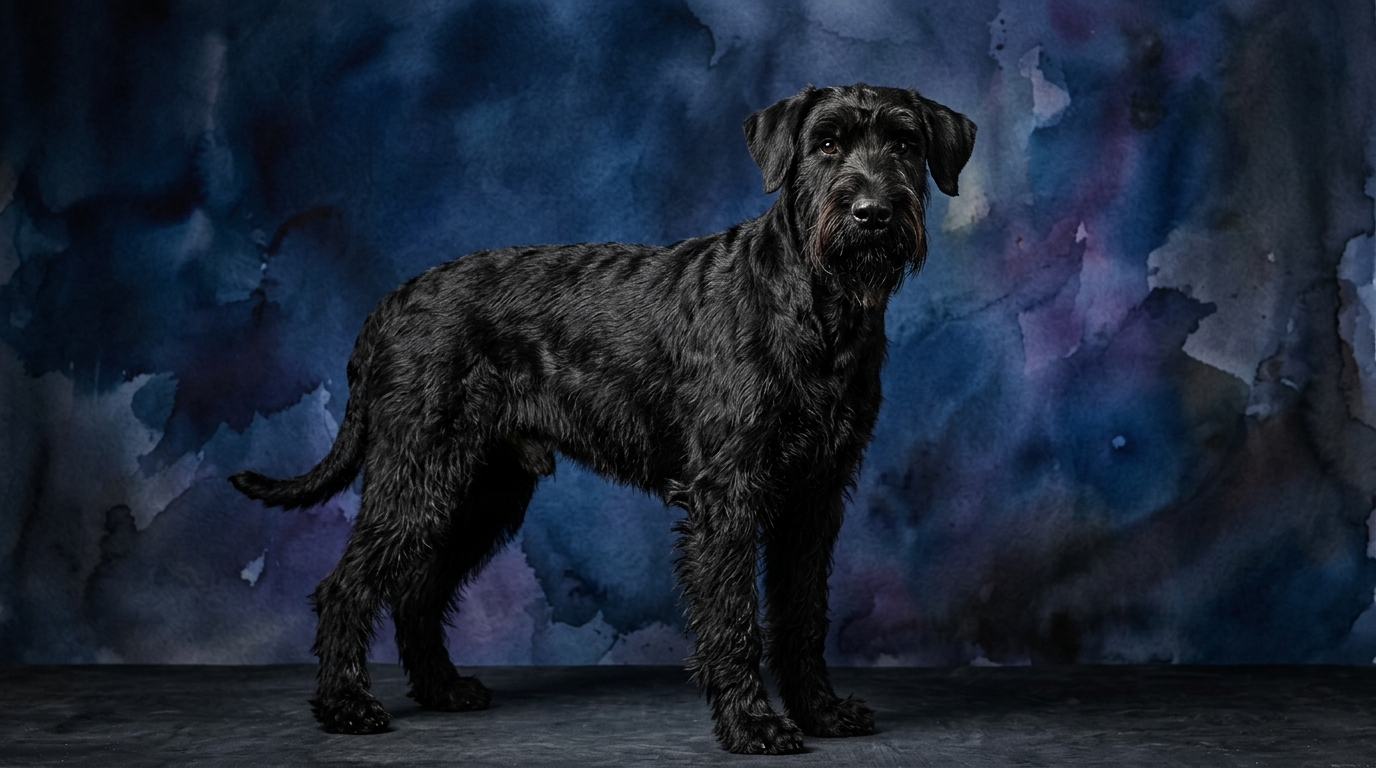
Side-by-Side IQ Profile: Giant Schnauzer
The Giant Schnauzer, a formidable working breed with a Coren rank of #28, exhibits a cognitive blueprint optimized for purpose and precision.
Problem Solving (4/5): This breed often demonstrates a remarkable capacity for intricate thought, quickly deciphering complex sequences or figuring out how to manipulate objects to achieve a goal. They excel at puzzle toys and can learn multi-step commands, indicating a strong ability to connect cause and effect and strategize.
Training Speed (4/5): Their eagerness to engage and sharp mental processing allows them to grasp new commands and routines with impressive swiftness. They typically require fewer repetitions than many other breeds to solidify a behavior, making them highly responsive to consistent instruction.
Social Intelligence (3/5): Giant Schnauzers possess a functional understanding of human cues and social hierarchies within their family unit, enabling them to form strong bonds and interpret familiar emotional states. While capable of loyalty, their social interactions can sometimes be more reserved or task-focused compared to overtly effusive breeds.
Instinctive Drive (3/5): Rooted in their heritage as working dogs, their instinctive drive manifests as a pronounced protective instinct and a desire for purpose. They are motivated by tasks and can exhibit strong territoriality, channeling their natural inclinations into guarding or herding-like behaviors.
Memory (4/5): Their retention of learned behaviors, commands, and even specific routines is often exceptional. Once a lesson is ingrained, it tends to stick, contributing to their reliability in performance and their ability to recall complex information over time.
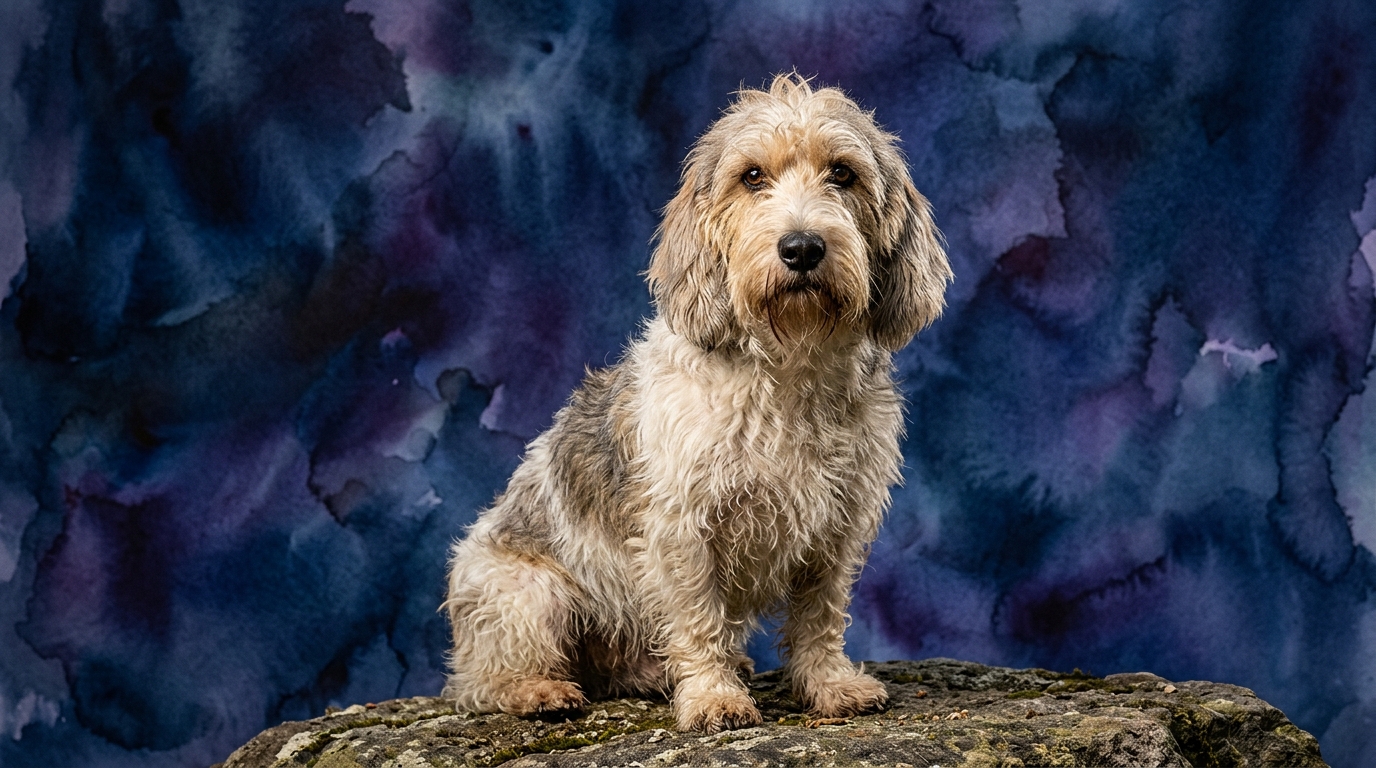
Side-by-Side IQ Profile: Petit Basset Griffon Vendéen
The Petit Basset Griffon Vendéen (PBGV), a charming hound breed not listed in Coren's ranking, showcases a different but equally compelling set of cognitive strengths.
Problem Solving (3/5): PBGVs are competent problem-solvers, particularly when the challenge involves their powerful scenting abilities. They can skillfully navigate complex scent trails or figure out how to access enticing smells, though their approach may be more trial-and-error or instinct-driven than the Schnauzer's calculated strategy.
Training Speed (3/5): While capable of learning, PBGVs typically absorb new commands at a moderate pace, often requiring more patience and repetition from their trainers. Their independent hound nature means they process information through a lens of 'what's in it for me,' which can sometimes slow down the initial training phase.
Social Intelligence (3/5): PBGVs are generally sociable and form affectionate bonds with their human companions, exhibiting a good understanding of social dynamics within their family. They are often described as having a joyful, outgoing temperament, making them adept at engaging with people and other animals in a friendly manner.
Instinctive Drive (3/5): Their primary instinctive drive revolves around scent work; they possess an unwavering determination to follow a compelling trail. This powerful instinct can override other considerations, shaping their behavior and focus, and making them persistent in their pursuit of olfactory information.
Memory (3/5): PBGVs have a solid memory for routines and familiar commands, especially those associated with positive reinforcement. They remember places, people, and the location of interesting scents, though their recall for abstract commands might not be as sharp or immediate as a breed with higher memory scores.
Where the Giant Schnauzer Wins Cognitively
The Giant Schnauzer undeniably takes the lead in several cognitive domains, particularly where structured learning and complex task execution are concerned. Their Problem Solving score of 4/5 indicates a superior capacity for analytical thought; they aren't just reacting to stimuli but actively processing and strategizing to overcome obstacles. This translates to a dog that can quickly understand intricate commands, learn multi-step sequences for agility or obedience, and even figure out how to open childproof latches with persistent effort.
Furthermore, the Schnauzer's Training Speed (4/5) means they assimilate new information and behaviors with impressive efficiency. Owners will find that once a concept is taught correctly, the Schnauzer internalizes it rapidly, requiring fewer repetitions to achieve proficiency. Coupled with their exceptional Memory (4/5), this means a Giant Schnauzer not only learns fast but also retains that knowledge reliably over time, making them highly dependable in performing learned tasks, even after a break. Their cognitive strength lies in their ability to process, store, and execute complex information with precision and consistency.
Where the Petit Basset Griffon Vendéen Wins Cognitively
While the numerical scores might suggest the PBGV is outmatched in some areas, their cognitive strengths are uniquely tailored to their original purpose and contribute to a distinct form of intelligence. Their Problem Solving (3/5) is particularly adept when applied to olfactory challenges; a PBGV can brilliantly dissect a complex scent puzzle, tracing subtle trails through varied environments with unwavering focus and ingenuity. This isn't about opening a latch, but about independently navigating a sensory landscape to achieve a specific, instinct-driven goal.
The PBGV's Social Intelligence (3/5), while numerically equal to the Schnauzer's, often manifests as a more overtly cheerful and engaging disposition, making them exceptionally good-natured companions. They are adept at charming their way into laps and hearts, using their social cues to foster positive interactions. Their strong Instinctive Drive (3/5) isn't just a challenge to training; it's a testament to their unwavering determination and single-minded focus when pursuing a goal they deem important – typically a scent. This persistence, while sometimes frustrating for human trainers, is a cognitive asset in their world, allowing them to overcome physical and mental hurdles in their pursuit. Their memory (3/5) also shines in remembering scent locations and social pleasantries, making them reliable in their routines and affectionate greetings.
Which is Easier to Train, and Why?
Without question, the Giant Schnauzer is generally easier to train compared to the Petit Basset Griffon Vendéen. The Schnauzer's superior Training Speed (4/5) means they process commands and associate actions with consequences far more rapidly. They are often eager to please and find satisfaction in performing tasks for their handler, which aligns perfectly with their strong problem-solving skills (4/5). This breed thrives on structured learning environments and can quickly pick up complex obedience routines, advanced tricks, or specialized tasks like protection work. Their inherent focus and robust memory (4/5) ensure that lessons stick, requiring less remedial training.
In contrast, the PBGV, with a Training Speed of 3/5, requires significantly more patience and creative motivation. Their independent hound nature, coupled with a powerful Instinctive Drive (3/5) for scent, means their attention can be easily diverted by an intriguing smell. A PBGV might understand a command perfectly well, but if a compelling scent trail crosses their path, their instinct often overrides their learned behavior. This isn't a lack of comprehension but a prioritization rooted in their ancient purpose. Training a PBGV often involves making the learning process incredibly rewarding and fun, competing with their natural curiosity, and consistently reinforcing desired behaviors in varied environments to build reliability against distractions.
Suits Active Owners vs. Relaxed Owners
The cognitive profiles of these two breeds align them with very different owner lifestyles. The Giant Schnauzer is an ideal match for active, engaged owners who can provide consistent mental and physical stimulation. Their high problem-solving ability, rapid training speed, and strong memory mean they thrive when given a job to do, whether it's advanced obedience, agility, protection sports, or even complex trick training. They require owners who are prepared to invest time in daily training sessions and challenging activities to prevent boredom, which can lead to destructive behaviors. A Schnauzer needs an owner who appreciates a thinking dog and is willing to channel their purposeful drive.
Conversely, the Petit Basset Griffon Vendéen suits owners who appreciate a cheerful, independent, and sometimes comical companion, and who are prepared for a dog whose primary motivation is often their nose. While they still require regular exercise, particularly opportunities for scent exploration, they are less demanding in terms of structured, task-oriented mental work. Owners who enjoy long, rambling walks where the dog can follow interesting smells, and who have a patient, good-humored approach to training, will find a PBGV a delightful fit. They are excellent for those seeking a companion for adventures rather than a canine partner for competitive work, valuing their spirited independence over strict obedience.
The Verdict
Opt for a Giant Schnauzer if you are an experienced, active owner seeking a highly trainable, task-oriented canine partner capable of advanced obedience, protection, or dog sports, and you can provide consistent mental challenges and firm guidance.
Select a PBGV if you appreciate a joyful, independent, and scent-driven companion, enjoy outdoor adventures focused on exploration, and possess the patience and humor to work with a breed whose instincts often take precedence.
🧠 Find Your Pet's IQ Score
Our Pet IQ Lab assessment covers 25+ tests across 5 cognitive dimensions — personalized to your breed.
Take the Full IQ Test →Frequently Asked Questions
Does Coren's ranking apply to both breeds?
Coren's ranking places breeds based on working and obedience intelligence. The Giant Schnauzer is ranked #28, indicating strong working aptitude, while the Petit Basset Griffon Vendéen is not specifically ranked, which is common for many hound breeds whose intelligence is expressed differently than in obedience contexts.
Can a PBGV learn complex commands?
Yes, a PBGV can learn complex commands, but it will typically require more repetitions, patience, and highly motivating rewards compared to a Giant Schnauzer. Their independent nature and powerful scent drive mean consistency and engaging training methods are crucial for success.
How do their social intelligence scores of 3/5 compare in practice?
Both breeds have a social intelligence score of 3/5, but they manifest differently; the Giant Schnauzer's is often more reserved and family-focused, while the PBGV tends to be more overtly jovial and outgoing with a wider circle. The Schnauzer's social interactions might be more about understanding hierarchy and expectations, whereas the PBGV's are often about charming engagement.