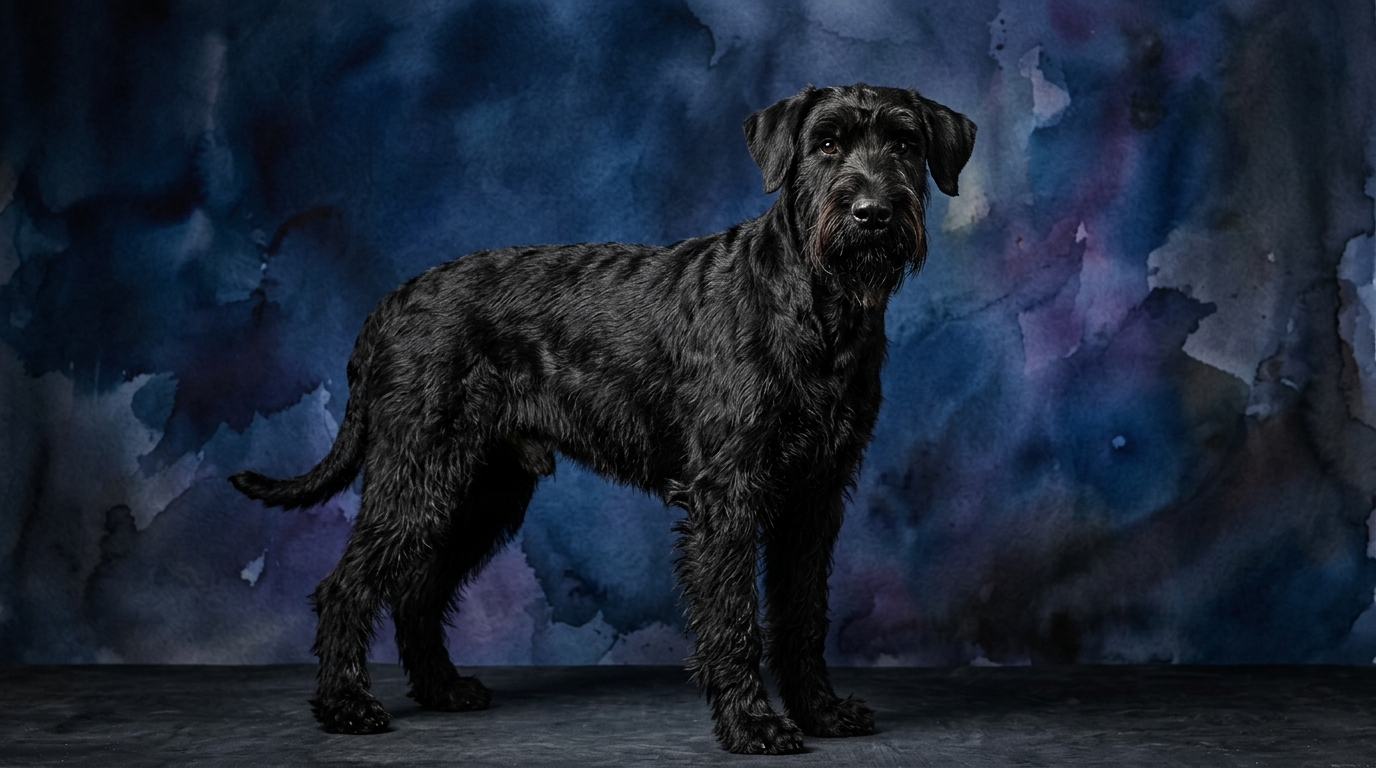
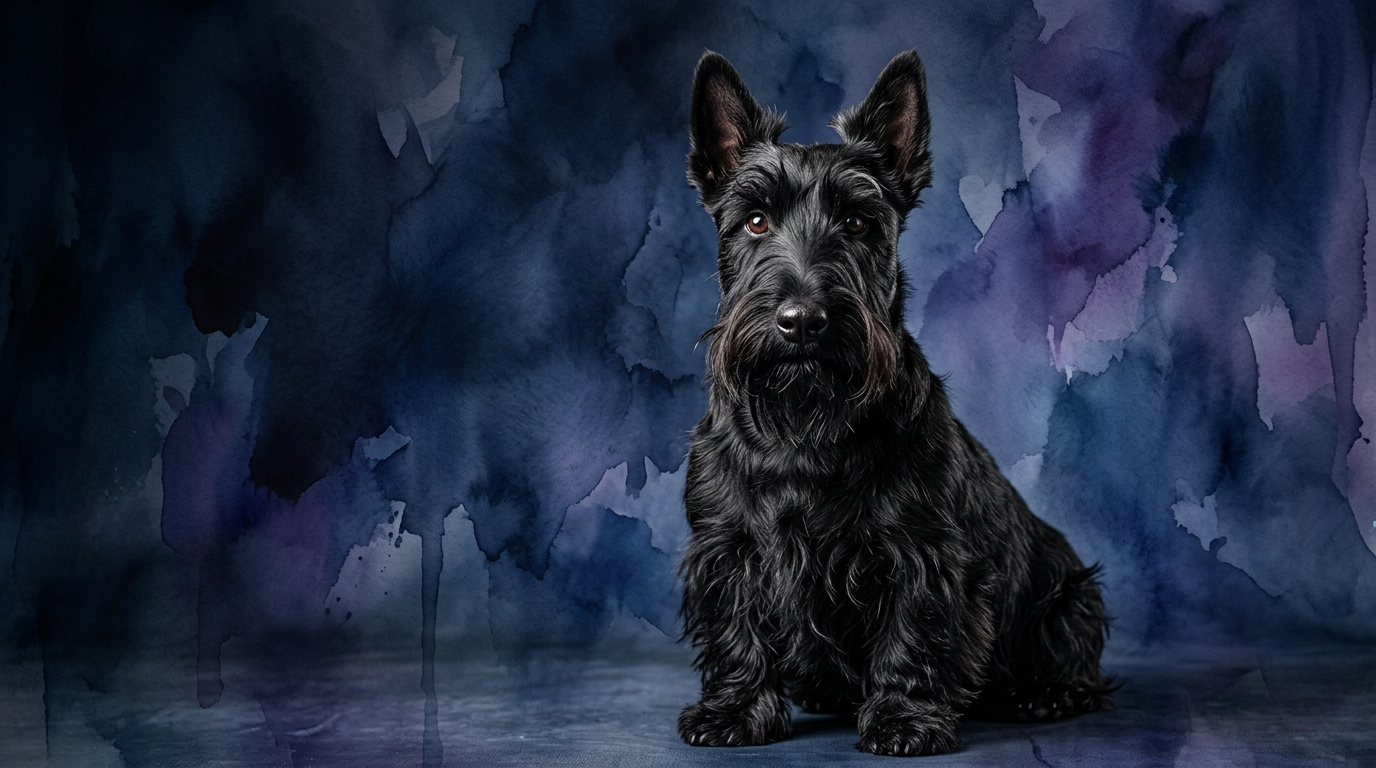
Side-by-Side IQ Profile: Giant Schnauzer vs. Scottish Terrier
At The Cosmic Pet Pet IQ Lab, we evaluate canine intelligence across five key dimensions, offering a nuanced perspective beyond simple obedience. The Giant Schnauzer, with a Coren rank of #28, consistently demonstrates a higher aptitude in several cognitive areas, a reflection of its working dog heritage. Its Problem Solving is rated 4/5, indicating a strong capacity for analytical thought and strategic planning when faced with new challenges. Training Speed also scores 4/5, signifying a rapid ability to grasp and integrate new commands and routines. Social Intelligence for the Giant Schnauzer stands at 3/5, suggesting a good understanding of human cues and group dynamics, albeit with a focused loyalty. Its Instinctive Drive is 3/5, a purposeful energy often directed towards tasks, and its Memory is a solid 4/5, ensuring long-term retention of learned behaviors and experiences.
The Scottish Terrier, holding a Coren rank of #65, presents a distinct cognitive profile shaped by its terrier origins. Its Problem Solving is rated 3/5, demonstrating practical resourcefulness, especially in tasks related to its historical hunting role, though perhaps less inclined towards abstract challenges. Training Speed for the Scottish Terrier is 3/5, meaning it learns at a steady pace but may require more consistent, engaging motivation due to its independent streak. Social Intelligence is 3/5, reflecting a discerning nature and a strong bond with its chosen companions, though not always outwardly effusive. Its Instinctive Drive is also 3/5, characterized by a tenacious and often self-directed pursuit of goals, while its Memory is rated 3/5, adequate for retaining essential information and routines.
Where the Giant Schnauzer Wins Cognitively
The Giant Schnauzer's cognitive strengths distinctly emerge from its history as a versatile working dog, reflected in its superior problem-solving acumen (4/5). This breed demonstrates a remarkable capacity for navigating complex scenarios, often displaying foresight in tasks that require sequential steps or adapting to changing environmental demands. Owners frequently observe them figuring out new puzzles or adjusting strategies when initial attempts fail, showcasing a genuine depth of understanding rather than mere trial-and-error.
Its training speed (4/5) is a testament to its readiness and eagerness to absorb new information, making it adept at mastering intricate command chains and adapting to novel routines swiftly. This rapid acquisition isn't just about rote memorization; it's about processing instructions efficiently and consistently applying them across various contexts. The Giant Schnauzer's strong ability to generalize learned behaviors makes it a highly adaptable companion in diverse training environments, from competitive obedience to protection work.
Furthermore, the Giant Schnauzer's memory (4/5) is a robust asset, ensuring that learned behaviors, spatial awareness, and past experiences are retained over long periods. This enduring recall contributes significantly to its reliability in consistent performance and its ability to build upon previous training without significant regression, forming a solid foundation for advanced work. This breed remembers tasks, people, and places with remarkable clarity, which is invaluable for a companion expected to perform consistently over its lifetime.
Where the Scottish Terrier Wins Cognitively
While the Scottish Terrier's numerical scores might not surpass the Giant Schnauzer's in specific dimensions, its unique cognitive profile presents distinct advantages rooted in its terrier heritage. The Scottish Terrier's instinctive drive (3/5), though numerically equal, manifests with a singular focus and tenacity that is unparalleled when directed towards its purpose. This isn't merely a drive to work, but a deeply ingrained persistence to achieve a goal, often involving independent problem-solving related to pursuit and excavation.
Its problem-solving (3/5) is highly practical and self-directed, excelling in situations that require independent thought and determination rather than collaborative instruction. A Scottish Terrier might cleverly devise ways to reach a hidden toy or navigate a complex scent trail, relying on its own cunning rather than waiting for human direction. This self-reliance makes them adept at navigating their immediate environment and pursuing their interests with minimal oversight.
The breed's social intelligence (3/5), while not outwardly effusive, is characterized by a discerning perception of its immediate human companions and surroundings, fostering a strong, albeit selective, bond. This allows it to operate effectively with minimal direct oversight, relying on its own judgment and self-reliance in situations where a working dog might seek direction. Their loyalty is profound, often expressed through quiet companionship and an astute awareness of their family's routines and moods, making them remarkably attuned to their inner circle.
Which Is Easier to Train and Why
Based on The Cosmic Pet Pet IQ Lab's metrics, the Giant Schnauzer undeniably presents as the easier breed to train for a broad range of tasks. Its training speed of 4/5, coupled with a robust memory of 4/5 and superior problem-solving skills (4/5), means it not only grasps new commands quickly but also retains them reliably and applies them effectively in varied contexts. This breed was historically developed for collaborative work with humans, fostering an intrinsic desire to understand and execute tasks, making it generally more amenable to structured training sessions and complex sequences. Their inherent willingness to engage and learn means they often respond well to positive reinforcement and clear, consistent instruction, progressing rapidly through various levels of obedience and specialized training.
The Scottish Terrier, with a training speed and memory both at 3/5, requires a different approach. Its strong instinctive drive (3/5) often translates into a self-assured independence, a hallmark of the terrier group. While capable of learning, the Scottish Terrier may not always perceive immediate value in human-directed tasks that don't align with its innate instincts, leading to perceived stubbornness. Training a Scottie often demands more patience, creativity, and the ability to make tasks engaging and rewarding, leveraging its tenacity rather than confronting it directly. They respond best to fun, game-based training methods that appeal to their natural curiosity and prey drive, rather than repetitive drills.
Which Suits Active Owners vs. Relaxed Owners
For active owners seeking a canine partner for diverse activities, the Giant Schnauzer is often the more fitting choice. Its higher cognitive dimensions across problem-solving, training speed, and memory mean it thrives on consistent mental challenges and physical engagement, such as advanced obedience, agility, protection sports, or even service work. This breed requires an owner prepared to channel its substantial mental and physical energy into productive outlets, otherwise, its cognitive capacity might be directed towards less desirable behaviors. They excel when given a 'job' and an owner who is committed to providing consistent intellectual and physical stimulation, making them ideal for individuals or families with an active lifestyle and a passion for dog sports or advanced training.
Conversely, for owners who appreciate a more self-sufficient companion and prefer a less intensely demanding physical regimen, the Scottish Terrier might be more suitable. While not a couch potato, its physical exercise requirements are typically moderate compared to a working breed of the Schnauzer's size, often satisfied with daily walks and opportunities for vigorous play. However, 'relaxed' does not mean 'cognitively unchallenged'; a Scottish Terrier still needs mental stimulation to satisfy its keen intelligence and instinctive drive, albeit often in forms that cater to its independent nature, like puzzle toys, scent work, or engaging in playful 'hunts' in the yard. They thrive with owners who appreciate their distinct personality and are willing to engage their minds on their own terms.
The Verdict
Choose the Giant Schnauzer if you desire a highly trainable, versatile working partner for complex tasks, consistent engagement, and a strong collaborative bond in various activities.
Opt for the Scottish Terrier if you seek an independent, tenacious companion with a unique personality, manageable physical needs, and who appreciates a partner capable of self-directed thought and discerning affection.
🧠 Find Your Pet's IQ Score
Our Pet IQ Lab assessment covers 25+ tests across 5 cognitive dimensions — personalized to your breed.
Take the Full IQ Test →Frequently Asked Questions
How does Coren Rank influence these IQ dimensions?
Coren Rank generally reflects a breed's 'working and obedience intelligence,' which correlates strongly with training speed and problem-solving. A higher rank like the Giant Schnauzer's (28) indicates a greater aptitude for understanding and executing human commands, while the Scottish Terrier's rank (65) suggests a more independent learning style. It's a broad indicator of trainability for specific human-centric tasks.
Does instinctive drive impact trainability differently in these breeds?
Absolutely. The Giant Schnauzer's drive (3/5) is often channeled into collaborative tasks, making it a powerful asset in training when directed towards a shared goal. The Scottish Terrier's equally rated drive (3/5) is profoundly rooted in its independent hunting heritage, meaning it can be a formidable force, but often needs to be managed or redirected creatively during training to prevent conflicts with human commands.
Can a Scottish Terrier excel in advanced obedience despite its independent nature?
While the Scottish Terrier may not pick up commands as rapidly as a Giant Schnauzer, they absolutely can excel in advanced obedience with the right trainer. Success hinges on consistent, positive reinforcement, making training fun and engaging to appeal to their independent and often playful nature, rather than relying on rote repetition. Their tenacity, once directed, can be a great asset in mastering complex routines.