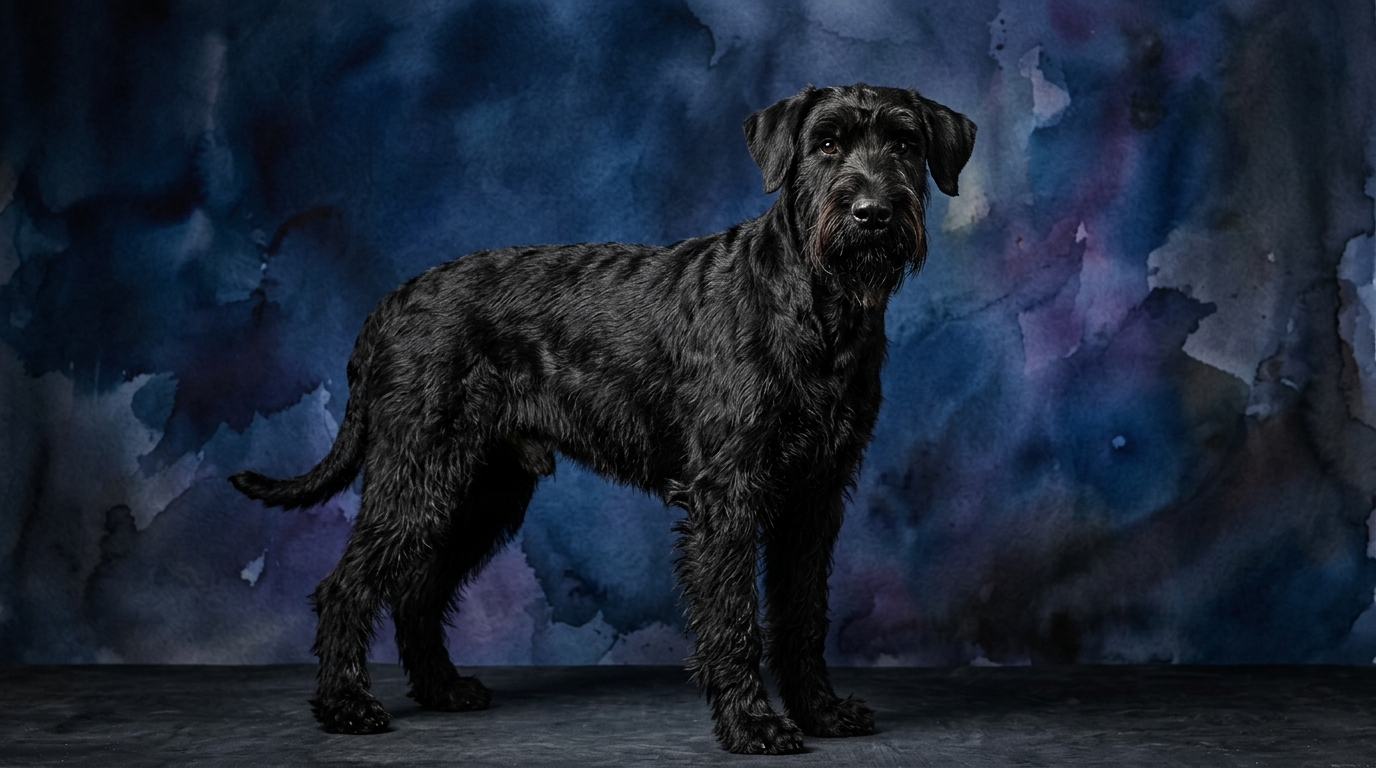
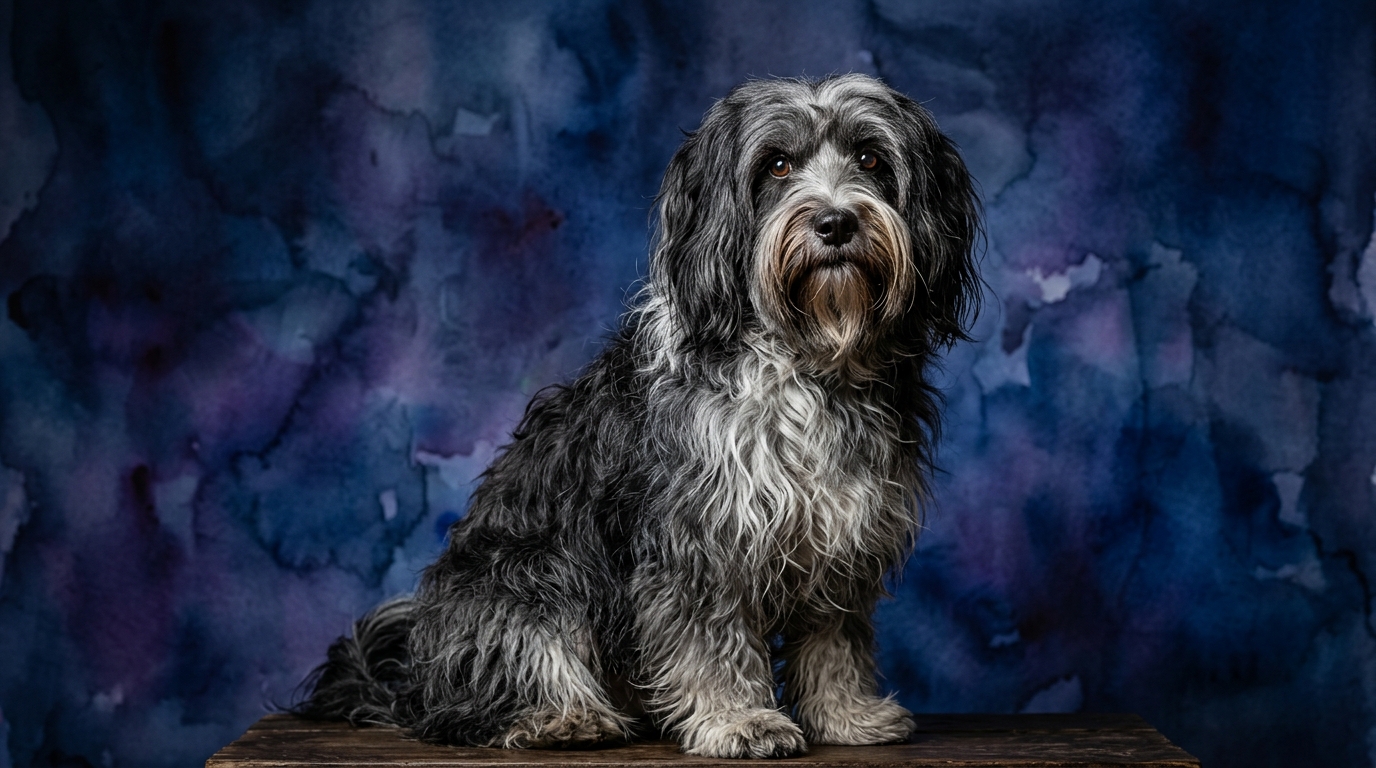
Side-by-Side IQ Profile: Giant Schnauzer vs. Tibetan Terrier
At The Cosmic Pet Pet IQ Lab, we analyze canine intelligence across five key dimensions, providing a nuanced understanding of each breed's cognitive strengths. Let's examine the profiles of the Giant Schnauzer and the Tibetan Terrier.
The Giant Schnauzer, a member of the Working Group, holds a respectable Coren rank of #28. Their Problem Solving ability is rated at 4/5, indicating a breed capable of impressive cognitive flexibility and adept at navigating complex scenarios, from figuring out how to unlatch a gate to devising strategies for retrieving a toy from a difficult spot. Their Training Speed also scores 4/5, meaning they absorb new commands and routines with remarkable efficiency, often requiring fewer repetitions than many other breeds to achieve mastery. Social Intelligence for the Giant Schnauzer is 3/5, suggesting a competent ability to interpret human cues and social dynamics, forming strong, loyal bonds with their families, though they might not possess the same intuitive 'people-pleasing' drive as some companion breeds. Their Instinctive Drive is 3/5, reflecting a balanced level of inherent working behaviors like guarding, which can be effectively channeled through structured training. Finally, their Memory is rated 4/5, indicating that once a Giant Schnauzer learns something, it tends to stick for the long term, contributing significantly to their reliability in training.
In contrast, the Tibetan Terrier, from the Non-Sporting Group, has a Coren rank of #63. Their Problem Solving ability is 3/5, suggesting a capable but not intensely independent problem-solver; they can navigate common challenges but might prefer to seek guidance from their human companions when faced with truly novel situations. Their Training Speed is also 3/5, indicating a steady, thoughtful learner who will acquire new commands and behaviors with consistent, positive reinforcement, though typically requiring more repetitions and patience. Social Intelligence for the Tibetan Terrier is 3/5, similar to the Schnauzer, meaning they are adept at understanding their human family and the nuances of household life, capable of forming deep bonds while retaining a charming independent spirit. Their Instinctive Drive is 3/5, reflecting their historical role as watchdogs and companions, translating into a watchful nature and a tendency to alert their owners without an overpowering prey drive or intense working focus. Their Memory is rated 3/5, meaning Tibetan Terriers retain learned information effectively, especially with regular reinforcement, building on past experiences to navigate their world.
Where the Giant Schnauzer Wins Cognitively
The Giant Schnauzer’s cognitive strengths are evident in several key areas where they demonstrably outperform the Tibetan Terrier. Their superior Problem Solving score of 4/5, compared to the Tibetan Terrier’s 3/5, means a Giant Schnauzer is more likely to independently strategize and overcome novel obstacles. For example, a Schnauzer might quickly figure out how to manipulate a complex puzzle toy to get a treat or devise a method to open a slightly ajar door, showcasing a proactive and analytical mind. This translates into a dog that isn't just following instructions but actively engaging with and comprehending its environment. Furthermore, their Training Speed of 4/5 markedly surpasses the Tibetan Terrier's 3/5. This means Giant Schnauzers grasp new commands and concepts with remarkable swiftness, often requiring fewer repetitions to achieve proficiency in tasks like heel work, stays, or complex sequences in obedience trials. They form strong associations between verbal cues and actions more rapidly, making them exceptionally responsive to structured learning. Lastly, the Giant Schnauzer's Memory score of 4/5, a point higher than the Tibetan Terrier, indicates a sustained retention of learned information. Once a Giant Schnauzer has mastered a command or a routine, it tends to stick for the long term, even after periods of inactivity. This reliability means less need for constant refresher training and a more consistent performance in learned behaviors, making them dependable partners in demanding roles.
Where the Tibetan Terrier Wins Cognitively
While the Tibetan Terrier's individual cognitive scores might not reach the peaks of the Giant Schnauzer, their unique blend of balanced abilities creates distinct advantages in certain contexts. Their Problem Solving (3/5) and Training Speed (3/5) scores, while moderate, suggest a steady and thoughtful approach to learning rather than an impulsive one. This deliberate learning style can be a cognitive 'win' for owners who prefer a dog that processes information carefully and consistently, rather than one that might try to outsmart them or push boundaries. They are less likely to overthink or become overly focused on a single task, which can lead to a more adaptable and less intensely driven companion in a home environment. The Tibetan Terrier’s balanced Social Intelligence (3/5) and Instinctive Drive (3/5) contribute to a temperament that is engaged but not overwhelmingly demanding. They are perceptive to human emotions and household dynamics without being overly deferential, maintaining a charming independence. This moderate drive means they are less prone to intense working fixations, making them easier to integrate into a family setting without requiring constant, high-stakes outlets for inherent behaviors. Their cognitive profile fosters a companion that is watchful and alert, yet generally amenable to a relaxed pace of life, contributing to a stable and predictable presence in the home.
Which is Easier to Train and Why?
Based on The Cosmic Pet Pet IQ Lab data, the Giant Schnauzer (Training Speed 4/5, Problem Solving 4/5) generally presents as the easier breed to train compared to the Tibetan Terrier (Training Speed 3/5, Problem Solving 3/5). The Schnauzer's quicker grasp of concepts means they require fewer repetitions to understand and execute commands. For instance, teaching a complex 'retrieve' command that involves multiple steps might take significantly fewer sessions for a Giant Schnauzer to master reliably in various environments, even with distractions. Their higher problem-solving capacity also means they can generalize learned behaviors to new situations more readily and troubleshoot minor command variations without becoming flustered, often anticipating what is expected. Conversely, the Tibetan Terrier's more deliberate learning pace necessitates greater patience and consistency from the trainer. While capable of learning any command, they may need more structured, repetitive sessions to solidify new behaviors and might be slower to adapt if the training context changes significantly. Behavioral differences also play a role; the Schnauzer's assertive and purposeful nature often translates into a keenness to work with their handler, needing clear boundaries and consistent leadership. The Terrier's independent streak, while charming, might require more persuasive, reward-based motivation and a trainer who understands their sometimes-stubborn nature to maintain engagement and progress effectively.
Which Suits Active Owners vs. Relaxed Owners?
The choice between these two breeds often hinges on an owner's lifestyle and their capacity to meet a dog's cognitive and physical needs. The Giant Schnauzer, with its robust problem-solving (4/5) and training speed (4/5) scores, coupled with an Instinctive Drive (3/5) that often manifests as a strong desire for purpose and engagement, is better suited for active owners. These dogs thrive when given tasks and consistent mental stimulation, whether it's advanced obedience training, competitive dog sports like agility or protection work, or long, mentally stimulating hikes that challenge both body and mind. Owners who enjoy engaging in consistent, structured training, providing complex puzzle toys, and participating in dog sports will find a deeply fulfilling partnership with a Giant Schnauzer, effectively channeling their considerable cognitive capabilities and physical energy. Their strong memory and quick learning mean they can excel in demanding roles, but neglecting these needs can lead to boredom and potential behavioral issues.
The Tibetan Terrier, possessing a more balanced cognitive profile with 3/5 across problem-solving, training speed, social intelligence, instinctive drive, and memory, is an excellent match for owners seeking a companion that is engaged but not overly demanding. While they appreciate walks, playtime, and consistent mental engagement, their need for intense, structured mental work is less pronounced than the Giant Schnauzer's. Relaxed owners who enjoy consistent, gentle training, moderate daily exercise (such as a couple of brisk walks), and a companionable, watchful presence will find the Tibetan Terrier's steady learning and adaptable nature a good fit. They are content with being part of family activities without needing to be constantly 'on the job.' Their cognitive make-up fosters a dog that is alert and playful, yet capable of settling down and enjoying a more leisurely pace of life, making them ideal for those who want an interactive dog without the intensity of a dedicated working breed.
The Verdict
Choose the Giant Schnauzer if you are an experienced owner seeking a highly trainable dog for advanced obedience, dog sports, or a working role, prepared to provide consistent mental and physical challenges.
Opt for the Tibetan Terrier if you desire a charming, adaptable companion for a moderately active household, appreciating a steady learner who thrives on consistent, positive engagement without needing intense, high-stakes tasks.
🧠 Find Your Pet's IQ Score
Our Pet IQ Lab assessment covers 25+ tests across 5 cognitive dimensions — personalized to your breed.
Take the Full IQ Test →Frequently Asked Questions
Are Giant Schnauzers good with children?
Giant Schnauzers can be excellent family dogs, particularly with older, respectful children who understand how to interact with a large, assertive breed. Their social intelligence (3/5) suggests they are capable of forming strong bonds, but early socialization and consistent training are crucial to ensure they understand their place in the family hierarchy and interact appropriately.
Do Tibetan Terriers bark a lot?
Tibetan Terriers were historically watchdogs, and their instinctive drive (3/5) can manifest as a tendency to bark at unfamiliar sights or sounds. While not excessive, they are vocal and will alert their owners to perceived changes in their environment, making early training important to manage this natural inclination.
How much exercise does a Giant Schnauzer need?
A Giant Schnauzer requires substantial daily exercise, typically an hour or more of vigorous activity, including walks, runs, or engaging play. Their cognitive profile, with 4/5 in problem-solving and training speed, means they also benefit greatly from mental stimulation through training sessions and puzzle toys to prevent boredom and maintain their sharp minds.